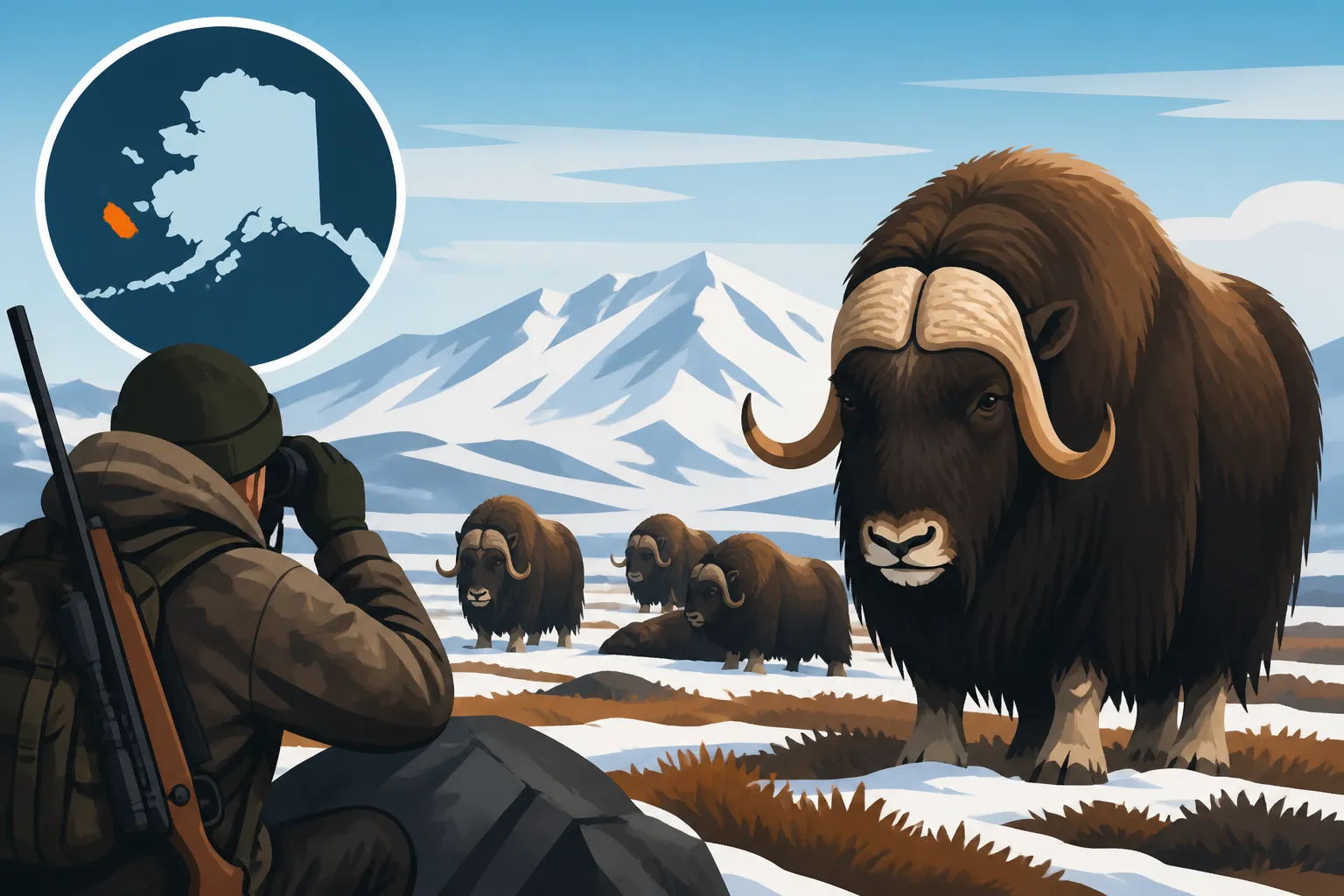
Nunivak Island’s Muskox Population Today
For anyone dreaming of Alaska's wild places, the thought of its unique big game often conjures images of massive moose or formidable brown bears. But there's another ancient giant, the muskox, that holds a special place, especially on Nunivak Island. Understanding their current population, the challenges they face, and how they're managed is crucial for anyone hoping to witness or hunt these magnificent animals, which is exactly what this comprehensive guide aims to unravel.
A Journey Through Time: Nunivak's Muskox History
The story of muskox on Nunivak Island is a remarkable tale of disappearance and rediscovery, a testament to both human impact and dedicated conservation efforts. These hardy creatures, often mistaken for bison due to their shaggy coats, have a deep history in the Arctic landscape.
The Vanishing Giants: Pre-Reintroduction Era
Long before modern hunting regulations or conservation initiatives, muskox roamed vast swaths of the Arctic, including mainland Alaska and its offshore islands. However, by the late 19th and early 20th centuries, a combination of factors led to their complete extirpation from Alaska. Unregulated hunting by whalers, prospectors, and early settlers played a significant role, often driven by survival needs in remote areas. Coupled with severe climate fluctuations that impacted their preferred forage and increased vulnerability to predation, the once-thriving Alaskan muskox populations dwindled to nothing. Nunivak Island, with its isolated yet rich tundra, was part of this unfortunate trend, its muskox disappearing entirely, leaving behind only historical accounts and scattered skeletal remains. This loss left a noticeable void in the island's unique ecosystem, a stark reminder of how quickly even the most robust species can vanish without proper stewardship.
A Second Chance: The Reintroduction Program
The concept of reintroducing muskox to their former ranges gained traction in the early 20th century. In 1935, a pivotal conservation effort brought a small herd of 31 muskox calves from East Greenland to Nunivak Island, a remote refuge managed by the U.S. Fish and Wildlife Service. This bold move was part of a broader strategy to re-establish muskox in Alaska, recognizing their ecological importance and potential as a subsistence resource. The calves, many orphaned, faced significant challenges in their new environment, but the isolation of Nunivak provided a safe haven from mainland predators and human disturbance. This initial transplant was a critical step, laying the groundwork for what would become one of the most successful wildlife reintroductions in North American history. The careful planning and ongoing monitoring by wildlife biologists ensured that these animals had the best possible chance to adapt and flourish. You can learn more about this specific event in Nunivak Island's Muskox Transplant History.
Establishing a Foothold: Early Population Growth
The initial years post-reintroduction were marked by cautious optimism. The small group of Greenlandic muskox adapted surprisingly well to Nunivak's tundra, finding ample forage and relative peace. Without significant predators like wolves or brown bears, and with careful management from federal and state agencies, their numbers slowly but steadily began to climb. Biologists meticulously tracked the herd's growth, studying their foraging patterns, reproductive success, and overall health. The island's diverse vegetation, characterized by sedges, willows, and grasses, provided the necessary sustenance for the muskox to thrive. As the herd grew, it became clear that Nunivak Island could support a healthy, self-sustaining population, eventually serving as a source population for further transplants to other parts of Alaska, expanding the species' range once again across the state. This early success solidified Nunivak's role as a cornerstone of muskox conservation in Alaska.
Nunivak's Muskox Population Today: Numbers and Trends
Understanding the current state of Nunivak Island's muskox population is essential for both wildlife managers and those interested in these magnificent animals. The herd represents a unique success story in conservation, but its management requires ongoing attention to balance ecological health with human interests.
Current Census and Management Objectives
Today, the Nunivak Island muskox herd is considered robust and well-managed, although its exact numbers fluctuate from year to year. The Alaska Department of Fish and Game (ADF&G) and the U.S. Fish and Wildlife Service collaborate on regular aerial surveys to estimate the population. These surveys are typically conducted when conditions allow for optimal visibility, often using fixed-wing aircraft or helicopters to cover the entire island. While specific numbers can vary, the herd has historically maintained a population generally ranging between 3,000 and 4,000 animals, making it one of the largest and most genetically important muskox populations in the world.
The primary management objective is to maintain a healthy, sustainable population that is in balance with the island's carrying capacity, while also providing limited hunting opportunities for both local residents and non-residents. This careful balancing act ensures that the herd doesn't overgraze its habitat, which could lead to declines in overall health and productivity. The management also aims to preserve the genetic diversity of the herd, recognizing its role as a source for other populations. Understanding Alaska Game Management Units and How They Are Numbered can provide context for how these specific populations are designated and overseen within the broader state wildlife management framework.
Factors Influencing Population Dynamics
Like any wild population, the Nunivak muskox are subject to various factors that influence their numbers. While large predators like wolves or brown bears are absent on Nunivak, which significantly reduces calf mortality from predation, other natural forces play a role. Severe winters, characterized by prolonged periods of deep snow or widespread ice crusts, can limit access to forage, leading to increased mortality, especially among calves and older animals. Such events highlight the importance of Muskox Qiviut and Winter Survival, as their incredibly dense underwool is critical for insulating them against extreme cold.
Disease outbreaks, though rare and closely monitored, also pose a potential threat to a concentrated population. Furthermore, the island's carrying capacity itself is a natural limiter. As the population approaches or exceeds what the habitat can sustainably support, factors like competition for food and reduced reproductive rates can naturally slow growth or even lead to declines. Habitat quality, influenced by long-term weather patterns and muskox grazing pressure, is a continuous consideration for wildlife managers.
The Role of Hunting in Population Control
Controlled hunting plays a critical role in the management of Nunivak's muskox population. Given the absence of natural large predators, hunting serves as a primary tool to regulate herd size and maintain ecological balance. ADF&G issues a limited number of permits annually, typically through a highly competitive draw system, ensuring that harvest levels are sustainable and align with population objectives.
This controlled harvest helps prevent overpopulation, which could degrade the fragile tundra habitat and ultimately harm the muskox themselves through increased competition for food and potential for disease spread. Hunting also provides a valuable subsistence resource for local communities and offers unique recreational opportunities for hunters worldwide. The careful allocation of permits, often prioritizing local subsistence users, reflects a holistic approach to wildlife management that respects both ecological needs and human cultural ties to the land. This careful management ensures that the population structure remains healthy, including a good balance of age and sex classes within the herd, which is also influenced by Muskox Herd Structure and Rutting Bulls.
Life on the Tundra: Nunivak Muskox Habitat and Behavior
Nunivak Island offers a pristine, yet challenging, environment for its muskox. Understanding the unique characteristics of this land and how the muskox interact with it provides crucial insights into their survival and success.
Nunivak's Unique Arctic Tundra Ecosystem
Nunivak Island is a remote, treeless expanse in the Bering Sea, characterized by its vast, rolling tundra. This landscape, shaped by permafrost and long, cold winters, is surprisingly rich in life, though adapted to extreme conditions. The island's terrain consists of low hills, wide river valleys, and countless shallow lakes and ponds, all supporting a diverse array of Arctic and sub-Arctic vegetation. During the brief summer, the tundra bursts into a mosaic of sedges, grasses, willows, mosses, and lichens, providing essential forage. However, the winters are long, dark, and often brutally cold, with heavy snows and strong winds that can create significant challenges for ground-dwelling animals. The low-lying nature of much of the island means that snow can accumulate deeply, potentially burying critical food sources. Yet, the muskox are perfectly evolved for this environment, their thick coats and robust physiology allowing them to thrive where other large herbivores would perish.
Grazers of the North: Diet and Foraging Habits
Muskox are primarily grazers and browsers, their diet shifting seasonally with the availability of vegetation. In summer, they capitalize on the abundance of green grasses, sedges, and forbs that proliferate across the tundra. They spend much of their day grazing, building up fat reserves crucial for surviving the lean months. As winter approaches and snow covers the ground, their foraging strategies adapt. They become more reliant on browsing woody shrubs like dwarf willows and birch, often using their broad muzzles and powerful heads to sweep snow aside, uncovering buried vegetation.
Their digestive systems are highly efficient, allowing them to extract maximum nutrients from coarse, fibrous plant material. This ability to utilize a wide range of forage, coupled with their slow metabolic rate and heat-retaining qiviut, is key to their success in an environment with limited food resources for much of the year. This persistent foraging behavior is vital not just for individual survival but also for the overall health and reproductive success of the herd.
Social Structures and Survival Strategies
Muskox are highly social animals, typically living in herds that vary in size depending on the season and availability of resources. Herd structure usually consists of mature bulls, cows, and their offspring. During the rut, dominant bulls engage in spectacular head-butting contests to establish breeding rights, showcasing the Muskox Herd Structure and Rutting Bulls in action.
Their most iconic survival strategy against predators—and historically, against wolves and grizzlies on the mainland—is the defensive circle. When threatened, the adult muskox form a tight ring around the calves, facing outwards with their formidable horns, presenting an impenetrable barrier. While natural predators are absent on Nunivak, this innate behavior remains a crucial part of their social fabric and an evolutionary adaptation to harsh environments. Their thick, shaggy outer guard hairs and incredibly soft, dense qiviut underwool provide unparalleled insulation, allowing them to withstand temperatures far below freezing, even during intense Arctic storms. These collective behaviors and physiological adaptations are what allow them to persist and thrive in one of the planet's most extreme environments.
Hunting Nunivak Muskox: Permits and Practicalities
Hunting muskox on Nunivak Island is a bucket-list experience for many, but it's far from a casual endeavor. It requires meticulous planning, a deep understanding of the regulations, and a considerable investment in both time and resources.
The Nunivak Muskox Draw Permit System
Securing a muskox permit for Nunivak Island is one of the most challenging aspects of planning such a hunt. Unlike over-the-counter tags for some species, muskox permits are allocated through a highly competitive draw system administered by the Alaska Department of Fish and Game (ADF&G). Hunters must apply within a specific window, usually in the late fall or early winter for hunts the following year, and success rates are often very low, reflecting the limited number of permits issued to maintain sustainable population levels.
Residents typically have better odds and lower costs, reflecting Alaska's subsistence priority, but non-residents can and do draw permits. These permits specify the hunt area, season dates, and sex of the animal. Many aspiring hunters use services like GoHunt to research draw odds and historical data, giving them an edge in making informed application choices. Understanding How Alaska's Big Game Drawing Permits Work is critical, as the nuances of the application process can be complex. Persistence is key; it's not uncommon for hunters to apply for many years before finally drawing a coveted Nunivak muskox tag.
Guided Versus Unguided Hunting on Nunivak
For non-resident hunters, the choice between guided and unguided hunting is often predetermined by Alaska regulations. Specifically for muskox on Nunivak Island, non-resident hunters are typically required to hire an Alaska Registered Guide-Outfitter or hunt with a close relative who is an Alaskan resident. This requirement ensures hunter safety in remote, challenging terrain and helps maintain high ethical standards for the hunt. You can learn more about this by reading Hiring an Alaska Registered Guide-Outfitter.
Guided hunts on Nunivak generally involve flying into the small village of Mekoryuk, the island's only community, and then traveling by snowmachine in winter or ATV in fall/early spring with your guide to find the herds. Guides provide all necessary equipment, food, and expertise, navigating the challenging tundra and locating animals. Unguided hunts, while offering more independence, are generally reserved for resident hunters who possess the necessary local knowledge and logistical capabilities to safely and successfully execute the hunt in this remote environment. The unique challenges of Nunivak, including rapidly changing weather, difficult travel conditions, and the sheer remoteness, make a reputable guide invaluable.
Logistics of a Nunivak Hunt
Once a permit is secured, the logistical planning for a Nunivak muskox hunt begins in earnest. Travel to the island usually involves commercial flights to Bethel, followed by a smaller regional airline flight to Mekoryuk. Upon arrival, hunters typically coordinate with their guide or local contacts for ground transportation. In winter, snowmachines are the primary mode of travel across the frozen tundra, while ATVs or tracked vehicles are used during snow-free periods.
Hunting muskox often involves extensive travel, glassing for herds, and then a stalk across sometimes unforgiving terrain. Hunters must be prepared for extreme cold, strong winds, and wet conditions. Proper gear, from outer layers to insulated boots, is paramount. Once an animal is harvested, the work is far from over. Muskox are large animals, and quartering the carcass and packing out the meat and hide can be physically demanding. Hunters need to plan for meat and trophy care immediately after the kill. This includes prompt cooling of the meat, especially if temperatures are above freezing, which can be informed by Meat Care in 50-Degree September Weather. Hides, particularly for a life-size mount, require careful Cape Care for a Life-Size Bear Mount to prevent spoilage before transport. Shipping meat and trophies off the island typically involves air freight from Mekoryuk, requiring careful planning and coordination with airlines and local services. The entire process, from application to taking your meat home, demands thorough preparation and a resilient spirit. For further details on season dates and permit types, reviewing Alaska Muskox Season Structure is highly recommended. For those looking at the highly competitive draw, understanding Nunivak Muskox Permit Odds can help set realistic expectations.
| Year | Population Estimate | Total Permits Issued | Resident Harvest | Non-Resident Harvest | Success Rate (%) |
|---|---|---|---|---|---|
| 2018 | 3,300 | 150 | 120 | 25 | 96 |
| 2019 | 3,150 | 140 | 115 | 20 | 95 |
| 2020 | 3,400 | 155 | 125 | 25 | 97 |
| 2021 | 3,550 | 160 | 130 | 25 | 96 |
| 2022 | 3,600 | 160 | 130 | 25 | 97 |
| 2023 | 3,750 | 165 | 135 | 25 | 97 |
Note: Numbers are illustrative based on general trends and do not represent exact official figures for any given year, which can fluctuate. The number of non-resident permits is generally very low compared to resident opportunities.
Conservation and the Future of Nunivak Muskox
The success of the Nunivak Island muskox population is a testament to dedicated conservation efforts, but the future presents new challenges and continued needs for careful management. Balancing the ecological health of the herd with the interests of local communities and hunters is an ongoing process.
Collaborative Conservation Efforts
The thriving muskox population on Nunivak Island is a direct result of collaborative conservation efforts between the Alaska Department of Fish and Game (ADF&G), the U.S. Fish and Wildlife Service, and importantly, the local Yup'ik community of Mekoryuk. The island is part of the Yukon Delta National Wildlife Refuge, which provides a federal protective umbrella, while ADF&G manages the species population for the state. Local community involvement is paramount, as residents possess generations of knowledge about the land and its wildlife. They are often directly involved in subsistence harvesting and play a crucial role in monitoring the health of the herd and reporting observations. This integrated approach, which combines scientific expertise with traditional ecological knowledge, fosters a strong sense of stewardship and ensures that management decisions are culturally sensitive and ecologically sound. This partnership is vital for addressing specific challenges that might arise, from habitat changes to ensuring hunter safety, especially when considering Emergency Evacuation Plans in Remote Alaska.
Research and Monitoring for Long-Term Health
To ensure the long-term health and sustainability of the Nunivak muskox herd, ongoing scientific research and monitoring are essential. Biologists regularly conduct aerial surveys to estimate population size, track reproductive success, and assess herd composition (e.g., bull, cow, calf ratios). Beyond simple counts, studies delve into muskox genetics to monitor diversity, health, and potential vulnerabilities. Researchers also analyze muskox diet and habitat use, paying close attention to the impact of grazing on the tundra vegetation.
Health screenings and disease monitoring are also critical components, especially in a relatively isolated population where a single disease outbreak could have devastating effects. Data collected from harvested animals, such as age and physical condition, provide invaluable insights into the overall well-being of the herd. This continuous feedback loop of research and monitoring allows wildlife managers to adapt their strategies, ensuring that the muskox population remains robust and resilient in the face of changing environmental conditions and management objectives.
Climate Change and Future Challenges
While the Nunivak muskox population has been a conservation success story, it faces significant potential threats from climate change. The Arctic is warming at an alarming rate, and Nunivak Island is on the front lines of these changes. Rising temperatures can lead to altered vegetation patterns, potentially shifting the availability and quality of critical forage species for muskox. More frequent rain-on-snow events, where rain freezes on top of existing snow, can create impenetrable ice crusts that prevent muskox from accessing their buried winter food sources, leading to increased stress and mortality.
Changes in sea ice dynamics can also impact local weather patterns and potentially affect access to the island for management activities or even increase erosion along the coastline. As the climate continues to change, managers will need to consider novel adaptation strategies to mitigate these impacts, such as evaluating potential new forage sources or adjusting harvest quotas to account for increased natural mortality. The future of Nunivak's muskox will depend on continued vigilance, adaptive management, and a deep commitment to understanding and responding to the rapidly evolving Arctic environment.
Disclaimer
The information provided in this guide is for general informational purposes only and does not constitute official hunting regulations or legal advice. Hunting regulations in Alaska are complex and subject to change. Always consult the most current Alaska Department of Fish and Game regulations, hunt supplements, and emergency orders before planning or undertaking any hunting activity. Ensure you understand all licensing, tag, permit, and guide requirements for your specific hunt and residency status.