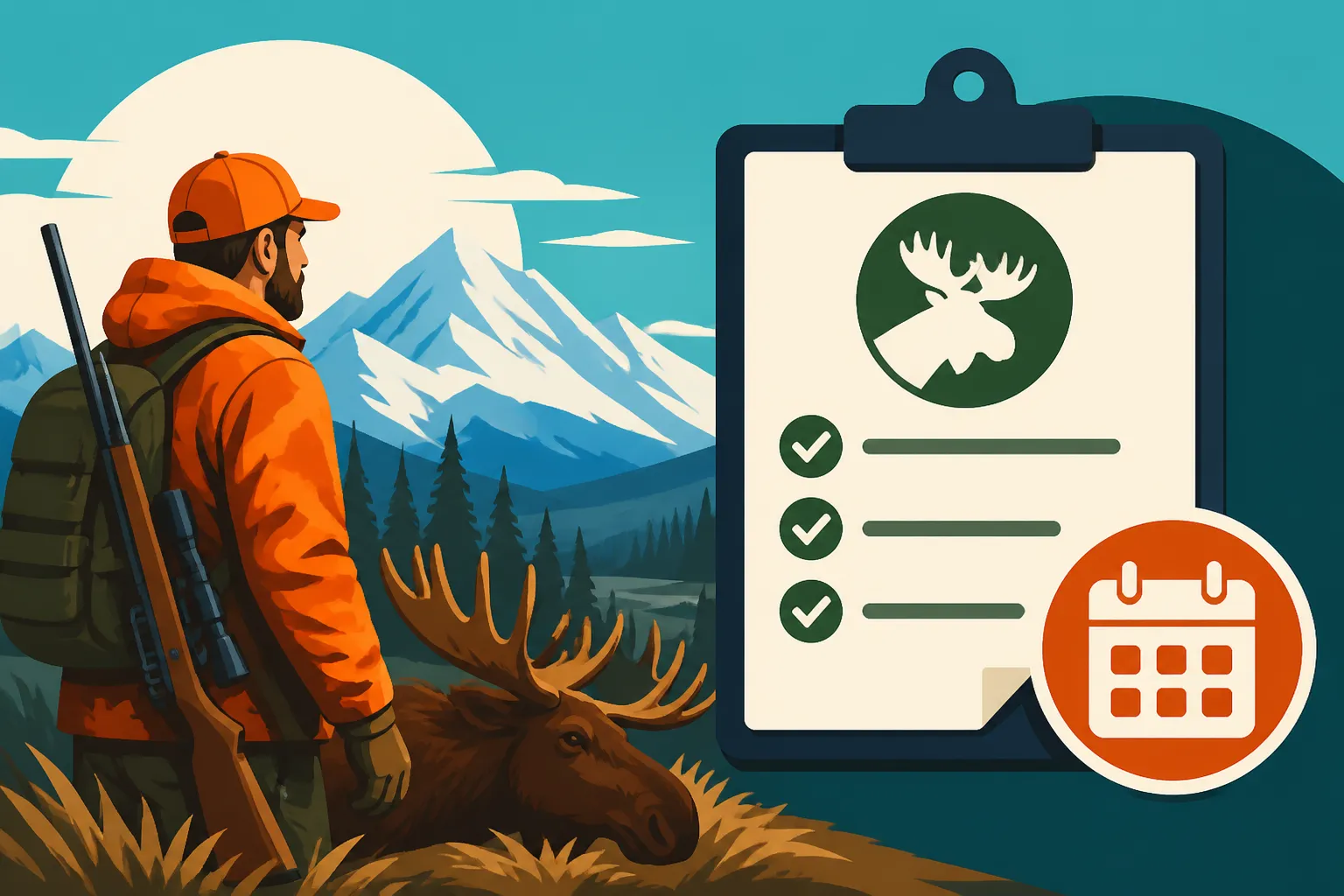
Alaska Harvest Report Deadline After the Hunt
That thrilling moment when you connect with a magnificent bull moose, a wary Dall sheep, or a stealthy black bear in the vast Alaskan wilderness is etched forever in your memory. The adrenaline, the hard work, the sheer triumph – it’s an experience like no other. But once the field dressing is done and the meat is cooling, it’s easy to let the administrative side of the hunt slip your mind. Too many hunters, caught up in the excitement and the practicalities of packing out meat or caring for a trophy, completely forget a crucial step: the Alaska harvest report deadline. This guide will clarify these essential reporting requirements, why they’re so vital, and how you can ensure your unforgettable Alaskan adventure remains fully compliant with state regulations, avoiding any unwelcome penalties down the line.
Understanding Alaska's Harvest Report System
It's easy to view paperwork as just that – paperwork. But in the world of wildlife management, harvest reports are far more than a bureaucratic nuisance. They are the backbone of sustainable hunting in Alaska, a state renowned for its incredible big game populations and the opportunities they provide.
Why Harvest Reports Are So Important
Imagine trying to manage a grocery store without knowing how much inventory you have, or how quickly it's moving off the shelves. That's essentially what wildlife management would be like without harvest reports. Every single report you submit, whether it's for a Dall sheep in the Chugach or a caribou from the Fortymile herd, contributes critical data to the Alaska Department of Fish and Game (ADF&G). This data helps biologists and game managers understand population trends, monitor harvest levels, and assess the overall health of specific game populations across different Game Management Units.
Without accurate and timely reporting from hunters, the state simply wouldn't have the necessary information to make informed decisions. This information directly impacts future hunting seasons, bag limits, and whether certain areas need specific management actions. It ensures that the hunting opportunities we cherish today will still be there for future generations. So, while it might feel like a minor detail after a demanding hunt, your harvest report is a crucial part of the conservation puzzle.
Different Types of Reports and Their Triggers
Alaska has several categories of hunting permits, and each comes with its own set of reporting requirements. It’s important to understand which type of permit you have, as this directly dictates the deadline and method of reporting.
First, you have your Harvest Tickets. These are the most common and are typically associated with general season hunts for species like moose, caribou, Sitka blacktail deer, and black bear. You pick these up over-the-counter or online, and they usually have a straightforward reporting process.
Next are Registration Permits. These are issued for specific areas or species, often to manage harvest quotas more tightly. Think of hunts where the season might close early by emergency order once a certain number of animals are taken. These often have different, sometimes shorter, reporting requirements compared to general harvest tickets. It’s vital to check the specifics printed directly on your registration permit. You'll often see announcements like How Alaska Registration Hunts Are Announced with details.
Finally, there are Draw Permits. These are for limited-entry hunts for highly sought-after species or areas, such as Dall sheep, mountain goat, bison, muskox, or certain brown bear hunts. If you've been lucky enough to draw one of these (you can Check Alaska Draw Results Online in February), the reporting instructions will be extremely explicit and often have unique deadlines and procedures. These permits are precious, and adhering to all rules, especially reporting, is paramount. Many hunters rely on resources like GoHunt to help them keep track of their various permits and application statuses, which can be incredibly helpful in staying organized with different deadlines.
Navigating the Deadlines: When to Report Your Kill
The biggest hurdle for many hunters isn't how to report, but when. Alaska's reporting deadlines can vary significantly depending on the type of permit and the species involved, making it easy to get confused if you don't pay close attention.
General Harvest Ticket Deadlines
For the vast majority of general season hunts, those covered by standard harvest tickets, there's a widely applicable deadline: December 15th of the calendar year in which you harvested the animal. This date is critical for many common species like general season moose, caribou, deer, and black bear.
Let’s say you were fortunate enough to harvest a bull moose in early September in a general season area. While the hunt might be over and the meat is in the freezer by mid-September, you still have until December 15th to submit that harvest ticket report. The same applies if you bagged a Sitka blacktail deer on Kodiak Island in November. Regardless of when your hunting season ended, if it falls within that calendar year, December 15th is your target. This gives hunters a good window to get their reports in, but it’s still easy to forget amidst the holiday season or post-hunt chores.
Special Rules for Registration and Draw Permits
This is where things can get a bit trickier, and where paying meticulous attention to your specific permit becomes non-negotiable. Registration and Draw Permits frequently have different, and often much shorter, reporting deadlines than the general December 15th rule.
For example, some registration permits might require you to report your harvest within 3 to 5 days of the kill, or within a set number of days from leaving the field. This is particularly common for hunts with strict quotas or where the season might close suddenly. If you’re on a remote fly-in hunt for caribou using a registration permit, you need to factor in your travel time out of the field when considering that 3-5 day window. It’s not just about when you fill out the form, but when it's submitted or postmarked.
It's paramount to read every single line of your specific permit as soon as you receive it, and definitely before you head into the field. Don’t assume it’s the same as last year, or the same as your buddy’s different hunt. Emergency orders, which can close an Alaska registration hunt early, can also sometimes affect reporting requirements or create specific new instructions that you’ll need to follow. Hunters often find resources like GoHunt invaluable for organizing and setting reminders for these varied and often overlooked individual permit deadlines.
Federal Subsistence Hunt Reporting
For those participating in federal subsistence hunts, particularly in areas like National Wildlife Refuges or Preserves, there are usually separate reporting requirements. While often mirroring state regulations, federal permits come from a different authority and will have their own distinct deadlines and submission processes.
Typically, you’ll receive a federal subsistence permit (often through the U.S. Fish and Wildlife Service or the National Park Service) with specific instructions. It’s not uncommon for these to require reporting within 10-30 days after the close of the season or the date of harvest. Just like state permits, the golden rule here is to read your federal permit documentation thoroughly to understand its unique obligations. Ignoring these can lead to issues with federal authorities, which are just as serious as state violations.
Here's a quick overview of common reporting deadlines, but always check your specific permit:
| Permit Type | Typical Reporting Deadline | Notes |
|---|---|---|
| General Harvest Ticket | December 15th (of harvest year) | For most common species (moose, caribou, deer, black bear). |
| Registration Permit | 3-5 days of kill / leaving field | Highly variable, read permit carefully. May close early by quota. |
| Draw Permit | Specific date on permit (e.g., 30 days post-season) | Varies greatly, often detailed on the permit itself. |
| Federal Subsistence Permit | Specific date on permit (e.g., 10-30 days post-season) | Issued by federal agencies, follow their specific instructions. |
How to Submit Your Alaska Harvest Report
Once you know when you need to report, the next step is how. Thankfully, ADF&G has streamlined the process, offering several convenient options for hunters to ensure compliance.
Online Reporting: The Easiest Method
For most hunters, especially those with reliable internet access, submitting your harvest report online is by far the easiest and most efficient method. The Alaska Department of Fish and Game website offers a dedicated portal for this purpose.
To report online, you'll typically need to:
- Log in to your ADF&G account or create one if you haven't already. This is often linked to where you purchased your hunting license and tags.
- Select the appropriate permit or harvest ticket that you need to report for. It will usually be listed under your active permits.
- Enter the required harvest details. This includes the date of harvest, the Game Management Unit and subunit where the animal was taken, sex of the animal, and specific trophy information (like antler spread or number of brow tines for moose, or full-curl status for sheep). You might also need to confirm if you salvaged all edible meat, which is a legal requirement under Alaska Moose Meat Salvage Requirements.
- Review and submit. Double-check all the information for accuracy before finalizing the report. You’ll usually receive an immediate confirmation that your report has been successfully submitted.
The online system is intuitive, guides you through the necessary fields, and provides instant proof of submission, eliminating any "did it get lost in the mail?" worries.
Mail-In Reports: Still an Option
For hunters in truly remote areas without internet access, or for those who simply prefer the traditional paper route, mail-in reports are still accepted. This is particularly relevant for those who spend extended periods off the grid.
You can usually find physical harvest report forms at ADF&G offices, many license vendors, and sometimes even within the hunting regulations booklet itself. Fill out the form completely and accurately, ensuring all the same details required for online reporting are included.
The crucial part about mail-in reports is the postmark. Your report must be postmarked by the official deadline. Don't wait until the last possible day if you're mailing it, especially if you're relying on a rural post office. Give yourself ample time for it to reach the postal system. This is a common pitfall for hunters who might finish a late-season deer hunt in November and then procrastinate mailing the report until December 14th, only for it to be postmarked late.
In-Person Submission
If you happen to live near an Alaska Department of Fish and Game office, or find yourself passing through one of the major hubs like Anchorage, Fairbanks, or Juneau, submitting your report in person is another reliable option.
This method allows you to hand over your completed report directly to an ADF&G staff member. It's a great choice if you have any questions about filling out the form, or if you simply want immediate confirmation that your report has been received and processed correctly. Plus, it offers peace of mind knowing it's handled right there. Just be sure to check their office hours before you make the trip.
Consequences of Missing the Deadline
After all the effort, expense, and time invested in an Alaska hunt, the last thing any hunter wants is to face penalties. Unfortunately, missing a harvest report deadline can lead to just that, turning a successful hunt into a costly headache.
Understanding Wanton Waste and Unreported Harvests
It’s important to clarify that an unreported harvest is distinct from, but can sometimes be conflated with, wanton waste. Wanton Waste Penalties in Alaska address the illegal abandonment or negligent destruction of edible meat or trophy parts. An unreported harvest, by itself, doesn't mean you've wasted meat. However, a pattern of non-compliance can sometimes draw unwanted attention, and in the eyes of ADF&G, both are serious infractions that undermine responsible wildlife management. They signal a lack of respect for the resource and the regulations designed to protect it.
Penalties for Late or Missing Reports
The consequences for failing to submit a harvest report on time can range from frustrating to severe:
- Fines: The most common penalty is a monetary fine. These fines can vary widely but can quickly add up to hundreds, if not thousands, of dollars. For example, a "Penalty for Missing an Alaska Harvest Report" could easily be several hundred dollars per unreported animal. Imagine enduring a multi-day fly-in hunt, spending thousands on licenses, tags, and air taxi services, only to get a fine for forgetting a simple report!
- Loss of Hunting Privileges: For repeat offenders or in cases of multiple unreported harvests, ADF&G has the authority to suspend or revoke your hunting privileges for a specific period. This means you could be banned from hunting in Alaska for a year, five years, or even longer, depending on the severity and frequency of your infractions. For many of us, the thought of losing even a single hunting season is devastating.
- Difficulty Obtaining Future Permits: While not always a direct, codified penalty, a history of non-compliance can raise red flags within the system. Future applications for draw permits, especially for highly coveted species, might face additional scrutiny, or you might find yourself in a less favorable light. Why risk jeopardizing future opportunities for something so easily preventable?
The key takeaway is this: ADF&G takes harvest reporting seriously because it's vital to their mission. Ignoring the deadline or hoping they won't notice is a gamble that rarely pays off and carries significant risks.
The Importance of Accurate Reporting
Beyond just submitting on time, it's equally crucial that the information you provide in your harvest report is accurate. Inaccurate reporting can lead to its own set of problems. For instance, correctly identifying a legal bull moose under Alaska Moose Antler Restriction Areas (e.g., spike-fork or 50-inch spread, or 4 brow tines on one side) is not just important in the field, but also when filling out your report. If your report inaccurately describes the animal you harvested, it could potentially be seen as misrepresentation, leading to further investigation.
Always take the time to double-check your harvest date, the exact GMU and subunit, the sex of the animal, and any specific antler or horn measurements required. This level of detail reinforces your commitment to ethical hunting and ensures the data collected is genuinely useful for managing Alaska's incredible wildlife resources.
Disclaimer
The information provided in this guide is for general informational purposes only and is not legal advice. Hunting regulations in Alaska are complex and subject to change. Always consult the most current Alaska Hunting Regulations booklet published by the Alaska Department of Fish and Game (ADF&G) and any specific permit conditions or emergency orders before heading afield. It is the hunter's responsibility to know and follow all applicable laws and regulations.