Alaska Brown Bear Spring and Fall Seasons
Planning an Alaska brown bear hunt can feel like trying to decipher an ancient map written in a foreign language. With vast landscapes and incredibly specific regulations that change from one Game Management Unit (GMU) to the next, it's easy to get overwhelmed trying to understand when and where you can pursue these magnificent animals. This comprehensive guide will illuminate the distinct opportunities and challenges presented by Alaska's spring and fall brown bear seasons, equipping you with the knowledge to navigate permits, regional differences, and crucial preparations for your hunt.
Understanding Alaska's Brown Bear Seasons: Spring Versus Fall
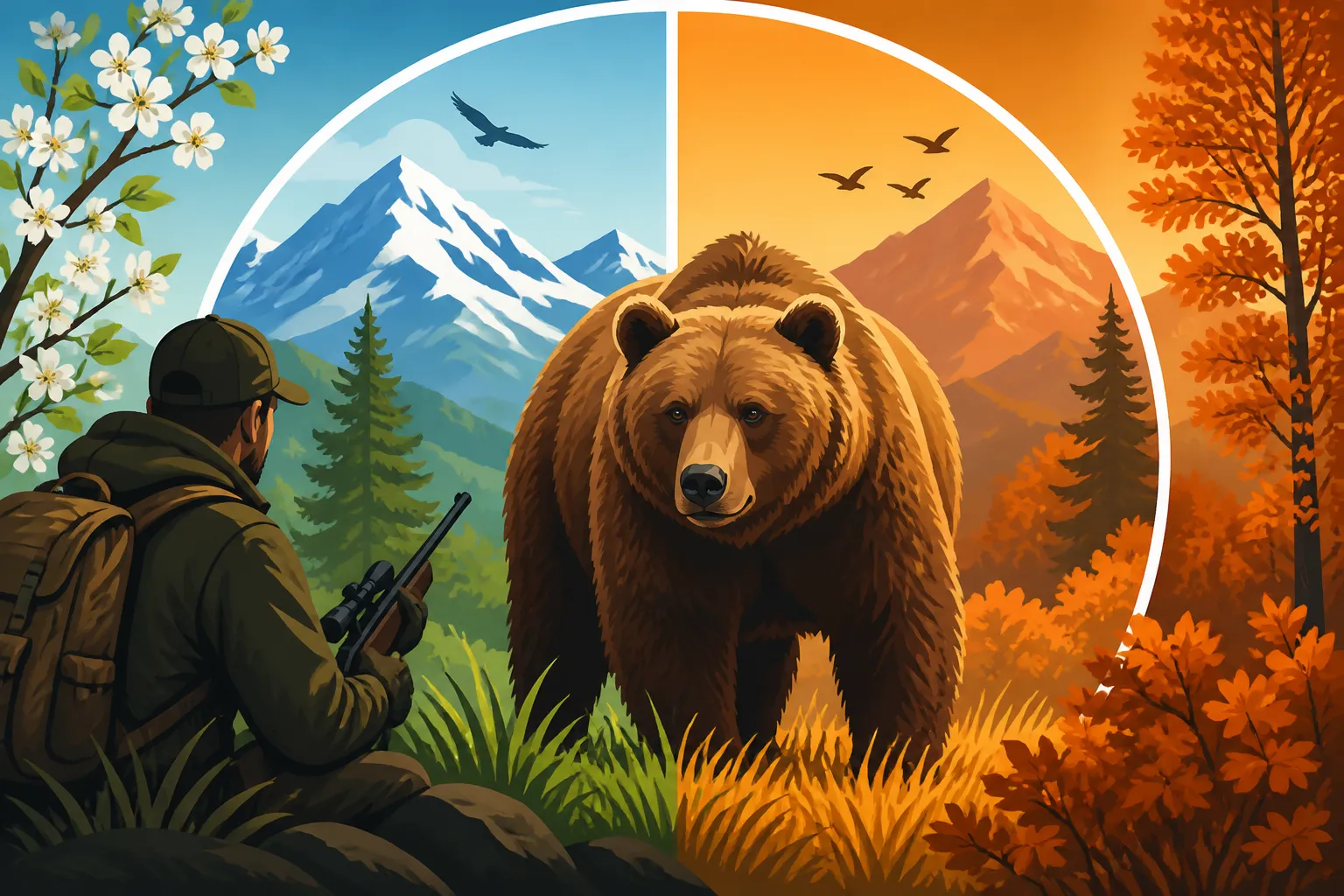
When you talk about brown bear hunting in Alaska, you're really talking about two fundamentally different experiences: spring and fall. While it's the same species, the environment, the bears' behavior, and subsequently, your hunting strategies, are worlds apart depending on the season you choose. Deciding which season is right for you means understanding these core distinctions.
The Fundamental Differences in Opportunity
Spring bear hunts, typically from April into May or early June, target bears that are just emerging from their long winter dens. These animals are often hungry, having depleted their fat reserves, and are actively seeking their first meals of the year. The landscape itself is in transition; you might be hunting in significant snowpack, looking for bears on south-facing slopes where the snow melts earliest, exposing vital new green-up, or scanning for carrion from winter kills. The light conditions are often excellent, with long daylight hours, and the white backdrop of snow can make spotting bears from a distance a bit easier. However, judging a bear's size can be tricky in spring as their fur can be shaggy and they are often lean, making them appear larger than they truly are.
Fall hunts, generally running from August through October, catch bears in a completely different phase of their annual cycle. This is the time of hyperphagia, where bears are in a desperate race against the clock to pack on as much fat as possible before winter forces them back into their dens. Their focus shifts dramatically to abundant food sources like salmon-filled rivers and streams, or berry patches carpeting the hillsides. The environment is typically green, lush, and often wet, especially in coastal areas. Spotting bears can be harder due to dense vegetation, but the concentration of bears around predictable food sources can offer unique opportunities. Hides in the fall are usually prime, thick, and plush, making it an excellent time for taxidermy-quality trophies. Bears are also at their heaviest, making accurate size judgment more feasible.
Regional Variations in Season Dates
It's crucial to understand that Alaska's brown bear seasons are not uniform across the entire state. What applies to the vast tundras of the Alaska Peninsula might be entirely different from the regulations in the interior mountain ranges or the rainforests of Southeast Alaska. This is where researching specific Game Management Units (GMUs) becomes paramount. Some GMUs, particularly those with abundant coastal brown bear populations, may offer both spring and fall hunting opportunities. These areas often coincide with major salmon runs or vast wilderness areas capable of supporting healthy bear populations, like Unit 9 on the Alaska Peninsula, famous for its large bears and multiple hunting seasons.
Conversely, many interior GMUs, where the bears are typically referred to as grizzlies (genetically the same, but smaller due to different food sources), might have shorter, often fall-only seasons, or may even be managed through limited draw permits due to lower population densities or specific management objectives. It’s not uncommon to find areas where a spring season exists solely for residents, or where the dates vary by as much as a month or more between neighboring units. Always consult the current Alaska Department of Fish and Game (ADF&G) regulations for the specific unit you plan to hunt. A powerful tool like GoHunt can be invaluable for cross-referencing these complex regulations with specific unit data and draw statistics.
Spring Brown Bear Hunting: Strategies and Considerations
Spring brown bear hunting in Alaska is a rugged pursuit, often defined by challenging weather and the specific behaviors of bears just awakening from their winter slumber. It's a test of patience and endurance, but it can yield incredible rewards for the prepared hunter.
Post-Denning Behavior and Food Sources
As the snows begin to recede, typically in April and May, brown bears start to emerge from their dens. They are, quite simply, ravenous. Their bodies have been running on stored fat for months, and their first priority is to find readily available food. This often means focusing on south-facing slopes, which catch the sun's warmth first and melt out earliest, allowing for the first flush of green vegetation. Bears will also key in on carrion—the carcasses of animals that succumbed to the harsh winter. Moose, caribou, or even smaller animals like Dall sheep that didn't make it through the deep snows become vital food sources. These areas of early green-up or concentrated carrion act as natural magnets for hungry bears.
The timing of their emergence, and thus the hunt, is heavily influenced by local conditions. While general patterns exist, the exact Brown Bear Denning Timing in Alaska can vary significantly depending on elevation, latitude, and how severe the preceding winter was. Hunters often spend hours, if not days, glassing these critical areas, looking for the tell-tale dark shape of a bear against the remaining snow or emerging vegetation. It's a game of observation, patience, and understanding the bear's immediate needs.
Typical Hunting Methods and Challenges
The predominant method for spring brown bear hunting is spot-and-stalk. This involves using high-quality optics, often a spotting scope and powerful binoculars, to methodically search vast landscapes from a vantage point, known as a glassing knob. Once a bear is spotted, the real work begins: planning and executing a careful stalk across potentially treacherous terrain. This could involve navigating steep, snow-covered hillsides, crossing swollen rivers, or moving through dense alder thickets. In some areas, particularly in the vast interior, hunters might use snow machines or even skis to access remote country in the early spring, always mindful of Alaska's strict same-day-airborne rule if flying is involved. Coastal spring hunts might involve using boats or skiffs to cruise shorelines, looking for bears foraging on beaches or digging for clams at low tide.
The challenges of a spring hunt are numerous. Weather can be highly unpredictable, ranging from sunny, warm days to blizzards, heavy rain, or biting winds, sometimes all within the same day. Gear needs to be robust, waterproof, and warm. Navigating varying snow depths, slush, and mud can be physically draining. Furthermore, accurately judging the size of a brown bear in the spring can be deceptively difficult. Their winter coats are thick and shaggy, and a bear that appears massive from a distance can sometimes shrink considerably as you get closer, especially if it's still lean from denning. It takes experience and keen observation to differentiate a truly large, mature boar from a smaller bear or a sow with cubs, which are often illegal to harvest.
Fall Brown Bear Hunting: Different Dynamics and Opportunities
If spring is about survival and emergence, fall is about abundance and preparation. Fall brown bear hunting offers a stark contrast, bringing with it different landscapes, behaviors, and an entirely new set of strategies.
The Allure of Salmon Streams and Berries
Fall brown bear hunts are intrinsically linked to the bounty of the Alaskan ecosystem, most notably the salmon runs. As salmon migrate upstream to spawn, they become a critical, calorie-rich food source that bears exploit intensely to build up fat reserves for hibernation. Rivers and streams, particularly on the coast and the Alaska Peninsula, transform into bear superhighways, with animals congregating to fish. Beyond salmon, the fall landscape offers vast fields of berries—blueberries, cranberries, crowberries—that bears will gorge on for weeks, often high up on open hillsides or in vast, sprawling valleys. These predictable food sources allow hunters to focus their efforts on specific areas where bears are known to feed heavily.
The relationship between Salmon Runs and Alaska Coastal Bear Size is undeniable. Bears in areas with strong, consistent salmon runs typically grow much larger than their interior counterparts, developing the massive body mass and large skulls that make them iconic. This focus on food sources makes fall hunts particularly exciting, as you're often hunting in areas teeming with life and activity.
Hunting Near Food Sources and Pre-Denning Habits
Hunting strategies in the fall often revolve around intercepting bears as they move to and from these rich food sources. This might mean setting up near a salmon stream, carefully glassing a berry-covered slope, or staking out a known travel corridor between feeding and bedding areas. Unlike the often wide-open landscapes of a spring hunt, fall hunting, especially in coastal areas, can involve navigating dense alder thickets, spruce forests, and thick willow patches. Visibility can be limited, and encounters can be at much closer ranges, requiring heightened awareness and preparedness. Fog, common in coastal regions, can also play a significant role, occasionally shutting down visibility for days.
The challenges of dense cover and frequent rain mean that tracking skills, knowledge of bear sign, and an intimate understanding of their movements become even more critical. Hunters need to be adept at still-hunting or carefully stalking through noisy brush. The rewards, however, are often spectacular. Bears in the fall are typically in peak condition, with thick, lush coats and immense body weight, making for an impressive trophy. Identifying a legal bull (boar) can still be challenging, but their robust autumn physique generally makes it easier to judge their maturity and size.
Navigating Regulations and Permits for Brown Bear
Hunting brown bear in Alaska isn't just about finding the animal; it's about diligently navigating a complex web of regulations, permits, and reporting requirements that are among the strictest in North America. Ignoring these rules can lead to severe penalties, so understanding them is non-negotiable.
Locking Tags and Residency Requirements
For non-residents, pursuing a brown bear in Alaska necessitates purchasing a specific "locking tag." This physical tag, once purchased, must be attached to the hide of your harvested bear immediately after the kill. The cost of an Alaska brown bear locking tag for non-residents is substantial, typically ranging from $1,000 to $1,500, making it one of the most expensive tags in the state. For a detailed breakdown, you might want to look into Alaska Big Game Locking Tags and What Each Costs. Residents, while not required to purchase a locking tag for brown bear, often need to obtain a no-cost harvest ticket for reporting purposes, depending on the GMU. It's a critical distinction to ensure you're legally compliant.
Perhaps the most significant regulation for non-residents is the guide requirement. Unless you are an Alaska resident hunting on your own, a non-resident must be accompanied by an Alaska-licensed registered guide or be hunting with a second-degree-of-kin Alaska resident who is providing assistance. This means a father, mother, son, daughter, brother, or sister who is an Alaska resident and meets specific criteria. This guide requirement adds a significant financial and logistical layer to any non-resident brown bear hunt. If you're considering a guided hunt, understanding the nuances of Hiring an Alaska Registered Guide-Outfitter is essential for a successful and ethical experience.
Draw Permits, Registration Hunts, and Reporting
Beyond the general locking tag requirement, many premier brown bear hunting areas in Alaska are managed through special permits. These fall into two main categories: draw permits and registration hunts. Draw permits are highly competitive, typically found in areas with limited access or highly sought-after trophy potential. Hunters apply during a specific window (usually November 1 to December 15) for a chance to win a permit for the following year. The odds can be incredibly low for some coveted hunts, making successful applications rare. For researching these odds and applying, resources like GoHunt's draw odds data are indispensable.
Registration hunts, on the other hand, are often managed on a quota basis. These hunts are open to all eligible hunters (residents and/or non-residents, depending on the hunt area), but once a predetermined number of bears are harvested, the season is immediately closed via emergency order. This means hunters must register for the hunt before going afield and often need to check frequently for closure announcements. Both draw and registration permits require careful study of the specific hunt conditions and deadlines, which are different from the general season rules. A good resource for understanding these distinctions is Alaska Harvest Tickets, Registration Permits and Draw Permits.
Crucially, all successful brown bear hunters are required to report their harvest to ADF&G within a very strict timeframe (often within 2-3 days of the kill). The hide and skull must also be presented to an ADF&G representative or designated authority for sealing. This involves inspection, collection of biological samples, and the application of a physical seal to the hide and skull. Failure to report and seal your bear can result in severe legal consequences, including fines and forfeiture of your trophy. These regulations are in place to ensure proper management and conservation of Alaska's brown bear populations.
Regional Differences in Alaska Brown Bear Seasons
Alaska is a land of immense ecological diversity, and nowhere is this more apparent than in its brown bear populations. The terms "brown bear" and "grizzly" are often used interchangeably, and while they refer to the same species (Ursus arctos), their habitat, diet, size, and even hunting seasons vary dramatically across the state.
Coastal Giants Versus Interior Grizzlies
The most striking regional difference is between the coastal brown bears and their interior counterparts, often called grizzlies. Genetically, they are one and the same, but the coastal bears grow to prodigious sizes, often weighing over 1,000 pounds and standing over 10 feet tall on their hind legs. This incredible growth is largely due to the abundant, protein-rich salmon runs and other marine food sources found along Alaska's coastline, particularly on the Alaska Peninsula, Kodiak, and other islands. For a deeper dive into this, check out Alaska Brown Bears on the Coast Versus Interior Grizzlies and Why Coastal Bears Outgrow Interior Grizzlies. Their seasons are often timed around salmon runs, and opportunities exist in both spring and fall. These hunts are typically logistically complex, often requiring boat or air taxi access to remote coastal areas.
Interior grizzlies, inhabiting the vast mountain ranges and tundras of inland Alaska, have a more varied diet of berries, roots, carrion, and small game, with fewer concentrated protein sources like salmon. Consequently, they are generally smaller, though still formidable animals, typically weighing between 300-600 pounds. Their hunting seasons are often shorter, sometimes only in the fall, and many hunts are managed through draw permits due to lower population densities. Access is often by air taxi to remote spike camps or by ATV in designated road systems like the Denali Highway or Taylor Highway. The hunting experience for a coastal giant or an interior grizzly is fundamentally different, from the terrain and weather to the bear's behavior and typical size.
Specific Unit Examples and Timing Considerations
Let's look at some hypothetical examples to illustrate these differences. Unit 9, encompassing much of the Alaska Peninsula, is world-renowned for its massive brown bears. Here, you'll typically find both spring (e.g., May) and fall (e.g., October) seasons available, often requiring a guide for non-residents. The timing of these seasons is meticulously set to coincide with bear emergence from dens in spring or the peak of salmon runs and berry season in the fall. The sheer vastness and remoteness of this unit, detailed in Brown Bear Country in Alaska's Unit 9, demand significant logistical planning.
Contrast this with parts of Interior Alaska, such as some subunits in Unit 20 or Unit 13. These areas are home to grizzlies, and seasons might be fall-only (e.g., September), or perhaps a highly limited draw hunt in both spring and fall. The specific dates will vary year to year based on local bear populations, food availability, and management goals. For instance, an area might have an antler-restriction moose hunt in early September, and a grizzly season might open slightly later to minimize hunter congestion or target bears that are more focused on pre-hibernation feeding. This hyper-local approach means that blanket statements about "Alaska brown bear seasons" are rarely accurate; detailed research for your chosen GMU is absolutely necessary. Utilize tools like GoHunt's GMU-specific data to pinpoint exact dates, regulations, and historical success rates.
Essential Preparations for Your Brown Bear Hunt
Regardless of whether you choose a spring or fall brown bear hunt, Alaska is not a place for the unprepared. The remote, rugged, and often unforgiving environment demands meticulous planning, physical readiness, and a deep respect for the power of these animals and the wilderness they inhabit.
Gear, Fitness, and Marksmanship
Your gear must be top-tier and absolutely reliable. Alaska weather is famously unpredictable, and you can experience all four seasons in a single day. Investing in high-quality, breathable, and truly waterproof rain gear is paramount – this is non-negotiable for comfort and safety. Layers are key, allowing you to adapt to rapidly changing temperatures. Footwear must be waterproof, sturdy, and well-broken in, suitable for endless miles of walking over uneven, wet, or snowy terrain. Given the potential for packing out hundreds of pounds of meat and hide, a robust backpack with a meat-hauling frame is essential.
Physical fitness cannot be overstated. A brown bear hunt often involves long, strenuous days of hiking, climbing, and potentially packing heavy loads over challenging terrain, far from any road or rescue. Start training well in advance, focusing on cardiovascular endurance, leg strength, and carrying weighted packs. Marksmanship is equally crucial. You must be proficient with your rifle, capable of making accurate, ethical shots under pressure, potentially at varying distances and from unconventional field positions. Your rifle choice should be adequate for large, dangerous game; Rifle Calibers for Coastal Brown Bear discusses appropriate options, typically ranging from .300 magnums up to larger calibers like .375 H&H or .338 Win Mag. Practice extensively from kneeling, sitting, and prone positions, and under simulated hunting stress.
Safety, Trophy Care, and Logistics
Bear safety is a constant concern when hunting brown bears. Always carry bear spray and know how to use it instinctively. Be prepared to deploy it, and understand that in some close-range encounters, a firearm may be necessary for defense. It's vital to know your role within your hunting party, whether you're the designated shooter or carrying the defense weapon. Detailed information on Bear Safety While Butchering a Kill in Alaska highlights critical precautions to take after a harvest.
Once a bear is down, proper trophy care is immediate and vital. The hide must be caped correctly, which means skinning out the feet, turning the ears, and splitting the lips. This is a labor-intensive process that can take hours in the field. The hide then needs to be salted thoroughly to prevent hair slippage and spoilage, especially in warmer temperatures. The skull must also be cleaned of flesh. Understanding Cape and Skull Care for a Brown Bear Hide is essential for preserving your trophy. Given the remote nature of many hunts, you might be days from refrigeration, making immediate and effective field care critical.
Finally, logistics for an Alaska brown bear hunt are a monumental undertaking. If flying in, you'll need to book air taxis well in advance, understand their weight limits, and factor in potential weather delays that can strand you in the field for days. Communication with your guide, air charter, or hunting partners about check-in plans and emergency procedures is absolutely critical. Be prepared for the unexpected; flexibility and a strong contingency plan are your best allies in the Alaskan wilderness.
| Feature | Spring Brown Bear Hunt | Fall Brown Bear Hunt |
|---|---|---|
| Typical Dates | April – May (varies significantly by unit and year) | August – October (varies significantly by unit and year) |
| Bear Behavior | Emerging from dens, hungry, seeking carrion/early green-up | Hyperphagia (intense feeding), focused on salmon/berries |
| Primary Food | Winter kills, early forage, some coastal clams | Salmon, berries, late-season vegetation |
| Hide Condition | Can be shaggy, lean; often good fur; some rub | Full, lush, thick; bears are fat; prime for taxidermy |
| Hunting Terrain | Snow-covered slopes, clear cuts, south-facing hills | Rivers, dense brush, berry patches, coastal beaches |
| Weather | Cold, snow, rain, wind; freeze/thaw cycles | Rain, fog, colder temperatures; can have early snow |
| Detection | Spotting on snow, glassing open areas | Stalking near food sources, listening for splashes/feeding |
| Logistical Access | Can involve snow machines, skis, aircraft (post-denning) | Boats (jet boats, skiffs), aircraft, ATV where permitted |
| Challenges | Judging size, variable weather, navigating snow | Dense cover, fog, identifying legal animals, bear encounters |
Disclaimer
The information provided in this guide is for general informational purposes only and does not constitute legal advice. Alaska hunting regulations are subject to change annually and can vary significantly by Game Management Unit, species, and residency status. It is the sole responsibility of the hunter to review and comply with all current Alaska Department of Fish and Game regulations, emergency orders, and federal regulations before planning or undertaking any hunting activity. Always consult the official ADF&G regulations booklet and any relevant federal agencies for the most accurate and up-to-date information.