Working a Kill Site in Grizzly Country
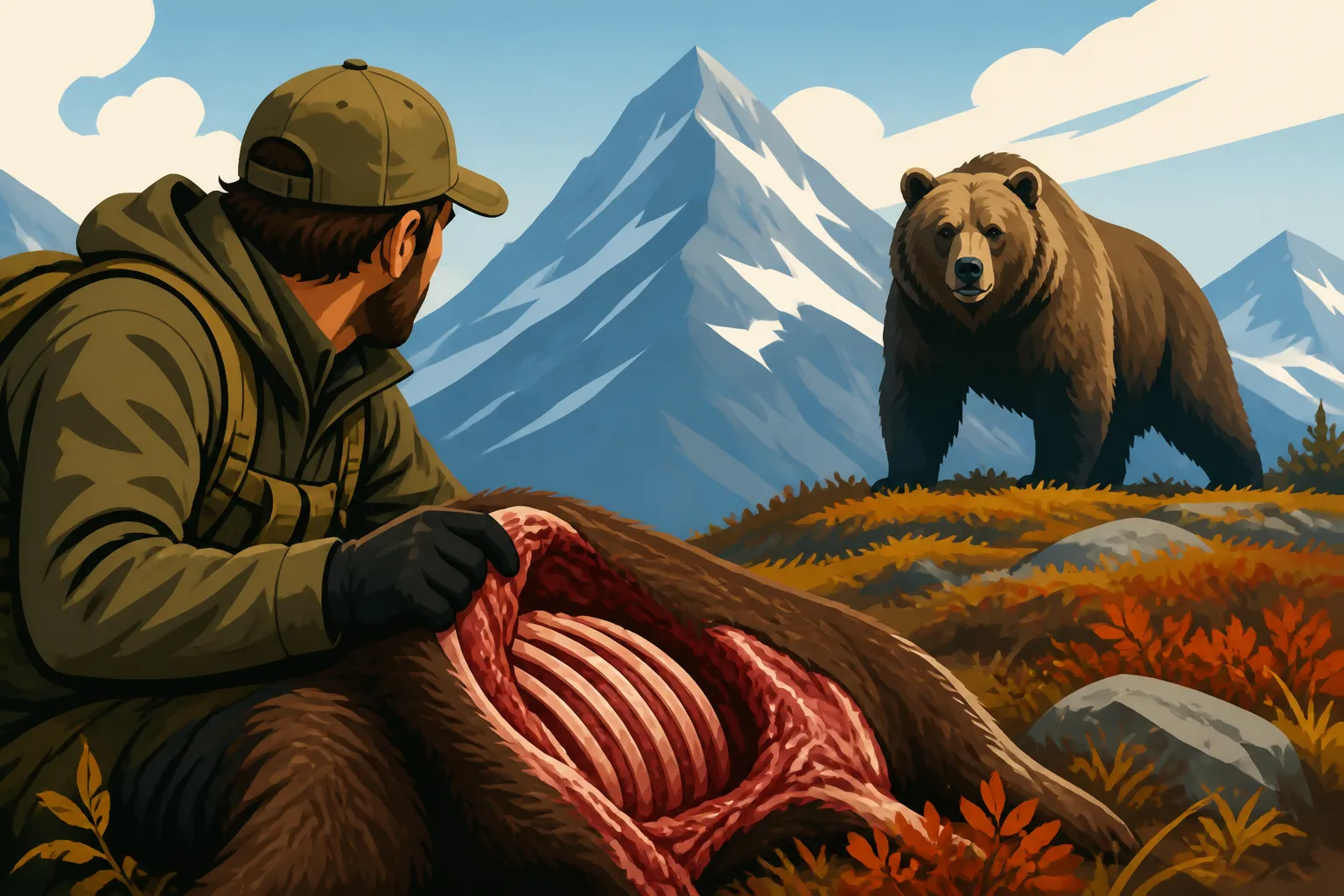
You've just put down an animal in the vast, unforgiving beauty of Alaska, and that surge of adrenaline and accomplishment quickly shifts to a different kind of intensity. Now, the real work begins: breaking down your game in a place where you're not at the top of the food chain. Working a kill site in grizzly country isn't just about butchering; it's a high-stakes chess match with one of the most powerful predators on the continent, where vigilance, swift action, and smart preparation are your only real defense. This isn't just a guide; it's a lifeline for understanding how to get your meat out safely while sharing the wild with Alaska's largest bears.
Assessing the Immediate Environment After the Kill
The moment your game hits the dirt, your focus must instantly broaden from the animal to the entire landscape around you. You've just created a beacon, a scent signature that can travel for miles on the wind, announcing a fresh meal to any predator within range. This initial assessment isn't a luxury; it's the foundation of your safety plan.
Initial Scan and Bear Sign Identification
Before you even think about approaching your downed game, take a deep breath and conduct a thorough 360-degree scan of your surroundings. This isn't just a casual glance; it's an active, intentional search for any indicators that a bear might already be in the vicinity, or heading your way. Listen intently – any snapping twigs, rustling brush, or distant huffing could mean trouble. Look for fresh tracks in soft earth, disturbed vegetation, or overturned rocks that suggest a bear has recently passed through. Keep an eye out for fresh bear scat; its presence can indicate recent activity and potentially a nearby den or feeding area.
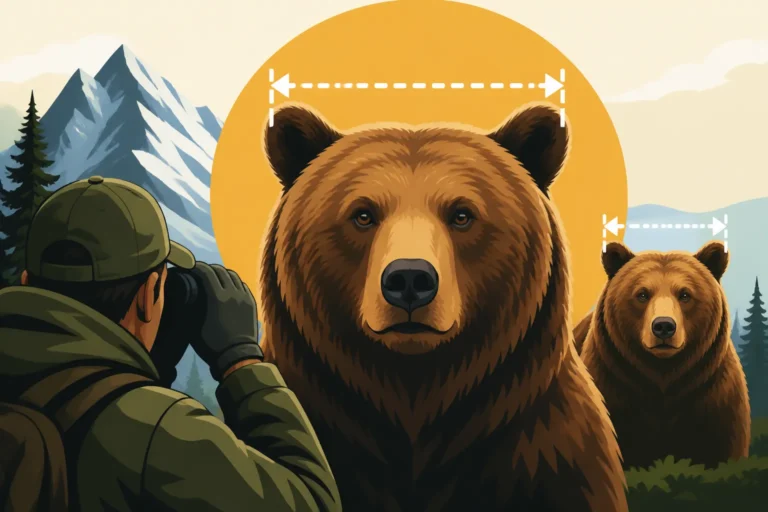
It's crucial to distinguish between a curious bear and one that might be more assertive or habituated. A bear simply moving through the area might just be passing by, but one that actively approaches the sound of the shot or the scent of blood demands immediate, heightened awareness. If you spot a bear before it spots you, it gives you a precious moment to assess its behavior and plan your next move. Often, a bear's ears are a good indicator of its mood: laid back can mean aggression, perked up can mean curiosity. Tools like a good pair of binoculars, which you might have used for spotting game in the first place, can be invaluable for this initial scan, especially in dense brush or broken terrain. Outfitters often advise clients to keep their optics at the ready even after the shot, just for this reason.
Establishing a Perimeter and Lookout System
Whether you're hunting solo or with a partner, establishing a clear perimeter and a vigilant lookout system is non-negotiable. If you have a partner, one person should always be on "bear watch" while the other begins the initial field dressing. This isn't a casual duty; the lookout needs to be constantly scanning, listening, and assessing wind direction. Bears have an incredible sense of smell, and the wind will carry the scent of the kill far downwind, attracting animals from considerable distances. Position your lookout in a spot that offers the best possible view of all approach vectors, especially downwind, and ensures a clear line of sight.
Communication is key. Agree on clear, concise signals for "bear sighted," "bear approaching," or "bear is too close." If you're hunting alone, this becomes even more critical. You'll need to periodically stop working, stand up, and perform your own diligent 360-degree scan, looking and listening. This might feel like wasted time when you're racing against the clock, but trust me, it's an investment in your safety. Consider the terrain: thick willows, dense timber, or steep draws can hide an approaching bear until it's uncomfortably close. Try to work in areas with open visibility if possible, or at least be intensely aware of those blind spots. When planning a hunt, some hunters, like those who might plan routes using tools from GoHunt, specifically look for open areas for this very reason – not just for spotting game, but for post-kill safety.
The Butchering Process with Bear Awareness
Once you've secured your perimeter, the clock truly starts ticking. Every minute you spend at the kill site increases the risk of a bear encounter. Efficiency, speed, and smart management of the carcass are paramount.
Efficient Quartering Techniques to Minimize Time
Knowing your butchering method cold is vital. For most big game in Alaska, especially moose or caribou, the "gutless method" is often preferred in bear country. This technique allows you to remove all the major muscle groups and backstraps without opening the body cavity and exposing the gut pile, which is an enormous attractant. It's faster, cleaner, and significantly reduces the amount of time you spend directly at the most pungent part of the carcass. Have all your tools ready: extremely sharp knives, a sharpening steel, game bags, and perhaps a small saw. Dull knives not only make the job harder and slower, but they also increase the risk of injury, which is the last thing you need in a remote, bear-heavy area.
Work systematically and with purpose. Don't dally. If you're new to this, practice at home on something like a deer or even a hog, just to get the mechanics down. For a comprehensive guide on large animals, you might find valuable insights in a post like Quartering a Bull Moose Alone in the Field. Remember, the goal is to get the meat off the bone and into breathable game bags as quickly as possible. These specialized bags are crucial; they protect the meat from flies, dirt, and debris while allowing it to cool. This cooling process is essential for meat quality, especially when you're also worried about the warmth of a September day, as discussed in Hanging Meat in Warm September Weather.
Managing Scraps and Blood for Reduced Attraction
After the meat is removed, you're left with the carcass, hide, and gut pile – a potent combination for attracting bears. Your strategy here is to minimize the allure. If possible, consolidate the gut pile and any remaining scraps of meat or fat into one tight package, and move it as far away from your intended meat cache and travel route as practically possible. Some hunters will drag it into a dense thicket or off a cliff face, if terrain allows, to make it less accessible and visible.
Avoid scattering blood and small pieces of meat indiscriminately around the kill site. This only broadens the "scent cone" and makes it harder to manage. If you've used the gutless method, the blood spillage will be less, but still present. Use dirt or snow to cover significant blood pools if you can. The less obvious the kill site looks and smells, the better. While it might seem counterintuitive to leave the hide, sometimes it's better to get the edible meat packed out first. However, if you're taking the hide for a trophy, knowing proper care, like what's covered in Cape and Skull Care for a Brown Bear Hide, is essential to prevent spoilage and maintain its value. Just remember, the hide also presents a significant draw for bears, so move it with the same urgency as the meat.
Packing Meat Away Quickly
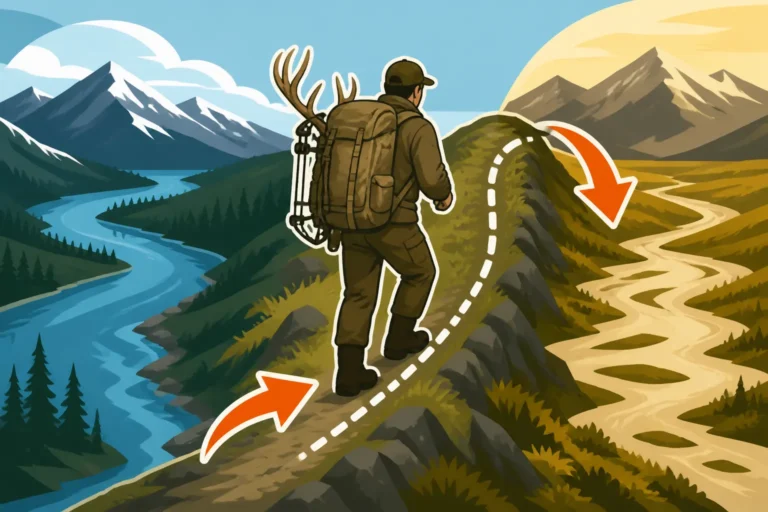
Once quartered and bagged, the meat needs to be moved from the immediate kill site to a more secure location as swiftly as possible. This often means making multiple trips back and forth, which can be exhausting, especially when dealing with Backpack Hunting in Alaska: Gear Weight and Meat Loads. Every trip back to the kill site increases exposure. Ideally, establish a temporary staging area for your meat, a short distance away but still within sight, where you can consolidate loads before making the final carry to a more permanent cache.
When carrying meat, don't just put your head down and slog. Maintain awareness. This is where your defensive tools, like a rifle or bear spray, must be instantly accessible. Your movements might be slower and more cumbersome with heavy packs, making you more vulnerable. If you're with a partner, try to move together if possible, or maintain constant vocal communication. Remember, active defense – making noise, being seen, carrying a deterrent – is often more effective than passive defense. Getting the meat cooled quickly is paramount, and game bags that breathe, even in coastal rain as mentioned in Game Bags That Breathe in Coastal Rain, are critical for this.
Setting Up a Secure Meat Cache
You've done the hard work of butchering, now the critical step of securing your harvest begins. A poorly placed or inadequate meat cache is an open invitation for trouble.
Choosing a Safe Location for Your Meat
The location of your meat cache is almost as important as the butchering itself. You want it far enough away from your camp (at least a quarter-mile, preferably more) that a bear investigating the meat won't stumble upon your sleeping area, but close enough to be retrieved efficiently. Look for natural advantages:
- Elevation: High ground is generally better than low ground.
- Visibility: Choose a spot with good visibility around the cache, allowing you to spot an approaching bear from a distance. Avoid dense brush.
- Away from Travel Corridors: Steer clear of obvious game trails, riverbanks, or natural drainages where animals, including bears, frequently travel.
- Downwind from Camp: The scent from your cache will still be potent; ensure prevailing winds carry that scent away from your camp, not towards it.
- Natural Barriers: Utilize natural features like rock faces, large fallen timber, or dense stands of spruce that might make it harder for a bear to access the meat or approach undetected.
Think like a bear: where would they look for an easy meal? Then, choose the opposite. When using mapping tools like those from GoHunt, you can often identify these types of terrain features and plan potential cache sites well in advance, even marking them on your offline maps.
Bear-Proofing Your Cache
Once you've picked your spot, it's time to make your cache as secure as possible. The primary method is to get the meat off the ground and suspended.
- Hanging Meat: The ideal scenario is to hang your game bags from a sturdy tree limb that is at least 10-12 feet off the ground and 4-6 feet away from the tree trunk. This makes it difficult for a bear to reach. You'll need rope and a method to hoist the heavy bags.
- Bear Fences: For extended stays or if suitable trees are scarce, an electric bear fence is an incredibly effective deterrent. A detailed setup guide can be found in Bear Fence Setup at a Meat Cache. These portable fences use small battery-powered chargers to deliver a memorable, but non-lethal, shock to any curious bear. They're a significant investment in terms of weight and cost, but many serious Alaska hunters consider them essential gear, especially for longer trips in high-density bear areas.
- Cover and Camouflage: While scent is the primary draw, visual cues can also attract bears. Cover your meat bags with branches or a tarp (securely tied down) to keep them out of direct sunlight and less visible to aerial predators like ravens and eagles, whose activity can also signal a find to bears on the ground.
- Regular Checks (with Caution): Only check your cache when absolutely necessary, and always approach with extreme caution, making noise as you go. Never just walk right up to it without first scanning the area.
Personal Safety and Defensive Strategies
Even with the best planning and execution, bear encounters can happen. Your personal preparedness and ability to react under pressure are your final lines of defense.
Carrying a Sidearm and Bear Spray: Pros and Cons
The debate over the best personal defense in bear country is long and often passionate. Most veteran Alaska hunters agree that having both a powerful sidearm and bear spray, and knowing how to use them, is the most robust strategy.
- Bear Spray: This is generally considered the first line of defense. It's non-lethal, highly effective at deterring aggressive bears, and has a wider "shot pattern" than a bullet, making it easier to deploy accurately under stress. It's often recommended for bears exhibiting defensive or curious behavior. Always carry it on your chest or hip, where it's immediately accessible – not buried in your pack.
- Sidearm: A large-caliber revolver or semi-auto (like a .44 Magnum, 10mm, or .454 Casull) is your last resort, intended for situations where a bear is actively attacking or threatening immediate harm. It requires precise aim under extreme duress. While many experienced hunters choose a specific Rifle Choice for Alaska Brown Bear Country for the kill, having a reliable sidearm accessible while doing the dirty work is critical. The effectiveness hinges entirely on your ability to deploy it and hit a vital area in a rapidly unfolding, close-range encounter. For a deeper dive into this comparison, check out Bear Spray Versus Rifle at Close Range.
- Training: Regardless of your choice, training is paramount. Practice deploying your bear spray quickly. Practice drawing and firing your sidearm safely and accurately. You need muscle memory, not fumbling. Many hunters carry a sidearm around a kill site, as detailed in Carrying a Sidearm Around a Kill Site, making accessibility a top priority.
Group Dynamics and Communication
If you're fortunate enough to hunt with a partner or a small group, leverage that advantage.
- Stay Together: In bear country, especially at a kill site, the strength is in numbers. Dispersing too widely makes individual hunters vulnerable.
- Clear Roles: Designate a lookout, a primary butcher, and perhaps a second person to assist and keep an eye on things. Rotate these roles to prevent fatigue and maintain vigilance.
- Constant Communication: Talk to each other. Call out what you're doing, what you see, and any unusual sounds. Your voices act as a deterrent, letting bears know humans are present. This constant chatter is a lot more effective than silence.
- Signal Devices: Even in a group, having reliable signal devices like a satellite messenger (Garmin InReach, Zoleo) is smart. Not only for emergencies, but also for checking in with your base camp or family, an important aspect of safety planning often covered in discussions about Signal Devices and Check-In Plans for Solo Alaska Hunts.
Contingency Planning for Bear Encounters
Hope for the best, prepare for the worst. Have a plan for different bear scenarios:
- Curious Bear: Most bears are just curious. Make yourself look big, make noise, and slowly back away, giving the bear space. Do not run. Talk calmly but firmly.
- Defensive Bear (Bluff Charge): A sow with cubs or a bear startled at close range might bluff charge. They often huff, stomp, and charge, stopping short. Stand your ground, continue to make noise, and have your deterrent ready. Often, this is the time for bear spray.
- Predatory or Aggressive Attack: This is rare, but it happens. If a bear is stalking you, approaching silently, or truly attacking (not a bluff), this is when you may need to use lethal force with a firearm. Fight back with everything you have.
The bottom line is knowing when to stand your ground, when to spray, and when to potentially use lethal force. These decisions are made in split seconds under extreme stress, which is why practice, training, and a deep understanding of bear behavior are invaluable. When you're out there, remember the vastness and the true wildness of Alaska. It's a place of incredible bounty, but it demands your utmost respect and preparation.
| Defensive Strategy | Primary Use Case | Pros | Cons | Training Required |
|---|---|---|---|---|
| Bear Spray | Defensive, curious bears | Non-lethal, wide spray pattern, very effective | Limited range, wind-dependent, potential self-contamination | Quick draw & aim |
| Sidearm (large caliber) | Active attack, predatory bears | Lethal force, effective at close range | Requires extreme accuracy, high stress, significant recoil | Extensive shooting & draw practice |
| Making Noise | Deterrence, showing presence | Simple, free, works well for curious bears | Not effective for aggressive or habituated bears | Consistent vocalization |
| Group Presence | General safety, intimidation | Makes you appear larger, shared vigilance | Still requires individual preparedness | Clear communication & roles |
Disclaimer
The information provided in this guide is for informational purposes only and is not a substitute for professional training, official safety guidelines, or personal experience. Hunting in Alaska, especially in bear country, carries inherent risks. Always consult current Alaska Department of Fish and Game regulations, undertake proper bear safety training, and ensure you are legally licensed and prepared for your hunt. Your safety is your responsibility.