Carrying a Sidearm Around a Kill Site
There's nothing quite like the immense satisfaction of finally getting an animal down in the Alaskan backcountry. All the planning, the sweat, the struggle – it culminates in that moment. But let's be honest, the work isn't over then, and often, the stress ramps up even higher. You've just laid out a dinner bell for every predator in the area, and suddenly, you're not just a hunter; you're a potential meal. Figuring out how to safely manage a kill site, especially when alone or in small groups, is paramount, and for many, that means having a reliable sidearm accessible. This guide will walk you through the practical considerations of carrying a sidearm to protect yourself and your hard-earned harvest when you're working a kill site in Alaska's wild.
The Inevitable Allure of a Fresh Carcass to Bears
You've just dropped a moose, a caribou, or a deer, and the smell of fresh blood, guts, and meat is permeating the air. In Alaska, that scent travels far and wide, and it's practically an open invitation for opportunistic scavengers, especially bears. Whether it's a coastal brown bear or an interior grizzly, they are incredibly attuned to these signals, and they aren't shy about investigating. This is why having a plan for Bear Safety While Butchering a Kill in Alaska This isn't just a hypothetical fear; it's a very real and present danger that hunters face every season.
The Dynamics of Bear Encounters at Kill Sites
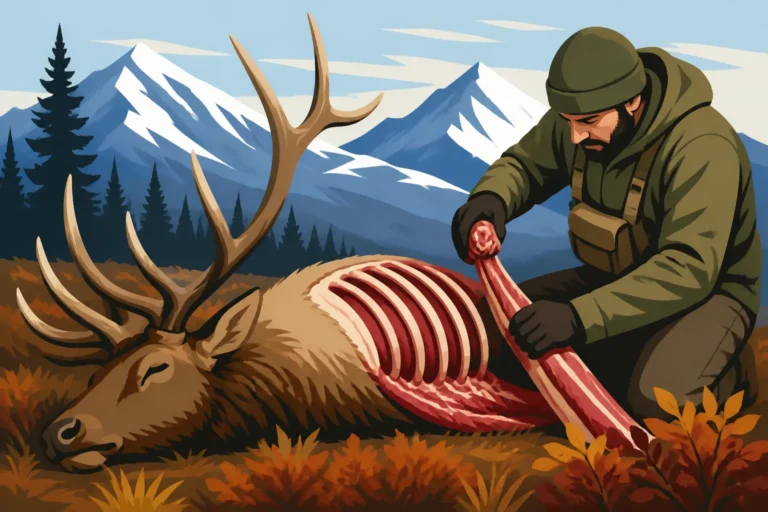
When a bear shows up at your kill site, it's usually not a casual stroll-by. They are drawn by a powerful instinct for an easy meal, and they can often appear surprisingly quickly. Many hunters report bears arriving within minutes or hours of a kill, especially in areas with high bear densities. Imagine you're knee-deep in gutting a bull moose, your hands covered in blood, your focus completely on the task at hand, and suddenly, you hear a twig snap behind you, or worse, see a large shadow just at the edge of the alders. That immediate jolt of adrenaline and fear is what every Alaska hunter has to prepare for.
What often complicates these encounters is the bear's perception of "ownership." They view the carcass as a valuable resource, and they may already be working it or eyeing it from a distance before you even arrive. When you, the hunter, show up and start butchering, you're essentially competing for their food, in their territory. This can lead to defensive aggression, making these encounters far more dangerous than a simple trailside sighting. You're not just seeing a bear; you're encountering a bear with a high-value food source, which drastically changes its behavior and threat level.
Close Quarters and Surprise Encounters
Unlike spotting a bear across a vast tundra valley, encounters at a kill site are often at uncomfortably close range. You might be bent over, working on an animal, your vision obscured by brush or the animal itself, and a bear could approach from downwind without you knowing until it's very close. The sheer size and speed of a charging bear are truly terrifying, and you have mere seconds to react. Your rifle might be leaned against a tree twenty feet away, or your bear spray might be buried in your pack.
The unpredictable nature of these close-quarters scenarios is what truly emphasizes the need for an immediately accessible personal defense tool. You might be quartering a massive bull moose, trying to manage Quartering a Bull Moose Alone in the Field, when a bear appears. Your long gun might be out of reach or cumbersome to deploy in a sudden, violent confrontation. This is where a sidearm, carried on your person, can provide a critical layer of immediate self-defense, giving you a chance to deter an attack or, in a worst-case scenario, defend your life.
Psychological Confidence and Deterrence
Beyond the immediate physical defense, simply carrying a sidearm can have a significant psychological impact. Knowing you have a powerful, readily accessible tool can instill a sense of confidence that allows you to focus more effectively on the demanding work of game retrieval. This isn't to say it eliminates fear, but it certainly helps manage the intense anxiety that comes with working in prime predator country. This mental edge can be crucial for clear thinking and effective action if an encounter occurs.
Furthermore, a visible sidearm, combined with a confident demeanor (even if it's feigned), might act as a subtle deterrent. Bears are incredibly smart and often gauge the perceived threat level. While it's certainly not a guarantee, presenting yourself as a prepared, confident individual, combined with verbal commands and assertive body language, can sometimes be enough to encourage a bear to give you a wider berth. Many seasoned Alaska hunters rely on this dual benefit of a sidearm – both as a physical defense tool and as a psychological boost, especially when in situations like Working a Kill Site in Grizzly Country.
Choosing the Right Sidearm for Alaska Bear Country
Deciding which sidearm to carry for bear protection in Alaska is a topic of endless debate among hunters. There's no single "perfect" answer, as personal preference, recoil tolerance, and the specific species you're most concerned about all play a role. However, there are definitely common characteristics and calibers that stand out as highly effective for bear defense. This isn't about plinking at the range; it's about stopping a large, powerful animal that means you harm.
Caliber Considerations for Large Game Animals
When it comes to bear defense in Alaska, bigger is generally better for calibers. We're talking about stopping power and penetration against thick hide, bone, and muscle. While a 9mm might be fine for two-legged threats, it simply lacks the energy to reliably deter an angry brown bear. The most commonly recommended and effective calibers for bear defense include:
- .44 Magnum: Often considered the minimum effective caliber for brown bear defense. With heavy, hard-cast bullets, it offers a good balance of power and manageable recoil for many shooters. Brands like Hornady and Buffalo Bore offer excellent loads designed for deep penetration.
- .454 Casull: A significant step up from the .44 Magnum, the .454 Casull delivers substantially more energy and penetration. It's a powerhouse, but with that comes considerable recoil, making accurate follow-up shots more challenging without dedicated practice.
- 10mm Auto: This semi-automatic cartridge has gained popularity for bear defense, especially with stout, heavy-for-caliber loads (e.g., 200-220 grain hard cast). It offers higher capacity than most revolvers and quicker reloads. While not as powerful as the .44 Mag or .454 Casull, its rapid follow-up shot potential can be a game-changer if you can place your shots accurately under duress.
- .500 S&W Magnum / .460 S&W Magnum: These are the big guns, offering incredible power and penetration, truly at the top end of handgun ballistics. They are highly effective at stopping large bears, but their immense recoil and muzzle blast make them very difficult to shoot accurately under pressure, and they are not for the faint of heart or inexperienced shooter.
Many hunters will meticulously research these options, perhaps even consulting online resources like GoHunt or local gun stores in Anchorage or Fairbanks to compare ballistics and available ammunition. The key is to choose a caliber you can actually shoot proficiently and rapidly when your life depends on it.
Revolvers Versus Semi-Automatics
The classic choice for bear country has long been the revolver. Their simplicity, rugged reliability, and ability to fire high-pressure, hard-cast loads make them a favorite. Revolvers like the Ruger Super Redhawk or Smith & Wesson 629 are mainstays. They are less prone to mechanical failures in harsh conditions (mud, cold, grit) and can fire even if pressed directly against a target, which can be critical in a bear attack. Their main downsides are limited capacity (usually 5-6 rounds) and slower reloads.
Semi-automatic handguns have seen a rise in popularity for bear defense, primarily due to the 10mm Auto cartridge. Brands like Glock (G20, G40) and Springfield Armory offer reliable 10mm platforms with higher capacities (15+ rounds) and faster reloads. The ability to quickly get multiple rounds on target is a major advantage. However, semi-autos can be more susceptible to malfunctions from grit, cold, or improper grip, and they require a clean, firm platform to cycle reliably. Some also argue that their hollow-point factory loads might not offer the same deep penetration as hard-cast revolver bullets unless specific heavy, hard-cast 10mm loads are chosen. Ultimately, the best choice often comes down to individual familiarity and confidence with either platform, and a comprehensive understanding of each firearm's limitations.
Here's a quick comparison of common sidearm choices for bear defense:
| Caliber | Typical Handgun Type | Pros | Cons | Primary Use Case |
|---|---|---|---|---|
| .44 Magnum | Revolver | Good power, widespread availability | Moderate to heavy recoil, 6-round capacity | Versatile, common bear defense |
| .454 Casull | Revolver | Excellent stopping power, deep penetration | Heavy recoil, challenging for follow-ups | Large bear defense, experienced shooters |
| 10mm Auto | Semi-auto | High capacity, quick follow-ups, less recoil | Less power than magnums, can jam if fouled | General bear defense, capacity preferred |
| _._500 S&W | Revolver | Ultimate power and penetration | Extreme recoil, very difficult to master | Absolute last resort, highly specialized |
Ammunition Selection and Penetration
Once you've chosen a caliber, the right ammunition is absolutely crucial. For bear defense, you want hard-cast, non-expanding bullets. Forget hollow points or soft points, which are designed for expansion on thin-skinned game. A bear's thick hide, heavy bone structure, and dense musculature require a bullet that will penetrate deeply and reliably to reach vital organs or break down structural integrity.
Look for bullets specifically designed for "bear defense" or "dangerous game." These are typically very hard, heavy lead alloy bullets (often with a gas check) that maintain their shape and drive straight through tough obstacles. Good examples include Buffalo Bore, Garrett Cartridges, and some offerings from Hornady. When you're making a choice for a Rifle Choice for Alaska Brown Bear Country or a sidearm, penetration is paramount. A bullet that deforms or fragments on a shoulder blade won't do you any good in a charge. It's an investment, but your life is worth it.
Holster Considerations and Carry Methods
Having the most powerful sidearm in the world is useless if you can't access it quickly and reliably when a bear is on you. This is why holster selection and carry method are just as important as the firearm itself. You need a setup that is secure, protects your weapon from the harsh Alaskan elements, and allows for an immediate draw under immense pressure.
Secure Retention and Quick Access
The primary function of a bear defense holster is to hold your handgun securely while allowing for a fast, intuitive draw. You'll be hiking, climbing, bending, and possibly falling, often with heavy packs. You absolutely do not want your sidearm to fall out. Look for holsters with active retention systems, such as thumb breaks or friction locks, that positively secure the firearm but can be disengaged quickly with a natural drawing motion. Passive retention (just friction) might be okay for concealed carry in urban environments, but it's often insufficient for the dynamic movements of backcountry hunting.
The draw stroke should be smooth and unobstructed. Practice drawing with the holster you choose, both unencumbered and while wearing your full hunting pack and layers. Can you access it quickly? Does your jacket or pack strap get in the way? These are critical questions to answer before you're faced with a charging bear.
Chest, Hip, and Backpack Holsters
Different carry methods offer different advantages, and the "best" choice often depends on your primary hunting style and gear.
- Chest Holsters: These are arguably the most popular choice for bear country in Alaska, and for good reason. They keep the handgun high and centered on your chest, making it easily accessible with either hand, even when wearing a large backpack with a hip belt. This position also keeps it out of the way of your rifle sling and allows for a quick draw while walking or kneeling. Brands like Hill People Gear, Kenai Chest Holsters, and Alaska Guide Creations are renowned for their rugged and comfortable chest rig designs. This is an excellent choice for when you're carrying substantial loads, perhaps after a successful hunt where Backpack Hunting in Alaska: Gear Weight and Meat Loads is a real concern, and your hands need to be free for other tasks.
- Hip Holsters (Strong Side or Drop Leg): While traditional, a strong-side hip holster can be problematic when wearing a backpack with a padded hip belt, as the belt can block access to the handgun. A drop-leg holster can mitigate this, dropping the holster below the hip belt, but they can be cumbersome for long hikes and can snag on brush. They are generally less favored for serious backcountry bear defense due to potential access issues and discomfort.
- Backpack Holsters: Some specialized backpacks have integrated holsters or PALS webbing where a modular holster can be attached. While this can work, ensure the handgun is still quickly accessible without having to remove your pack. Accessing a sidearm from a pack-mounted holster might not be as fast as a chest rig in an emergency.
Consider your entire system – your pack, your rifle, your layers – and how they interact with your chosen holster. The ultimate goal is instant, unencumbered access.
Protecting Your Sidearm from the Elements
Alaska is notoriously tough on gear. Rain, snow, mud, and dust are constant companions. Your sidearm needs protection to ensure it functions when you need it most. Many quality chest holsters come with integrated flaps or covers that protect the firearm from precipitation and debris. If your chosen holster doesn't, consider adding a heavy-duty gun cover or ensuring your outer layers provide sufficient protection.
Corrosion is another concern. Even stainless steel can rust in persistent damp conditions. Regularly clean and oil your sidearm, especially after being exposed to wet weather. Carrying a small cleaning kit with a bore snake and some oil can be a lifesaver for maintaining reliability in the field. After all the effort to secure a Cape Care for a Life-Size Bear Mount or quarters for the freezer, the last thing you want is a fouled firearm.
Training and Mindset for Sidearm Use
A powerful sidearm and a good holster are only tools. Without proper training and the right mindset, they can offer a false sense of security. In a bear encounter, especially a charge, seconds matter, and your actions must be instinctive and effective.
Practice Scenarios for Close-Range Encounters
The reality of a bear charge is that it happens extremely fast, often within feet. You won't have time to aim carefully, take a deep breath, or even think extensively. Your training must simulate these conditions. Practice drawing and firing quickly from your chosen carry position at close-range targets (e.g., 5-10 yards). Focus on getting multiple, accurate hits on a vital zone quickly.
Consider using airsoft or simulator guns to practice force-on-force scenarios with a partner, simulating a charging bear. This can help you refine your draw, target acquisition, and even learn to move off the line of attack while drawing. Remember, the goal isn't just to make noise; it's to deliver debilitating shots to stop a potentially lethal threat. This is a very different skill set than target shooting at a static range.
The Importance of Immediate Action Drills
In the heat of a bear encounter, malfunctions can happen. A stovepipe, a failure to feed, or a light strike could mean the difference between life and death. You must be able to clear these malfunctions instantly, without looking, purely by feel. Practice immediate action drills (tap, rack, bang for semi-autos; simply pulling the trigger again or rotating the cylinder for revolvers if it's a light strike) until they are second nature.
This level of proficiency comes only through repetition. Regularly dry fire your weapon at home, focusing on your draw and trigger press. Then, when you get to the range, integrate live-fire drills that mimic the stress and speed of a real encounter. Don't just punch paper slowly; practice drawing and firing two-round bursts as fast as you can accurately. This builds muscle memory and confidence in your equipment and your ability to run it under stress.
Mental Preparedness and Situational Awareness
No amount of gear or training can completely remove the terror of a bear encounter, but mental preparedness can help you react effectively. Understand that a sidearm is a last resort. Your primary defense should always be avoidance, then deterrents like loud noises, aggressive posture, and especially bear spray. Many hunters find themselves in a situation where they're weighing their options for Bear Spray Versus Rifle at Close Range, and understanding when to transition to a firearm is critical.
At a kill site, maintain constant situational awareness. Periodically scan your surroundings, especially downwind. If you're with a partner, take turns standing guard while the other works. Make noise, talk loudly, or even use a small, portable radio to play music to announce your presence. This often gives bears a chance to avoid you entirely. Before you head out, use resources like GoHunt to research bear densities in your intended hunting area. The more informed you are, the better equipped you'll be to make smart decisions in the field. Having a solid plan and staying vigilant can prevent a close call from escalating into a dangerous confrontation.
Disclaimer
Hunting in Alaska carries inherent risks, including encounters with dangerous wildlife. This article provides general information and should not be considered a substitute for professional training, official regulations, or personal judgment. Always prioritize safety, understand and follow all Alaska Department of Fish and Game regulations, and obtain proper instruction from qualified professionals before attempting to use any firearm for self-defense.