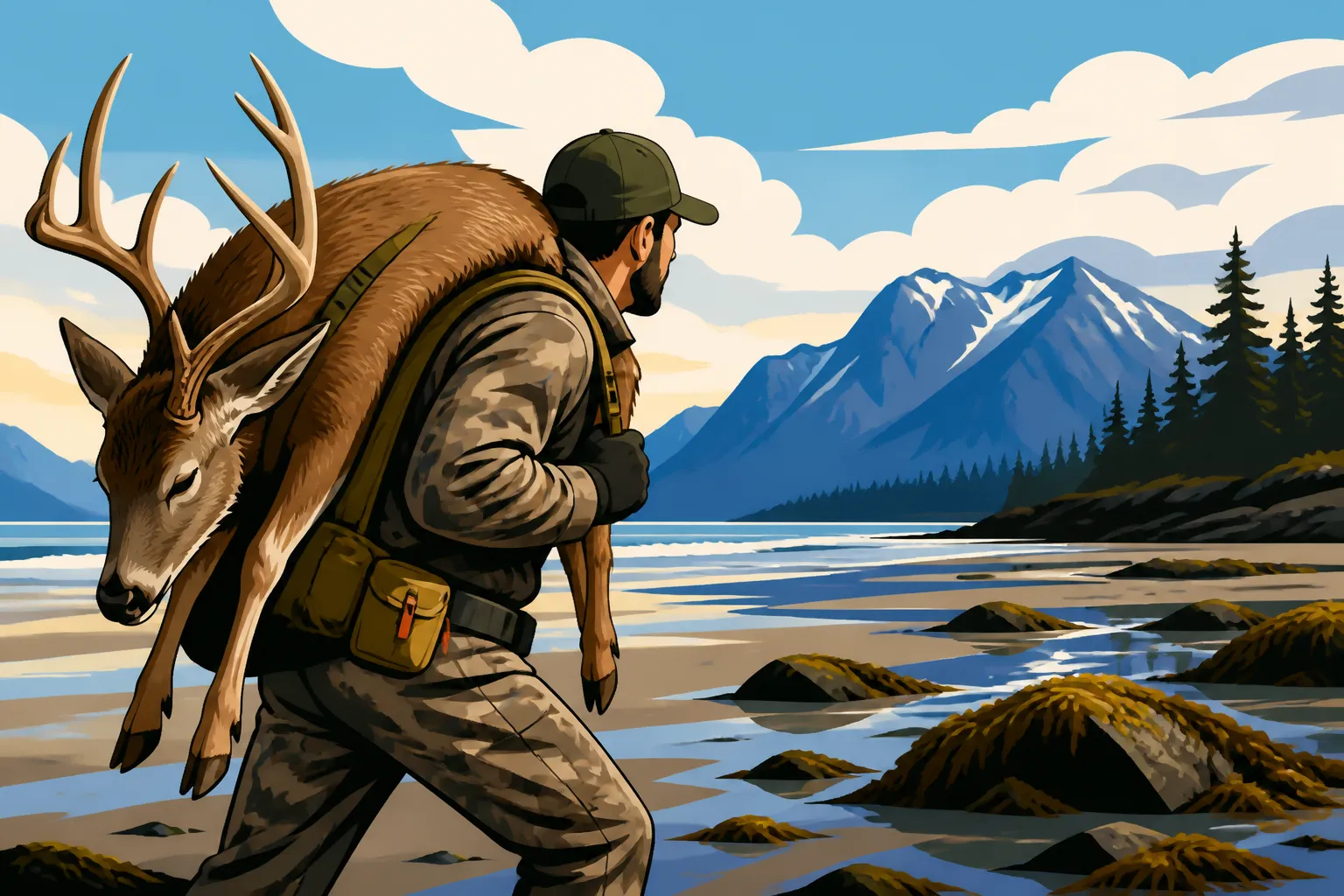
Packing a Deer Off a Beach at Low Tide
There’s a unique thrill to harvesting a Sitka blacktail deer on one of Alaska’s many coastal beaches, the salty air and dramatic scenery creating an unforgettable experience. However, that triumph can quickly turn to a frantic scramble when you realize the tide is steadily creeping in, threatening to claim your hard-earned venison. This guide is all about tackling that very real and stressful challenge, giving you the practical strategies and gear advice needed to successfully pack your deer off the beach before the ocean reclaims its territory.
The Relentless March of Alaska's Coastal Tides
Hunting the coastal fringes of Alaska for Sitka blacktail deer often means operating on the ocean’s schedule, and nowhere is this more apparent than when you’ve got a deer down on a beach. The tide here isn’t just a gentle ebb and flow; it’s a powerful, often dramatic shift that can completely change the landscape in a matter of hours. Misjudging the tides can turn a successful hunt into a desperate race against time, or worse, lead to lost meat and gear.
Coastal Alaska, particularly in the Southeast and Southcentral regions, is known for its significant tidal swings. Places like Cook Inlet can see differences of over 30 feet between high and low tide, and even in areas with smaller ranges, the speed at which the water comes in can be astonishing. Imagine quartering a deer near what appears to be a safe, dry spot, only to look up thirty minutes later and find the water lapping at your boots. It’s a common frustration for even seasoned hunters. The sloughs, mudflats, and rocky beaches that are exposed at low tide become completely submerged, often swiftly and with strong currents, as the tide rises. This makes knowing your tide tables not just a good idea, but an absolute necessity. Many hunters use apps or dedicated resources like those found on GoHunt to precisely track local tide predictions and currents. This foreknowledge allows you to plan your approach and, critically, your extraction route, ensuring you don't find yourself isolated or with a floating deer carcass.
Beyond the sheer volume of water, the terrain itself is a huge factor. Beaches in Alaska aren't always flat, sandy stretches. You'll encounter everything from slick, barnacle-covered rocks, deep, soft mudflats, to steep gravel banks and dense thickets of alder and devil's club right at the high tide line. Each of these presents its own set of challenges for moving heavy loads. That beautiful stretch of sand you landed your skiff on at low tide might disappear entirely, leaving only jagged rocks or impassable vegetation for your return journey. Understanding these dynamics is crucial for safe and efficient meat recovery. You need to mentally map out escape routes for when the tide turns, especially if your primary access point is tide-dependent.
Essential Gear for Beachside Deer Packing
Successfully packing a deer off a dynamic Alaskan beach requires more than just a sharp knife and strong back. The right gear can make all the difference, transforming a potential disaster into a manageable, albeit still strenuous, task. For those hunting deer along saltwater beaches, a specific kit should always be on hand.
First and foremost, you need proper game bags. Forget the flimsy cotton sacks you might use for whitetails down south. In Alaska’s often wet and mild coastal environment, you need game bags that breathe while protecting your meat from flies, dirt, and light rain. Synthetic, breathable game bags like those from TAG Bags or KUIU are ideal, as they allow air circulation to cool the meat quickly, which is vital in preventing spoilage. They also hold up well against the rough edges of bones and brush. Having a sufficient number of these bags is key—you'll want to break down the deer into quarters, backstraps, and other edible meat cuts, ensuring each piece is wrapped securely.
Next, a solid pack frame is non-negotiable. While you might be able to drag a whole deer a short distance on flat terrain, a quartered deer, especially on uneven, wet, or rocky ground, needs to be carried efficiently. Internal frame packs are great for comfort over long distances, but for hauling heavy, awkward loads of meat in game bags, an external frame pack like those offered by Mystery Ranch or Stone Glacier truly excels. They’re designed to distribute weight more effectively and often have dedicated shelving systems that keep the meat off your back, allowing for better airflow and preventing blood soakage into the pack itself. Before heading out, practice Backpack Hunting in Alaska: Gear Weight and Meat Loads so you're familiar with how to properly load and carry. This also includes durable straps and perhaps a separate meat shelf or compression system to keep the load tight and stable.
Beyond the immediate packing gear, consider a small, lightweight tarp or heavy-duty plastic sheeting. This provides a clean work surface for quartering the deer, keeping sand, dirt, and debris off your meat. It also offers some protection from drizzle or a light spray of salt water as you work. A good headlamp or two is also vital, as low tide often occurs during twilight or in the dark, and beach work is never quick. Waterproof gloves are a must for handling cold, wet meat, and to protect your hands from cuts and abrasions on sharp rocks or bones. Lastly, a robust pull sled or heavy-duty game cart can be an absolute lifesaver if you're working a relatively flat, sandy beach with a longer haul back to your boat or vehicle. While not always practical for super rugged terrain, a cart can greatly reduce the physical strain of dragging quarters across miles of beach at a frantic pace. Some hunters even bring a small, inflatable packraft if they anticipate needing to shuttle meat across a narrow tidal channel or small bay, especially if they are packrafting into a roadless Alaska drainage themselves.
| Gear Item | Purpose | Key Considerations |
|---|---|---|
| Breathable Game Bags | Protect meat from elements, allow cooling | Synthetic, durable, sufficient quantity |
| External Frame Pack | Efficiently carry heavy, awkward meat loads | Good weight distribution, meat shelf, stable |
| Sharp Knife/Saw | Quartering and processing deer | Full-tang, easy to sharpen, bone saw option |
| Work Tarp/Sheeting | Clean surface for field dressing | Lightweight, durable, waterproof |
| Headlamp(s) | Illumination during low-light conditions | Waterproof, bright, long battery life |
| Waterproof Gloves | Hand protection from cold, wet meat, abrasions | Insulated for cold, durable |
| Heavy-Duty Game Cart | Reduce dragging effort on flat/sandy beaches | Collapsible, sturdy wheels, load capacity |
| Tide Tables/App | Crucial for planning and safety | Accurate, local data, easy to access |
| Bear Spray/Firearm | Essential bear safety | Easily accessible, know how to use |
Strategies for Efficient Deer Packing on the Coast
Once your deer is down on the beach and the tide is on its way out (or worse, coming in), efficiency becomes your mantra. There’s no time for second-guessing; you need a clear, practiced plan to get that meat off the beach. This involves immediate action, strategic quartering, and smart load management.
The first crucial step is to quickly get the deer to the highest point you can reasonably reach on the beach before the tide turns, or at least to a spot where the water will recede furthest from your kill. This might mean a short, intense drag or carry, but it buys you precious time and a drier, cleaner work environment. Once there, immediately begin field dressing. Don't waste time admiring your trophy. The quicker you gut the animal, the faster it begins to cool internally, which is paramount in Alaska's often mild hunting temperatures, especially for Meat Care in 50-Degree September Weather. Once gutted, get the deer elevated off the sand or rocks if possible, even on a log or some brush. This helps with cooling and keeps it cleaner.
Next comes the quartering process. For beach recovery, especially when time is tight, you’re often not aiming for perfect butcher-shop cuts. The goal is rapid breakdown into manageable pieces for packing. The gutless method is often preferred by many Alaskan hunters, especially on coastal hunts, as it keeps the internal cavity sealed, preventing sand and water from contaminating the meat while still allowing for quick removal of the four quarters, backstraps, tenderloins, and neck meat. If you need to Quartering a Bull Moose Alone in the Field, many of those same principles apply to deer, just on a smaller scale. Work quickly and methodically. Use your tarp or plastic sheeting to keep the meat clean as you remove it. Place each quarter and major cut directly into a breathable game bag, sealing it up to protect it from insects and debris. In Southeast Alaska, the weather can turn on a dime, so using Game Bags That Breathe in Coastal Rain is essential to prevent moisture buildup and spoilage.
With the deer broken down and bagged, it's time for the actual packing or hauling. Load your external frame pack carefully, distributing the weight evenly and keeping the heaviest items closer to your back. If you have multiple hunters, divide the load strategically. If a game cart is an option, ensure the terrain is suitable before attempting to load it up. Remember, a game cart is only as useful as the path you can push it on. Rocky, soft, or steeply angled beaches will render it useless, forcing you back to pack frames. Always keep an eye on the tide line. Even if you're in a good spot, the water can come in faster than expected, especially in constricted bays or estuaries. Knowing your Tide Tables and Beach Deer Hunting will inform how fast you need to work. If you're skiff hunting deer along saltwater beaches, coordinate with your boat operator to ensure they're ready for pickup as soon as the meat is ready, especially if the landing spot is tide-dependent. Having a handheld radio or satellite communication device like an inReach can be invaluable for coordinating this.
Post-Recovery Meat Care and Logistical Challenges
Getting the deer off the beach is a huge victory, but the work isn’t over. Proper meat care immediately after recovery is critical, especially when dealing with the variable temperatures and sometimes humid conditions of coastal Alaska. You’ve put in the effort to harvest and pack it out; now you need to ensure it makes it to your freezer in prime condition.
Once the meat is off the beach and back at your boat, camp, or vehicle, the priority remains cooling. If you're using a boat for Boat-Based Deer Hunting on Alaska's Island Coastlines, you ideally have coolers pre-chilled with ice. Transfer the game bags into these coolers. Don't just dump ice directly onto unwrapped meat, as this can lead to waterlogging and spoilage. Keep the meat in its breathable game bags within the coolers, allowing for air circulation around the ice. If you have limited ice, consider using frozen water bottles or jugs, which can also provide drinking water later. For those with a longer boat ride back to a port, or perhaps a several-day hunt still underway, hanging the meat in a cool, shady, and breezy location, protected from scavengers, is essential. This could be a game pole at a spike camp, or even hanging it in the coolest part of your boat's cabin if secured. Always be mindful of bears and other scavengers in these coastal areas; they are ever-present and opportunistic. Having a plan for Cooling a Carcass Before the Flies Find It is not just about flies but about preventing overall spoilage.
Logistically, transporting your deer from the coast back to civilization presents its own set of considerations. If you’re flying out, be aware of airline policies regarding frozen meat. Many airlines allow game meat as checked baggage, but it must be properly packaged and frozen solid. Often, specialized insulated coolers or waxed cardboard boxes are required. It's always best to check with your specific air carrier well in advance to avoid costly surprises or delays at the airport. For nonresidents, shipping meat home from bush Alaska can be expensive but often worth it to preserve the quality of your harvest. Many towns have local processors who can handle the cuts, wrap, and freeze the meat for shipment. Hunters often use services like Alaska Air Cargo for transporting large quantities of frozen meat from remote areas or smaller communities to larger hubs like Anchorage or Seattle for onward travel.
Finally, proper documentation is key. Ensure you have your harvest ticket or tag properly validated and attached according to Alaska Department of Fish and Game regulations. For certain areas, there might be specific requirements for reporting your deer harvest, especially for Sitka blacktail deer populations which can vary greatly year to year. Keeping good records and understanding all the rules for How Long Alaska's Sitka Blacktail Deer Season Runs and the Kodiak Nonresident Deer Bag Limit will prevent any issues with wildlife troopers. Utilizing scouting tools like those found on GoHunt can also help you track harvest trends and population health, informing your future hunt plans. The satisfaction of a successful hunt extends beyond the shot—it includes the responsible and efficient recovery and care of your valuable game meat, all the way to your dinner plate.
Disclaimer
The information provided in this guide is for general informational purposes only and does not constitute legal or professional advice. Hunting regulations, weather conditions, and terrain in Alaska can change rapidly. Always consult the most current Alaska Department of Fish and Game regulations, local weather forecasts, and tidal charts before embarking on any hunt. Prioritize safety, carry appropriate emergency communication devices, and inform others of your hunt plan.