Wolf Hunting Over a Winter Kill Site
The vastness of Alaska’s winter landscape can make hunting wolves feel like searching for a ghost; their elusive nature and wide-ranging habits often lead to countless miles of tracking snow and frozen disappointment. If you’ve ever felt the sting of coming up empty after days in the brutal cold, you know the frustration. This guide will unravel the highly effective strategy of wolf hunting over a winter kill site, providing practical, in-depth advice on how to scout, set up, and execute a successful hunt for these intelligent and wary predators.
The Irresistible Pull of a Winter Kill Site
In the unforgiving grip of an Alaskan winter, food becomes the ultimate currency. When large game animals, like moose or caribou, succumb to harsh conditions, injury, or even another predator, their carcasses become an undeniable magnet for every scavenger and carnivore in the area, wolves being chief among them. Understanding this fundamental dynamic is the cornerstone of effective wolf hunting. It's not just about finding a dead animal; it's about understanding why and how wolves utilize it.
The Dynamics of Winter Scavenging
Wolves are opportunistic predators, and while they are incredibly adept at taking down live prey, they are equally eager to capitalize on an easy meal. A winter kill site, especially one from a large ungulate, represents a massive calorie bounty that can sustain a pack for days, sometimes even weeks. This is particularly true during periods of deep snow and extreme cold, when the energy expenditure of hunting live, healthy prey is at its highest. Instead of expending precious calories chasing down a vibrant moose, a wolf pack will readily return to a known, stable food source.
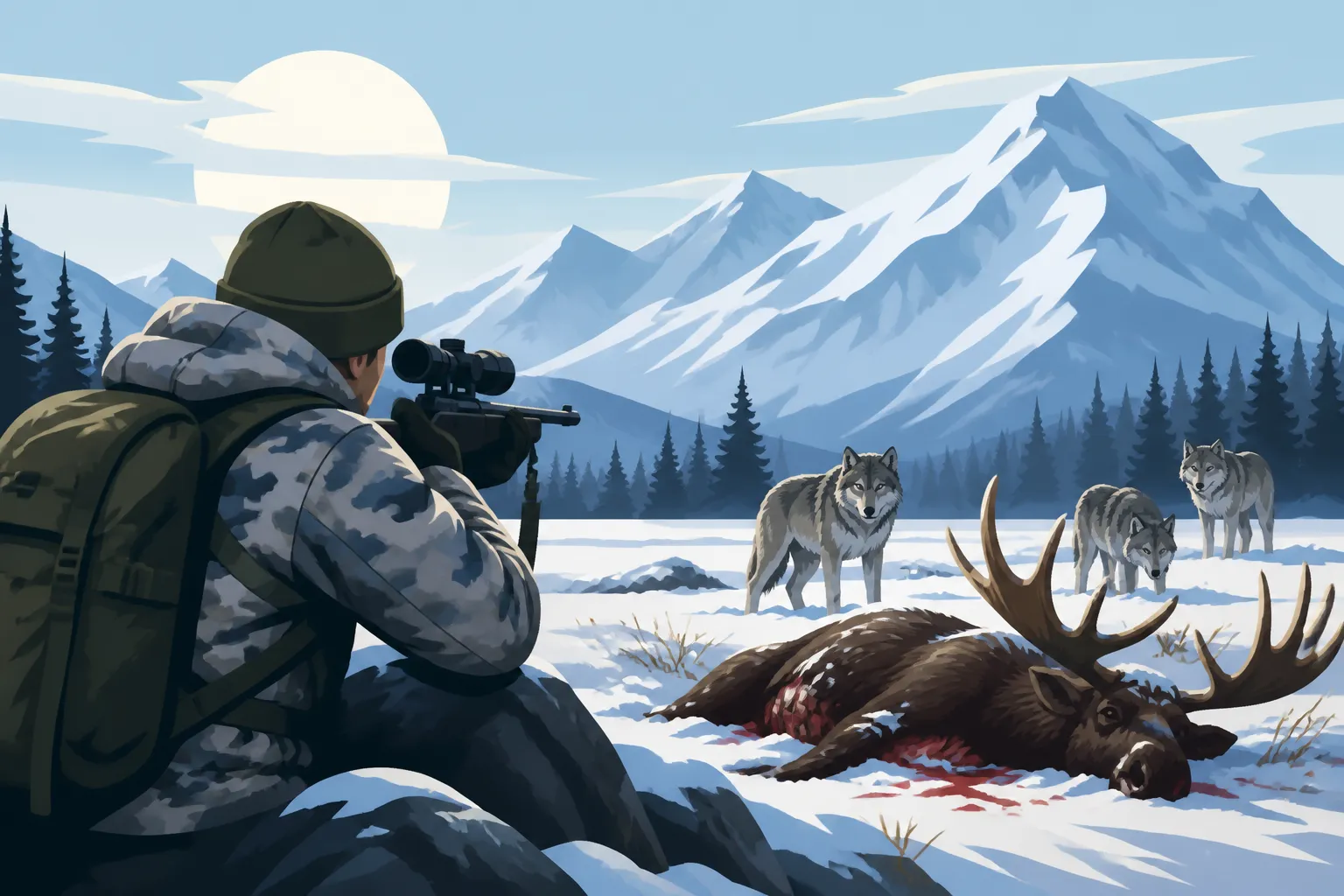
These sites act like a temporary hub for wolf activity. The pack will establish a pattern of feeding, resting nearby, and then returning, often guarding the kill from other scavengers like ravens, foxes, or even wolverines. This behavior provides a crucial window of opportunity for hunters. It's not uncommon to see multiple members of a wolf pack, or even the entire pack, visiting a kill over several days, making consistent scouting and patient waiting absolutely vital for success. The sheer volume of available meat means they don't have to be frantic or rushed, often allowing them to be a bit more predictable in their visits.
Identifying Productive Kill Sites
Not all kill sites are created equal. A small caribou carcass might provide a meal for a few wolves for a day or two, but a large moose or bison kill can draw wolves for an extended period, making it a much more "productive" site for a hunter. Look for indications of struggle in the snow, like churned-up areas, blood trails, or signs of an avalanche or icefall. Often, a kill will occur where an animal was already weakened, perhaps by age, injury, or deep snow.
The best kill sites are typically in areas where natural travel corridors converge, or near established wolf territories. You might spot ravens circling high above or see their tracks and droppings around the periphery of a potential site, acting as natural indicators. Observing nearby game trails and understanding general moose or caribou winter range can also help you predict where a kill might occur. Using tools like the mapping features offered by GoHunt can help identify these potential game corridors and wintering areas from satellite imagery, giving you a head start on your scouting.
Scouting and Setting Up Your Ambush
Once you've identified a potential winter kill site, the real work begins. Wolves possess incredible senses of smell, sight, and hearing, making a successful ambush dependent on meticulous scouting and careful setup. This isn't a casual affair; it requires dedication and an understanding of wolf behavior.
Remote Reconnaissance and Access
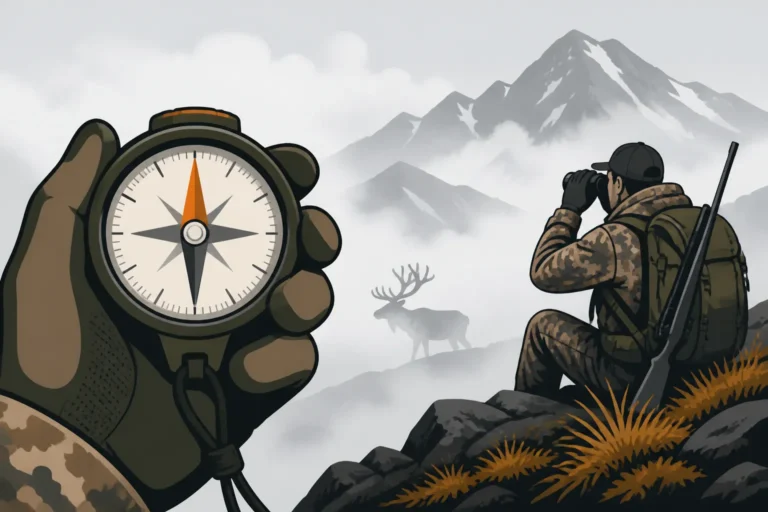
Your initial scouting should be as remote and unintrusive as possible. Avoid walking directly into a kill site immediately, as your scent and tracks can easily spook wary wolves. Instead, approach from downwind, staying high on ridges or in areas with good visibility, using binoculars or a spotting scope to observe from a distance. Look for wolf tracks leading to and from the kill, noting the direction of travel and the frequency of visits. Larger, heavier tracks often indicate mature wolves.
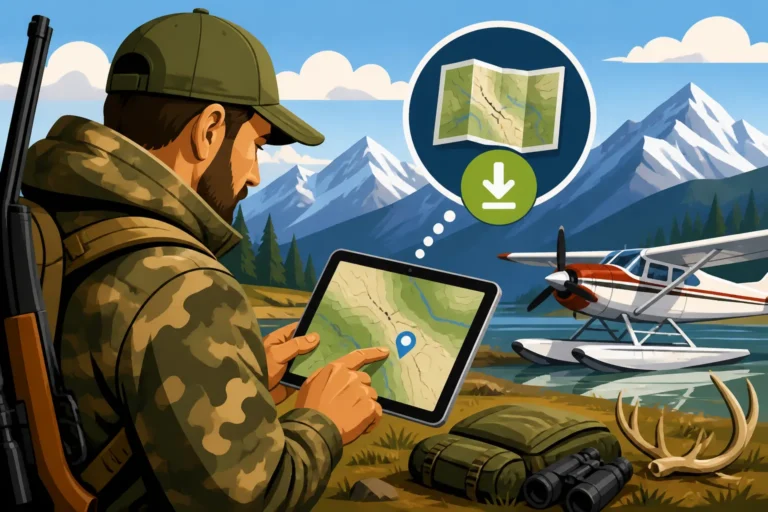
Pay attention to how the wolves are approaching the kill. Do they use a specific ridge line? A frozen creek bed? A dense stand of timber? Understanding their preferred routes will guide your ambush location. Access to these remote areas often involves snowmachines, skis, or even small aircraft. Before you head out, make sure you've properly prepared by Downloading Offline Maps Before a Fly-In and ensuring your GPS Battery Life in Cold Camps is optimized. Remember, the less disturbance you create around the kill site, the better your chances.
Concealment and Wind Management
Concealment is paramount. Wolves have exceptional eyesight, especially against a stark winter backdrop. You'll need natural cover such as dense spruce stands, rock outcroppings, or even deep snowdrifts that can be sculpted into a blind. White camouflage, often overlooked, can be incredibly effective in snowy environments. The goal is to blend seamlessly into your surroundings, breaking up your silhouette and eliminating any unnatural shapes.
Perhaps even more critical than visual concealment is wind management. A wolf's nose is its most powerful tool. They can detect human scent from incredible distances, even in freezing temperatures. Always approach and set up your ambush downwind of the kill site and any suspected wolf travel corridors. The wind direction can shift, sometimes suddenly, in Alaska's unpredictable weather, so having a secondary escape route or an alternative setup position in mind is always a smart move. Using a small wind checker can help confirm the precise direction of air currents, allowing you to fine-tune your position and avoid broadcasting your presence.
Timing and Patience: The Wolf Hunter's Virtues
Wolf hunting over a kill site is rarely a quick affair. It's a game of patience, endurance, and understanding the subtle rhythms of the wild. The cold, the waiting, the anticipation – it all tests a hunter's resolve.
Optimal Hunting Windows
Wolves, like many predators, are often most active during low-light conditions – dawn and dusk. These are typically the periods when they'll make their moves to and from the kill site, feeling more secure under the cloak of diminishing or rising light. However, don't discount midday visits, especially if the weather is particularly harsh or if the pack is very hungry. If they haven't fed recently, they might be bolder.
Another optimal window can be during periods of changing weather, like when a snowstorm is approaching or breaking. These shifts can influence animal movement. A steady, gentle snow can also mask your presence, both visually and by muffling sound and carrying your scent differently. It's crucial to be in position before first light and remain vigilant until well after dark, even if it means enduring bitter cold for hours on end. Sometimes, the only thing that pulls a bull from thick cover is an aggressive call sequence, as we explore in Calling Bull Moose During the Alaska Rut, but with wolves on a kill, it's more about waiting for them to make their move.
The Long Wait and Mental Fortitude
Waiting, especially in the extreme cold of an Alaskan winter, can be brutal. Hours can tick by with nothing but the wind and the occasional raven for company. This requires immense mental fortitude. Dress in layers, stay hydrated, and bring high-calorie snacks to maintain your energy and core temperature. A comfortable, insulated seat and a stable shooting rest can make all the difference in maintaining focus.
Avoid unnecessary movement and noise. Even a subtle rustle or a reflective flash can be enough to send a wary wolf packing. Use your optics constantly, sweeping the surrounding terrain. Wolves often appear as fleeting shadows or subtle movements in the periphery before revealing themselves fully. Resist the urge to call too much, as excessive calling can sometimes alert wolves to your presence without drawing them in effectively. While some tactics involve Predator Calling for Alaska Wolves and Wolverine, relying solely on calling at a kill site might be less effective than silent waiting, as the wolves already know where the food is.
Gear and Tactics for Success
Hunting wolves over a kill site demands specific gear tailored for extreme cold and sharp tactics to overcome their keen senses. Preparation in this regard is not just about comfort; it's about increasing your chances of success and ensuring your safety.
Essential Cold Weather and Optics Gear
Your gear choices are critical. For clothing, think layers, layers, layers. A high-quality base layer, insulating mid-layers like fleece or down, and a waterproof/windproof outer shell are non-negotiable. Don't forget insulated boots rated for extreme cold, warm mittens (with fingerless gloves for shooting), and a good balaclava or neck gaiter. White camo overwhites will help you disappear into the snowy landscape.
Optics are your lifeline for spotting wolves before they spot you. A high-quality binocular (10×42 or 12×50) and a powerful spotting scope (20-60x or higher) are essential for scanning vast areas and identifying subtle movements. You'll need a sturdy tripod for both, as holding them steady in the cold for extended periods is difficult. Rangefinders are also crucial for accurate shot placement across potentially long distances. When preparing for your hunt, remember to run through a quick check: Sighting In Before You Fly to a Remote Alaska Camp is critical, as a slight bump during travel can throw off your zero.
For firearms, a flat-shooting rifle chambered in a cartridge capable of delivering sufficient energy at extended ranges is ideal. Think .270 Win, .30-06, .300 Win Mag, or similar calibers. Accuracy is paramount. Ensure your rifle is zeroed precisely and you are proficient with it, especially in cold weather gear. We discuss similar considerations when looking at Rifle Choice for Alaska Brown Bear Country, emphasizing power and reliability.
Shot Placement and Follow-Up
Wolves are incredibly tough animals, and a clean, ethical kill is always the goal. Aim for the vital zone – typically the shoulder or chest cavity – to ensure a quick dispatch. Due to their lean body mass and sometimes long ranges, shot placement needs to be precise. Practice shooting from stable positions that mimic what you might encounter in the field, like prone or from a tripod-supported bipod.
After the shot, watch the wolf carefully. They can cover ground quickly even when mortally wounded. If possible, keep your scope on them until they are out of sight or clearly down. If you need to track, wait a short period (15-30 minutes) to allow the animal to expire, then proceed cautiously. Wolf fur can be surprisingly thick, and snow conditions can make blood trails difficult to follow, so mark your starting point and the direction of travel carefully. Remember, while the thrill of the hunt is palpable, safety is paramount, especially when you consider Wolf Pack Sizes in Interior Alaska and the potential for multiple animals to be present.
Safety and Ethical Considerations
Hunting in Alaska, especially in winter and around kill sites, comes with unique risks and ethical responsibilities. Ignoring these can lead to dangerous situations or tarnish the hunting experience.
Bear Safety Around Carcasses
Even in winter, especially early or late winter, the presence of a large carcass can attract bears. While most bears are denned up during the coldest months, a late-denning or early-emerging bear, or even a bear that briefly emerges from its den during a warm spell, can be drawn to a large food source. Coastal brown bears, in particular, may den later and emerge earlier.
Always be bear aware around a kill site. Carry a powerful handgun (.44 Mag, 10mm) and/or a reliable rifle with a heavy bullet for defense. Bear spray is also an essential tool for close encounters, and understanding when to deploy Bear Spray Versus Rifle at Close Range could save your life. Make noise as you approach, scan continuously, and never assume the kill is yours alone. When you are quartering a moose or caribou, it is vital to know about Carrying a Sidearm Around a Kill Site for precisely this reason. If you encounter a bear on a kill, it's generally best to back away slowly and give it space; a confrontation over food is one you likely don't want.
Respecting the Animal and the Land
Ethical hunting extends beyond the shot. It encompasses respect for the animal you pursue, the environment it inhabits, and the regulations that govern the hunt. Ensure you have the proper licenses and tags, and that you understand the specific regulations for wolf hunting in your chosen Game Management Unit, including any harvest reporting requirements. Alaska's hunting regulations are complex, and knowing the specifics of Alaska Wolf Trapping Versus Hunting Seasons is important, as rules differ significantly between these methods.
After a successful kill, make every effort to salvage the meat, if regulations allow and the condition of the carcass makes it suitable for consumption. Many wolf hunters are primarily interested in the hide, but responsible hunters minimize waste. Properly care for the hide to preserve its quality; cold weather often helps with this, but careful handling is still needed. Remember that you are a visitor in the wilderness, and leaving no trace is always the goal. Tools like GoHunt can help you keep track of regulations and land ownership, which is a key part of responsible hunting.
Considerations for Long-Term Success
To consistently find success in wolf hunting over kill sites, it's not enough to simply react to a fresh carcass. A proactive approach and continuous learning will make you a more effective hunter.
Building a Network and Local Knowledge
Alaska is vast, but local knowledge is golden. Building relationships with other hunters, trappers, and bush pilots can provide invaluable insights into wolf activity, game concentrations, and recent kill sites. These networks often form through shared experiences and mutual respect for the land and the animals. A pilot might spot a kill from the air during a routine flight, or a trapper might notice increased wolf tracks in a certain drainage. Such intel can drastically cut down your scouting time and increase your odds.
Additionally, understanding the broader dynamics of wildlife populations, such as Winter Range and Moose Survival in Interior Alaska, can inform your long-term strategy. Knowing where and when moose and caribou are most vulnerable can help you predict where kill sites are likely to emerge in future seasons. Platforms like GoHunt often have community forums or resources that can help hunters connect and share non-sensitive, general information about hunting conditions.
Adapting to Changing Conditions
Alaska's environment is constantly changing. A heavy snowfall can open up new wolf travel corridors or make others impassable. A sudden warm spell can thaw kill sites and make them less attractive, or change how your scent carries. Successful wolf hunters are adaptable. If your primary kill site goes cold, don't be afraid to pull up stakes and scout for another. Have backup plans and alternative areas in mind.
The ability to adapt also extends to your hunting strategy. If the wolves are particularly wary and not approaching the main kill, consider setting up further back on a known travel route to intercept them as they approach or depart. Sometimes, a change in tactics, such as a subtle distress call, might be warranted, but only after careful observation and an understanding of the specific situation. Even subtle details like the variations in Wolf Coat Colors Across Alaska can provide clues about regional populations or individual animals you might be observing.
Conclusion
Hunting wolves over a winter kill site is a challenging but immensely rewarding endeavor. It demands patience, meticulous planning, expert woodsmanship, and a deep respect for Alaska's unforgiving wilderness and its most cunning predator. By understanding wolf behavior, mastering your setup, and diligently managing risk, you’ll not only increase your chances of success but also gain an unparalleled appreciation for the intricate dance of life and death in the Last Frontier. It’s a hunt that truly tests your limits, but the experience and potential reward are unforgettable.
Disclaimer
Hunting in Alaska involves inherent risks and demands strict adherence to all state and federal regulations. This guide provides general informational advice only and does not substitute for thorough research of current Alaska Department of Fish and Game regulations, specific unit rules, and landowner permissions. Always prioritize safety, ethical hunting practices, and personal responsibility in the field.