Cell Coverage at Remote Camps
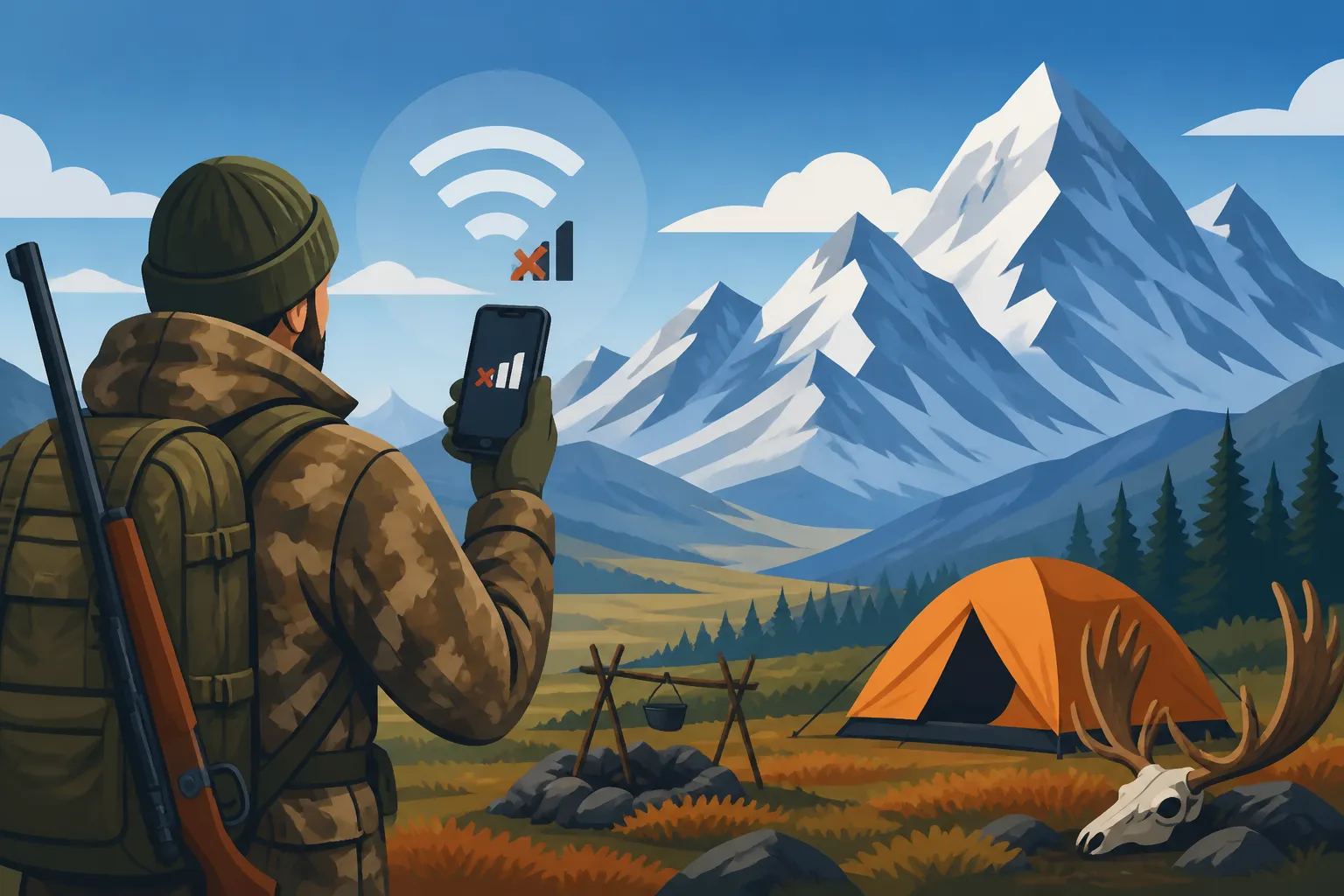
The dream of an Alaska hunt often involves vast, untouched wilderness, incredible wildlife, and the profound silence of true remoteness. But let's be honest, for many of us, that dream is tempered by a very real, very modern anxiety: "Will I have cell service?" The short answer, for most remote camps in Alaska's backcountry, is almost certainly no. This guide will walk you through the harsh realities of communication in the Alaskan bush, what reliable alternatives actually exist, and how to prepare so you can focus on your hunt, not on a blinking "No Service" icon.
The Harsh Reality of Alaska's Backcountry Connectivity
It's easy to assume in our hyper-connected world that you'll always find at least a bar or two, especially in places you might fly into on a bush plane. But Alaska isn't like the Lower 48 in that regard. Expecting any kind of cellular signal once you leave the road system or major towns is a recipe for frustration and, in a true emergency, could put you in a tough spot.
Why Cell Service is Practically Non-Existent
The biggest reason you won't find cell service in remote Alaska is simple geography and economics. Alaska is enormous, and much of it is rugged mountains, vast tundra, and dense forests, all sparsely populated. Cell towers need a population base to justify the massive investment of installation and maintenance, especially in areas with extreme weather and challenging logistics. The sheer distances involved in covering millions of acres with a reliable cellular network are astronomical.
Think about flying into a remote lake in the Alaska Range for a Dall sheep hunt or floating a river in the interior for moose. You're likely hundreds of miles from the nearest town with a cell tower, and even then, mountains and dense timber can block what little signal might theoretically reach. Many hunters, especially those new to Alaska, pack their smartphones, hoping for a miracle. They end up using them only for photos and staring blankly at the "no service" message, realizing their phone has become an expensive paperweight for communication. Even if you do catch a momentary flicker of signal, it's rarely enough to send a text, let alone make a call, and it's far too unreliable for any kind of emergency communication.
The Impact on Hunters and Their Families
This lack of connectivity can create real stress, both for the hunter in the field and the loved ones back home. For the hunter, it's the feeling of being completely cut off. You might want to check in, share a success, or simply let someone know you're safe. When you can't, that feeling of isolation can be profound. It forces you to truly disconnect, which is part of the allure of wilderness hunting, but it also means you're solely responsible for your communication and safety plan.
For families, the anxiety can be even worse. They might be used to daily texts or calls, and suddenly, for a week or ten days, there's radio silence. This can lead to unnecessary worry, especially if they haven't been properly briefed on your communication plan. It's not just about comfort calls; it's about genuine emergencies. What if a family member back home gets sick? What if there's an issue with your return flight? Without a reliable way to communicate, even simple logistical changes become incredibly complicated, and urgent news becomes impossible to transmit in a timely manner.
Essential Communication Alternatives for Remote Alaska Hunts
Since your smartphone is likely to be a glorified camera and map viewer (if you've downloaded offline maps) in the Alaskan bush, you need to turn to technology designed for true off-grid communication. These devices rely on satellite networks, providing a lifeline when traditional cell towers are out of range.
Satellite Phones: Your Lifeline in the Bush
When it comes to two-way voice communication from virtually anywhere on the planet, a satellite phone is still the gold standard. These devices connect directly to orbiting satellites, allowing you to make and receive calls much like a regular cell phone, just with a slightly longer delay and sometimes a less clear connection. Companies like Iridium, Inmarsat, and Globalstar operate these networks, each with its own coverage, reliability, and pricing structure. Iridium, for example, is known for its pole-to-pole coverage, which is a huge advantage in high latitudes like Alaska.
Many hunters choose to rent a satellite phone for their trip, as purchasing one can be a significant upfront investment, plus you'll need a service plan. Rental costs often include a set amount of minutes, and you can buy additional minutes if needed. When using a sat phone, you generally need a clear view of the sky, free from dense tree cover or steep canyon walls, for the best signal. It's wise to practice making a call or two before your trip so you're familiar with the process. Knowing you have a working satellite phone gives an immense sense of security, especially if you need to coordinate a rescue, update your air taxi pilot on a changed pick-up location, or check in with family about an emergency back home. Remember, these are not cheap calls, so they are best reserved for essential communication.
Satellite Messengers and GPS Devices
For many hunters, a satellite messenger device like a Garmin inReach, Zoleo, or Spot X strikes a perfect balance between communication capability, size, and cost. These compact devices offer two-way text messaging through satellite networks, allowing you to send predefined messages (like "All is well" or "On schedule") to contacts, as well as type custom messages. Many also include GPS tracking features, letting your loved ones follow your progress on a map online, which can be a huge comfort.
The standout feature of these devices is the SOS button. In a true life-threatening emergency, pressing this button sends a distress signal with your exact GPS coordinates to a 24/7 international search and rescue monitoring center. They will then coordinate with local authorities to initiate a rescue. This feature alone makes these devices invaluable. Subscription plans vary, often with different tiers offering more messages, tracking intervals, and features. Battery life is typically excellent, often lasting many days on a single charge, which is crucial when you're far from an outlet. Planning for GPS Battery Life in Cold Camps is important here. You can easily integrate these into your daily routine by setting up InReach Check-In Schedules for Solo Hunts with your emergency contact. When preparing your gear for a hunting trip, many resources, like those you find on GoHunt, emphasize the importance of these devices for backcountry safety.
Personal Locator Beacons PLBs: Emergency-Only Options
A Personal Locator Beacon (PLB) is a single-purpose, life-saving device. Unlike satellite phones or messengers, PLBs are strictly for emergency use and do not offer two-way communication. When activated, a PLB transmits a powerful distress signal on the 406 MHz frequency, which is picked up by a satellite system managed by the international search and rescue organization (COSPAS-SARSAT). This signal is relayed to a rescue coordination center, which then uses your registered information to contact local authorities and initiate a rescue operation.
PLBs are typically smaller, lighter, and have a longer battery life than satellite messengers, as they are designed for one critical function. You must register your PLB with the appropriate national authority (in the U.S., it's NOAA) so that when an alert is received, rescuers know who you are and who to contact. Because they are emergency-only, PLBs are often seen as a backup to a satellite messenger or phone, or as a primary safety device for those who want the absolute simplest, most reliable emergency signaling system without the distraction of regular communication. The key is that they are for life-threatening emergencies only; activating one for a minor inconvenience will tie up precious search and rescue resources.
Preparing for Communication Blackouts and Emergencies
Knowing your gear is one thing; having a plan for how you'll use it and what to do when things go awry is another entirely. Good preparation is your best defense against the anxieties and dangers of being out of touch in the Alaskan wilderness.
Developing a Robust Communication Plan
Before you ever step foot in the bush, sit down and create a detailed communication plan. This isn't just a suggestion; it's a non-negotiable part of responsible backcountry travel. Start by designating a reliable point person back home—someone who understands your itinerary, your communication devices, and what constitutes a true emergency. Leave them a copy of your detailed trip plan, including your intended route, camp locations, dates you expect to be in specific areas, and who to contact if they don't hear from you by a certain time. This is where Leaving a Trip Plan With a Contact becomes vital.
Establish clear check-in schedules. For example, you might agree to send a pre-set "I'm okay" message from your satellite messenger every evening at 8 PM, or make a satellite phone call every three days. Make sure your point person knows what to do if a check-in is missed (e.g., wait 24 hours, then contact your air taxi service). Discuss what kinds of messages warrant an urgent reply from home. Should they contact you for non-emergencies? Probably not. The more clearly you define these protocols, the less stress there will be for everyone involved. Some hunters even coordinate these plans through services or forums like BookYourHunt, where experienced outfitters can provide guidance on remote communication strategies.
Battery Management and Power Solutions
Even the best communication device is useless without power. In remote Alaska, where charging outlets are non-existent, careful battery management is paramount. Prioritize charging all your devices to 100% before your trip. For extended hunts, you'll need portable power solutions. High-capacity power banks are excellent for recharging satellite messengers and phones multiple times. Look for models designed to withstand cold temperatures, as battery efficiency drops significantly in the cold.
Solar panels are another popular option, especially for hunts with open, sunny conditions. Modern portable solar chargers can keep your devices topped up during the day. Just remember that cloudy weather or dense forest cover can limit their effectiveness. Always carry spare batteries for any device that uses them, and consider having a backup power bank. When you’re out for ten days or more, managing every watt of power is critical. It's always a good idea to power down devices when not in use and keep them warm, perhaps inside your sleeping bag at night, to maximize battery life.
Setting Realistic Expectations
Perhaps the most important part of preparing for communication blackouts is managing expectations—both your own and your family's. It's crucial to have an honest conversation with your loved ones before you leave. Explain that cellular service will be non-existent, and that all communication will be via satellite devices on a pre-determined schedule. Reassure them about the emergency capabilities of your satellite messenger or PLB.
Embrace the digital detox. One of the unique joys of hunting in truly remote Alaska is the complete disconnect from the constant demands of the modern world. There's a freedom that comes with not being reachable by email, social media, or work calls. By planning thoroughly and setting clear expectations, you can alleviate the anxiety and fully immerse yourself in the hunting experience. Let your family know that if they don't hear from you exactly on schedule, it doesn't automatically mean something is wrong; it could be weather delays, a long day in the field, or simply poor satellite alignment at that moment. Trust your plan, and trust your gear.
Here's a quick comparison of popular communication devices for remote Alaska:
| Feature | Satellite Phone | Satellite Messenger (e.g., inReach) | Personal Locator Beacon (PLB) |
|---|---|---|---|
| Primary Use | Two-way voice calls, some data/text | Two-way text, GPS tracking, SOS | Emergency SOS signal only |
| Coverage | Global (network dependent, e.g., Iridium) | Near global (network dependent, e.g., Iridium, Globalstar) | Global (COSPAS-SARSAT) |
| Cost (Device) | Higher purchase/rental | Moderate purchase/rental | Moderate purchase |
| Cost (Service) | Per minute/monthly plan, higher cost | Monthly/annual subscription (various tiers) | No subscription (registration required) |
| Emergency Button | Yes (often for direct emergency calls) | Yes (dedicated SOS button to monitoring center) | Yes (dedicated SOS button to monitoring center) |
| Battery Life | Moderate (days, depending on usage) | Excellent (days to weeks, depending on usage/tracking) | Very long (years in standby, ~24-48 hrs transmitting) |
| Ease of Use | Similar to a mobile phone | Intuitive interface, often with app integration | Very simple (activate button) |
| Connectivity Need | Clear view of sky | Clear view of sky | Clear view of sky |
| Best For | Frequent voice communication, critical updates | Regular check-ins, custom texts, tracking, SOS | Ultimate backup, emergency-only situations |
Disclaimer
This article is for general informational purposes only and does not constitute professional advice. Laws, prices and regulations vary by location and change over time. Consult a qualified professional for guidance on your specific situation.