Reading Sheep Country From a Glassing Knob
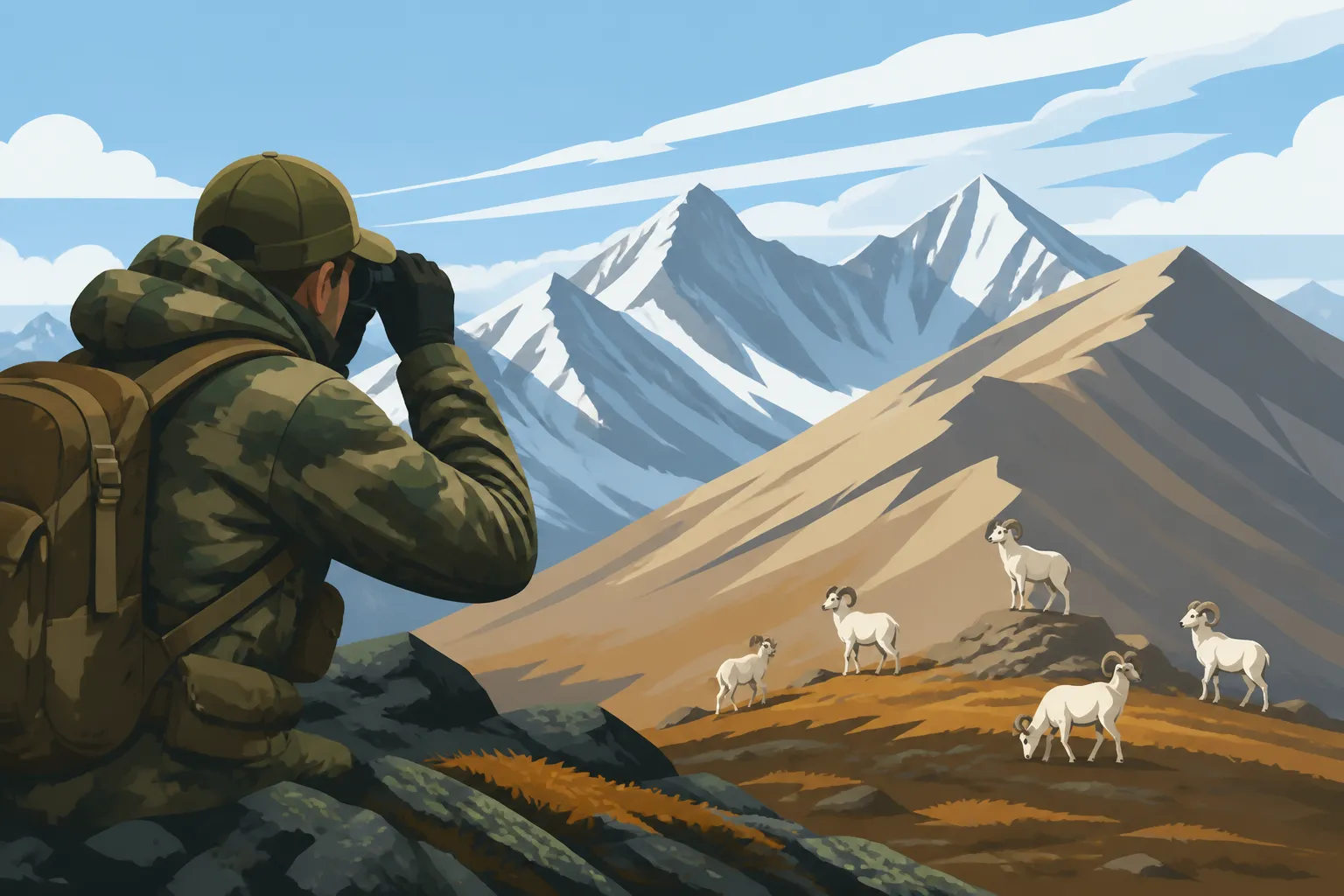
The vast, unforgiving landscape of Alaska can feel like an impossible puzzle when you're trying to locate Dall sheep. Their brilliant white coats, so striking against dark rock in pictures, have a magical way of blending into the snow patches, shale slides, and broken terrain they call home. It's a frustrating reality for many hunters who spend countless miles walking only to wonder if they're passing right by the ram of a lifetime. This guide is dedicated to mastering the art of reading sheep country from a glassing knob, transforming your approach from aimless wandering to calculated, effective searching.
The Philosophy of Patient Glassing
Hunting Dall sheep in Alaska isn't about covering ground with your boots as much as it is about covering ground with your eyes. The sheer scale of the Chugach, Wrangell, or Brooks Ranges makes "walking and looking" an exercise in futility and exhaustion. The most successful sheep hunters understand that their primary tool isn't their rifle, but their optics and the patience to wield them effectively from a strategic vantage point.
Why Elevation Is Your Best Friend
Imagine trying to find a single white marble dropped onto a vast, textured white rug. Now imagine looking for that marble from a ladder. That's the difference elevation makes in sheep hunting. Sheep country is characterized by massive basins, intricate networks of cliffs, benches, and chutes, all leading up to rugged ridgelines. From down in the valley, or even partway up a mountain, your line of sight is constantly interrupted by rises, folds in the terrain, and vegetation. You're always looking through things, not into them.
A carefully chosen glassing knob, however, puts you above the immediate clutter. You're looking down into basins, across entire cirques, and often over the top of smaller ridges that would otherwise hide sheep. This perspective allows you to systematically pick apart vast tracts of landscape, identifying key features like escape routes, feeding areas, and bedding spots that would be invisible from below. The ability to see the "whole picture" from a high point is paramount. It allows you to eliminate unproductive ground quickly and focus your efforts where sheep are most likely to be, saving your legs for the stalk, not the search.
The Time Investment Equation
This isn't a quick scan. You can't just glance through your binoculars for five minutes and expect to find sheep. Patient glassing demands a significant investment of time, often hours, sometimes entire days, from a single vantage point. Think of it like a chess match against the mountain and its inhabitants; you're waiting, observing, and letting the game unfold before making your move.
Many hunters, especially those new to sheep hunting or used to different species, struggle with this concept. There's an innate desire to keep moving, to feel like you're "doing something." But with sheep, "doing something" often means sitting still and letting your eyes do the work. The light changes, sheep move from shaded bedding areas into sun-drenched feeding zones, or emerge from behind a ridge. These are moments you'll miss if you're constantly on the move. Embrace the stillness, pack a comfortable pad to sit on, bring plenty of water and snacks, and be prepared to commit. The mental discipline required to spend hours meticulously dissecting a mountainside is just as important as the physical conditioning needed for the climb.
Essential Gear for Effective Glassing
You can have the best intentions and the most patient mindset, but without the right tools, your glassing efforts will be severely hampered. High-quality optics and the means to stabilize them are not luxuries; they are fundamental necessities for successful sheep hunting in Alaska.
High-Quality Optics Are Non-Negotiable
When you're trying to spot a white animal, sometimes a mere speck, against a backdrop of white snow, grey rock, and tan tundra at distances of a mile or more, optical clarity and magnification become paramount. This is not the place to skimp on gear.
For your primary scanning, a good pair of binoculars is essential. Many hunters lean towards 10×42 or 12×50 models for their balance of magnification, field of view, and manageable weight. A 10×42 is a fantastic all-around choice for packing and general use, while a 12×50 offers a bit more reach for those longer-range scans without becoming too shaky for freehand use for short periods. For dedicated glassing from a tripod, some sheep hunters swear by 15×56 binoculars. These larger objective lenses gather more light, offering a brighter image in low-light conditions (dawn and dusk, when sheep are often most active) and providing exceptional detail at long distances. However, anything beyond 12x magnification becomes nearly unusable without a solid tripod. When researching a unit, tools like GoHunt's gear reviews can offer insights into which specific models are favored by experienced backcountry hunters for their optical performance and durability in Alaskan conditions.
Once you've spotted something with your binoculars—what often appears as a mere "dot" or an unusual patch of white—you'll immediately reach for your spotting scope. This is where the real identification happens. A quality spotting scope, typically with a 60-80mm objective lens and variable power (e.g., 20-60x or 27-60x), is crucial for discerning a full-curl ram from a ewe or a sublegal ram. The larger objective lens will again contribute to brightness and resolution, which is vital for counting annuli rings, judging horn tip brooming, or confirming specific antler characteristics like brow tines. Clarity right to the edge of the field of view, and excellent chromatic aberration control (minimizing color fringing), are hallmarks of top-tier spotting scopes that make all the difference when you're straining to judge a ram across a vast canyon.
The Indispensable Tripod
You simply cannot effectively glass for sheep without a sturdy tripod. Trying to hold high-magnification binoculars or a spotting scope steady enough for prolonged, detailed observation by hand is impossible. Even at 10x, your natural hand tremor will make it difficult to pick out subtle movements or shapes at long range. At 15x or with a spotting scope at 40x or 60x, it's a completely lost cause.
A tripod provides the stability needed for hours of strain-free glassing. It allows you to meticulously scan an area without your arms fatiguing, and more importantly, without the image jumping around. This steady platform enables you to truly resolve details, not just glimpse them. When choosing a tripod for a backpack sheep hunt, prioritize lightweight carbon fiber models that offer excellent rigidity. Look for one that's easily adjustable from a sitting position, or even prone, allowing you to get comfortable for those long stints behind the glass. The ability to quickly mount and dismount both your binoculars (with an adapter) and your spotting scope is also a key feature. Remember, it's not just about weight; it's about stability and ease of use in rugged, windy mountain environments. Having the right Tripod Height for All-Day Glassing can make or break your comfort and effectiveness during those long hours.
Deconstructing Sheep Habitat from Afar
Once you've settled into your glassing knob with your high-quality optics firmly mounted on a tripod, the next step is to understand what you're actually looking for and where to focus your attention. Sheep don't just randomly appear anywhere; they utilize specific terrain features for security, feeding, and bedding. Learning to "read" these features from a distance is a critical skill.
Identifying Key Features and Terrain
Sheep are creatures of habit and necessity. Their survival hinges on their ability to find food, water, and refuge from predators in their unforgiving alpine environment. From your glassing knob, you'll want to identify these crucial elements.
Aspect: The direction a slope faces, or its aspect, is hugely important. South-facing slopes receive more direct sunlight, meaning snow melts off them earlier in the spring, and they often green up faster, offering prime foraging. Conversely, north-facing slopes might hold snow later but can offer cooler bedding in late summer. During the early season, sheep will often gravitate towards the greenest slopes, which are typically south-facing. Later in the season, they might use north-facing slopes for shade during hot days.
Bench Systems and Broken Rock: Dall sheep are masters of navigating steep, broken country. Look for intricate networks of benches—relatively flat ledges on otherwise steep slopes—and areas of broken rock and cliff faces. These are their highways and their fortresses. They'll travel along benches to access different areas, and when threatened, they'll often disappear into the labyrinth of cliffs where predators struggle to follow. A good sheep hunter learns to identify these subtle shelves and ledges, because that's often where rams will be moving or bedding. Mastering Reading Contour Lines for Sheep Benches on your topo map before the hunt can give you a significant advantage in identifying these promising areas.
Green-ups and Lush Pockets: Even in the austere alpine, there are pockets of lush vegetation where sheep will concentrate to feed. These "green-ups" often occur where snowmelt provides consistent moisture, or in areas with specific soil compositions. Look for distinct color changes on the mountainside – greener patches stand out against the grays, browns, and whites of rock and tundra. Sometimes these are small, isolated pockets; other times, entire slopes might be verdant. Spotting these from afar can tell you exactly where sheep will be spending their prime feeding hours.
Water Sources: While sheep are incredibly adapted to arid environments, they still need water. In some areas, this might come from snowmelt, but in others, clear streams or mineral licks are vital. Identifying these water sources and the trails leading to and from them can be a goldmine. Sheep often follow predictable paths to water, especially in drier regions.
Understanding Sheep Behavior and Movement
Knowing where sheep hang out is one thing; understanding when and how they use those areas is another. Observing their patterns can unlock their location.
Feeding and Bedding Patterns: Generally, sheep are most active during the cooler parts of the day: early morning and late evening. This is when they will be up and feeding in those green-up areas or traversing bench systems. As the sun climbs higher and temperatures rise, especially on clear, warm days, they'll typically move to bedding areas. These might be shaded ledges, windy saddles, or even just a relatively flat spot with a good view, allowing them to rest and chew their cud while maintaining vigilance. Look for patches of white that remain stationary for extended periods; these are often bedded sheep.
Escape Routes and Travel Corridors: Sheep always have an escape plan. When you spot sheep, take a moment to analyze their surroundings. Where would they go if spooked? What natural barriers protect them? They often utilize areas that offer both good visibility to spot danger and quick access to steep, broken terrain that discourages pursuit. Learning to identify these escape routes can inform your stalking strategy. Similarly, they often use specific travel corridors—sometimes well-worn trails, other times subtle paths through the rocks—to move between feeding grounds, water sources, and bedding areas.
Rams vs. Ewes and Lambs: A critical behavioral observation is the segregation of rams from ewe/lamb bands, especially outside of the rut. Mature rams, particularly the older, larger ones, often form bachelor groups and inhabit different, often steeper and more remote, terrain than the ewes and lambs. While there can be crossover, seeing a large group of small white dots often indicates a ewe/lamb band. Conversely, a smaller group of robust, perhaps slightly larger, white forms might signal rams. Understanding Ram Groups Versus Ewe Bands is key to focusing your efforts on trophy animals. This type of detailed observation, combined with the comprehensive mapping data available on platforms like GoHunt, can help you narrow down your search and maximize your time in the field.
The Art of the Grid Search
You're set up on your glassing knob, you know what terrain features sheep prefer, and you have an idea of their behavior. Now it's time to actually find them. This is where a systematic "grid search" comes into play – a methodical approach to scanning vast landscapes that ensures you don't miss anything.
Systematic Scanning Techniques
The biggest mistake a hunter can make when glassing is to casually sweep their binoculars or spotting scope across a mountainside. Your eyes are drawn to movement, or perhaps the most prominent features, but in doing so, you'll inevitably skip over vast sections of terrain. Sheep are masters of camouflage, especially when bedded, and can easily be overlooked.
The solution is a structured, disciplined scanning technique often called the "grid" or "brick wall" method. Start at one edge of your designated viewing area—say, the top left corner of a mountain face or basin. Pick a distinct reference point (a rock, a clump of willows) and scan slowly to the right, covering a narrow horizontal strip of terrain. When you reach the right edge of that strip, drop your optics slightly (just enough to overlap your previous field of view) and scan back to the left. Continue this pattern, slowly working your way down the mountainside, like reading a book. Each "line" of your scan should slightly overlap the one above it, ensuring every square foot of ground is examined.
The key words here are "slow" and "deliberate." Don't rush. Pause at interesting features, look into shaded pockets, and scrutinize anything that looks out of place. A sheep might appear as nothing more than a faint white lump against a snowdrift or a grey rock. It's often not the definitive "sheep shape" that first catches your eye, but an anomaly in the landscape, a slight difference in texture or color. You'll thank yourself for taking the time to implement Glassing Grids That Cover a Whole Basin when that elusive ram finally materializes.
Following Up with the Spotting Scope
Once your binoculars pick up that suspicious "dot," that unusual patch of white, or that faint flicker of movement, it's time to switch to your spotting scope. This is where the magic of high magnification truly shines.
Carefully transition from your binoculars to your spotting scope, centering the target in your scope's field of view. Start at a lower magnification (e.g., 20x or 27x) to quickly reacquire the target, then slowly dial up the power. As you increase the magnification, that ambiguous "dot" will hopefully resolve into a definitive sheep.
With the spotting scope, your goal is three-fold:
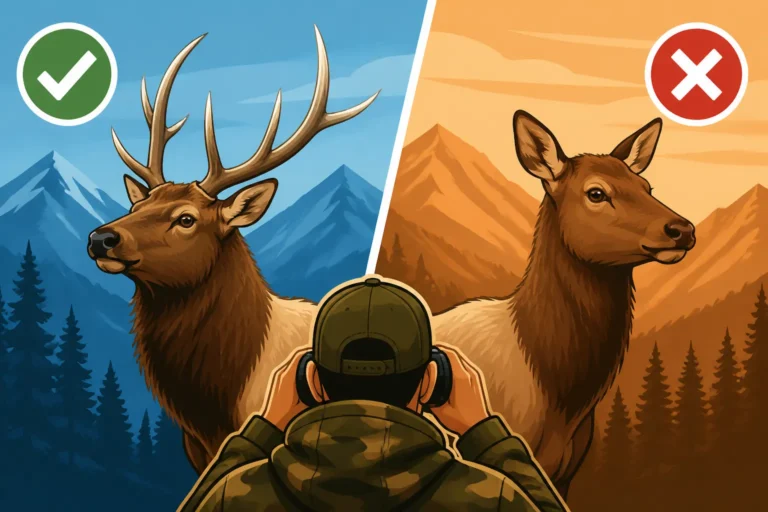
- Confirm the Species and Sex: Make sure it's actually a Dall sheep, not a mountain goat, a patch of snow, or a distant rock. Then, identify if it's a ram or a ewe. Rams typically have much heavier, more massive horns that curl back and out, whereas ewe horns are thinner and shorter.
- Judge Legality: This is the most critical step for ram hunters. In Alaska, Dall sheep rams often have a "full curl" regulation or other antler restrictions (e.g., minimum tip-to-tip spread, number of brow tines). A full-curl ram is defined as a horn that completes an arc of 360 degrees, or if the horn tip is broken, the horn would have made a full curl if not broken. You'll be looking for distinct growth rings, the overall mass, and the sweep of the horn. This is incredibly challenging at long distances, so take your time. Understanding Spotting Scope Power for Ram Judging is crucial, but so is patience. Don't rush this decision. You might need to watch the animal for an extended period, waiting for it to stand up, turn its head, or move to a different vantage point to get a clearer view. Knowing How Long to Watch a Ram Before Shooting is a valuable lesson learned through experience, as is understanding the nuances of Full-Curl Judging From Below the Ram.
- Define Location and Surroundings: Once you've positively identified a legal ram, pay close attention to its exact location relative to prominent landmarks. Use your mapping app (like GoHunt's detailed topo maps) to pinpoint its position. Note its direction of travel, if any, and other animals in its vicinity. This information will be vital for planning your stalk.
Maximizing Your Glassing Knob Selection
Choosing where to set up your glassing operation is almost as important as the act of glassing itself. A poorly chosen knob can negate all your efforts, while a strategic one can make finding sheep feel almost effortless.
Strategic Positioning for Optimal Views
It might seem counterintuitive, but the highest peak isn't always the best glassing knob. While elevation is beneficial, there's a point of diminishing returns. Too high, and the sheep below can appear like tiny specks in a bowl, making it hard to judge detail or gauge distance. You might also find yourself fighting swirling winds or losing precious hunting time on an arduous, energy-draining ascent.
The ideal glassing knob offers a commanding view of multiple basins, cirques, and ridgelines, allowing you to sweep a vast area without having to constantly relocate. It should provide varied viewing angles, letting you look down into valleys, across open slopes, and into shaded pockets.
When selecting a knob, also consider:
- Wind Direction: Try to position yourself downwind or crosswind of the area you intend to glass. While Dall sheep's primary senses are sight, their sense of smell is keen, and you don't want your scent wafting into their territory.
- Concealment and Background: While you want to see, you don't want to be seen. Avoid silhouetting yourself against the skyline. Use terrain features like large boulders, stunted alders, or folds in the ground for concealment. Being visible can put sheep on alert and cause them to move into less accessible terrain. This is also important if you're planning on Setting Up a Spike Camp Above a Sheep Basin; you want to be close enough for early morning glassing, but far enough and concealed enough not to disturb the animals.
- Access and Egress: Think about how you'll get to and from the knob, especially in low light or adverse weather. Is there a safe, relatively easy route? Will you be able to initiate a stalk efficiently from your position?
Adapting to Light and Weather Conditions
Alaska's weather is notoriously fickle, and light conditions can change rapidly. A good sheep hunter learns to adapt their glassing strategy to these shifting elements.
Light Conditions:
- Morning and Evening: These are prime glassing times. The low-angle light creates long shadows that highlight the contours of the terrain and can make sheep stand out. However, direct sunlight can also create glare. Try to position yourself so the sun is behind you or to your side, illuminating the area you're glassing. Glassing at First Light Versus Midday is often your best bet for spotting animals on the move.
- Midday: Often a slower period for active sheep, but don't give up entirely. This is when sheep are often bedded, so focus on those shaded ledges, rocky outcrops, and saddles where they might seek refuge from the sun or wind. The harsh midday sun can create heat shimmer, which makes long-range viewing difficult.
- Overcast Days: Often some of the best days for glassing. The diffused light reduces harsh shadows and glare, creating a more uniform illumination that can make spotting white sheep easier.
Weather Challenges:
- Fog and Clouds: These are the bane of the sheep hunter's existence. When visibility drops to mere yards, glassing becomes impossible. Use these times for navigation, napping, or planning. Be patient; the weather often breaks, sometimes quite suddenly. When the fog finally lifts, the clarity can be exceptional.
- Rain and Snow: Optical performance is reduced in precipitation. Lenses can fog or collect moisture. Keep your optics clean and dry. Use lens covers and rain guards. While unpleasant, sheep are still out there, sometimes more active in light rain.
- Wind: High winds can make holding optics steady even on a tripod challenging. Seek sheltered positions behind boulders or in depressions. Wind can also carry your scent further, so be extra mindful of your position.
Leveraging Technology and Information
While patience and optics are king, modern technology and a solid understanding of regulatory information can significantly boost your effectiveness in reading sheep country.
Digital Mapping and Satellite Imagery
Long before your boots hit Alaskan dirt, you should be meticulously scouting your unit from the comfort of your home. Digital mapping applications like Gaia GPS, onX Hunt, or GoHunt's powerful mapping features are invaluable tools. These platforms offer detailed topographic maps, satellite imagery, and sometimes even 3D terrain views that allow you to explore the mountains virtually.
Before your hunt, use these tools to:
- Identify Potential Glassing Knobs: Look for prominent peaks, ridges, or high points that offer expansive views of promising sheep habitat.
- Map Sheep Habitat: Locate those north and south-facing slopes, intricate bench systems, and areas of broken rock. Highlight potential feeding grounds (Dall Sheep Diet and Mineral Licks can give clues on where to search), water sources, and escape routes.
- Plan Your Approach: Map out potential routes to your glassing knobs, considering elevation gain, distance, and potential obstacles. Identify safe travel corridors.
- Download Offline Maps: Alaska's wilderness often lacks cell service. Always download offline maps for your entire hunting area before you leave home to ensure you have navigation capabilities in the field. This also helps with Alpine Navigation Without Cell Service once you're on the ground. A solid pre-hunt Scouting a Unit From Satellite Imagery Before You Fly strategy can save days of in-field searching.
Understanding Local Conditions and Regulations
Even with the best gear and scouting, local knowledge and current information are crucial.
- Alaska Department of Fish & Game (ADF&G): Regularly check the ADF&G website for your specific Game Management Unit (GMU). They provide detailed information on season dates, bag limits, and specific regulations. Pay attention to any emergency orders or closures that might affect your hunt.
- Weather Patterns: Research historical weather patterns for your hunting area. Knowing what to expect regarding snow, rain, and temperature variations can help you prepare with the right gear and plan your glassing days accordingly.
- Hunter Pressure: Some road-accessible or more popular fly-in areas might experience higher hunter pressure. Being aware of this can influence your choice of glassing knobs, perhaps opting for more remote or harder-to-reach locations where other hunters might not venture.
By combining the timeless skill of patient glassing with the power of modern technology and thorough research, you'll significantly increase your odds of locating and successfully pursuing a magnificent Dall sheep in the vastness of Alaska.
| Optics Type | Magnification/Objective | Primary Use | Tripod Needed? | Pros | Cons |
|---|---|---|---|---|---|
| Binoculars | 10×42 | General scanning, quick checks | No (optional) | Lightweight, good field of view, versatile | Less detail at extreme range |
| Binoculars | 12×50 | Extended scanning, more detail | Yes (recommended) | Brighter image, good balance of power | Heavier than 10x, harder to hold steady freehand |
| Binoculars | 15×56 | Dedicated long-range scanning | Yes (essential) | Excellent light gathering, high detail | Heavy, bulky, wide field of view can be narrow |
| Spotting Scope | 60-80mm obj., 20-60x | Ram judging, detailed observation | Yes (essential) | Highest magnification, superior detail | Narrow field of view, heavy, requires tripod |
Disclaimer
Hunting in Alaska carries inherent risks, including but not limited to severe weather, dangerous wildlife encounters, and rugged, unforgiving terrain. This guide provides general information and recommendations only. Hunters are solely responsible for their safety, preparation, adherence to all Alaska Department of Fish and Game regulations, and securing all necessary licenses and permits. Always prioritize safety, carry appropriate emergency communication devices, and inform trusted contacts of your itinerary.