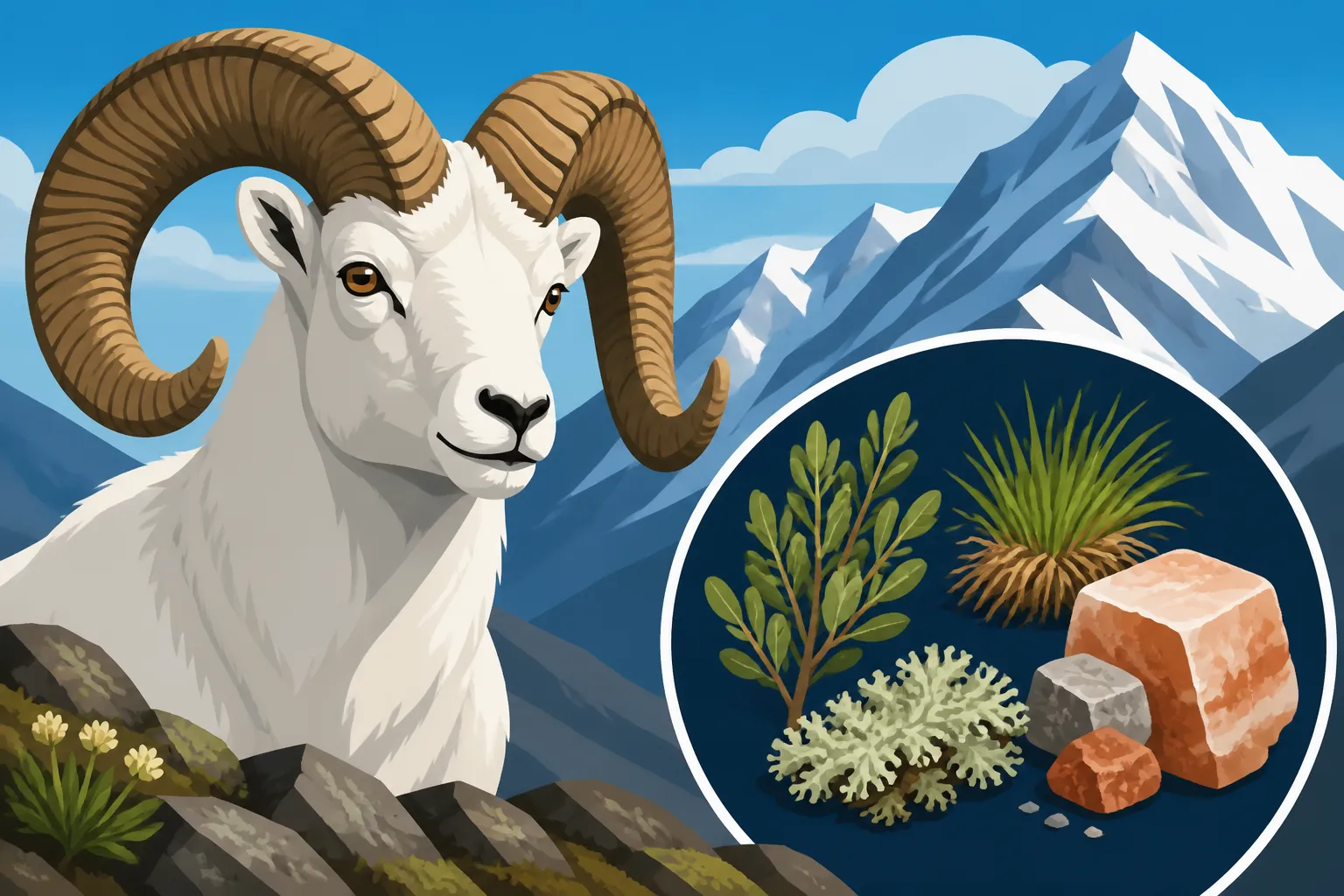
Dall Sheep Diet and Mineral Licks
Hunting Dall sheep in Alaska can feel like searching for a needle in a haystack, especially when those haystacks are entire mountain ranges. Many hunters spend countless hours glassing, only to question if they're even looking in the right general vicinity. The truth is, Dall sheep don't just wander aimlessly; their movements are dictated by a relentless pursuit of essential nutrients, a quest that often leads them to specific forage and, perhaps most notably, to mysterious mineral licks. Understanding these dietary needs and the critical role licks play is your compass to unlocking their high-country haunts.
The Foundation of the Dall Sheep Diet: Alpine Forage
Dall sheep are true high-country specialists, perfectly adapted to survive in some of Alaska's most rugged and unforgiving terrain. Their diet, much like their existence, is a testament to their resilience, focusing on the sparse but nutrient-rich vegetation found above timberline. For the aspiring sheep hunter, knowing what they eat, and when, is fundamental to predicting where they might be.
Year-Round Grazing and Browsing
Unlike some other big game species that switch dramatically between grazing (eating grasses) and browsing (eating shrubs and twigs), Dall sheep primarily graze throughout the year, with a significant reliance on forbs, grasses, and sedges. In the short, intense Alaskan summer, the alpine tundra bursts with life, offering a smorgasbord of high-protein, easily digestible plants. They'll meticulously pick through mosses, lichens, and a variety of small flowering plants. While they favor these succulent green shoots, they are opportunistic and will consume whatever is available. This often means finding them in lush, south-facing slopes that receive maximum sunlight, promoting early growth. However, their grazing isn't confined to summer. Even in winter, they'll paw through shallow snow to access dried grasses, lichens, and frozen forbs, often migrating to wind-swept ridges where snow cover is minimal, exposing these vital food sources. If you want a deeper dive into what they consume, take a look at our article on What Dall Sheep Eat Above Timberline.
Seasonal Shifts and Nutritional Needs
The nutritional demands of Dall sheep shift dramatically with the seasons, directly influencing their foraging choices and movements. In spring, after a long, lean winter, ewes are pregnant or have just lambed, and rams are recovering lost body mass. This is when protein-rich new growth is critical. They'll seek out the earliest green-up, often on sun-drenched slopes, to quickly replenish their reserves. As summer progresses, energy and mineral requirements increase, especially for growing lambs and rams that are putting on horn growth. This period sees them seeking out a wider variety of plants. By late summer and fall, their focus shifts to accumulating fat reserves for the coming winter, often grazing heavily on whatever palatable vegetation remains before the snows deepen. These seasonal changes mean that a ridge holding sheep in August might be barren in June, or vice versa. Understanding these shifts is key to knowing where to focus your Glassing Grids That Cover a Whole Basin.
Water Sources and Hydration in High Country
While often overlooked, access to water is an integral part of a Dall sheep's diet and survival strategy. In the alpine, water typically isn't scarce – snowmelt streams, tarns, and lingering snowfields provide ample hydration for much of the year. However, sheep generally prefer to stay in open country where they have a commanding view of their surroundings, even when accessing water. This means they'll often utilize small seeps or meltwater trickles on open slopes rather than descending into dense timber or deep, predator-prone valleys just for a drink. During prolonged dry spells in late summer, or early in the season before extensive melt, their movements might be more restricted to areas with reliable water sources, making these spots potential focal points for hunters. It's not just about what they eat, but also where they can safely drink while keeping an eye out for bears or wolves.
Deciphering the Mystery of Mineral Licks
For many hunters, mineral licks are almost mythical places—rare, highly prized spots where sheep congregate. And for good reason: these locations are absolutely crucial for Dall sheep health and often serve as magnets for rams and ewes alike, making them prime areas to focus scouting and hunting efforts. Understanding why sheep seek these out and what they look like is critical.
Why Sheep Seek Out Specific Minerals
Dall sheep, like many herbivores, have specific physiological needs for minerals beyond what their everyday forage provides. Calcium, phosphorus, sodium, and magnesium are vital for bone development, muscle function, nerve transmission, and, critically, for horn growth in rams. The plants they eat, especially at high altitudes and in acidic soils, often lack sufficient quantities of these essential elements. This deficit becomes particularly acute during periods of rapid growth (lambs), pregnancy and lactation (ewes), and intense horn development (rams). The compulsion to visit mineral licks is deeply ingrained, driven by instinct to correct these dietary imbalances. Without these supplemental minerals, sheep would suffer from various health issues, including stunted growth, weakened bones, and reproductive problems. This drive is so strong that sheep will travel considerable distances and accept increased predator risk to reach a productive lick. If you've ever wondered about the incredible horn growth, a big part of the answer lies here; our piece on Ram Horn Growth Rings and Age explores this further.
Types of Natural Mineral Licks
Natural mineral licks in Alaska's sheep country come in a few forms, and knowing what to look for can be a game-changer. The most common type is a "salt lick," where sheep ingest sodium and other salts directly from exposed soil. These often appear as discolored, eroded patches of earth, sometimes with a whitish or yellowish crust, typically found near springs, seeps, or exposed riverbanks within alpine basins. The soil here might be naturally rich in mineral salts or have concentrations from evaporated mineral-rich water. Another type involves "geothermal seeps" or areas where groundwater rich in minerals bubbles to the surface, depositing salts. Volcanic ash deposits can also create mineral-rich soils that attract sheep. Less obvious are areas of "mineralized bedrock," where the sheep will actually chew or lick at exposed rock faces to chip off mineral-laden fragments. Regardless of the type, the key characteristic is visible evidence of repeated use: tracks, droppings, and often deep gouges in the earth from their constant licking and pawing. Many hunters find that a tool like GoHunt's satellite imagery can be invaluable for identifying these potential geological anomalies.
Behavioral Patterns Around Lick Sites
Dall sheep exhibit distinct behavioral patterns around mineral licks that are incredibly useful for hunters to understand. Licks are not typically frequented 24/7; rather, sheep often visit in concentrated bursts. Peak usage tends to be in the late spring and early summer, corresponding with the highest demands for mineral intake for lambing ewes and growing rams. They often approach licks cautiously, bedding down nearby to survey the area before moving in to lick. They are highly vulnerable at these sites, as their attention is focused on the ground. Groups, especially ewes with lambs, will often take turns, with some standing guard while others lick. Rams might be seen alone or in bachelor groups, often more wary than ewes. The duration of their visits can vary from a quick 10-minute stop to several hours, depending on their needs and perceived safety. Observing these patterns can tell you when a lick is most active and how sheep are using it, informing your approach and setup for a hunt. This is one of the key reasons why understanding Why Rams Use Mineral Licks in Spring is so important.
Strategies for Locating Productive Licks
Finding these invaluable mineral licks can feel like a daunting task in the vastness of Alaska's mountains. It's a combination of technology, tireless glassing, and a keen eye for subtle clues that will lead you to these sheep magnets. Every bit of information you can gather before and during your hunt increases your odds exponentially.
Satellite Imagery and Topographic Clues
Modern satellite imagery is an incredible asset for pre-season scouting, allowing you to "e-scout" vast tracts of sheep country from your living room. Look for areas of unusual soil discoloration—patches of reddish, yellowish, or whitish earth that stand out from the surrounding green and grey tundra. These are often indicators of mineral deposits. Pay close attention to south-facing slopes, especially near persistent water sources like springs or small meltwater creeks, as these areas often have exposed soil and concentrated minerals. Contour lines on topographic maps can also offer clues; look for benches or gentle slopes leading into steeper terrain, or areas where the terrain flattens out around a water source, as these are often preferred access points for sheep. Software like GoHunt's mapping tools allow you to layer different satellite views and topographic maps, making it much easier to identify these subtle features and mark potential lick locations for further investigation. This kind of detailed scouting can save you days of walking in the field.
On-the-Ground Reconnaissance
Nothing beats putting boots on the ground for confirming a potential lick location. Once you've identified a promising spot on a map, the real work begins. When approaching a suspected lick, do so carefully, glassing the area thoroughly before exposing yourself. Look for physical signs: deeply worn trails leading to the site, tracks in the mud or soft earth (especially ewe and lamb tracks in spring, or large ram tracks later in the season), and copious amounts of droppings. The ground at an active lick will often be churned up, with visible excavations from sheep pawing and licking the soil. You might even find shed wool caught on nearby rocks or vegetation. Take your time to observe from a distance, noting any fresh activity or recent tracks. Remember, some licks are used more frequently than others, and even a heavily used lick might only see activity at specific times of day or seasons. It's a bit like detective work, piecing together all the clues. Our guide on Reading Sheep Country From a Glassing Knob offers more tips for field observation.
Interpreting Sign and Activity Levels
Once you've located a lick, the next step is to interpret how active it is and by which animals. Fresh tracks and droppings are obvious indicators. Look for different sizes of tracks to determine if it's ewes, lambs, or mature rams frequenting the area. The amount of "digging" in the soil can also speak volumes; deeply excavated areas suggest consistent, long-term use, while shallower scrapes might indicate newer or less intense activity. Consider the time of year: a lick showing heavy ram use in late spring might be less critical for them come the August hunting season, when they are more focused on feeding and rutting. However, a lick still showing fresh activity in summer could be a goldmine. If you find a lick, don't just move on; spend time observing from a concealed position. This will allow you to learn the sheep's entry and exit routes, their preferred times of visit, and how wary they are at that specific location. This real-time intelligence is invaluable for planning your hunt and maximizing your chances of success.
Here's a quick reference table to help categorize and understand mineral lick characteristics:
| Lick Type | Appearance | Common Location | Peak Use Season | Typical Users |
|---|---|---|---|---|
| Salt Lick (Soil) | Eroded, discolored earth (white/yellow/red) | Near springs, seeps, exposed riverbanks | Spring/Early Summer | Ewes, Lambs, Rams |
| Geothermal Seep | Warm, bubbling ground; mineral deposits | Volcanic areas, fault lines | Year-round | Ewes, Lambs, Rams |
| Mineralized Bedrock | Exposed rock faces with lick marks | Steep cliffs, rocky outcrops | Spring/Early Summer | Mostly Rams |
| Mud Wallow | Wet, muddy depressions; often discolored | Low-lying areas near water | Summer | Ewes, Lambs |
Integrating Diet and Lick Knowledge into Hunting Plans
Knowing about Dall sheep diet and mineral licks isn't just academic; it's a strategic advantage that directly translates into more effective hunting plans. By combining this ecological understanding with sound backcountry tactics, you can significantly improve your chances of a successful hunt.
Timing Your Hunt with Peak Lick Usage
While some sheep use licks throughout the summer, peak usage typically occurs in late spring and early summer when the demand for minerals is highest due to lambing and early horn growth. For hunters, this means that while licks are excellent scouting locations, their activity might wane by the August and September hunting seasons as rams shift their focus more towards foraging for fat reserves and then, later, the rut. However, some licks, particularly those with a very strong mineral draw, can remain active well into the hunting season. If you're planning an early season hunt, focusing on known licks can be highly productive. Later in the season, sheep might still visit licks, but they will likely be more spread out across general foraging areas. The key is to scout them in advance or plan for an early season hunt if you want to capitalize on peak lick activity. This helps you understand when to set up a Spike Camp Above a Sheep Basin for optimal results.
Setting Up Effective Observation Points
When hunting near a mineral lick, patience and a good observation strategy are paramount. Because sheep are often wary at licks, you need to set up in a location that offers both an unobstructed view of the lick and excellent concealment, ideally with the wind in your favor. This might mean glassing from a distant ridge across a valley, or carefully approaching and finding a hidden spot high above the lick. Your position should allow you to observe the sheep's approach, behavior at the lick, and potential escape routes. Avoid setting up directly at the lick, as your presence will likely spook them. Remember, sheep have incredible eyesight, so minimizing movement and using natural cover is essential. This could involve spending an entire day, or even several, observing a lick from a static position, waiting for the right opportunity. A high-quality spotting scope is an absolute must for this type of detailed observation from a distance.
Ethical Approaches to Hunting Near Licks
Hunting near mineral licks presents unique ethical considerations. While legal in most areas, some hunters choose to avoid hunting directly over a lick due to the animals' vulnerability there. However, using a lick as a focal point for scouting and then hunting sheep as they move to or from the lick, or in their nearby foraging areas, is a widely accepted and often highly effective strategy. The goal isn't to ambush a sheep while it's engrossed in licking minerals, but to understand its movements and habits. This could mean positioning yourself on a travel corridor a few hundred yards away from the lick, or targeting the feeding slopes immediately surrounding the lick where sheep spend more time. Always prioritize a fair chase, and ensure that if you do take an animal near a lick, you understand and follow all meat salvage laws, such as Packing Out Meat in Alaska: The Salvage Law Hunters Must Follow, to ensure no waste.
Environmental Factors and Nutritional Stress
The rugged Alaskan environment isn't static; it's constantly changing, and these shifts have direct implications for Dall sheep nutrition and, consequently, their distribution and health. Understanding these broader ecological forces helps paint a more complete picture of the sheep's world.
Impact of Harsh Winters on Forage Availability
Alaskan winters are legendary for their severity, and their impact on forage availability for Dall sheep can be profound. Deep snowpacks can bury critical food sources, forcing sheep to expend more energy pawing through snow or to move to less ideal, but more accessible, areas. Prolonged periods of extremely cold temperatures can also reduce the nutritional value of even exposed forage. A series of harsh winters can lead to population declines, particularly among lambs and older ewes, as nutritional stress weakens them and makes them more susceptible to disease and predation. In such years, the sheep that survive are often those that have found the most reliable winter ranges—often wind-swept ridges that shed snow and maintain some accessibility to forage. This is why knowing How Deep Snow Kills Sheep Lambs is crucial to understanding herd dynamics.
Glacier Retreat and New Mineral Exposures
Alaska is a land of glaciers, and as these massive ice sheets retreat due to climate change, they expose new landscapes that haven't seen the light of day in centuries or even millennia. This glacial retreat can uncover new mineral deposits and fresh, undisturbed soils that may be rich in the very elements Dall sheep seek. While it might take time for vegetation to colonize these newly exposed areas, the raw mineral exposures themselves could become new, previously unknown, licks. Savvy hunters and biologists are starting to pay attention to these dynamic landscapes, watching for signs of sheep exploring these newly revealed territories. This is an evolving aspect of sheep ecology that could shift traditional sheep ranges over the long term, creating new opportunities and challenges for conservation and hunting alike.
The Role of Climate Change
Beyond glacier retreat, broader climate change patterns are also influencing Dall sheep habitats and nutrition. Changes in precipitation, temperature, and the timing of snowmelt and green-up can alter the availability and quality of their forage. Milder winters might initially seem beneficial, but they can also lead to increased rain-on-snow events, which create icy crusts that lock away forage. Earlier springs could mean earlier green-up, but also more frequent late-season freezes that damage new growth. These shifts can put additional nutritional stress on sheep, making their reliance on consistent, high-quality forage and mineral licks even more critical. Hunters need to be aware that historical patterns might be subtly changing, requiring them to adapt their scouting and hunting strategies based on real-time conditions rather than relying solely on past experiences. It’s an ongoing process of observation and adaptation, much like what the sheep themselves must do every year.
Disclaimer
Please note that hunting regulations, seasons, and access rules can change frequently in Alaska. Always consult the most current Alaska Department of Fish and Game (ADF&G) regulations and land use policies before planning any hunt. This guide is for informational purposes only and does not supersede official regulations.