Bowhunting Alaska Big Game in Archery-Only Areas
The allure of an Alaska big game hunt is undeniable, but for many, the sheer pressure on general season units or the challenge of drawing a coveted tag can feel like an insurmountable hurdle. Thankfully, Alaska offers a unique and incredibly rewarding avenue for hunters seeking a more focused and, in many ways, more intimate experience: bowhunting in designated archery-only areas. This comprehensive guide will walk you through everything you need to know to pursue big game with a stick and string in these special units, from understanding the regulations to mastering the tactics that bring success.
Understanding Alaska's Archery-Only Areas
Alaska is vast, and its hunting regulations reflect the diverse landscapes, wildlife populations, and human use patterns across the state. Archery-only areas are a special designation, set aside to offer a unique hunting experience and often to manage game populations in specific regions, especially those closer to human habitation or with higher recreational use. It's a fantastic way to extend hunting opportunities for bowhunters, often in places where general firearm hunting might be restricted for safety or conservation reasons.
What Defines an Archery-Only Area?
An archery-only area, often referred to as an "AO" or "Archery-Only Unit" within the hunting community, is precisely what it sounds like: a geographic region where big game hunting is restricted solely to archery equipment. This means no rifles, no shotguns (unless specifically for small game or defense in some contexts, but not big game), and no muzzleloaders. The intent is to create a different kind of hunting pressure, one that demands closer ranges, stealth, and a deeper understanding of animal behavior. These areas are typically established by the Alaska Department of Fish and Game (ADF&G) through regulatory processes, and their boundaries are clearly defined in the annual hunting regulations booklet. They can range from small parcels of land near urban centers to expansive wilderness zones.
For instance, you'll find archery-only areas around Anchorage, Fairbanks, and Juneau, often encompassing greenbelts, state park lands, or military reservations that are otherwise too busy or populated for safe firearm discharge. These areas provide invaluable opportunities for urban and suburban hunters to pursue deer, moose, or even bears without having to travel hundreds of miles into the bush. The restricted weapon type inherently reduces hunting pressure and often encourages game animals to utilize these areas, providing a unique challenge and reward for the dedicated bowhunter.
Where to Find These Unique Hunting Grounds
Identifying and researching archery-only areas is a crucial first step in planning your hunt. The most definitive source is always the current Alaska Hunting Regulations, published annually by the ADF&G. These booklets detail all game management units (GMUs) and any special regulations within them, including specific archery-only zones. You can find these regulations online on the ADF&G website, or pick up a physical copy at most sporting goods stores and ADF&G offices across the state. Tools like GoHunt can also be incredibly helpful for visualizing these areas on maps, overlaying land ownership, and understanding unit-specific regulations.
Beyond the regulations, community forums, local archery clubs, and regional ADF&G biologists can be excellent resources. For example, the Anchorage Bowl has several notable archery-only areas that provide opportunities for moose and black bear. Similarly, parts of the Matanuska-Susitna Valley, like areas within Palmer Management Area, have specific archery rules for moose. In Southeast Alaska, some islands or specific timber tracts near communities might have archery-only deer seasons. It’s always worth checking the specific unit regulations for the area you're interested in, as they can change year to year based on population surveys and management objectives. Some areas might even be archery-only for specific species but allow firearms for others, so reading the fine print is paramount.
The "Why" Behind Archery-Only Designations
The establishment of archery-only areas isn't arbitrary; it serves several important management and public safety purposes. Primarily, it's about public safety in areas with higher population densities or significant recreational use. Firearms have a much greater range and potential for collateral damage, making them unsuitable for some areas. Archery equipment, with its significantly shorter effective range, presents a much lower risk to non-hunters or property. This allows for controlled hunting opportunities in places that would otherwise be completely closed.
Secondly, these designations are often a tool for wildlife management. In some cases, game populations, such as deer or moose, might become overabundant in certain areas, leading to increased vehicle collisions, property damage, or habitat degradation. Allowing bowhunting provides a mechanism to reduce these populations in a targeted and less disruptive way. It can also help disperse hunting pressure, drawing some hunters away from heavily used general season firearm areas. Furthermore, archery-only seasons can extend hunting opportunities, offering additional time in the field outside of general firearm seasons, which adds value for hunters and contributes to overall harvest goals without increasing pressure during peak firearm seasons. It reflects a proactive approach by ADF&G to provide diverse recreational opportunities while maintaining healthy wildlife populations and ensuring public safety.
Alaska Bowhunting Regulations and Requirements
Navigating Alaska's hunting regulations can feel like tackling a dense textbook, especially when you factor in the specific rules for bowhunting. It's not just about having a bow; it's about meeting minimum standards, completing required certifications, and understanding how these apply to the species you're pursuing. Falling afoul of these rules can turn an exciting hunt into a costly and disappointing experience, so thorough preparation is key.
Minimum Draw Weights and Broadhead Rules
Alaska, like many states, has specific legal requirements for archery equipment when hunting big game. These aren't just suggestions; they are strictly enforced regulations designed to ensure humane kills and prevent unnecessary suffering. For big game, your bow must have a minimum draw weight of at least 40 pounds. This applies to both recurves and compound bows, and it’s a non-negotiable standard. While many modern bows easily exceed this, it’s critical to verify your equipment meets this threshold, especially if you're using an older bow or one set up for lighter target shooting.
Beyond draw weight, the type of broadhead you use is also regulated. For big game, broadheads must have at least two opposing cutting edges and a minimum width of 7/8 inches. Mechanical (expandable) broadheads are generally legal in Alaska, provided they meet the minimum width when expanded and have the requisite cutting edges. However, broadheads that are designed to inflict damage by means other than cutting (e.g., those with barbed ends, exploding tips, or devices that propel poison or tranquilizers) are strictly prohibited. It’s always a good practice to carry a few different broadhead types if you're unsure, and to verify with the current regulations. Many experienced Alaska bowhunters favor fixed-blade broadheads for their reliability and penetration on tough animals like moose and bear. Remember, the goal is a clean, ethical kill, and choosing the right Broadhead Rules for Alaska Big Game is a huge part of that.
Hunter Education and Bowhunter Certification
Just like with firearm hunting, there are specific education requirements you need to meet before heading into the Alaskan wilderness with your bow. All hunters born after January 1, 1986, must possess a valid hunter education certificate to hunt big game in Alaska. This certification can be from Alaska or any other state or Canadian province, as long as it's recognized by the International Hunter Education Association. For many, this is a standard requirement they’ve already met.
However, for bowhunting in particular, Alaska imposes an additional layer of certification for certain species or areas. Specifically, to hunt brown bear, grizzly bear, or muskox with a bow, you must also possess a valid bowhunter education certificate. This is separate from general hunter education and focuses specifically on the unique challenges and ethics of bowhunting. It covers topics like shot placement, animal anatomy, tracking, and recovery, all tailored for archery. While not required for species like moose, caribou, or deer in general archery areas, it's highly recommended for all serious bowhunters, as it significantly enhances safety and success. You can find details on course availability and reciprocity on the ADF&G website under their Alaska Hunter Education and Orientation Requirements. Don't overlook these requirements; game wardens take them very seriously.
Specific Species Rules for Bowhunters
While the general draw weight and broadhead rules apply broadly, certain species and units might have additional considerations for bowhunters. For instance, the general season dates and bag limits will always apply to bowhunters within a given unit, unless an archery-only season is specifically noted with different dates. It's not uncommon for an archery-only season to run earlier or later than the general firearm season, providing expanded opportunity. Always check the specific GMU and species section in the regulations for these details.
Beyond season dates, some species, particularly brown bears, have stringent guide requirements for non-resident hunters. Even if you're bowhunting in an archery-only unit, if you're a nonresident pursuing brown bear, you will still need to be accompanied by an Alaska-licensed guide or an Alaska resident who is within the second degree of kindred. This isn't an archery-specific rule, but it's a critical one for bowhunters to remember. Similarly, if you're fortunate enough to draw a permit for species like bison or muskox, those hunts will have their own very specific rules, which may or may not allow archery, and often dictate guide requirements or specific equipment. When planning, use resources like GoHunt to cross-reference draw odds with specific unit regulations for your chosen species. Always verify the rules for your target species in your target GMU, right down to the specific legal bull or ram requirements, such as those covered in Field Judging a Legal Bull Under Alaska Antler Rules.
Essential Gear for Alaska Archery Hunts
Bowhunting in Alaska's archery-only areas demands a robust and reliable gear setup. This isn't your backyard target practice; it's about facing unpredictable weather, rugged terrain, and potentially dangerous wildlife, all while trying to execute a precise shot at close range. Your gear choices will directly impact your comfort, safety, and ultimately, your success. Skimping on quality or preparedness here is a recipe for a miserable, or even dangerous, hunt.
Choosing a Reliable Bow System
Your bow is, of course, the heart of your archery setup. For Alaska, reliability and durability are paramount. Modern compound bows are incredibly popular due to their speed, accuracy, and forgiving nature, but traditional recurves and longbows also have a dedicated following. Whatever your preference, ensure your bow is well-maintained, tuned, and capable of withstanding harsh conditions. A bow press and basic tools for minor adjustments are excellent additions to a spike camp kit, or at least familiarization with your bow's specific maintenance needs.
When selecting a bow, consider the environment. If you're backpacking into sheep country, every ounce counts. A lighter, more compact bow might be preferable. For moose hunts where shots might be taken from a tree stand or ground blind, a slightly heavier, more stable bow might be an advantage. The most critical factor, however, is your proficiency with the chosen system. Practice extensively at varying distances, in different weather conditions, and from realistic hunting positions. Ensure your Alaska Archery Draw Weight Minimums for Big Game are met, and that you can comfortably and accurately draw and hold at that weight, even when cold or tired. A 60-70 lb compound bow is common, offering plenty of kinetic energy for big game, while still being manageable for most hunters.
Arrows, Broadheads, and Field Care
Your arrows and broadheads are what actually deliver the killing blow, so their selection and preparation are equally critical. For Alaska big game, choose heavy, durable arrows that will penetrate deeply. Carbon arrows are popular for their consistency and strength, but aluminum or carbon-aluminum hybrids also have their advocates. Fletching should be robust to handle brush and weather, with larger helical fletches often preferred for better flight stability, especially with fixed-blade broadheads.
As for broadheads, as discussed, Alaska has minimum requirements. Many seasoned Alaska bowhunters opt for robust fixed-blade broadheads like GrizzlyStik, Magnus Stinger, or QAD Exodus for their deep penetration and reliability, especially on bone. Mechanical broadheads can be effective, but ensure they are proven to deploy reliably and withstand tough hide and bone impacts. Carry more arrows than you think you'll need; accidents happen, and a bent or broken arrow in the field can end your hunt. Always have a reliable way to sharpen your broadheads in the field if needed, or carry extra pre-sharpened ones. Beyond the shot, proper Cape and Skull Care for a Brown Bear Hide and careful meat handling starts immediately, and having a sharp knife and game bags is paramount.
Staying Dry and Warm: The Alaskan Reality
Beyond your shooting system, the rest of your gear is about survival and comfort in Alaska's often unforgiving environment. This includes your clothing, shelter, navigation tools, and safety equipment. Prioritize layering systems made of synthetic materials or merino wool, as cotton is utterly useless once wet. A truly waterproof and breathable outer shell is non-negotiable, as you will likely encounter rain, snow, or persistent dampness. You can't successfully bowhunt if you're shivering uncontrollably. Consider something like the Sitka Gear Ascent series for breathable layers or their Stormfront jacket for extreme wet weather.
Good quality, broken-in waterproof boots are essential, along with plenty of wool socks. For shelter, a sturdy tent capable of handling high winds and heavy precipitation, often with a small stove if you're staying for an extended period, is vital. Navigation tools, including a reliable GPS with offline maps (like those from GoHunt or Gaia GPS), a compass, and physical maps, are a must. Cell service is virtually nonexistent in most remote areas, so a satellite communication device like a Garmin inReach or Zoleo is critical for emergencies and checking in with loved ones. Remember that Archery Tackle That Survives Ten Days of Rain means more than just your bow; it means your entire kit needs to be waterproofed and robust.
Tactics for Success in Archery-Only Units
Bowhunting in Alaska's archery-only areas is a chess match against wild animals. It requires a blend of patience, stealth, keen observation, and the ability to capitalize on fleeting opportunities. Since you're often hunting in areas with higher human activity, the animals might be more accustomed to people, but they're still incredibly wary. Close-range encounters are the name of the game, demanding a precise approach and flawless execution.
Spot-and-Stalk Strategies for Big Game
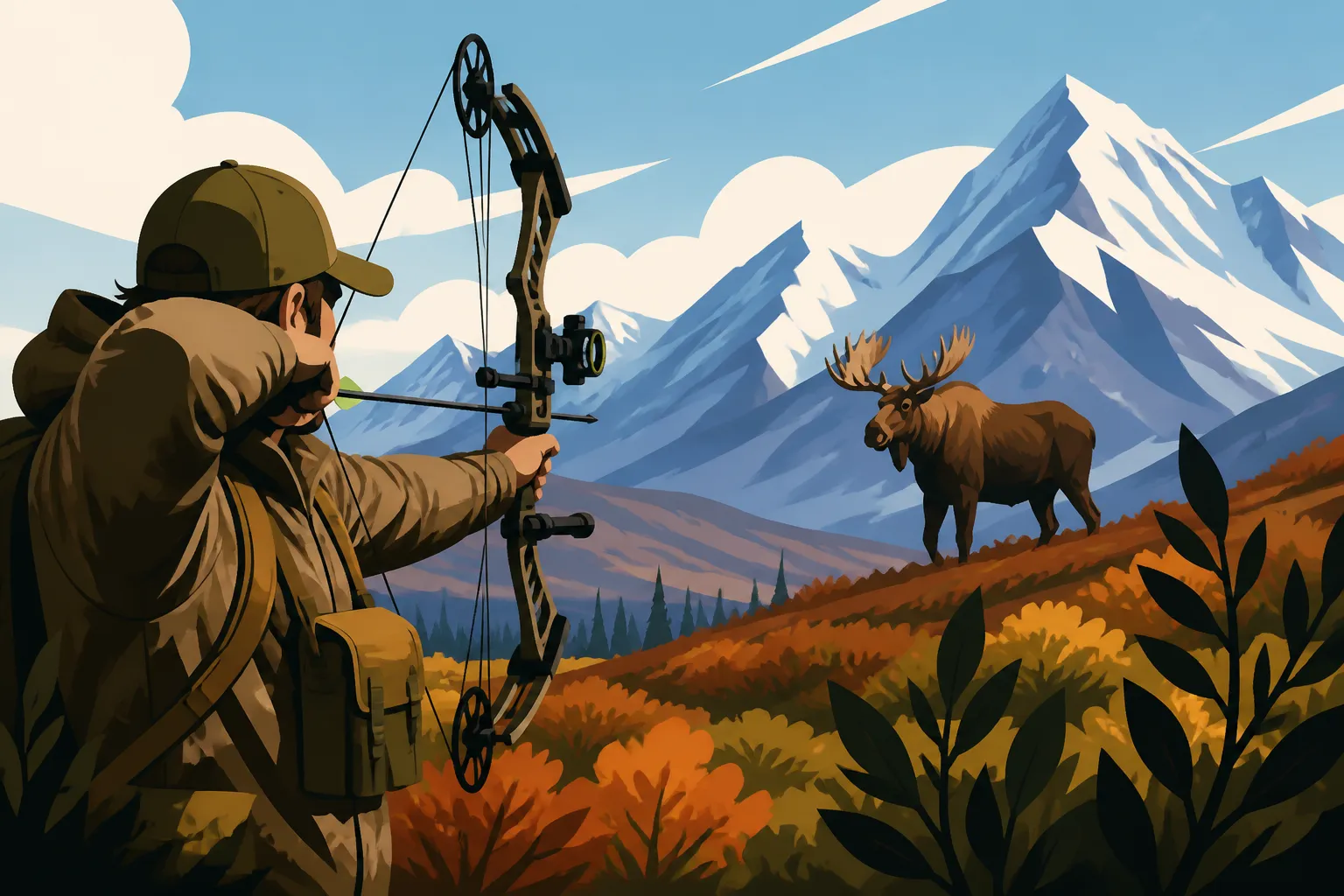
Spot-and-stalk is arguably the most exhilarating and effective tactic for bowhunting big game in Alaska. This method relies on finding animals from a distance, usually with binoculars or a spotting scope, then meticulously planning and executing a stalk to get within bow range. This is particularly effective for open country species like caribou or sheep, but can also work for moose and bear in certain habitats. Imagine glassing a distant hillside in an archery-only zone near Fairbanks, spotting a bull moose feeding, then spending hours using terrain features, wind direction, and cover to slowly close the distance, inch by agonizing inch.
The key to a successful spot-and-stalk is patience and understanding the wind. Always approach from downwind, using thermals (air currents that rise in the morning and fall in the evening) to your advantage. Take your time, move slowly, and be prepared to freeze for extended periods if an animal looks your way. Knowing the terrain, using every natural fold, rock, or clump of willows for cover is crucial. This often means crawling on hands and knees through mud or dense brush, so good quality knee pads and tough clothing are invaluable. This tactic often requires incredible physical stamina, akin to Spot-and-Stalk Dall Sheep Hunting Above Alaska Timberline, even if you're not in the mountains.
Calling Techniques for Close Encounters
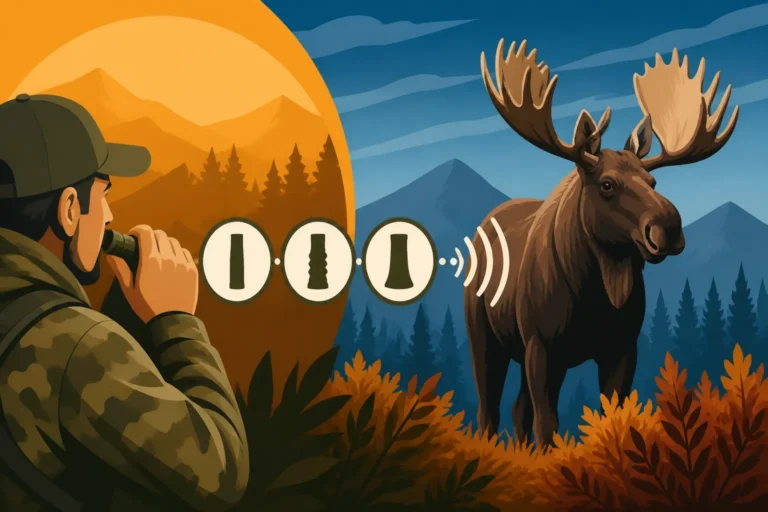
Calling is an art form in bowhunting, particularly for species like moose and black bear during certain seasons. In archery-only areas, where animals might be more habituated to general human presence but less to direct hunting pressure, calling can be incredibly effective at drawing them into bow range. For moose, cow calls and bull grunts, especially during the rut, can be irresistible. Using a moose scapula to rake brush can simulate a bull fighting or feeding, creating a visual and auditory stimulus that brings a curious bull closer. You can learn a lot by researching Calling Bull Moose During the Alaska Rut.
For black bears, especially in spring, a distressed fawn or rabbit call can sometimes lure them in, appealing to their predatory instincts. However, calling bears carries inherent risks, and extreme caution and awareness of your surroundings are paramount. It’s also crucial to practice calling before your hunt, not just the sounds, but how to set up, how to have your bow ready, and how to react when an animal responds. Positioning yourself with good cover, a clear shooting lane, and an escape route is vital when calling in close-range predators. The goal is to draw the animal into your predetermined shooting window, not to have it burst in unexpectedly.
Blind Hunting and Ambush Setups
Sometimes, the most effective approach is to let the animals come to you. Blind hunting, whether from a portable ground blind, a tree stand, or a natural ambush point, can be highly productive in archery-only areas, particularly near food sources, travel corridors, or water. This tactic is especially useful in areas with dense vegetation where spot-and-stalk is difficult, or when hunting pressured animals that have learned to avoid direct encounters.
For deer and moose, setting up a ground blind along a well-used trail leading to a feeding area or bedding cover can be excellent. In timbered archery-only zones, a tree stand overlooking a rub line or a small clearing can provide a crucial elevated advantage, allowing you to see further and remain undetected. This requires extensive scouting before the season, or using satellite imagery and mapping tools from GoHunt to identify key terrain features and animal sign. Look for pinch points, saddles, creek crossings, or areas with fresh tracks and droppings. Set up your blind or stand well in advance if possible to allow animals to become accustomed to its presence. Pay close attention to wind direction each day, as a single gust carrying your scent can ruin hours of patient waiting.
Physical and Mental Preparation for Remote Bowhunts
Bowhunting in Alaska, especially in archery-only areas that often demand more intricate stalks and closer encounters, is as much a test of mental fortitude as it is physical strength. The raw, wild landscape will push you, and being truly prepared means addressing both your body and your mind. This isn't just about hiking for miles; it's about being able to perform when it truly counts, under pressure, often after days of grueling effort.
Building the Necessary Stamina
An Alaska bowhunt can be physically demanding. Whether you're navigating dense alder thickets, climbing steep sheep hills (even if just to a glassing knob), or slogging through boggy muskeg, your body needs to be ready. This isn't just a gym membership; it's a dedicated training regimen. Focus on exercises that build endurance, strength, and core stability. Long hikes with a weighted pack – gradually increasing the weight to simulate carrying a meat load – are invaluable. Incorporate exercises like step-ups, squats, lunges, and deadlifts to strengthen the legs and back.
Cardiovascular fitness is paramount. Aim for consistent cardio like running, cycling, or swimming to improve your lung capacity, which will be critical when trying to catch your breath for a shot after a strenuous stalk. Don't forget flexibility and balance training; uneven terrain is the norm, and a twisted ankle can end a hunt prematurely. The better your physical condition, the more enjoyable and successful your hunt will be, and the safer you'll be when Packing Out Meat in Alaska: The Salvage Law Hunters Must Follow over challenging terrain.
Developing Archery Proficiency Under Pressure
Simply being able to hit a target at 30 yards isn't enough for an Alaska bowhunt. You need to be proficient under pressure, often in less-than-ideal conditions. This means practicing in your hunting clothes, including your heavy layers and backpack. Practice shooting from kneeling, sitting, and awkward positions you might encounter in the field. Practice after a sprint or a long walk to simulate an elevated heart rate.
Crucially, practice at varying ranges, not just your comfortable "sweet spot." Bowhunting in archery-only areas often means opportunities can present themselves anywhere from 10 to 40 yards, sometimes even closer. Know your maximum ethical range, and stick to it religiously. Many bowhunters carry a rangefinder, but practice estimating distances by eye, as fumbling for a rangefinder might cost you a shot. Consistency, repetition, and simulating hunting scenarios are key to building the muscle memory and mental calm needed to make an ethical shot when a trophy animal steps into your shooting lane.
The Mental Game of Close-Range Hunting
The mental aspect of bowhunting is often overlooked but is just as important as the physical. Alaska hunting can be a roller coaster of emotions: the excitement of a fresh track, the frustration of a blown stalk, the intense focus before a shot, and the quiet patience required during long waits. Archery-only areas often demand even more mental toughness due to the need for extreme stealth and precision at very close ranges. The smallest mistake, a snapped twig, or an errant puff of wind can ruin hours of effort.
Develop a strong mental game by visualizing successful hunts, practicing breathing techniques to calm nerves, and cultivating extreme patience. Be prepared for setbacks and learn to push through discomfort. Remember that decision-making under stress is crucial. Knowing when to hold, when to draw, and when to let down (if the shot isn't perfect) can be the difference between a clean kill and a wounded animal. Trust your preparation, respect the animal, and embrace the challenge. Having a solid plan and backup plan, and knowing your Signal Devices and Check-In Plans for Solo Alaska Hunts, can significantly reduce mental stress.
Dealing with Alaska's Unique Challenges
Alaska presents a myriad of unique challenges to any hunter, but for the bowhunter, these challenges can be amplified. Operating at closer ranges, with a more limited effective weapon, demands an even greater level of awareness and preparation. From navigating wildlife encounters to preserving your hard-earned meat, understanding and planning for these specific Alaskan realities is paramount.
Bear Safety for the Bowhunter
Hunting in Alaska means hunting in bear country, period. Whether it's black bears or the formidable brown bears, an encounter is always a possibility, especially around a kill site. For bowhunters, the close-range nature of the hunt means you might be physically closer to bears than a rifle hunter, and your primary weapon is less immediately effective as a deterrent. This reality demands a heightened focus on bear safety.
Always carry bear spray and know how to use it. Many experienced Alaska hunters also carry a powerful sidearm (e.g., a .44 Magnum or 10mm Auto) as a backup when in brown bear country, even if their primary weapon is a bow. When you make a kill, especially in a remote area, be extremely vigilant. Field dress your animal quickly and efficiently, and be prepared to defend your meat. A bear fence around your meat cache can provide invaluable peace of mind and protection. Remember, Bear Safety While Butchering a Kill in Alaska isn't just about carrying a weapon; it's about constant situational awareness, making noise, and understanding bear behavior. Never assume a bear won't be interested in your kill.
Meat Care in Remote, Often Warm, Conditions
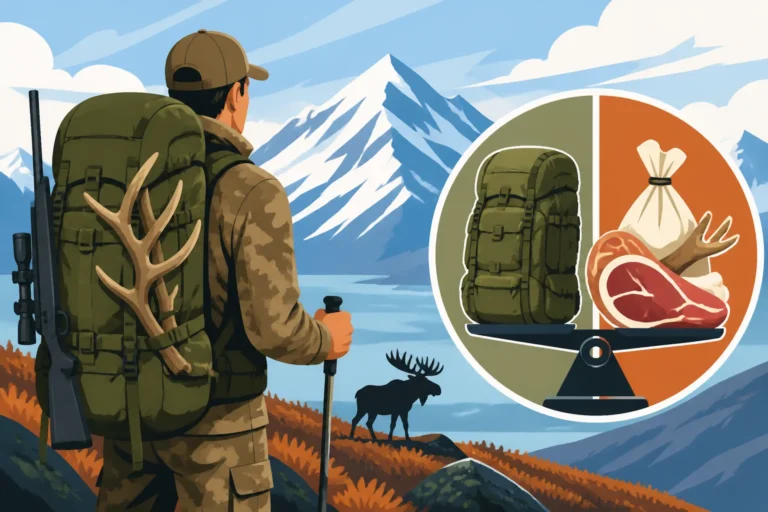
Once you've made a successful shot, the real work often begins: meat care. Alaska's "salvage law" requires hunters to salvage all edible meat from big game animals, and this means getting it cooled and protected quickly. This can be a significant challenge, especially in early season hunts where temperatures can still be quite warm. For a bowhunter who might be deep in an archery-only unit, miles from the nearest road or pickup point, this logistical hurdle is magnified.
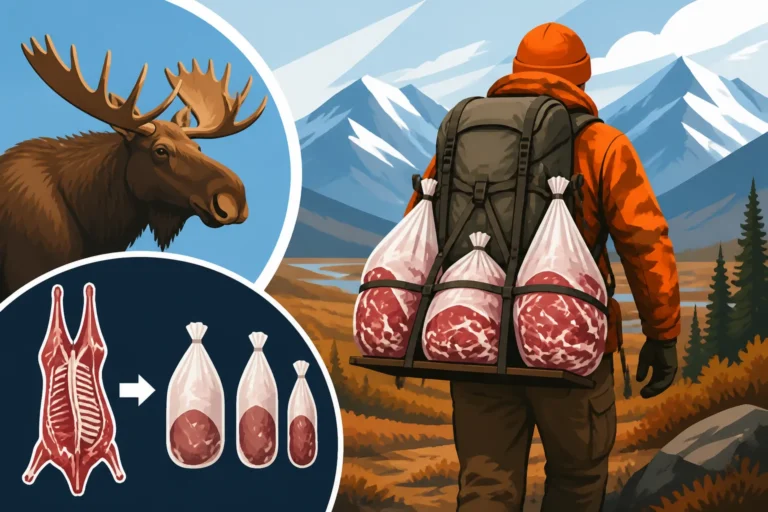
The moment an animal is down, begin field dressing immediately. Remove the guts to allow the carcass to cool internally. Skinning the animal and quartering it into manageable pieces (e.g., bone-in quarters for moose, or deboning for smaller animals) is the next step. High-quality game bags are essential to protect the meat from flies, dirt, and debris while allowing it to breathe and cool. Hang meat in the shade, off the ground, and separated to maximize airflow. If temperatures are above freezing, Hanging Meat in Warm September Weather requires extra vigilance and potentially more frequent checks, or even packing out meat in smaller loads over multiple trips. The quicker you can get the meat to a cooler or processing facility, the better the quality will be.
Logistics: Getting In and Out of Archery-Only Areas
Many archery-only areas are accessible by road, especially those near urban centers, but some might require significant foot travel, ATVs (where legal), or even small aircraft. Understanding the specific access rules for your chosen unit is critical. Is motorized access permitted? Are there trail systems, or will you be bushwhacking?
If you're hunting a road-accessible archery-only area, your logistics might be simpler, focusing on packing out meat on a game cart or sled. For more remote areas, a backpack hunting approach will be necessary. This means carefully planning your gear weight, food, and water. A pack frame designed to carry heavy loads will be your best friend when it comes time to haul out meat. Consider a multi-trip pack-out strategy if the animal is large, such as a bull moose, or if the terrain is particularly rugged. Learning how to properly bone out and Quartering a Bull Moose Alone in the Field is a skill every Alaska hunter should possess. Always have a clear extraction plan, whether it's a vehicle rendezvous, a scheduled air taxi pickup, or simply knowing your route out on foot. Using mapping tools like GoHunt to mark potential game trails and exit routes can make all the difference.
Ethical Considerations and Fair Chase
Bowhunting, by its very nature, brings a different set of ethical considerations to the forefront compared to firearm hunting. The pursuit of big game with a bow in Alaska's archery-only areas is not just about legality; it's about respecting the animal, upholding the principles of fair chase, and ensuring a humane outcome. This higher standard requires careful thought and unwavering discipline.
Shot Placement and Recovery
For a bowhunter, understanding animal anatomy and precise shot placement is absolutely critical. Your arrow's cutting action relies on hitting vital organs—specifically the heart and lungs—to cause rapid blood loss and a quick, ethical death. Unlike a high-powered rifle bullet, an arrow doesn't have the shockwave or hydrostatic force to be as forgiving of a marginal hit. Practice shooting at realistic 3D targets that highlight vital zones. Know the quartering-away, broadside, and slightly quartering-to angles, and understand which shots to take and, more importantly, which shots to pass.
After the shot, patience is paramount. Resist the urge to immediately pursue a wounded animal. Give it time—often 30 minutes to an hour for a lung shot, or several hours for a liver shot—to lie down and expire. Pushing an injured animal too soon can cause it to run further, making recovery incredibly difficult or impossible. Meticulous tracking, looking for blood, hair, and disturbed ground, is an art form every bowhunter must master. If you're unsure of your shot or the trail goes cold, back out and return later with fresh eyes or more help. Losing an animal is a deeply unfortunate outcome that every ethical hunter strives to avoid, and diligent recovery efforts are part of your responsibility.
Understanding Animal Behavior for Archery
Bowhunting demands a much deeper understanding of animal behavior than hunting with a firearm. Because you need to get so close, you must anticipate an animal's movements, reactions, and escape routes. Learn to read body language: a twitch of an ear, a flick of a tail, a subtle shift in weight—these can all signal an impending move or indicate that the animal has detected you. Use this knowledge to position yourself for a shot or to adjust your stalk.
Knowing when an animal is relaxed, feeding, or alert is crucial. When an animal is calm, it's often your best chance to close the distance. If it's alert and staring in your direction, you need to freeze and wait. Learning typical feeding patterns, bedding areas, and travel corridors will enable you to set up ambushes or plan more effective stalks. For instance, understanding how moose move through willow flats versus spruce timber will inform your approach. The more you study the natural history and behavior of your target species, the more successful you'll be at getting within that critical 20-40 yard range.
Respecting the Resource and Other Hunters
Hunting in archery-only areas, particularly those closer to human development, comes with an added responsibility to represent hunters positively. This means respecting private property boundaries, cleaning up any trash you generate (pack it in, pack it out!), and being courteous to other users of the land, whether they are hikers, birdwatchers, or other hunters. Your actions reflect on all bowhunters.
Furthermore, respecting the resource means adhering strictly to all regulations, including bag limits, season dates, and legal animal definitions. Don't push the legal boundaries; if you're unsure if a moose has enough brow tines or if a ram is full curl, pass. The opportunity will come again. Ethical hunters prioritize a clean kill, full meat salvage, and leaving no trace. This stewardship ensures that these unique archery-only opportunities continue to exist for future generations of bowhunters in Alaska.
Disclaimer
The information provided in this guide is for general informational purposes only and does not constitute legal advice. Hunting regulations in Alaska are complex and subject to change. Always consult the most current Alaska Department of Fish and Game (ADF&G) hunting regulations booklet and any applicable emergency orders before planning or undertaking a hunt. It is the individual hunter's responsibility to know and obey all federal, state, and local laws and regulations.