Rural Residency and Federal Subsistence Eligibility in Alaska
Navigating the hunting regulations in Alaska can feel like trying to untangle a knotted fishing line in the dark, especially when you start diving into the distinctions between state and federal rules. One of the trickiest areas, and a source of genuine frustration for many aspiring hunters, is understanding rural residency and eligibility for federal subsistence hunts. This guide is here to shed some light on that often-confusing landscape, explaining what federal subsistence means, who qualifies, and how you can figure it all out.
Understanding the Dual System of Alaska Hunting
Alaska is truly unique, not just in its vast wild landscapes but also in its complex framework of land management and hunting regulations. Unlike most states where a single agency, typically the state fish and wildlife department, governs all hunting, Alaska operates under a dual system that can leave many hunters scratching their heads.
State vs. Federal Jurisdictions in Alaska
Imagine stepping into a colossal store where some aisles are managed by one company and others by a completely different one, each with its own set of rules, even for the exact same products. That's a bit what hunting in Alaska feels like with state and federal jurisdictions. Large portions of Alaska are federal lands, including National Parks, Preserves, National Wildlife Refuges, and Bureau of Land Management (BLM) lands. Alongside these, you have vast expanses of state land, Native Corporation lands, and even some private parcels.
The Alaska Department of Fish and Game (ADF&G) generally manages game populations and hunting on all lands within the state, issuing licenses, tags, and setting seasons. However, on federal lands, the federal government (through agencies like the National Park Service, U.S. Fish and Wildlife Service, and BLM) also has authority, particularly when it comes to subsistence uses. This creates a situation where you might be hunting the same species, in the same Game Management Unit (GMU), but depending on whose land you're standing on and who you are, the rules can be vastly different. It’s this intricate patchwork that often leads to confusion and, frankly, a lot of head-scratching moments for hunters trying to do everything by the book.
Why Federal Subsistence Exists
The federal subsistence program isn't some arbitrary bureaucratic creation; it's deeply rooted in Alaska's history and legal framework. It primarily stems from the Alaska National Interest Lands Conservation Act (ANILCA) of 1980. This landmark federal law set aside over 100 million acres of federal land in Alaska for conservation purposes, but it also recognized and protected the customary and traditional subsistence uses of renewable resources by rural Alaska residents.
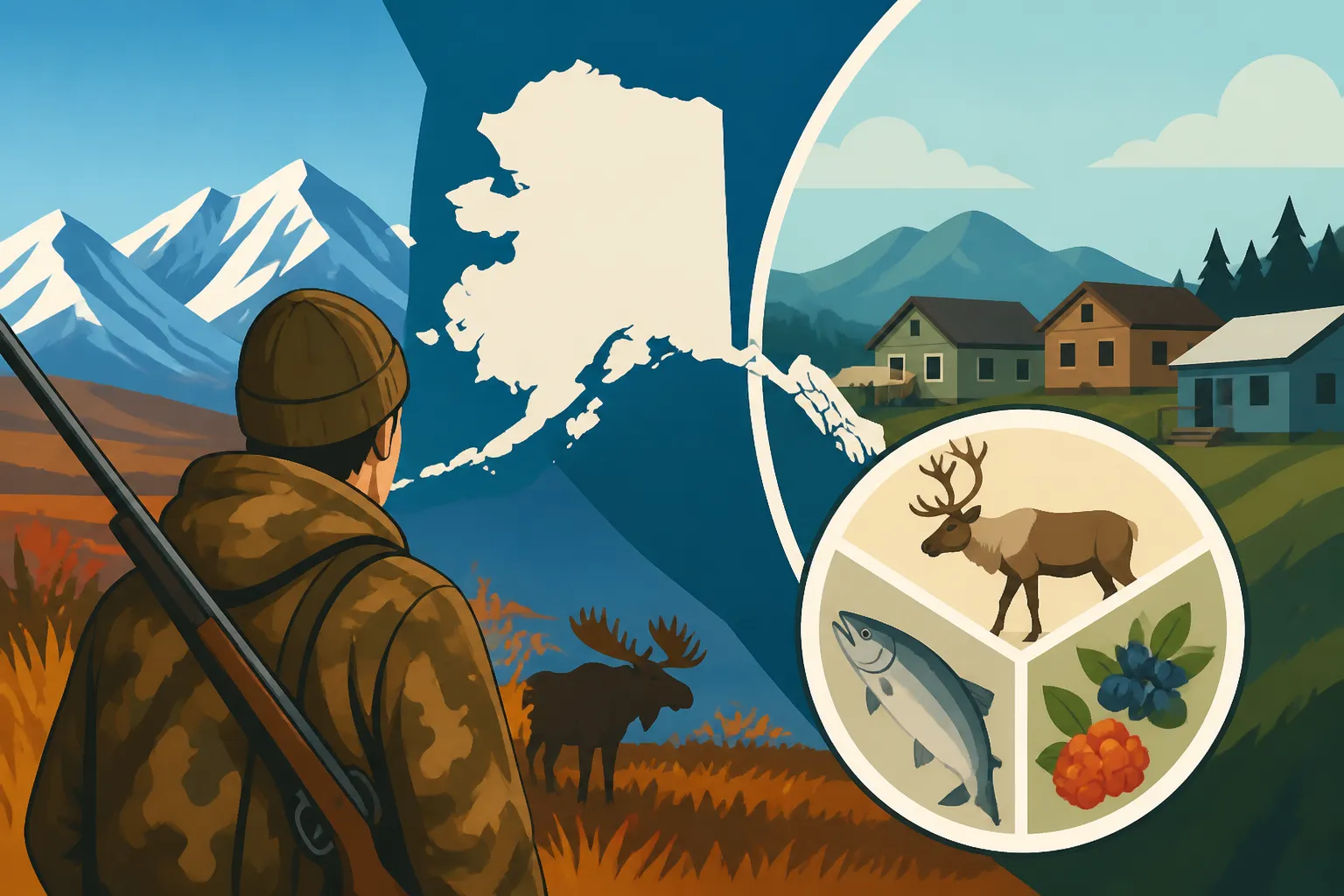
The core goal of federal subsistence is to ensure that rural Alaskans, many of whom have historically relied on hunting, fishing, and gathering for their sustenance and cultural practices, continue to have priority access to these resources on federal lands. It's an acknowledgment that for many communities, hunting isn't just a recreational pursuit; it's a way of life, a primary food source, and a fundamental part of their heritage. This priority is granted over urban residents and non-residents, a distinction that, while legally sound, can sometimes feel unfair to those who don't qualify but still cherish the tradition of hunting. The program aims to maintain healthy fish and wildlife populations while ensuring these traditional ways endure.
Defining "Rural Residency" for Federal Subsistence
This is where things get really specific and, unfortunately, often lead to the most misunderstandings. The term "rural" in the context of federal subsistence isn't just about whether a town feels small or isolated; it's a very particular legal definition.
The Legal Criteria for Rural Status
For federal subsistence purposes, "rural" isn't a feeling; it's a designation based on specific criteria, primarily population size and density, as determined by the Federal Subsistence Board (FSB). The overarching idea is that communities lacking a significant urban infrastructure or population density are considered rural. Historically, this has meant communities with populations under a certain threshold, often 2,500 people, and without significant road access to larger urban centers, though the criteria can be more nuanced.
The frustrating part is that some communities that might feel very remote or small to an outsider, or even to a lifelong Alaskan, are actually classified as "non-rural" by federal standards. This determination is crucial because if your primary residence is in a community designated as non-rural, you are generally not eligible for federal subsistence permits, regardless of how much you depend on wild game. The federal government maintains a list of communities designated as either rural or non-rural, and this list is the definitive answer, not your gut feeling or your impression of the town's size. It’s imperative to check this official list rather than making assumptions based on perceived remoteness.
Common Misconceptions About Rural Eligibility
It's really easy to get this wrong, and I've seen countless hunters express frustration over it. Many people mistakenly believe that if they live outside of Anchorage or Fairbanks, they must be "rural." But Alaska has several other population centers that are, by federal definition, considered non-rural. For instance, Juneau, Ketchikan, Sitka, Kodiak, and Valdez are all federally designated non-rural communities. So, while someone living in Valdez might feel like they're in a small, isolated town compared to Seattle or even Anchorage, for the purposes of federal subsistence, they are considered an urban resident and are not eligible for federal priority hunts.
This distinction often catches people off guard, especially those who move to a place like Kodiak Island, assuming the entire island is rural due to its remote nature. Only certain communities on Kodiak might qualify as rural. This can be a huge letdown for folks who moved hoping to participate in specific hunts. Always, and I mean always, verify your community's official designation before making any hunt plans or assumptions. The Alaska Department of Fish and Game (ADF&G) and the Office of Subsistence Management websites are excellent resources to find the official list of designated rural and non-rural communities. You can often find detailed information on What Counts as a Rural Community in Alaska on their respective sites.
Applying for Federal Subsistence Permits
If you've confirmed your rural residency, the next step is understanding how to actually apply for and secure federal subsistence permits. This process often runs parallel to, but distinctly separate from, the state's hunting permit system.
The Application Process for Federal Permits
Applying for federal subsistence permits is a specialized process that requires careful attention to detail and, crucially, understanding which agency manages the specific hunt you're interested in. Depending on the federal land you plan to hunt – be it a National Park/Preserve, National Wildlife Refuge, or BLM land – you'll be dealing with different federal offices. The Office of Subsistence Management (OSM), under the U.S. Fish and Wildlife Service, generally oversees the federal subsistence program, but the permits themselves are often issued by specific federal land managers.
Typically, you'll need to fill out a federal subsistence permit application, which will ask for proof of your rural residency in Alaska. This might include utility bills, property tax statements, or other documents verifying your primary domicile. Deadlines are critical and can vary significantly from state hunt deadlines, so tracking them carefully is a must. For instance, a federal hunt for caribou in a National Preserve might have an application period in late spring, separate from the state's fall drawing deadlines. It’s not uncommon to find these applications available online through the relevant federal agency's website. If you're planning a trip, be sure to look into Federal Subsistence Permits on Alaska Refuges well in advance, as they often have unique requirements.
Specific Federal Hunt Opportunities
Federal subsistence hunts are designed to offer opportunities for species traditionally harvested by rural residents. This often includes prime opportunities for species like caribou, moose, and sometimes even bears and sheep, particularly in areas like National Preserves or National Wildlife Refuges. For example, some units within the vast Western Arctic Caribou Herd range, or specific areas within the Wrangell-St. Elias National Preserve, might have federal subsistence seasons that are exclusive to rural residents or have more liberal bag limits or earlier opening dates than the state general seasons.
These hunts are distinct from the state's general hunts or drawing permits. While the state might have a limited drawing permit for moose in a particular area, federal subsistence hunters might have a registration hunt for moose in a adjacent or overlapping federal parcel. It’s essential to remember that even if you qualify for a federal subsistence permit, you still need a valid Alaska state hunting license and any species-specific state locking tags required for the animal you intend to hunt. The federal permit grants you the opportunity under specific federal regulations, but the state still requires its basic licensing. This layered approach is another example of the complexity unique to Alaska hunting, making meticulous planning with resources like GoHunt even more critical to avoid any legal missteps.
Navigating Federal vs. State Season Differences
One of the biggest headaches for hunters in Alaska, rural or urban, is the potential for completely different season dates and regulations between federal and state jurisdictions, even for the same game animal in adjacent areas. It's a prime source of confusion and sometimes, accidental violations.
When Federal Seasons Differ from State Seasons
Imagine you're hunting moose in a vast area that straddles both state and federal lands. The state-managed portion might open on September 1st with a specific antler restriction, while the federal subsistence portion, literally a few miles away, could open on August 20th with a different bag limit, perhaps even allowing a "bull of any size" for qualified rural residents. This isn't a hypothetical; it's a common reality in Alaska.
These differing seasons and bag limits are a direct result of the federal government's mandate to provide priority for subsistence users. While the state manages for general public harvest and often focuses on opportunity for all residents, federal regulations prioritize those rural residents with customary and traditional uses. This means a federal hunt might open earlier, close later, or have different sex/age restrictions (like antlerless animals or specific antler-point requirements) than the corresponding state season. Hunters must be incredibly diligent, often carrying both state and federal regulations booklets, and possess a clear understanding of land ownership boundaries, which can be tricky without excellent mapping tools. Failing to understand these nuanced differences can easily lead to a citation for hunting out of season or taking an illegal animal. The frustration is real when you think you’re legal, only to find out the line on the map meant a whole new set of rules.
Unit 23 Federal Closure to Nonlocal Hunters: A Case Study
Perhaps no situation exemplifies the federal subsistence priority and its impact on non-local hunters more clearly than Unit 23 in Northwest Alaska. This vast area, encompassing much of the range of the Western Arctic Caribou Herd, has seen significant federal management decisions that directly limit access for non-rural hunters. The Unit 23 Federal Closure to Nonlocal Hunters has been in effect for years, effectively closing federal lands within Unit 23 to non-federally qualified hunters for caribou.
This closure is rooted in the health of the Western Arctic Caribou Herd. When the herd population falls below a certain threshold, as it has in recent years, federal managers invoke measures to ensure subsistence priority for the local rural communities. This means if you are not a federally qualified rural resident of Unit 23, you generally cannot hunt caribou on federal lands there, even if the state has an open season for other areas or species. This closure ensures that the crucial resource remains available for the communities that depend on it most directly. Understanding the Western Arctic Herd Threshold for Unit 23 Access is key to grasping why these restrictions are in place and why they are so impactful for those outside the local subsistence community. It's a stark reminder that land status and residency are paramount in Alaska hunting.
The Impact and Future of Federal Subsistence
The federal subsistence program is a constantly evolving topic, deeply intertwined with wildlife management, cultural heritage, and the broader social fabric of Alaska. Its impacts are felt across the state, sparking both support and criticism.
Benefits and Criticisms of the System
On the one hand, the benefits of federal subsistence for rural Alaskans are undeniable. It provides essential food security and cultural continuity for communities that have relied on wild resources for generations. For many, harvesting moose, caribou, or salmon isn't a leisure activity; it's a critical component of their diet and a practice that reinforces their connection to the land and their heritage. The system aims to protect these traditional ways of life in the face of modern development and increasing population pressures.
However, the system also draws its share of criticism. Many non-rural Alaskan residents, particularly those who live in urban areas like Anchorage or Fairbanks, often feel unfairly excluded from hunting opportunities on federal lands that they also help to fund through taxes. They argue that while they respect subsistence needs, the strict division creates a "have and have-not" system that can seem arbitrary, especially when they hunt just miles from a federal subsistence zone. Non-residents also often find the system challenging to understand and navigate, as they generally have no access to federal subsistence hunts and must rely solely on state-managed opportunities. It's a complex ethical and practical debate, where valid arguments exist on both sides, highlighting the persistent tension between different user groups and their access to Alaska's shared resources.
Staying Informed About Regulatory Changes
Given the dynamic nature of game populations, climate, and human needs, both state and federal hunting regulations in Alaska are subject to frequent changes. What's true this season might not be true next season, making constant vigilance absolutely essential. Relying on outdated information is a recipe for disaster.
The best way to stay informed is to regularly check the official sources. For federal subsistence rules, the Office of Subsistence Management (OSM) website is your primary resource. They post proposed changes, meeting schedules, and final regulations. For state regulations, the Alaska Department of Fish and Game (ADF&G) website is the go-to. They release new regulation booklets annually and publish emergency orders that can close seasons early or modify bag limits. Organizations like GoHunt also provide valuable services, consolidating information and offering tools to track changes and analyze draw odds, which can be particularly helpful for planning complex Alaskan hunts. Understanding How Alaska Sets Its Hunting Seasons through its Board of Game, and following the Alaska Board of Game Meeting Cycle will give you insight into potential future changes. Make it a habit to review these sources before every hunt, and even periodically throughout the year if you're planning for the future.
Here's a comparison of key aspects of state versus federal subsistence hunting in Alaska:
| Feature | Alaska State Hunting | Federal Subsistence Hunting (on Federal Lands) |
|---|---|---|
| Eligibility | All licensed hunters (resident, nonresident, alien) | Federally qualified rural Alaska residents only |
| Primary Goal | Conservation, sustained yield, recreational harvest | Priority for customary & traditional rural subsistence uses |
| Permit Types | General season, drawing permits, registration permits, harvest tickets | Federal subsistence permits (registration or harvest tickets) |
| Season Dates | Set by Alaska Board of Game; generally uniform for all | Set by Federal Subsistence Board; can differ significantly from state seasons |
| Bag Limits | Set by ADF&G, generally applies to all hunters | Can be more liberal than state limits for qualified users |
| Land Managed | All lands (state, federal, private) within state jurisdiction | Specifically federal lands (National Preserves, Refuges, BLM) |
| Required License | Alaska State Hunting License + appropriate tags | Alaska State Hunting License + appropriate tags + Federal Subsistence Permit |
| Examples of Access | Road system hunts, general draw hunts | Specific federal units, certain caribou herds (e.g., Unit 23) |
Staying on top of these nuanced rules is essential for a legal and successful hunting experience in Alaska. It’s not just about knowing where to go, but knowing whose rules apply to you when you get there. For more detailed information, remember to check resources like Alaska Residency Requirement for Subsistence Hunts and Federal Versus State Subsistence Priority in Alaska which often clarify these complex eligibility requirements. And don't forget the importance of proper reporting; missing the Alaska Harvest Report Deadline After the Hunt can lead to penalties regardless of your eligibility status. Always confirm the most current information, including Alaska Hunter Education Card Requirements and your Alaska Hunting License Validity Period, directly with ADF&G or the relevant federal agency before you head into the field.
Disclaimer
The information provided in this guide is for general informational purposes only and is not intended as legal advice. Hunting regulations in Alaska are subject to change, and it is the hunter's sole responsibility to consult the most current Alaska Department of Fish and Game regulations, Federal Subsistence Management regulations, and any applicable local or federal land management rules before engaging in any hunting activities. Always verify all information with the official regulatory agencies.