Wolf Coat Colors Across Alaska
When most people picture an Alaskan wolf, they often envision a uniform gray. But the truth is, these incredible animals exhibit a stunning array of coat colors, from ghostly white to midnight black. This diversity isn't just visually striking; it reflects deep genetic influences and adaptations to Alaska's varied landscapes. Understanding these unique color patterns can greatly enhance your appreciation and field identification skills, whether you're observing or hunting. This guide will delve into the fascinating factors behind wolf coat colors across the Last Frontier.
The Genetic Tapestry Behind Wolf Colors
The incredible variety in wolf coat colors isn't random; it's a complex dance of genetics, environmental pressures, and evolutionary history. Wolves, like many mammals, carry a suite of genes that determine everything from the color of individual hairs to the overall pattern of their fur. It's a much more intricate picture than simply "gray."
Dominant and Recessive Genes
At the heart of wolf coloration are various dominant and recessive genes. For instance, a common misconception is that a wolf is simply gray. In reality, a "gray" wolf typically has individual hairs that might be banded with black, brown, tan, and even white, creating an overall grizzled or blended appearance. The expression of these genes dictates whether a wolf will be predominantly black, white, or one of the many shades of gray and tan in between. A wolf might carry recessive genes for a color that doesn't show up in its own coat, but could be passed on to its pups. This is why you can sometimes see a litter with black, white, and gray individuals, even if the parents appear to be the same color. It's a beautiful example of Mendelian genetics playing out in the wild, ensuring a robust genetic diversity within the pack.
Melanism and Leucism
Two of the most striking color variations in Alaskan wolves are melanism (black coats) and leucism (white coats). These aren't just subtle shifts in gray, but profound expressions of genetic traits.
Melanistic wolves, often referred to as black wolves, are completely black from nose to tail. This trait is caused by a genetic mutation, specifically an allele that is thought to have entered wolf populations through historical interbreeding with domestic dogs. This gene is dominant, meaning a wolf only needs one copy of the gene to express a black coat. While a black wolf might seem disadvantageous against snow, it can offer excellent camouflage in dense, dark forests or at dawn and dusk when light is low. Some researchers even suggest there might be immune system advantages linked to the melanism gene, potentially contributing to its persistence.
On the other hand, leucistic wolves are predominantly white. It's important to distinguish leucism from albinism; leucistic animals retain normal pigment in their eyes (which are typically amber or brown), nose, and paw pads. Albinos, by contrast, lack all pigment and have red or pink eyes. White wolves are particularly common in arctic and subarctic regions of Alaska, where their coats blend seamlessly into snowy landscapes. This natural camouflage is invaluable for a predator that relies on stealth, allowing them to approach prey undetected. In these environments, being white isn't just a pretty characteristic; it's a vital survival tool.
Regional Variations in Alaskan Wolf Coat Colors
Alaska is an immense state with incredibly diverse ecosystems, and the coat colors of its wolf populations often reflect their local environments. A wolf pack in the snowy Arctic will face very different challenges and opportunities than one in the dense, rainy forests of Southeast Alaska. These adaptations over generations have led to distinct regional patterns in wolf coloration.
Arctic and Interior White Wolves
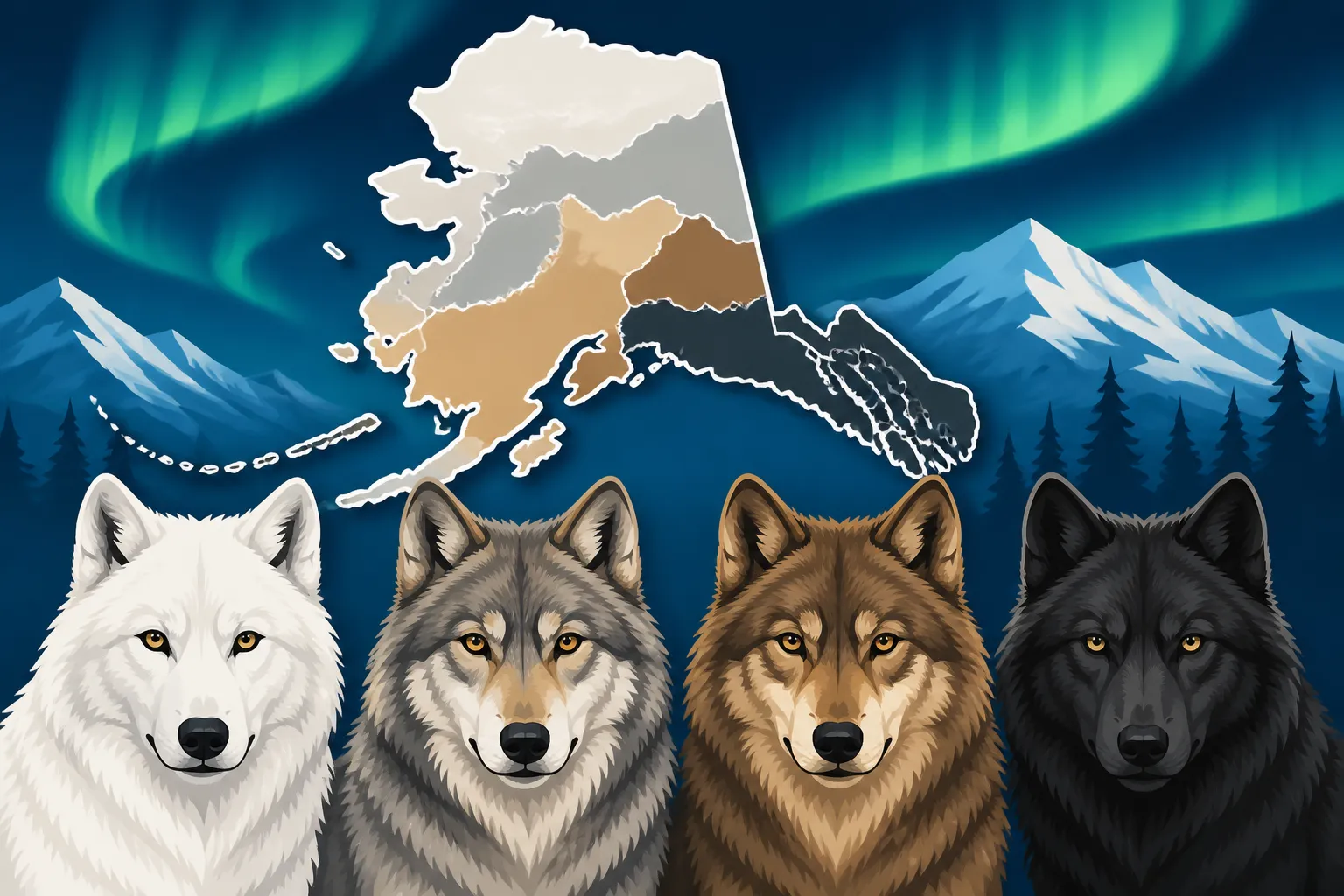
When you picture a truly wild, majestic white wolf, you're likely imagining one from Alaska's far north or vast interior. In the treeless tundras of the Arctic Slope and the sparse boreal forests that stretch across much of Interior Alaska, pure white or very light gray wolves are a common sight. Their striking white coats offer unparalleled camouflage in the long, snow-covered winters that define these regions. Whether stalking caribou on a windswept ridge or approaching a moose in a frozen river bottom, a white coat allows these predators to become almost invisible against the snowy backdrop. This adaptation is crucial for their hunting success in open country where cover is scarce. You'll often see these ghostly forms roaming areas like the Arctic Slope Hunting in Unit 26A or through the vast expanse of the Brooks Range, perfectly suited to their frigid, white-dominated world. For hunters planning to pursue wolves in these northern reaches, understanding this natural camouflage is key to spotting them against the terrain.
Gray and Tan Wolves of the Boreal Forest
Moving south into the heart of Alaska's boreal forest, the classic "gray" wolf becomes more prevalent. These wolves are far from uniformly gray; their coats are often a rich mosaic of grizzled gray, various shades of brown, black guard hairs, and creamy tan underfur. This complex coloration is a masterclass in camouflage within the mixed spruce and birch forests, brushy river bottoms, and treeline areas that characterize central and southcentral Alaska. The dappled sunlight filtering through the canopy, the shadows of dense spruce, and the varying colors of forest floor vegetation all provide a perfect backdrop for these blended coats. Whether they're moving through the Susitna Valley, exploring the vast drainages of the Yukon and Kuskokwim, or traversing regions like Hunting Unit 13 and the Nelchina Basin, their coats allow them to blend into the shadows and broken terrain. This blend helps them disappear from the sight of prey like moose and caribou, making their presence known only when it's too late.
Black Wolves of the Coastal and Southeastern Forests
Perhaps the most striking color variation, black wolves are seen with higher frequency in specific regions, particularly along Alaska's rainy coastlines and in the dense, dark rainforests of Southeast Alaska. While they can occur anywhere, their prevalence seems elevated in areas like the Kenai Peninsula, Kodiak Island, or the islands of Southeast. The deep, dark hues of their coats provide excellent concealment amidst the shadows of old-growth spruce and hemlock forests, where light penetration can be minimal even on bright days. A black wolf can seem to vanish into the undergrowth, particularly during the region's frequent overcast weather or when silhouetted against dark timber. While a black wolf might stand out sharply against fresh snow, in the typical dark and moist forest environments they inhabit, they are incredibly effective at remaining unseen. The exact reasons for this higher concentration of melanistic wolves in coastal and southeastern regions are still debated, but environmental factors, genetic drift, and potentially even immune system advantages associated with the melanism gene could play a role in their success here.
Age and Seasonal Changes in Wolf Pelts
A wolf's coat isn't a static feature; it's a dynamic reflection of its age, health, and the changing seasons. The pelage can dramatically alter in appearance throughout the year, offering different challenges and opportunities for camouflage and warmth. Understanding these shifts is crucial for anyone hoping to observe or hunt wolves.
Pup Coats to Adult Pelts
When wolf pups are born, they typically arrive with soft, fuzzy, and often darker coats compared to their adult counterparts. This dense, insulating fur helps keep them warm in the den during their vulnerable early weeks. As they grow and begin to venture out, their coats gradually transition. This process isn't instant; it can take a year or more for a young wolf to fully develop its adult coloration and texture. You might notice a yearling wolf looking a bit scruffier, with a less defined color pattern than a mature adult. As wolves age further, especially into their senior years, their coats can start to show signs of "grizzling" around the muzzle and face, with white or gray hairs appearing, much like humans going gray. Their fur might also thin or become coarser in texture. These subtle changes are part of the natural life cycle and can sometimes offer clues to an individual wolf's age and experience within the pack.
Winter vs. Summer Coats
The most dramatic transformation in a wolf's appearance comes with the change of seasons. Alaska's severe winters demand exceptional insulation, and a wolf's winter coat is a marvel of natural engineering. These pelts are incredibly thick, dense, and luxurious, featuring a deep layer of insulating underfur protected by long, coarse guard hairs. This winter fur often appears richer in color and can even seem lighter overall due to the sheer volume of pale underfur and the way light reflects off the guard hairs, providing enhanced camouflage against snow-covered landscapes. It's a prime example of nature's design for survival in extreme cold. For those interested in trapping or hunting, this is often the most prized time for their hides.
As spring arrives and temperatures rise, wolves begin to shed this magnificent winter coat, transitioning to a much thinner, sparser summer pelt. This process, often called "blowing coat," can make a wolf look ragged and even sickly for a period. The summer coat appears darker and flatter, as the dense underfur is largely gone, and the guard hairs are shorter and less abundant. A wolf in its summer coat might appear significantly smaller and lankier than the same animal in its winter prime. This lighter coat helps them regulate body temperature during warmer months, but also means a different visual signature in the field. When Predator Calling for Alaska Wolves and Wolverine in the summer months, be prepared for a less impressive pelt than what you might see in a wildlife documentary filmed in winter.
Implications for Hunters and Wildlife Enthusiasts
Understanding the nuances of wolf coat colors isn't just an academic exercise; it has practical implications for anyone venturing into Alaska's wild spaces. Whether you're a hunter, photographer, or simply an admirer of these apex predators, knowing what to look for can significantly enhance your experience and success.
Field Identification and Observation
One of the most immediate benefits of recognizing wolf coat variations is improved field identification. While size and gait are primary identifiers, knowing that wolves in the far north are often white, while those in southeastern rainforests might be black, can help you narrow down possibilities when spotting a distant canid. It's a common mistake to misidentify a wolf, especially at a distance, confusing them with coyotes or even large domestic dogs. However, observing the specific color patterns, alongside their characteristic long legs, deep chest, large feet, and broad head, helps confirm their identity. Utilizing resources like GoHunt for researching specific units and their known wildlife populations can give you a better idea of what to expect in terms of wolf presence and potential color phases. Remember, an isolated black speck against a snowy field could just be a distant boulder, but if you're in an area known for black wolves and you see movement, it warrants a closer look. Similarly, knowing that wolves can appear thinner and darker in their summer coats helps avoid misjudgment when Wolf Packs Sizes in Interior Alaska are seen.
Trophy and Aesthetic Considerations
For hunters pursuing wolves, coat color can be a significant aesthetic factor. Many hunters dream of a pristine white arctic wolf pelt or a sleek, jet-black hide from the coastal forests. These unique pelts are often highly prized as trophies, reflecting the challenging nature of the hunt and the stunning beauty of the animal. A successful wolf hunt can culminate in a magnificent rug or wall mount that captures the essence of Alaska's wilderness. When considering a wolf hunt, whether through a guide or on your own, researching areas known for specific color phases might influence your choice of hunting grounds. GoHunt, for example, can be an excellent platform to research different game management units and their characteristics, including anecdotal evidence of wolf color prevalence. Should you be successful, proper Cape Care for a Life-Size Bear Mount principles should be applied to your wolf hide, ensuring it's handled correctly in the field to preserve its quality for tanning and taxidermy.
| Alaskan Region | Typical Wolf Coat Colors | Primary Camouflage Advantage |
|---|---|---|
| Arctic Tundra & Brooks Range | Pure White, Light Gray | Blends with snow-covered landscapes, treeless terrain |
| Interior Boreal Forest | Grizzled Gray, Brown, Tan, Mixed Black | Dappled light and shadows of spruce and birch forests |
| Southcentral Mountains | Varied Gray, Brown, Occasional Black, Some White at higher elevations | Diverse terrain of mountains, forests, and alpine tundra |
| Coastal Rainforest (Southeast) | Predominantly Black, Dark Gray, Occasional Brown | Deep shadows of dense old-growth forests, frequent overcast |
| Western Alaska | Mixed Gray, Tan, Some White (further north) | Tundra, scrub brush, and riverine environments |
Disclaimer
This article is for general informational purposes only and does not constitute professional advice. Laws, prices and regulations vary by location and change over time. Consult a qualified professional for guidance on your specific situation.