Wolverine Range and Density in Alaska
It can feel like you're chasing a phantom when you set out to find a wolverine in Alaska. These enigmatic creatures are truly the spirits of the northern wild, often leaving nothing but a faint track in the snow or a fleeting glimpse in the distance. This guide aims to pull back the curtain on these incredible animals, helping you understand their true range and density across Alaska's vast landscapes, and what that means for actually encountering one.
The Elusive Nature and Solitary Lives of Wolverines
Wolverines (Gulo gulo), often called "skunk bears" or "gluttons," are undeniably one of Alaska's most elusive and fascinating predators. Unlike their more social cousins, wolves, or the relatively predictable movements of bears around food sources, wolverines tend to be fiercely solitary. This characteristic alone makes them incredibly difficult to study and even harder to encounter in the wild. A single wolverine can roam hundreds of square miles, constantly on the move, making their presence sparse even in areas where their population is considered stable. This solitary existence minimizes competition for scarce resources in harsh environments, but it also means that hunters or wildlife enthusiasts might spend years in prime wolverine habitat without ever seeing one. It’s a testament to their wildness, and perhaps a source of both frustration and profound respect for those who appreciate the true wilderness experience.
Their independence also means that while you might find signs of other animals congregating around a winter kill or a salmon stream, a wolverine is far more likely to approach such a bounty alone, often under the cover of darkness or in the deep stillness of a snow-choked forest. This makes relying on typical game patterns for other species less effective for locating wolverines. You're not looking for a group; you're looking for a single, powerful, and notoriously shy individual navigating an immense territory all by itself. Their ability to cover vast distances quickly, combined with their solitary nature, contributes significantly to the feeling that they are almost mythological creatures, always just beyond reach.
Diet, Scavenging Habits, and Cache Behavior
Wolverines are often characterized as opportunistic scavengers, and for good reason. Their diet is incredibly varied and largely dictated by what's available in the harsh environments they inhabit. While they are capable hunters, taking down small game like rodents, birds, and even larger prey like deer or caribou calves when the opportunity arises, a significant portion of their sustenance comes from scavenging. They possess an incredibly powerful sense of smell, allowing them to detect carcasses, especially those buried under snow or hidden from other predators, from remarkable distances. This makes them frequent visitors to winter kill sites or even abandoned meat caches left by hunters.
Their scavenging prowess also means they are incredibly resourceful. They can crunch through bone and frozen meat that would deter many other predators, utilizing every last bit of a carcass. This efficiency is critical for survival in areas where food can be scarce for long periods. A particularly intriguing behavior is their caching of food. A wolverine will often drag large pieces of meat, sometimes weighing more than itself, and bury them in snow, under rocks, or in dense vegetation. This behavior, sometimes called "lardering," allows them to store food for leaner times. This drive to cache also makes them a concern for hunters who have downed game in remote areas. Ensuring you have a robust Bear Fence Setup at a Meat Cache is not just for bears; a determined wolverine can cause significant damage to an unguarded kill, too. They are relentless once they find a food source, and their powerful jaws and claws can tear through many conventional barriers.
Geographic Range of Wolverines Across Alaska
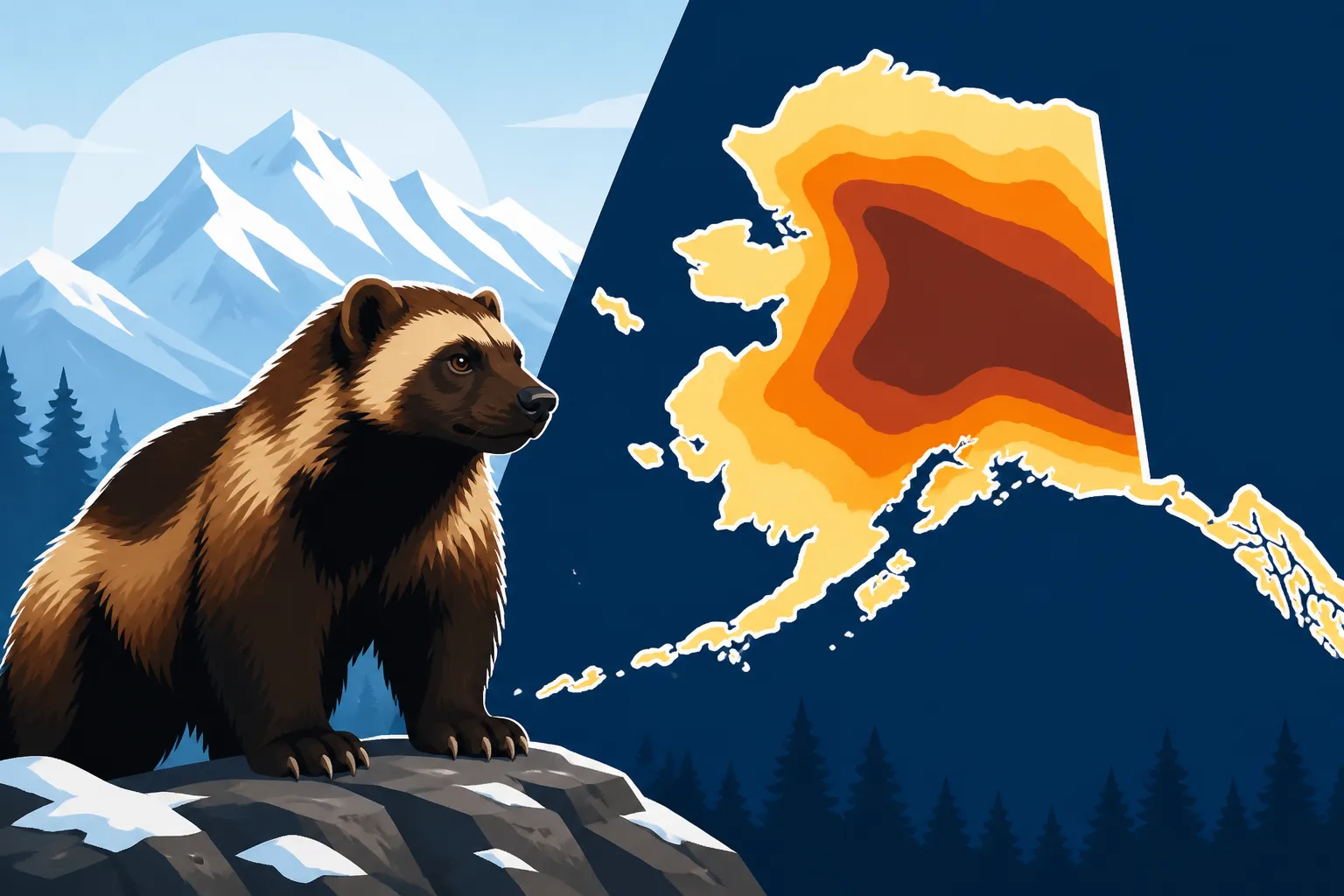
Alaska is essentially one massive wolverine habitat. You'd be hard-pressed to find a major region within the state where wolverines aren't present, though their density varies considerably. They thrive in rugged, remote, and often cold environments, which describes much of the Last Frontier. From the vast boreal forests of the Interior to the jagged peaks of the Alaska Range and the remote stretches of the Arctic Slope, these animals have carved out a niche. Their range is truly expansive, reflecting their adaptability to diverse terrain and climates. This widespread distribution makes understanding their habitat preferences even more crucial for anyone hoping to locate them, whether for photography, research, or hunting purposes.
However, "widespread" doesn't mean "common." Even in areas where they are known to reside, their low population density means that simply being "in their range" isn't enough; you need to understand the nuances of where they prefer to spend their time within that range. This is where detailed topographic maps and satellite imagery, perhaps utilized through platforms like GoHunt, can be invaluable for identifying potential travel corridors and preferred habitat types. Knowing that they exist across the state is one thing; pinpointing the specific microhabitats they exploit within a vast Game Management Unit (GMU) is another challenge entirely.
Interior Alaska's Vast Wilderness
The vastness of Interior Alaska, stretching from the Yukon-Kuskokwim Delta east to the Canadian border and north to the Brooks Range foothills, represents prime wolverine territory. This region is characterized by extensive taiga forests, tundra, and numerous mountain ranges. Here, wolverines roam free across millions of acres of wild land, often following caribou migrations or frequenting areas with high moose populations, capitalizing on winter kills or predator activity. The sheer scale of the landscape allows them to maintain their solitary habits without frequent encounters with other wolverines or humans. Rivers and drainages often serve as natural highways through dense forests, and wolverines will readily use these for travel.
When considering areas like the sprawling forests around Fairbanks or the remote reaches of the Yukon Flats, it's important to remember the seasonal shifts in prey availability. In winter, for example, a wolverine might focus its efforts on areas where snow conditions make it easier to scavenge from wolf kills or find weakened ungulates. During warmer months, they might shift their focus to smaller mammals, bird nests, or even berries. Understanding these seasonal food patterns, often visible through detailed scouting reports or mapping tools, can provide clues to their movements, even if direct sightings remain rare. This dynamic relationship with their environment means a reliable food source in one season might not be reliable in another, forcing wolverines to continuously adapt and move.
Coastal Mountains and Southeast Alaska Presence
While often associated with the interior, wolverines are also found in the rugged coastal mountains of Southcentral and Southeast Alaska. Regions like the Chugach Mountains, Kenai Peninsula, and even parts of the Tongass National Forest in Southeast Alaska host wolverine populations. Here, their habitat is often characterized by steep, heavily glaciated terrain, dense coastal rainforests at lower elevations, and expansive alpine tundra above the tree line. The presence of goats and sheep in these mountains provides potential food sources, either through predation on young or scavenging from avalanche fatalities. The challenging topography offers the solitude and remoteness these animals require.
However, hunting wolverines in these coastal areas presents unique challenges. The wet, maritime climate means thicker vegetation, consistent precipitation, and often less consistent snow cover at lower elevations, making tracking more difficult. The vastness of the terrain, combined with heavy timber, means that spotting one can be an extraordinary stroke of luck. Hunters in these regions often rely on general observation while pursuing other game, or specifically target areas known for consistent winter snows where tracks might be visible along ridgelines or high alpine basins. Even then, successful encounters are few and far between, underscoring their "ghost of the mountains" reputation. Alpine Navigation Without Cell Service is critical in these types of remote, rugged environments where wolverines thrive.
Arctic and Subarctic Adaptations
Further north, wolverines are well-adapted to the extreme cold and sparse landscapes of Alaska's Arctic and Subarctic regions, including the Brooks Range and the North Slope. These areas are characterized by vast expanses of tundra, often frozen for much of the year, with limited tree cover except in river valleys. Here, wolverines primarily scavenge from caribou herds, muskox, and wolf kills, or prey on lemmings and arctic ground squirrels. Their thick fur and large, snowshoe-like paws are perfectly evolved for this harsh environment, allowing them to traverse deep snow and withstand brutal temperatures.
The wide-open nature of the tundra might seem to make them easier to spot, but the sheer scale of the landscape and their natural camouflage often makes them disappear into the vastness. During the winter months, their tracks can be a primary indicator of their presence. Experienced trappers, for instance, often set Wolverine Sets in Deep Snow in these areas, specifically targeting the routes these animals use as they patrol their immense territories. This involves a deep understanding of their movements and preferred travel corridors, which is often gleaned from years of experience in the specific environment. Finding good spots for "Wolverine Sets in Deep Snow" is an art form in itself, requiring an intimate knowledge of the land and the animals' habits.
Population Density and Factors Affecting Numbers
When we talk about wolverine density, it’s crucial to understand that these animals naturally exist at very low numbers across their range. They are not like deer or moose, where you might see multiple individuals in a day in good habitat. A wolverine's home range can span hundreds, sometimes even thousands, of square miles for a single animal. This inherent low density is a biological reality for a wide-ranging, solitary carnivore at the top of its food chain, rather than an indicator of an unhealthy population in most areas. Trying to find one is like searching for a needle in a continent-sized haystack, even with the best intelligence.
Understanding the factors that influence these already low densities is key to appreciating the challenges of management and hunting. Food availability, particularly large ungulate carcasses, plays a significant role. Where caribou or moose are abundant, and especially where wolf packs are active, creating more scavenging opportunities, wolverine numbers might be slightly higher. Conversely, in areas with fewer large game animals, wolverine density will naturally be even lower. This ecological interconnectedness means the health of one species often impacts another, and the wolverine is a prime example of an animal closely tied to the broader ecosystem’s health.
Low Density Across Massive Landscapes
The reality of wolverine populations is that their numbers are inherently low, even in what might be considered "prime" habitat. Unlike species that rely on abundant, spatially concentrated resources, wolverines need vast, undisturbed wilderness to thrive. Their large home ranges mean that even if a region is teeming with other wildlife, the actual number of wolverines per square mile will be minuscule compared to other game animals. This is simply how their biology works; they require extensive territory to find enough food and to avoid other wolverines, minimizing intraspecific competition.
For hunters, this low density translates into an extreme challenge. You can't simply "go where the wolverines are" in the same way you might target a known moose feeding ground or a caribou migration route. Instead, success often comes down to an accumulation of factors: extensive time in the field, deep snow that makes tracking possible, and a bit of luck to be in the right place at the right time. Many wolverine harvests are incidental, happening when a hunter is out pursuing other game like moose or caribou and simply stumbles upon a wolverine track or a quick sighting. This highlights the truly opportunistic nature required for a successful wolverine hunt. GoHunt's detailed satellite imagery can help identify remote, rugged terrain that might hold these elusive creatures, but it's still a significant undertaking.
Impact of Food Availability and Trapping Pressure
As mentioned, food availability is a primary driver of wolverine density. Areas with robust populations of moose, caribou, and especially wolves (which provide scavenger opportunities) tend to support slightly higher wolverine numbers. Think of an area like Unit 13 in the Nelchina Basin, known for its caribou and moose, which would likely have a more consistent food base for wolverines than an area with very sparse ungulate populations. However, wolverines are so adaptable that even in lean areas, they can eke out a living on small game or even insect larvae and berries in season.
Trapping pressure can also impact localized wolverine densities, although statewide populations remain stable due to their vast range and the inherent difficulty of consistent trapping. Wolverines are highly prized for their incredibly durable and frost-resistant fur, making them a valuable target for trappers. In accessible areas or those with a history of intensive trapping, local wolverine numbers might be temporarily reduced. However, their ability to move long distances means that populations tend to recover as individuals disperse into vacant territories. Alaska's trapping regulations aim to manage this pressure sustainably, ensuring that trapping does not lead to long-term population declines. The state carefully monitors harvest numbers and adjusts seasons or bag limits as needed, reflecting the dynamic nature of both the wolverine population and human activity.
Fluctuations and Regional Variations
Wolverine populations, while generally stable across Alaska, can experience localized fluctuations. These shifts are often tied to cycles in prey populations, particularly small game like voles and hares, which might experience boom-and-bust cycles. When small game populations crash, wolverines might shift their focus more heavily to scavenging or move into areas where larger ungulate kills are more frequent. Severe winters can also impact wolverine populations, particularly affecting the survival of young, but their hardiness generally makes them resilient to climatic extremes.
Regionally, you might find slightly higher densities in large, undisturbed wilderness areas with diverse prey bases, such as the northern reaches of the Alaska Range or portions of the Brooks Range. Conversely, areas closer to human settlements or with fragmented habitat might exhibit even lower densities. While the entire state is considered wolverine range, a wildlife biologist might point to certain remote national preserves or vast stretches of Bureau of Land Management (BLM) land as having the most consistent, albeit still low, wolverine presence. This regional variation underscores the importance of researching specific Game Management Units you intend to hunt or explore, using resources like the Alaska Department of Fish and Game (ADF&G) regulations and Alaska Game Management Units and How They Are Numbered to inform your planning.
Tracking Wolverine Movements and Home Ranges
Understanding how wolverines move across their immense home ranges is paramount for anyone hoping to locate them. They are not creatures of habit in the sense that they'll show up at the same spot every evening, but their movements are often dictated by the topography, available cover, and scent of potential food. A male wolverine's home range can be hundreds of square miles, overlapping with several smaller female territories, and they are constantly patrolling these vast areas. This constant movement makes predicting their exact location a formidable task.
In deep snow, their tracks can reveal a lot about their travel patterns. They often utilize ridgelines, frozen riverbeds, and the edges of willow thickets as efficient travel corridors. When a wolverine is on the move, it typically exhibits a bounding gait, leaving a distinctive track pattern. Sometimes, they’ll even use established game trails or winter logging roads, especially if scent marking or checking for food. Learning to read these subtle signs, coupled with knowledge of their likely habitats and food sources, increases your odds of a successful encounter. Without direct observation, tracks are often the most concrete evidence you'll find of their presence.
Identifying Key Travel Corridors
Wolverines, despite their nomadic nature, aren't entirely random in their movements. They often gravitate towards certain types of terrain that offer efficient travel or increased opportunities for food. Ridges, particularly those with a bit of wind-blown snow or exposed rock, serve as excellent vantage points and travel routes. They can move along these high points, checking the drainages below for signs of prey or carrion. Similarly, frozen rivers and lake edges, especially in areas like Interior Alaska, act as natural highways, allowing them to cover long distances with less effort than slogging through deep snow or dense timber.
The edges of different habitat types, such as the transition zone between dense timber and open tundra, are also key corridors. These "ecotones" often hold a higher diversity of prey animals. When Scouting a Unit From Satellite Imagery Before You Fly, you might look for these natural breaks in the landscape, recognizing them as potential wolverine travel routes. Identifying pinch points, like narrow passes between mountains or constricted river valleys, can also be productive. A wolverine moving through its vast home range will often funnel through these natural bottlenecks, making them strategic locations to focus your efforts. Thinking like a wolverine – always looking for the easiest route to cover ground and find food – is the best way to identify these hidden pathways.
Winter Sign and Scat Interpretation
Winter is arguably the best time to track wolverines, primarily because their movements leave undeniable evidence in the snow. Their tracks are distinctive: large, broad paws with five toes, often showing claw marks, and a characteristic bounding pattern that looks almost like they are hopping. Fresh tracks indicate a wolverine has passed recently, and by following them, you can gain insight into their hunting and scavenging behavior. You might find tracks leading to a cached kill, or following the trail of a moose or caribou, signaling a potential predation attempt or opportunistic scavenging.
Beyond tracks, look for other signs. Wolverine scat, though rare to find, can offer clues about their diet, often containing hair, bone fragments, and sometimes even plant matter. Claw marks on trees, especially snags or smaller conifers, can indicate scent marking, a way for wolverines to communicate their presence to others in their territory. Sometimes, if they've been busy at a carcass, you might find disturbed snow, torn-up hide, or even fragments of bone left behind. Learning to differentiate these subtle clues from those left by foxes, coyotes, or even wolves requires experience, but it’s an essential skill for anyone serious about understanding these elusive creatures. The more time you spend deciphering these winter puzzles, the more you’ll unlock the secrets of their hidden lives.
Hunting Challenges and Conservation Considerations
Hunting wolverines in Alaska is, by all accounts, an immense challenge. It's not a "destination hunt" for most, but rather an opportunistic harvest often associated with other big game pursuits. The combination of their low density, vast home ranges, and their elusive nature means that success rates are significantly lower than for many other species. This isn't a species you can reliably "call in" or stake out in the same way you might a moose or a bear. Ethical hunting of wolverines demands patience, a deep respect for the animal, and an understanding of the immense wilderness it inhabits. It also requires meticulous attention to hunting regulations, which can vary by Game Management Unit and often include specific bag limits or seasons.
Conservation of wolverines is largely focused on maintaining their vast, undisturbed habitat. Unlike some species that benefit from specific habitat improvements, wolverines primarily need large tracts of wild land where they can roam freely without significant human interference. Their continued presence across Alaska is a testament to the health of these immense ecosystems, serving as a powerful indicator species for wilderness integrity. For those who value true wildness, the wolverine is a symbol of everything Alaska represents, and ensuring their long-term viability requires a commitment to protecting the wild places they call home.
Understanding Management Units for Wolverines
Alaska's diverse landscapes are divided into Game Management Units (GMUs), each with specific regulations for hunting and trapping various species, including wolverines. These regulations cover everything from season dates and bag limits to legal methods of harvest. For example, some units might have different trapping seasons than hunting seasons, or specific areas might be closed to certain activities. Because wolverine populations are naturally sparse, management often focuses on conservative harvest limits to ensure sustainability. It's not uncommon for bag limits to be one wolverine per year or even per lifetime in certain areas.
Before embarking on any wolverine hunting or trapping endeavor, it is absolutely essential to consult the most current Alaska hunting regulations booklet for the specific GMU you plan to operate in. Regulations can change annually based on population assessments by the Alaska Department of Fish and Game (ADF&G), so relying on outdated information is a recipe for trouble. Using digital tools like those offered by GoHunt or directly accessing ADF&G's online resources can help you pinpoint the precise rules for your target area. Always be sure to check for emergency orders as well, which can close seasons prematurely due to unforeseen circumstances or quota attainment, especially in registration or drawing permit hunts for other species.
Ethical Hunting Practices and Regulations
Given the wolverine's low density and the challenges in finding them, ethical hunting practices are paramount. This means ensuring a clean, humane kill, adhering strictly to all regulations, and having a deep understanding of the animal you are pursuing. For many, a wolverine harvest is a once-in-a-lifetime achievement, and it should be treated with the utmost respect. This includes proper meat salvage, although wolverine meat is not typically highly prized, and meticulous care of the hide, which is its primary trophy value. Cape and Skull Care for a Brown Bear Hide principles can generally apply to wolverine hides as well, especially regarding quick cooling and proper fleshing.
Regulations often include requirements for sealing wolverine hides by a specified deadline, which helps ADF&G gather important biological data and monitor harvest levels. It's crucial to know where and how to get your hide sealed after a successful harvest. Respect for the animal also extends to the method of harvest. While trapping is a common and effective way to harvest wolverines, hunters can also take them, often opportunistically, while pursuing other game. Whatever the method, a commitment to fair chase and responsible stewardship of this magnificent animal is essential. The thrill of encountering and potentially harvesting a wolverine should always be balanced with a deep understanding of its ecological role and the need for its continued wild existence.
Table of Estimated Wolverine Home Range and Density Examples
It's difficult to provide exact, statewide average density numbers for wolverines because their populations are so dispersed and fluctuate regionally. However, studies often give insights into typical home range sizes, which directly correlate with low density.
| Region of Alaska (Example) | Estimated Male Home Range (sq miles) | Estimated Female Home Range (sq miles) | Relative Density (Qualitative) | Primary Habitat Type | Key Prey/Scavenge Sources |
|---|---|---|---|---|---|
| Interior Alaska (e.g., Tanana Flats) | 200-600 sq mi | 50-200 sq mi | Low to Very Low | Boreal Forest, Tundra | Moose, Caribou, Voles, Snowshoe Hare |
| Alaska Range (e.g., Denali NP/Preserve) | 250-700 sq mi | 70-250 sq mi | Very Low | Alpine Tundra, Glaciers | Dall Sheep, Caribou, Ground Squirrels |
| Coastal Southcentral (e.g., Chugach Mtns) | 150-450 sq mi | 40-150 sq mi | Low | Mountain Forest, Alpine | Mountain Goat, Moose, Small Mammals |
| Arctic Slope (e.g., Brooks Range) | 300-800 sq mi | 80-300 sq mi | Very Low | Arctic Tundra, Barrens | Caribou, Muskox, Lemmings |
Note: These figures are approximations based on scientific studies and can vary significantly depending on local conditions, food availability, and individual wolverine behavior. Wolverine populations are dynamic and often fluctuate.
Disclaimer
Hunting and trapping in Alaska carry inherent risks and require strict adherence to all state and federal regulations. The information provided in this guide is for informational purposes only and should not replace official regulations, professional guiding advice, or comprehensive safety training. Always prioritize safety, ethical practices, and responsible stewardship of Alaska's wildlife resources.