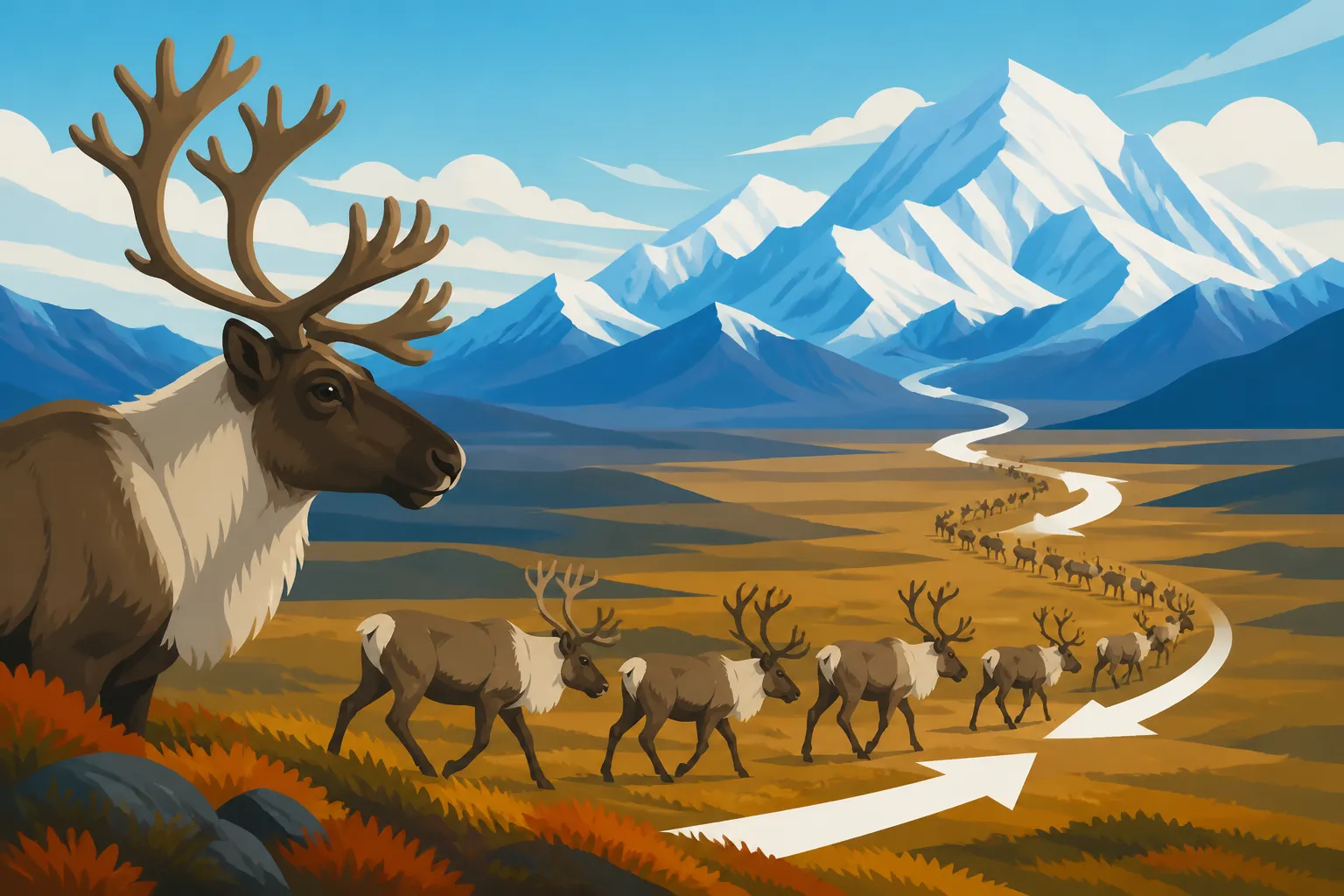
Caribou Herds of Alaska and How They Move
The vast, untamed wilderness of Alaska presents a profound challenge for anyone hoping to understand its incredible wildlife, especially the majestic caribou. It's easy to feel overwhelmed by the sheer scale of their migrations and the seemingly unpredictable nature of their movements, making hunting or even just observing these animals a true exercise in patience and knowledge. This comprehensive guide will demystify the incredible journeys of Alaska's caribou herds, breaking down their biology, behavior, and the critical factors that drive their epic migrations across the Great Land.
The Enduring Spirit of Alaska's Caribou Herds
Caribou are more than just another big game animal in Alaska; they are a symbol of the wild, untamed north, embodying the very essence of nomadic survival in one of the planet's harshest environments. Their presence defines vast stretches of tundra and taiga, and their seasonal movements dictate the rhythms of life for countless other species, from apex predators to the smallest wildflowers. For many Alaskans, and those who travel here to hunt, understanding caribou means understanding a fundamental part of the state's natural heritage and the unique challenges and rewards that come with engaging with it.
The Nomadic Lifestyle Defined
Unlike many ungulates that stick to relatively constrained home ranges, caribou are truly nomadic, constantly on the move in search of forage, to escape predators, or to find suitable calving grounds. This isn't just a casual stroll; these are often epic, hundreds-of-miles-long migrations that can shift dramatically from year to year depending on snow cover, insect harassment, and the availability of their preferred lichens and browse. This constant movement makes them incredibly resilient but also presents significant challenges for management and hunting. You might scout an area diligently for days, only to find the herd has completely vanished overnight, relocating tens of miles away. It's a humbling experience that teaches you quickly that the caribou are always in charge.
Caribou Versus Reindeer: What's the Difference?
It's a common point of confusion, and frankly, it can be a little tricky to sort out unless you know what you're looking for. In Alaska, the terms "caribou" and "reindeer" are often used interchangeably by the general public, but scientifically and culturally, there's a distinct difference. Caribou are wild, undomesticated members of the species Rangifer tarandus, thriving in herds across the state's vast interior and northern regions. Reindeer, on the other hand, are the domesticated form of the same species, often found in smaller, managed herds, primarily on the Seward Peninsula, a legacy of late 19th and early 20th-century introductions from Siberia for subsistence purposes. You'll see reindeer mostly on farms or for specific subsistence operations. When we talk about hunting in Alaska, almost always, we're talking about the wild, free-ranging caribou. They're genetically identical, but their lifestyles and interactions with humans are worlds apart.
Mapping Alaska's Major Caribou Herds
Alaska is home to 32 distinct caribou herds, each with its own unique range, migration patterns, and population dynamics. While many are small and localized, a few stand out for their sheer size and significant impact on both the ecosystem and hunting opportunities. Understanding these major players is crucial for anyone planning to hunt or simply appreciate these incredible animals. It's not just about drawing a line on a map; it's about recognizing the living, breathing landscape they inhabit.
The Fortymile Caribou Herd: A Story of Resurgence
The Fortymile Caribou Herd is a true conservation success story, illustrating the power of dedicated management and the caribou's incredible resilience. Historically one of the largest herds in North America, its numbers plummeted in the mid-20th century, reaching a low of around 5,000 animals in the early 1970s. Thanks to aggressive management actions, including habitat protection, predator control, and carefully regulated harvests, the herd has made a remarkable comeback. Today, the Fortymile Herd ranges across eastern Interior Alaska and parts of Canada's Yukon Territory, often moving in vast columns that can be seen for miles.
Their migration routes are famously complex and can shift dramatically, making them a challenging but rewarding quarry for hunters. The herd's size has fluctuated, but generally, it's considered to be thriving again, providing significant hunting opportunities. Knowing the herd's current location and movement patterns is vital, and resources like GoHunt can be invaluable for tracking these changes. Hunters pursuing this herd must pay close attention to the specific quota for the season, as hunting is often managed by Emergency Order and can close without much warning once the quota is met. For more specifics on permits and regulations, you can read up on the current Fortymile Caribou Quota for the Season.
The Western Arctic Herd: Alaska's Giant
If you're looking for scale, look no further than the Western Arctic Herd. This is, without a doubt, Alaska's largest caribou herd, and one of the largest in the world, with populations that have historically exceeded 400,000 animals. Its immense range stretches across northwest Alaska, from the Bering Sea coast east to the Brooks Range, and north to the Arctic Ocean. The sheer number of animals moving across this landscape is an awe-inspiring sight, a wildlife spectacle on par with the great migrations of Africa.
Hunting opportunities for the Western Arctic Herd are substantial, but also highly regulated and subject to change based on population estimates and federal subsistence priorities, particularly in Unit 23. This herd is often central to the subsistence lifestyle of many rural Alaskan communities, and federal regulations give priority to these users. Non-local hunters often rely on fly-in camps or boat access along major rivers to intercept portions of this migrating giant. Keeping an eye on the Western Arctic Herd and the 200,000 Threshold is important, as management actions often change when the herd crosses certain population benchmarks. The vastness of their range means scouting from satellite imagery before you fly is a critical step in planning.
The Nelchina Herd: Roadside Opportunities and Management Challenges
The Nelchina Caribou Herd is perhaps the most accessible for many Alaskans and non-residents alike, largely due to its range overlapping with major road systems like the Denali and Glenn Highways in Game Management Unit 13. While not as numerous as the Western Arctic Herd, the Nelchina still boasts a healthy population, providing consistent hunting opportunities for moose and caribou. Its accessibility, however, also brings unique management challenges, balancing hunter access with sustaining herd health and public safety near roads.
Hunters often use ATVs or simply hike from the roadside to intercept migrating animals. The movements of the Nelchina Herd can be quite dynamic, with animals appearing along the highways during certain times of the year, particularly during the fall migration. Being able to track their movements, even day-to-day, is incredibly helpful. For a detailed look at how this herd interacts with the state's transportation network, checking out resources on Nelchina Caribou Movement Along the Denali Highway can offer significant insights for planning a hunt. This herd is a fantastic option for those without the resources for a bush plane hunt, but still demands respect for the animal and its habitat.
The Science and Spectacle of Caribou Migration
The image of thousands of caribou moving across the tundra is one of Alaska's most iconic wildlife spectacles. These aren't random wanderings; caribou migrations are meticulously timed events, driven by ancient instincts and immediate environmental cues. Understanding the 'why' and 'how' of these movements is key to appreciating their lives and successfully interacting with them, whether for photography or a well-planned hunt.
Driving Forces Behind the Great Migrations
Caribou are constantly balancing a complex equation of survival. Their migrations are primarily driven by three critical factors: food availability, predator avoidance, and insect harassment. As winter snows recede, they move towards green-up, seeking fresh forage to rebuild body condition after the lean months. Lichens, their primary winter food, are slow-growing and easily depleted, forcing herds to constantly seek new pastures. Calving grounds are often chosen for their relative safety from predators, typically remote, open areas where calves can quickly get to their feet and outrun danger.
Then there's the relentless onslaught of insects – mosquitoes, black flies, and warble flies – which can drive caribou to distraction in the summer months. Herds will often move to higher, windier elevations or even coastal areas to escape the biting swarms, expending vast amounts of energy in the process. This constant pressure to find relief and forage shapes their entire annual cycle. Sometimes, even the smallest shift in wind direction can trigger a major movement if it offers relief from biting insects.
Navigating the Vast Alaskan Landscape
How do these animals, often in herds of tens of thousands, navigate such immense distances across featureless tundra? It's a combination of instinct, memory, and perhaps subtle environmental cues we don't fully understand. Caribou typically follow well-worn migratory corridors, often using prominent ridges, river valleys, and passes that have been used for generations. They have an incredible sense of direction and can cover significant ground quickly, often maintaining speeds of several miles per hour for extended periods.
During migration, a caribou can travel up to 30-40 miles in a single day, especially if pushed by predators or insects. The lead animals often dictate the pace and direction, but the entire herd moves as a collective, a massive force of nature flowing across the landscape. Hunters who have spent days glassing the horizon know the feeling of watching a distant "ribbon" of caribou slowly resolve into thousands of animals, an experience that is both mesmerizing and humbling. For more insights on spotting game from a distance, understanding techniques like Glassing Grids That Cover a Whole Basin can be incredibly helpful when hunting a moving herd.
The Calendar of Caribou Movements
While specific dates can vary by herd and year, a general calendar of caribou movements holds true across Alaska. Late winter sees herds scattered, often on winter range, digging through snow for lichens. As spring approaches (April-May), pregnant cows begin their journey towards traditional calving grounds, often followed later by bulls and younger animals. Calving typically occurs in late May to early June, a vulnerable but vital period.
Summer (July-August) often involves movements driven by insect avoidance and foraging in new growth. By late August and into September, the rut begins, and bulls are in hard antler, often congregating in larger groups. This is a prime time for hunters. As fall deepens (October-November), herds begin their southbound migration back to wintering areas, often in thick timber or wind-swept ridges where snow is shallower and lichens are more accessible. This constant seasonal ebb and flow dictates not only their survival but also the opportunities for hunters to intercept them.
Ecological Roles and Environmental Challenges
Caribou are much more than just game animals; they are fundamental to the ecological fabric of Alaska's northern landscapes. Their sheer numbers and migratory habits mean they exert significant influence on their environment, while simultaneously facing increasing pressures from a changing world. Understanding their ecological role helps us appreciate their importance beyond just a hunting tag.
Caribou as Keystone Species: Impact on Tundra and Taiga
In many parts of Alaska, caribou are considered a keystone species – an organism that has a disproportionately large impact on its environment relative to its abundance. Their extensive grazing and trampling influence vegetation patterns, particularly on the delicate tundra and in the sparse taiga forests. By browsing on willows and other shrubs, they can shape plant communities, preventing woody encroachment in some areas and encouraging the growth of their preferred forage in others.
Their movements also help cycle nutrients across vast landscapes. Caribou droppings fertilize the tundra, and their carcasses, when they fall to predators or natural causes, provide vital food sources for scavengers and contribute organic matter back to the soil. Without caribou, many Arctic and sub-Arctic ecosystems would look and function very differently, highlighting their critical role in maintaining the health and biodiversity of these regions.
Predators and Pressure: Surviving in a Harsh Land
Life for a caribou is a constant negotiation with predators. Wolves are perhaps their most significant natural predator, often following the herds during their migrations, picking off the old, the weak, or the young. Brown bears and black bears also prey on caribou, particularly calves during the calving season, and can opportunistically take adult animals. Wolverines, lynx, and even golden eagles can also pose a threat to vulnerable calves.
This constant predatory pressure has shaped caribou evolution, leading to their incredible endurance, their ability to live in large groups for collective defense, and the timing of their calving to coincide with periods of abundant forage and relative safety. The balance between predator and prey is a delicate one, and shifts in predator populations or caribou numbers can have cascading effects throughout the ecosystem. For hunters, understanding bear activity, especially when quartering a kill alone in the field, is paramount for safety. Knowing how to set up a proper Bear Fence Setup at a Meat Cache can literally save your hunt and your life.
Climate Change: A Shifting Landscape for Caribou
The effects of climate change are particularly pronounced in the Arctic and sub-Arctic, and caribou are feeling the impacts firsthand. Warmer temperatures can lead to altered vegetation patterns, potentially affecting the availability of their preferred lichens and browse. Increased instances of freezing rain can create ice crusts on top of snow, making it incredibly difficult for caribou to access their winter forage, leading to starvation and reduced calf survival.
Changes in insect populations, with longer and more intense insect seasons, could also increase harassment, forcing caribou to expend more energy escaping the swarms and leaving less time for feeding. Scientists are actively studying these changes and their potential long-term effects on herd health and migration patterns. This isn't just an abstract scientific concern; it's a real, palpable threat that could fundamentally alter the future of Alaska's iconic caribou.
Hunting Alaska Caribou: Strategies and Regulations
Hunting caribou in Alaska is a quintessential wilderness experience, offering the chance to pursue big game in some of the most remote and beautiful landscapes on Earth. However, it's also an endeavor that demands thorough planning, respect for the animal, and strict adherence to regulations. The caribou are literally always on the move, and successful hunting means being adaptable, persistent, and well-prepared for any situation the Alaskan backcountry throws at you.
Understanding Caribou Hunting Seasons and Bag Limits
Before you even think about packing your rifle, you need to understand the complex web of Alaska's hunting regulations. Caribou seasons and bag limits vary significantly by Game Management Unit (GMU) and even by specific herd. Some areas might have early-season hunts focused on bulls, while others might have later seasons or general hunts for any caribou. Many caribou hunts require a harvest ticket, which is free but mandatory, and some herds are managed by registration permits or even drawing permits.
Crucially, many herds are managed with quotas that can lead to emergency closures. You might be planning a hunt for weeks, only to find the season has closed early due to the quota being met. This is where staying incredibly current with Alaska Department of Fish and Game (ADF&G) announcements is vital. Online resources, and platforms like GoHunt, can help you stay informed about changes in season status. Always check the most up-to-date regulations for your specific hunt unit, as they change annually. Don't forget to understand your Alaska Harvest Ticket Reporting Deadlines as well, because failure to report can jeopardize future hunting opportunities.
Planning Your Expedition: Gear, Logistics, and Mindset
Caribou hunting in Alaska often means heading into remote country. Whether you're doing a fly-in hunt with an air taxi, a float hunt down a river, or a long backpack trip from a road system, the logistics are paramount. You'll need reliable gear that can withstand unpredictable Alaskan weather, from heavy rain and high winds to freezing temperatures, often all in the same day. Quality rain gear, layered clothing, a robust shelter, and a reliable cooking system are non-negotiable.
Food and water purification are critical, as are navigation tools like a GPS and satellite communication device. For fly-in hunts, working with a reputable transporter is key. Understanding how Fly-In Hunting: Working With an An Alaska Transporter Pilot can save you a lot of headaches and ensure a safe and successful trip. Physical fitness is also crucial; even if you're not climbing mountains, you'll likely be hiking over uneven tundra, carrying heavy loads of gear and, hopefully, meat. The mental toughness to endure discomfort and uncertainty is just as important as the physical strength.
Field Judging and Ethical Harvest
When a herd of caribou finally appears, the excitement can be overwhelming, but it's important to remain calm and make an ethical shot on a legal animal. Many caribou hunts have antler restrictions, such as "bull only" or specific brow tine or antler spread rules. Learning how to judge these characteristics in the field, often quickly and at a distance, is a skill that comes with practice. Take your time to positively identify your target before pulling the trigger. Understanding Field Judging a Legal Bull Under Alaska Antler Rules is non-negotiable.
Once an animal is down, the work truly begins. Alaska has strict wanton waste laws, meaning all edible meat must be salvaged. This often involves quartering the animal in the field and packing it out, sometimes over challenging terrain and significant distances. Having a plan for meat care, especially in warmer early season temperatures, is vital to prevent spoilage. Good game bags, proper cooling, and efficient packing are essential. Don't underestimate the physical demands of packing out a caribou. Read up on Packing Out Meat in Alaska: The Salvage Law Hunters Must Follow well before your trip.
Conservation, Management, and the Future of Caribou
The health of Alaska's caribou herds is a testament to sound wildlife management and the ongoing commitment of Alaskans and conservationists. However, the future of these iconic animals isn't guaranteed, and their continued well-being requires vigilant oversight, scientific research, and responsible engagement from all stakeholders, especially hunters.
ADF&G's Role in Herd Health
The Alaska Department of Fish and Game (ADF&G) is the primary agency responsible for managing caribou populations within the state. Their biologists conduct regular aerial surveys to estimate herd sizes, track migration patterns, and assess herd health, including factors like calf survival rates and bull-to-cow ratios. Based on these data, ADF&G sets hunting seasons, bag limits, and permit requirements, always aiming for sustainable harvests that ensure the long-term viability of the herds.
This often involves complex decision-making, balancing the needs of subsistence users, resident sport hunters, and non-resident hunters, while also considering ecological factors like habitat carrying capacity and predator-prey dynamics. ADF&G also plays a critical role in public education, providing accessible information on regulations and responsible hunting practices.
Hunter Involvement in Data Collection
Hunters are not just participants in caribou management; they are often vital partners in data collection. Every time a hunter fills out a harvest ticket or reporting form, they are providing valuable information to ADF&G. Details like the date and location of the kill, the age and sex of the animal, and the condition of the antlers contribute to the larger dataset that informs management decisions. This citizen science aspect is crucial, especially in a state as vast and remote as Alaska.
Furthermore, hunters often act as the "eyes and ears" on the ground, reporting unusual caribou movements, signs of disease, or other observations that can alert biologists to emerging issues. This partnership between hunters and managers is a cornerstone of Alaska's conservation model, recognizing that those who spend the most time in the field often have the most to contribute. If you're wondering about antler development, consider exploring topics like Caribou Antler Size on Bulls and Cows and Why Cow Caribou Keep Antlers Longer, which provide fascinating insights into their biology.
Balancing Access and Preservation
One of the ongoing challenges in caribou management is balancing public access with the need to preserve wilderness integrity and minimize disturbance to the herds. Road-system access, while convenient for many hunters, can concentrate pressure on certain segments of a migrating herd. In some areas, special restrictions, like the bow-only corridor along portions of the Dalton Highway, are implemented to manage this pressure.
The use of off-road vehicles, aircraft, and other modern technologies also requires careful consideration to prevent overharvest or undue stress on the animals. ADF&G, in conjunction with land managers, continually evaluates these issues to ensure that hunting opportunities remain robust while protecting the caribou and their habitat for future generations. It's a constant effort to find that sweet spot where human interaction doesn't compromise the wild spirit of the caribou.
Life on the Hoof: Caribou Adaptations and Biology
To truly appreciate caribou, it helps to delve a little deeper into their unique biology. These animals are incredibly specialized for life in the Arctic and sub-Arctic, possessing a suite of adaptations that allow them to thrive where other large mammals would struggle. Their physiology is a marvel of natural engineering, finely tuned for a life of constant movement and harsh conditions.
Antler Cycles and Unique Physiology
One of the most distinctive features of caribou is their antlers. Unlike other deer species where only males typically grow antlers, both male and female caribou grow antlers, though the size and timing differ significantly. Bull caribou grow impressive racks, often shedding them in late fall or early winter after the rut. Cows, however, retain their smaller antlers much longer, often through the winter and into spring, sometimes even after calving. This is thought to be an adaptation that allows dominant cows to defend prime feeding spots from bulls and younger animals during the critical winter months when forage is scarce.
Their antlers are also unique in their velvet stage and general shape, often featuring large brow tines, sometimes called "shovels," that project forward. These brow tines can be important for identifying legal bulls in antler-restricted units. Beyond antlers, caribou have a unique digestive system capable of breaking down tough, fibrous lichens, and their metabolism can adjust seasonally to conserve energy during lean times.
The Caribou Diet: Fueling Endless Journeys
Caribou are primarily herbivores, and their diet changes dramatically with the seasons. In winter, lichens are their absolute lifeline. These slow-growing, ground-dwelling organisms are abundant in the tundra and taiga, and caribou have a specialized digestive system that can extract nutrients from them, a feat most other ungulates cannot accomplish. They use their large, crescent-shaped hooves to dig through snow, a behavior known as "cratering," to reach these vital food sources.
In spring and summer, their diet shifts to more nutritious green vegetation, including sedges, grasses, willows, and other broadleaf plants. This allows them to quickly put on fat reserves needed for the arduous migrations, the rut, and, for cows, pregnancy and lactation. This seasonal variation in diet is a crucial driver of their migrations, as they constantly seek the most nutrient-rich forage available. Knowing what moose eat in a ten-year-old burn, for instance, might give you clues to caribou feeding behavior in similar environments, as there can be some overlap in browse choices, even if caribou rely more heavily on lichens.
Surviving the Arctic: Physical Adaptations
Caribou are built for the cold and the long haul. Their incredibly dense, hollow hair provides superior insulation, trapping a layer of air close to their bodies, making them one of the warmest-insulated mammals in the Arctic. Their large, broad hooves are another remarkable adaptation, acting like snowshoes to distribute their weight over snow and soft tundra, preventing them from sinking. The sharp edges of their hooves also provide excellent grip on ice and rocks, and they serve as effective shovels for digging.
Furthermore, their nasal passages are specially adapted to warm incoming air, preventing excessive heat loss from their lungs and helping to conserve moisture. These physical traits, combined with their migratory behavior and herd dynamics, are what allow caribou to not only survive but thrive in the extreme and ever-changing conditions of the Alaskan wilderness.
| Herd Name | Primary Range | Typical Population Range (Approx.) | Key Characteristics | Primary Access Method(s) |
|---|---|---|---|---|
| Fortymile | Eastern Interior AK & Yukon Territory | 40,000 – 80,000 | Renowned comeback story, complex shifting migrations, subject to quota closures. | Road-system (Taylor Hwy), ATV, Fly-in. |
| Western Arctic | Northwest Alaska, Brooks Range to Bering Sea | 200,000 – 400,000+ | Largest herd in AK, epic migrations, critical for subsistence, federal priority regulations. | Fly-in (bush plane), River boats (e.g., Kobuk, Noatak). |
| Nelchina | Southcentral Alaska (GMU 13) | 30,000 – 50,000 | Most accessible herd (Denali/Glenn Hwy), roadside hunting opportunities, managed for resident/general hunts. | Road-system (Denali, Glenn Hwy), ATV, Short hikes from roads. |
| Porcupine | Northeastern AK & Yukon, Northwest Territories | 150,000 – 250,000 | Migrates to Arctic coastal plain for calving, transboundary herd, highly sensitive to industrial development. | Fly-in, remote backcountry. |
| Mentasta | Eastern Interior AK, Mentasta Mountains | 3,000 – 6,000 | Smaller, more localized herd, often accessed by ATV or short flights. | ATV, Fly-in. |
| Mulchatna | Southwest Alaska | Currently very low | Historically large, but experienced a severe decline, currently under hunting closure. | Primarily fly-in (currently closed). |
Disclaimer
The information provided in this guide is for general informational purposes only and does not constitute legal or professional advice. Hunting regulations in Alaska are complex, subject to frequent change, and vary significantly by Game Management Unit and specific species. It is the individual hunter's responsibility to consult the most current Alaska Hunting Regulations, Emergency Orders, and any applicable federal regulations from the Alaska Department of Fish and Game (ADF&G) and other relevant authorities before planning or engaging in any hunting activities. Always prioritize safety, ethical hunting practices, and respect for wildlife.