Brow Tine Counts on Alaska Antler-Restricted Bulls
It’s one thing to spot a magnificent bull moose in the vast Alaskan wilderness, but it’s another entirely to confirm he’s legally harvestable under Alaska’s often complex antler restrictions. That moment of doubt, the frantic glassing, the fear of making a mistake that could lead to a citation – it's a familiar and unwelcome feeling for many hunters. This guide is designed to clarify the nuances of brow tine counts on antler-restricted bulls, helping you gain the confidence to make the right call in the field.
Navigating Alaska's Antler Restriction Complexities
Alaska's hunting regulations, particularly for moose, can feel like a labyrinth, especially when you encounter areas with specific antler restrictions. These aren't just arbitrary rules; they're vital tools for managing moose populations, ensuring a healthy balance between bulls and cows, and allowing younger bulls to mature. Understanding the underlying philosophy and where these rules apply is the first step toward a successful and legal hunt.
The Rationale Behind Antler Restrictions
The primary goal of antler restrictions in many Game Management Units (GMUs) across Alaska is to manage the bull-to-cow ratio and promote older, larger bulls within the population. In areas that are easily accessible, like some road-system units, hunter pressure can be intense. Without restrictions, too many young, reproductively viable bulls might be harvested before they have a chance to breed or grow to their full potential. By instituting rules that protect younger animals – often defined by antler configuration – wildlife managers aim to create a more resilient and sustainable moose population.
Think about it this way: if every bull, no matter how young, could be harvested, the herd's dynamics would quickly skew, potentially leading to fewer successful breeding cycles and a decline in overall herd health. Antler restrictions are designed to be a scalpel, not a blunt instrument, allowing for harvest while safeguarding the future of the species. This approach often differs significantly from "any legal bull" hunts found in more remote, less-pressured units, which can add a layer of complexity if you're used to simpler regulations. Researching specific unit rules, perhaps through resources like GoHunt, is critical for any serious hunt planning.
Distinguishing Between "Legal" and "Sublegal" Bulls
The terms "legal" and "sublegal" are not simply about size; they are about precise biological and regulatory criteria. A "sublegal" bull isn't just a small bull; it's a bull that, despite its appearance, does not meet the specific antler requirements set forth for that particular GMU and season. The most common criteria involve a bull being a "spike-fork," having a minimum 50-inch antler spread, or, crucially for this discussion, possessing a minimum number of brow tines on one side.
The pressure of making a quick decision in the field, often with limited time and visibility, means there's no room for guesswork. Misidentifying a legal bull can lead to a missed opportunity, while harvesting a sublegal bull can result in significant fines, loss of your animal, and hunting privileges. It's a high-stakes moment, demanding precision and a deep understanding of the regulations. This guide aims to remove some of that pressure by demystifying the brow tine rules. If you've ever felt that heart-sinking moment of uncertainty, you know how crucial it is to be absolutely sure before you pull the trigger. Understanding when you might be Mistaking a Legal Bull for a Sublegal One is a common pitfall.
The Critical Detail: Counting Brow Tines Accurately
When the regulations stipulate a certain number of brow tines, this seemingly simple rule can quickly become complicated in the field. What exactly counts as a brow tine? How do you distinguish a true tine from a small bump or growth? Getting this right is paramount to a legal harvest.
What Legally Constitutes a Brow Tine
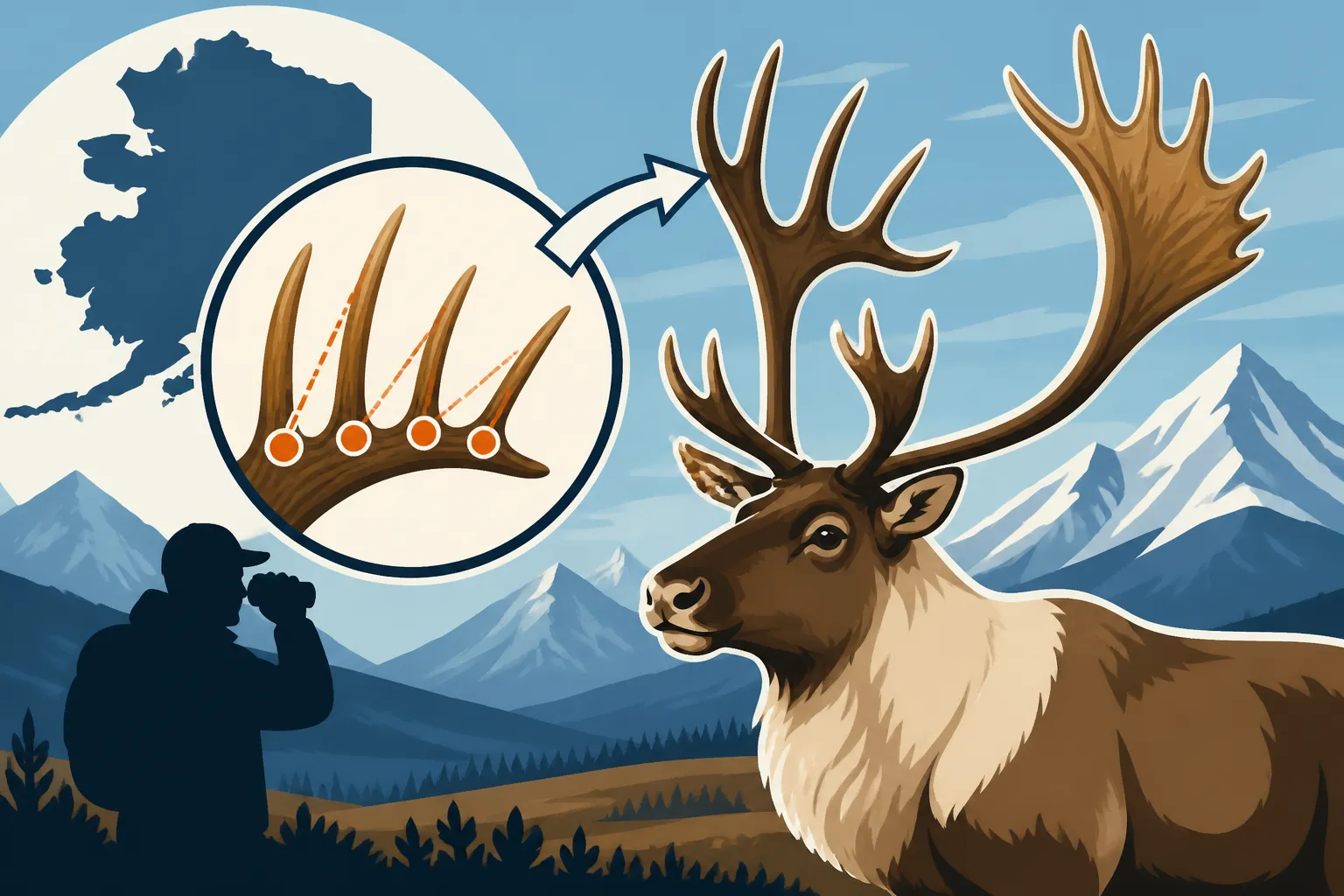
In Alaska, a "brow tine" is generally defined as a projection from the main beam of the antler that extends forward or forward and downward, typically originating from the base of the antler. The key here is "projection" and its direction. It needs to be a distinct point, not just a swelling or imperfection on the beam. Often, regulations will specify a minimum length for a projection to count as a tine – usually at least one inch. This length requirement is critical because a small bump that doesn't meet the one-inch threshold is not a legal brow tine, no matter how much you might want it to be.
The requirement is almost always specified "per side." For instance, a common regulation might state, "at least three brow tines on one side." This means you only need to confirm three distinct, legal brow tines on either the left or the right antler. You don't need three on each side, nor do you need six in total. This distinction is vital and often misunderstood. Make sure you understand How to Count Brow Tines on a Live Bull as precisely as possible.
Field Judging for Brow Tine Requirements
Accurately counting brow tines in the field demands patience, excellent optics, and a methodical approach. First and foremost, you need clear vision. A good spotting scope is invaluable here, allowing you to zoom in and discern details that might be invisible with binoculars alone, especially at longer distances. Stability is also key; a sturdy tripod will minimize shake and help you focus.
Once you’ve spotted a potential bull, settle in for a thorough examination. Don't rush. The bull might be facing away, in thick cover, or obscured by shadows. You need to wait for him to turn, walk, or present different angles. Look specifically at the base of the antlers, where the brow tines originate. Are the projections distinct? Do they meet the approximate one-inch length requirement? It helps to mentally "draw" a line around the base of the antler and identify what truly projects forward or downward. If there's any doubt about a projection's length or its legal definition, it's always best to err on the side of caution and pass. The ethical decision to hold your shot until you are absolutely certain is paramount in Alaska's challenging hunting environment. Proper Glassing the Alaska Range: Finding Game Before You Move is fundamental to this process.
Overcoming Common Field Judging Challenges
Alaska moose antlers are magnificent, but they are also incredibly varied. This natural diversity, combined with environmental factors like breakage or abnormal growth, can make field judging brow tines a true test of a hunter’s skill and knowledge.
The Spike-Fork Conundrum and Brow Tine Overlap
One of the most common sources of confusion in antler-restricted areas is the interaction between brow tine rules and the "spike-fork" definition. In many units, a bull is legal if it is either a spike-fork or meets the brow tine (or 50-inch spread) requirement. A "spike-fork" bull is typically defined as a bull with at least one antler being a spike (no tines greater than one inch) and the other being a spike or having a fork (at least one tine greater than one inch).
Here's where it gets tricky: a bull might not have the required three brow tines, but if it qualifies as a spike-fork, it's still legal. Conversely, a young bull that is not a spike-fork, but also doesn't have three brow tines on one side, would be illegal. It’s not just about one rule; sometimes you have to assess multiple criteria simultaneously. You could encounter a bull with only one or two brow tines, and if it's past the "spike-fork" stage (meaning its antlers are more developed than simple spikes or forks), then it would be a sublegal animal. This is why a precise understanding of the Spike-Fork Legal Definition in Alaska is crucial. Always consult the current regulations for your specific GMU to understand which combination of rules applies.
When Antler Configuration Deceives You
Moose antlers are not cookie-cutter perfect. You'll encounter bulls with short, stubby brow tines that are barely an inch long, tines that grow in unusual directions, or antlers that are broken or damaged. These variations are the primary culprits in miscounts. A small nub at the base might look like a brow tine from 500 yards, but upon closer inspection, it's too short to legally count. Similarly, a bull might have broken off one or two of its brow tines, making an otherwise legal bull suddenly illegal if it no longer meets the minimum count.
This is why patience is your best friend. Don't just count the tines once and assume. Watch the bull, wait for different angles, and get the clearest possible view. If you can only see two distinct brow tines on one side, and the rule requires three, then that bull is likely sublegal unless it qualifies under another exemption. Rushing this decision can have severe consequences, as violating antler restrictions can lead to significant penalties, including citations and forfeiture of your harvest. Using digital mapping and regulation tools like those offered by GoHunt can help you review the specific rules for your area multiple times before and even during your hunt, leaving no stone unturned in your quest for certainty. The last thing any hunter wants is to face Why Antler Restriction Hunts End in Citations.
Combining Rules: Brow Tines, Spread, and Points
While brow tines are a significant aspect of antler restrictions, they rarely exist in isolation. Many GMUs have a combination of rules, requiring hunters to assess multiple antler characteristics before making a legal determination. This multifaceted approach is designed to provide greater flexibility in population management while still protecting certain age classes of bulls.
The "50-Inch Spread" Rule and Its Interaction
Alongside brow tine requirements, the "50-inch spread" rule is one of the most common antler restrictions in Alaska. This regulation dictates that a bull is legal only if its antlers measure at least 50 inches at their widest point. The tricky part is that these rules often interact in an "either/or" fashion. For example, a regulation might state that a bull is legal if it has either three brow tines on one side or an antler spread of at least 50 inches. This means you might harvest a bull with fewer than three brow tines, as long as its spread is 50 inches or more.
Conversely, a bull with a spread of less than 50 inches could still be legal if it meets the brow tine requirement. The challenge arises when you're trying to judge both simultaneously. Estimating a 50-inch spread in the field is notoriously difficult, especially at distance. Many hunters use the width of their rifle barrel or shoulder to estimate, but this is imprecise. It requires a great deal of experience to gauge accurately, and combining that judgment with a brow tine count adds another layer of complexity. Take the time to practice Measuring a 50-Inch Spread Against Your Rifle before your hunt so you have a visual reference.
Total Points and Other Unit-Specific Rules
While brow tines and the 50-inch spread are prevalent, some GMUs might have other, less common antler restrictions. These could include requirements like "at least four points on one side," where brow tines might be counted as part of the total points. For instance, a bull might have one brow tine and three additional points on its main beam, meeting a "four points total" rule. The specific wording in the regulations is paramount.
This highlights the absolute necessity of deeply immersing yourself in the specific hunting regulations for your chosen GMU. These rules are not uniform across the state; they vary widely based on local population dynamics, habitat, and hunter access. What is legal in one unit might be a serious violation in an adjacent one. Before you even set foot in the field, you must download and thoroughly study the most current Alaska hunting regulations booklet. Don't just skim it; read it closely, paying particular attention to the antler restrictions for your specific hunt area. Utilizing resources like GoHunt for cross-referencing and understanding regional variations can be an invaluable asset in this preparatory phase. Going into your hunt with absolute clarity on Field Judging a Legal Bull Under Alaska Antler Rules will ensure an ethical and successful experience.
Here’s a simplified table summarizing common antler restriction types you might encounter in Alaska:
| Restriction Type | Definition | Common Areas / Purpose | Field Judging Challenge |
|---|---|---|---|
| Spike-Fork | At least one antler is a "spike" (no tines >1" long beyond the main beam) and the other is a "spike" or "fork" (at least one tine >1" long). | High-pressure, accessible units (e.g., parts of GMU 20A or 13) to protect mature bulls. | Confirming true "spike" vs. a tiny, potentially broken tine, or ensuring the "fork" meets the 1-inch minimum. Often requires clear views of both antlers. |
| 3 Brow Tines | At least three brow tines (points >1" long) on one antler, projecting forward or forward-downward from the base. | Specific regions where managers aim to protect younger bulls with less developed antlers. | Accurately counting all tines, distinguishing small bumps or malformations from legal tines that meet the 1-inch minimum. Requires patience and excellent optics to verify angle and length. |
| 50-Inch Spread | Antlers measure at least 50 inches at their widest point. | Diverse, often where managers balance opportunity with protecting younger animals, or in areas with strong trophy potential. | Estimating spread accurately, especially at distance. Visual comparison with familiar objects (e.g., rifle length, shoulder width) can help but is prone to error. Light conditions and antler angle can significantly distort perception. |
| Any Legal Bull | No antler restrictions; any bull with antlers is legal, regardless of size or configuration. | Remote, less-pressured units where natural mortality and lower hunter access manage populations. | Simplest to judge, but still requires confirming it is indeed a bull and not a cow (though antlered cows are rare, they do occur). The primary challenge is typically accessing these remote areas, which often entails complex logistics like Fly-In Hunting: Working With an an Alaska Transporter Pilot or Float Hunting Alaska Rivers for Moose and Caribou. |
Disclaimer
This guide offers general information for educational purposes. Hunting regulations in Alaska are complex, change frequently, and vary significantly by Game Management Unit and specific hunt area. It is the individual hunter's sole responsibility to consult and adhere to the most current Alaska Department of Fish and Game regulations for their specific hunt. Ignorance of the law is not a defense for violations.