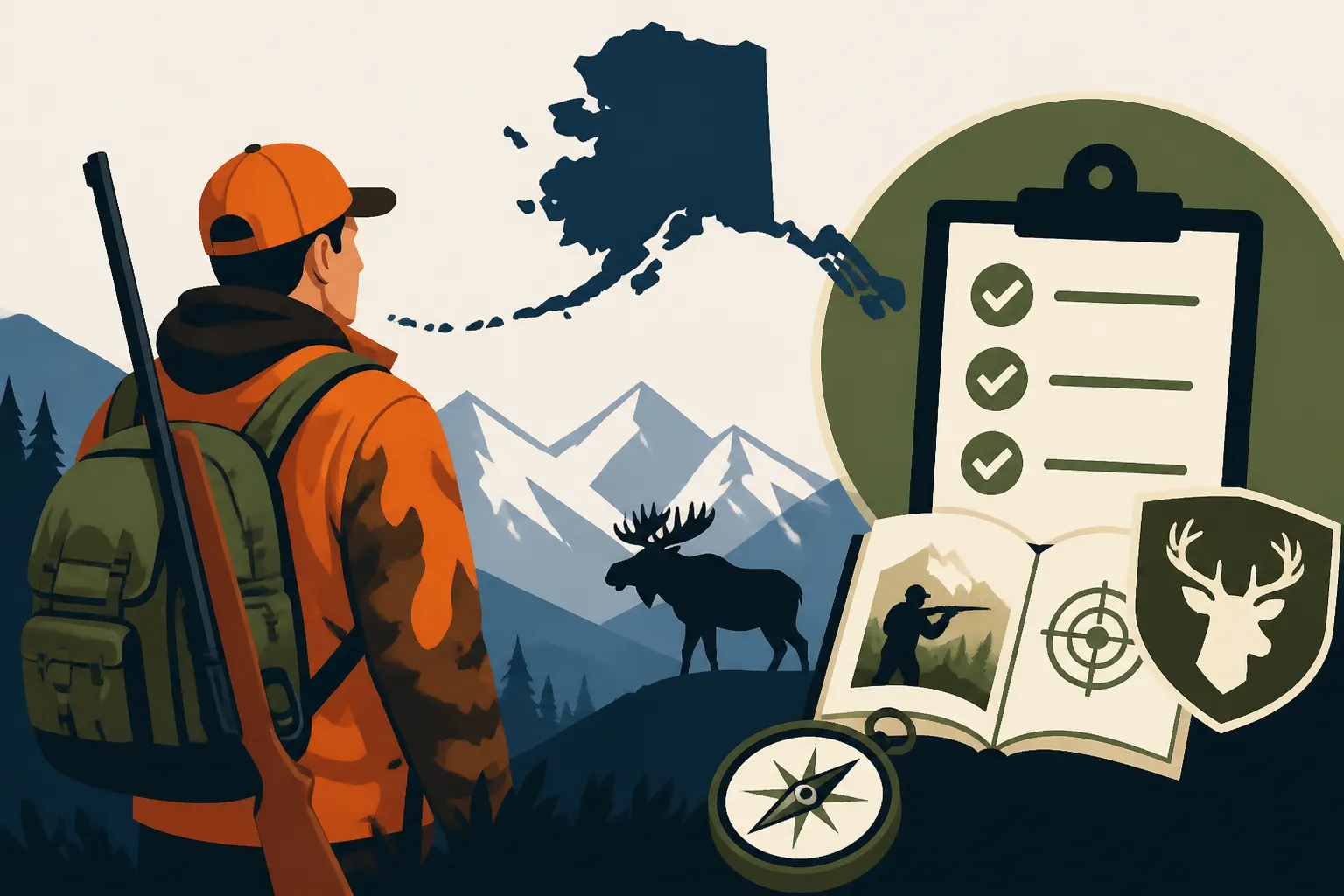
Alaska Hunter Education and Orientation Requirements
Hunting in Alaska, for all its unparalleled majesty and raw adventure, also comes with its own unique set of responsibilities and legal prerequisites. It’s not just about knowing how to shoot straight; it's about understanding the vast, complex ecosystem, respecting the animals, and most importantly, ensuring your safety and the safety of those around you. Many new hunters, or even seasoned veterans coming from other states, often find themselves scratching their heads over Alaska's specific hunter education and orientation rules. This comprehensive guide is here to unravel all that confusion, walking you through everything you need to know to hunt legally and ethically in the Last Frontier.
Understanding Alaska's Hunter Education Mandate
The Alaska Department of Fish and Game (ADF&G) isn't just trying to make things difficult when they require hunter education; these rules are deeply rooted in safety, conservation, and the preservation of our hunting heritage. The sheer scale and wildness of Alaska mean that mistakes can have far more serious consequences than in more populated areas. Imagine being miles from the nearest road, deep in the backcountry, when an accident occurs – proper training can be the difference between a close call and a tragedy.
Why Formal Training is Essential in Alaska
Alaska's hunting environment presents challenges far beyond what many hunters experience in the Lower 48. From unpredictable weather and treacherous terrain to the constant presence of large, potentially dangerous game like brown bears and moose, every hunt requires a high degree of preparedness and skill. Hunter education programs are designed to instill critical knowledge about firearm safety, wildlife identification, shot placement, game care, and wilderness survival. This isn't just theoretical; it's about practical skills that could save your life or prevent a lost animal. Without this foundational understanding, a hunter risks not only their own well-being but also that of their hunting partners and the animals they pursue. It's a fundamental step toward responsible participation in a challenging activity.
The Role of Hunter Education in Conservation
Beyond safety, hunter education plays a crucial role in conservation. Ethical hunting practices are central to maintaining healthy wildlife populations. These courses teach hunters about wildlife biology, habitat management, and the importance of adhering to bag limits and seasons. When hunters understand the ecological principles behind regulations, they are far more likely to comply and contribute positively to wildlife management efforts. For instance, knowing how to field judge a legal bull or ram correctly is taught directly through these programs, preventing accidental harvest of illegal animals, which can severely impact herd dynamics. The goal is to create informed participants who see themselves as stewards of Alaska’s incredible natural resources, ensuring that future generations can also experience the thrill of the hunt. This commitment to conservation is why organizations like the Wild Sheep Foundation and Safari Club International are often involved in supporting such educational initiatives.
Age and Residency: Who Needs Certification in Alaska?
The question of who needs hunter education in Alaska can sometimes feel a bit like untangling a fishing net after a long day – it’s full of knots and specific conditions. But breaking it down by age, residency, and specific exemptions helps clarify things considerably.
General Age Requirements for Hunter Education
In Alaska, anyone born on or after January 1, 1986, is required to present a valid hunter education certificate to purchase a hunting license. This applies to both residents and non-residents alike. If you were born before this date, you are generally exempt from the hunter education requirement, though taking a course is always a good idea for a refresher, especially if you're new to Alaska's unique hunting challenges. The state wants to ensure that a baseline of knowledge and safety is met by those who are more likely to have grown up without direct, hands-on hunting experience or formal training from an early age.
For young hunters, the path is carefully structured. Children under 10 years of age cannot legally hunt big game, but they can participate in small game and waterfowl hunts under direct adult supervision without a hunter education certificate. For those aged 10-15, they must possess a hunter education certificate to hunt big game, and they must still be under the direct supervision of a licensed hunter who is 16 years or older and possesses a valid hunting license. This layered approach ensures that younger hunters gain experience in a controlled, safe environment while working towards full independence as responsible hunters. It’s important for parents and guardians to plan ahead to enroll their children in courses well before the hunting season begins, as slots can fill up fast, especially for hands-on field days.
Exemptions and Special Considerations
While the general rule is clear, there are a few important exceptions and considerations to be aware of. First, if you are an active duty member of the U.S. armed forces stationed in Alaska, or a dependent of such a person, you may be eligible for specific exemptions, provided you meet certain criteria related to your military training and experience. However, it's crucial to verify these details directly with the ADF&G, as rules can change.
Another significant exemption often pertains to Alaska residents who qualify for certain subsistence hunts. These individuals, typically living in rural areas and demonstrating a historic dependence on subsistence resources, might have different educational requirements or may be able to acquire a permit without a standard hunter education certificate under federal or state subsistence programs. These are often community-based and culturally sensitive, recognizing traditional knowledge and practices. For non-residents, these exemptions typically do not apply. If you're planning an Alaska hunt, always double-check the current regulations, as the requirements for Alaska Hunter Education Card Requirements are periodically updated.
The Path to Certification: Online, In-Person, and Field Days
Obtaining your hunter education certificate in Alaska can be done through a few different avenues, each offering unique benefits and catering to different learning styles and schedules. Whether you prefer the flexibility of online learning or the hands-on experience of a traditional classroom, there’s a path for you.
Online Hunter Education Courses
For many busy individuals, online hunter education courses offer incredible convenience. You can complete the coursework at your own pace, from the comfort of your home, fitting lessons around work, family, and other commitments. These courses typically cover all the theoretical aspects of hunting safety, wildlife identification, regulations, and ethics through interactive modules, videos, and quizzes. Providers like Hunter-ed.com or the National Shooting Sports Foundation often offer state-specific online content approved by the ADF&G.
However, it's crucial to understand that simply completing the online portion is usually not enough for full certification in Alaska. The online segment is primarily for the classroom knowledge, but it doesn't adequately assess practical skills or reinforce critical safety habits with actual equipment. While incredibly useful for foundational learning, the Alaska program requires more for most participants.
In-Person Classroom Training and Field Days
The traditional in-person classroom course is still a robust option and often combined with a mandatory field day. These courses, typically taught by certified ADF&G instructors, provide a more interactive learning environment where you can ask questions, engage in discussions, and benefit from the direct experience of seasoned hunters. The classroom portion delves into firearm types, shot placement, game care, Bear Safety While Butchering a Kill in Alaska, and ethical decision-making, often using real-world Alaskan examples and scenarios.
The field day component is arguably the most vital part of Alaska's hunter education. This is where the rubber meets the road. During a field day, participants get hands-on experience with firearm handling, safe shooting positions (critical for navigating Shooting Positions on Alaska Tundra and Sidehills), muzzle control, carrying firearms safely, and practicing safe shooting fundamentals. You'll also learn practical skills like crossing obstacles with a loaded firearm and even basic survival techniques. This practical application ensures that hunters aren't just memorizing facts but are developing muscle memory for safe and responsible actions in the field. This blend of classroom theory and practical application is what truly prepares a hunter for the challenges of Alaska's wilderness.
Beyond Basic: Species-Specific Orientation Requirements
While general hunter education covers the fundamentals, Alaska recognizes that certain species present unique challenges and ethical considerations, necessitating additional, specialized training. This is particularly true for hunts involving Dall sheep and mountain goats, where the terrain, physical demands, and conservation efforts are exceptionally stringent.
The Dall Sheep Hunter Orientation
Dall sheep hunting in Alaska is often considered the pinnacle of North American mountain hunting – a true physical and mental test. Because these hunts typically occur in remote, high-alpine environments with extremely demanding conditions, and due to the vulnerability of sheep populations, Alaska has a mandatory Dall Sheep Hunter Orientation requirement. This orientation is required for all hunters, regardless of age or previous hunter education certification, before participating in a general season Dall sheep hunt. This is not just a suggestion; it's a legal requirement designed to ensure hunters are fully prepared for the extreme physical and mental demands, as well as the unique ethical considerations, of sheep hunting.
The orientation delves into critical topics like field judging a legal ram (the "full-curl" rule and other antler restrictions), the importance of avoiding accidental harvest of ewes, advanced optics use for Glassing Grids That Cover a Whole Basin, survival in alpine environments, and responsible meat and trophy care in the backcountry. It often includes detailed case studies of past incidents and emphasizes the delicate balance of conservation. You can usually complete this orientation online through the ADF&G website, and it's something you should tackle well in advance of your hunt. Ignoring this requirement is not only illegal but also incredibly foolish given the inherent dangers and ethical complexities of pursuing Dall sheep in their remote, unforgiving habitat. Many seasoned hunters, myself included, will often review the orientation material even if not required, as a refresher before any mountain hunt. Keeping up with resources like GoHunt can also provide valuable insights into specific unit regulations and changes in orientation requirements.
Mountain Goat Hunter Orientation and Other Specialized Training
Similar to Dall sheep, hunting mountain goats in Alaska comes with its own specific challenges, particularly regarding nanny identification. Accidental harvest of a nanny (female goat) can have a devastating impact on localized goat populations, as their reproductive rates are generally lower than many other big game species. To address this, some game management units in Alaska have specific mountain goat hunter orientation requirements, or at least highly recommend such training. These orientations focus heavily on Telling a Billy From a Nanny at Distance, distinguishing horn characteristics, body size, and behavior patterns to ensure only legal billies (male goats) are harvested.
Beyond these mandatory or highly recommended orientations, hunters might also seek out specialized training for other species or hunting methods. For instance, those interested in Bear Baiting in Alaska: How the Registered Site System Works will find specific regulations and ethical guidelines that go beyond general hunter education. Similarly, Bowhunting Alaska Big Game in Archery-Only Areas often involves specific bowhunter education requirements or certifications in addition to the standard hunter education. Always consult the current Alaska Hunting Regulations for the specific requirements of the species and unit you plan to hunt.
Reciprocity: Bringing Your Home State's Hunter Ed to Alaska
For non-resident hunters eyeing an Alaskan adventure, one of the most common questions revolves around their existing hunter education certificates. The good news is that Alaska generally recognizes hunter education certificates from other states, provided they meet certain criteria.
Alaska's Acceptance of Out-of-State Certificates
Alaska does accept hunter education certificates issued by other states, provinces, or countries, as long as the issuing agency is approved by a state or provincial government and adheres to the standards of the International Hunter Education Association (IHEA-USA). This means if you completed a recognized hunter education course in, say, Montana, Pennsylvania, or British Columbia, that certificate is typically valid for hunting in Alaska. This reciprocity is a huge relief for many hunters, eliminating the need to retake a full course just for an Alaskan trip.
When you go to purchase your Alaska hunting license, you'll need to present proof of your hunter education. This usually means your official hunter education card or certificate. It's always a good idea to carry the original or a clear copy with you when hunting, as wildlife troopers may request to see it in the field. Ensuring that your home state's certificate is easily verifiable and clearly indicates your completion is key.
Verifying Your Certificate and Avoiding Issues
While reciprocity is standard, it's always prudent to double-check. Before you commit to your big Alaskan hunt, it’s a smart move to contact the Alaska Department of Fish and Game (ADF&G) to confirm that your specific certificate format or issuing state is indeed recognized without question. This is particularly important if your certificate is from a non-North American country, or if it's an older certificate that might not have a widely recognized format.
To avoid any last-minute surprises or delays when purchasing your license, gather all your hunter education documentation well in advance. Some states offer digital verification or online portals where you can retrieve your certificate if the physical card is lost. Being prepared will ensure a smooth start to your hunting trip and prevent any unnecessary headaches at the license vendor or with wildlife enforcement officers. I’ve seen hunters arrive in Alaska, excited for their trip, only to discover their paperwork isn't quite right, leading to frustrating delays or even missed opportunities.
Navigating Regulations and Resources for Ongoing Compliance
The world of hunting regulations is anything but static, especially in a dynamic environment like Alaska. Staying compliant isn't a one-time check-off; it's an ongoing commitment to staying informed. This is where hunters need to be proactive, utilizing various resources to keep up with the latest rules and emergency orders.
The Importance of the ADF&G Hunting Regulations
The absolute cornerstone of staying compliant in Alaska is the annual hunting regulations booklet published by the Alaska Department of Fish and Game. This document is far more than just a list of rules; it's your bible for legal hunting. It details season dates, bag limits, legal methods of take, specific unit restrictions, and critical definitions for every species in every game management unit. You can pick up a physical copy at most license vendors, ADF&G offices, or download the latest version directly from their website.
It’s crucial to read this document thoroughly for your specific unit and target species. Don't just skim! Pay close attention to the general regulations, then delve into the unit-specific rules, as these can vary dramatically. For example, Alaska Moose Antler Restriction Areas will be clearly outlined, defining what constitutes a legal bull in a particular unit. Missing a detail, even a seemingly minor one, can result in citations, fines, or loss of hunting privileges. Every experienced Alaskan hunter knows this booklet inside and out, or at least knows exactly where to find the information they need.
Digital Tools and Staying Up-to-Date
In today's digital age, relying solely on a printed booklet isn't always enough, especially with the potential for emergency orders that can close seasons early due to quotas or changing wildlife conditions. Many savvy hunters, myself included, use digital tools to supplement their understanding and stay current. The ADF&G website is a primary resource, offering real-time updates, news releases, and often specific FAQs for complex regulations.
Furthermore, technology platforms like GoHunt have become invaluable for many hunters. GoHunt offers comprehensive insights, drawing odds, and regulation breakdowns that can make the daunting task of planning an Alaska hunt significantly easier. While GoHunt is excellent for planning and research, always cross-reference any information with the official ADF&G regulations. Utilizing these digital platforms can help you stay informed about changes to Alaska Harvest Report Deadline After the Hunt, new draw application windows, or even emergency closures that might affect your planned trip. Subscribing to ADF&G email alerts is another proactive step, ensuring critical updates land directly in your inbox.
Avoiding Common Mistakes: Pitfalls and Best Practices
Even with hunter education and a diligent approach to regulations, it's surprisingly easy to fall prey to common mistakes in the heat of the moment or due to insufficient planning. Alaska's vastness and challenging conditions amplify these risks, making attention to detail and preparedness paramount.
Misinterpreting Antler or Horn Restrictions
One of the most frequent and costly mistakes in Alaska involves misinterpreting antler or horn restrictions. Alaska has very specific rules for what constitutes a legal animal for species like moose, caribou, and Dall sheep. For moose, this often means specific Alaska 50-Inch Moose Spread Rule or a minimum number of brow tines (e.g., "spike-fork" or "3 brow tines or more on one side"). For Dall sheep, it’s the Full-Curl Judging From Below the Ram rule, which can be tricky to assess from a distance, especially in challenging light or terrain.
The consequences of harvesting an illegal animal are severe, ranging from hefty fines and forfeiture of the animal to potential loss of hunting privileges. To avoid this, dedicate significant time to Field Judging a Legal Bull Under Alaska Antler Rules or rams, both in pictures and in the field. Practice with optics, use reference points like your rifle's length to estimate spread, and when in doubt, do not shoot. It's far better to walk away from a questionable animal than to face the repercussions of an illegal harvest. Many veteran hunters will tell you they've passed on multiple animals because they couldn't be 100% sure of legality.
Ignoring Emergency Orders and Quota Closures
Alaska's hunting seasons are not always set in stone from year to year. For many species, especially caribou and some registration hunts, seasons can close early via emergency order once a quota is met, or they can be delayed due to migratory patterns or other factors. For example, Alaska Registration Hunts That Close on Quota are common for caribou herds, where managers must react quickly to herd movements and harvest levels.
Hunters who fail to check for these emergency orders regularly, even during their hunt, can inadvertently hunt illegally. Before you head into the field, and even daily if possible while you're out there, check the ADF&G website or specific regional hotlines for updates. In remote areas, this might mean checking satellite phone messages or InReach devices for updates when you connect. It’s a harsh reality, but ignorance of an emergency order is no defense. Plan your hunt with the understanding that flexibility and staying informed are critical.
The Importance of a Detailed Trip Plan
While not a direct hunter education requirement, creating a comprehensive trip plan is a fundamental best practice that hunter education programs strongly advocate for, especially in Alaska. This is particularly vital for Signal Devices and Check-In Plans for Solo Alaska Hunts or even group hunts in remote areas. A detailed trip plan should include your intended route, camp locations, dates of travel, and expected return. It should also list all members of your hunting party, their emergency contacts, and any relevant medical information.
Crucially, this plan needs to be shared with a trusted contact who is not going on the hunt with you. This person serves as your lifeline, knowing when to expect you back and when to initiate search and rescue efforts if you fail to check in. Alaska’s wilderness is unforgiving, and help can be days away. A well-executed trip plan, combined with appropriate wilderness first aid training and proper gear, dramatically increases your safety margin and is a direct extension of the responsible decision-making taught in hunter education.
The Lifelong Learner: Advanced Training and Ethical Hunting
Hunter education is just the starting line, not the finish line, for truly responsible and skilled Alaskan hunters. The pursuit of knowledge and refinement of skills should be a lifelong endeavor, enhancing safety, success, and the overall enjoyment of the hunt.
Beyond Basic: Wilderness First Aid and Survival Skills
While basic hunter education touches on survival, the sheer scale and remoteness of Alaska demand a deeper dive into wilderness first aid and survival skills. Imagine being miles into the backcountry when a partner suffers a serious injury, or a sudden, unexpected change in weather leaves you stranded. Knowing how to stabilize an injury, manage hypothermia, build an emergency shelter, or signal for help can be literally life-saving. Courses like Wilderness First Aid (WFA) or even Wilderness First Responder (WFR) provide invaluable training for hunters heading into truly remote areas.
Beyond formal courses, practicing basic survival skills—like fire starting in wet conditions, navigation with Alpine Navigation Without Cell Service, or water purification—should be part of every hunter's off-season routine. It's not about being a survivalist; it's about being prepared for the inevitable challenges that Alaska’s wild places will throw your way. This proactive approach to self-reliance is a hallmark of truly experienced Alaskan hunters.
Emphasizing Ethical Considerations in the Field
Ethical hunting isn't just about following the law; it's about making morally sound decisions that reflect respect for the animal, the land, and the hunting tradition itself. Hunter education lays the groundwork, but advanced ethical thinking develops with experience and reflection. This includes understanding the impact of your choices on public perception, the importance of fair chase, and the commitment to Alaska Moose Meat Salvage Requirements. This means striving for quick, humane kills, making every effort to recover downed game, and treating the harvested animal with dignity.
Advanced ethical considerations also extend to how we interact with other hunters, land users, and even non-hunters. It means being a good ambassador for hunting, sharing knowledge respectfully, and ensuring that our actions uphold the integrity of the sport. Organizations like the Boone and Crockett Club and their fair chase ethic guidelines offer excellent resources for ongoing reflection on these deeper aspects of hunting. The commitment to ethical hunting ensures that the privilege of hunting in Alaska remains intact for generations to come.
Disclaimer
This guide is intended for informational purposes only and does not constitute legal advice. Hunting regulations in Alaska are complex and subject to change. Always consult the official Alaska Department of Fish and Game (ADF&G) hunting regulations booklet and website for the most current and accurate information before planning or engaging in any hunting activities.