Deer Above Timberline in Early August
Many hunters dream of August deer in Alaska, but finding them means understanding their unique behavior when they're pushed high above the trees. This guide dives deep into the specific challenges and rewards of pursuing Sitka blacktail deer in the vast, open alpine country during the earliest part of the season, helping you strategize your hunt for success in these rugged, breathtaking landscapes. Forget the dense timber; we’re going high, where the air is crisp, and the views are endless, but the deer are often few and far between if you don't know where to look.
The Allure and Challenge of Early August Alpine Deer
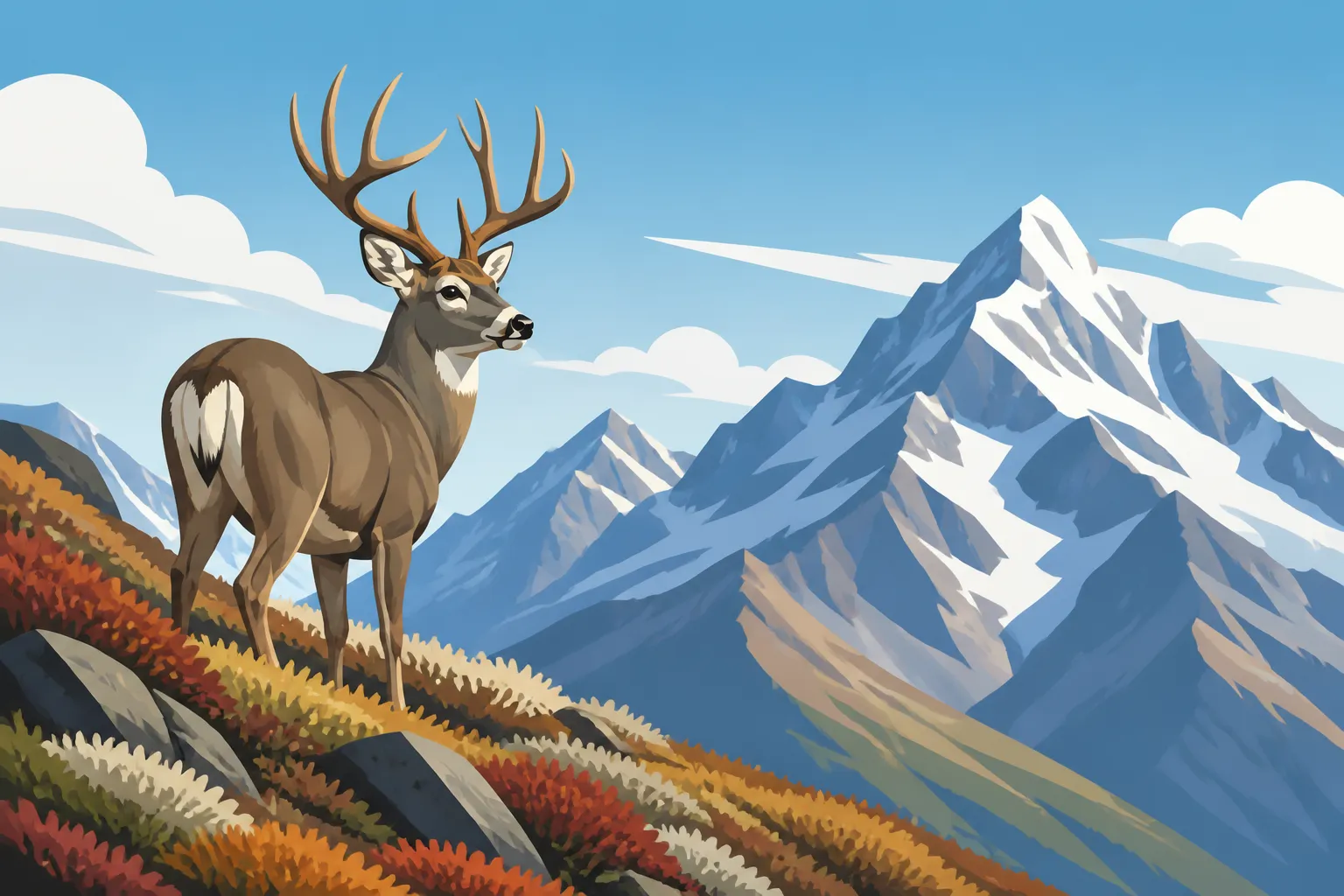
There's something incredibly appealing about hunting above timberline. The expansive views, the absence of dense brush, and the sheer challenge of navigating truly wild country draw many into the Alaska alpine. But for Sitka blacktail deer, early August isn't just a scenic choice; it's often a strategic one, driven by food, insect pressure, and a brief respite from predators that prefer lower elevations. Understanding this "why" is key to finding success.
Why Deer Head for High Country in Summer
As the snow recedes from the higher elevations in late spring and early summer, a bounty of tender, nutritious forage becomes available. Deer, much like other herbivores, are opportunistic feeders, and the alpine zones offer a smorgasbord of wildflowers, succulent forbs, and fresh green shoots that are highly palatable and rich in nutrients critical for antler growth and body condition after a long winter. Lower elevations, by contrast, might be getting browsed out, or the vegetation can become tough and less nutritious. Beyond food, the alpine provides a crucial escape from the relentless insect hordes – mosquitoes, white socks, and flies – that can make life miserable in the timbered valleys, especially on the warmer, still days of summer. Up high, the constant breeze acts as a natural deterrent, offering deer a more comfortable existence. Furthermore, the open terrain, while exposing them to aerial predators, can also provide an early warning system for approaching ground predators like bears and wolves, allowing them to spot danger from a distance.
Weather Vagaries and Variable Conditions
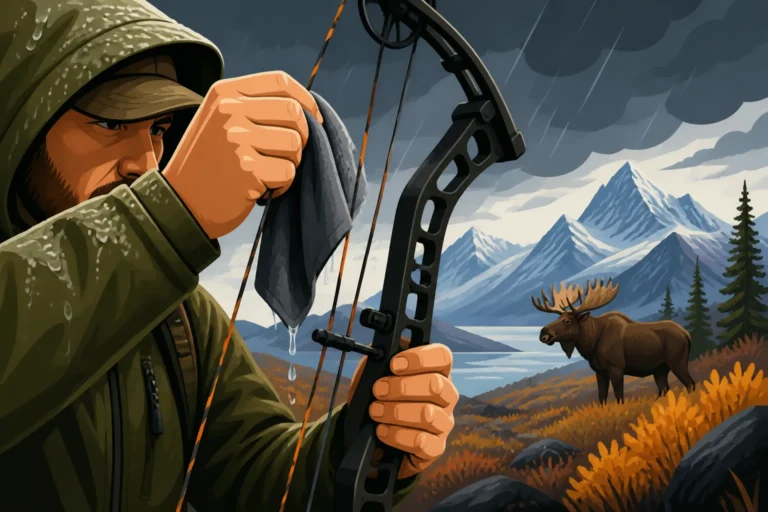
Hunting above timberline in early August might sound like pleasant summer hiking, but anyone who's spent time in Alaska's mountains knows that weather can turn on a dime. You might start your day in warm sunshine, stripping down to a base layer, only for a cold front to roll in by midday, bringing driving rain, thick fog, and even hail or snow at higher elevations. The coastal regions, especially places like Kodiak Island or Prince of Wales Island, are notorious for their sudden, heavy rains and dense fog that can reduce visibility to mere feet. This creates significant challenges for glassing and navigation. The interior mountains can be equally unpredictable, with rapid temperature swings between day and night. Proper layering, including high-quality waterproof and windproof outerwear, is non-negotiable. It's a humbling experience to be caught unprepared when the mercury drops 30 degrees and the wind howls, making even short traverses feel arduous.
Advantages of Hunting Above Timberline
Despite the challenges, hunting the alpine in early August offers some distinct advantages. First, the open country, while demanding excellent glassing skills, often means deer are more visible than when they're skulking through dense forests. You can often spot animals from miles away, giving you ample time to plan a stalk. This makes it an ideal scenario for hunters who enjoy the methodical process of long-range glassing and strategic approaches. Second, the higher elevations tend to have fewer hunters, especially if you're willing to go beyond the easily accessible areas. While popular units like those on Kodiak will see hunter pressure, getting into truly remote alpine basins can feel like you have the entire mountain range to yourself. This solitude is a major draw for many who seek a pure wilderness experience. Finally, the physical exertion required to hunt these areas means that any deer taken is truly earned, adding to the satisfaction of the hunt.
Scouting and Locating High-Country Deer
Finding those elusive Sitka blacktails above the trees isn't a matter of blind luck. It requires meticulous planning, an understanding of the terrain, and keen observation skills. Before you even set foot on the mountain, and certainly once you're there, smart scouting is paramount.
Pre-Season Satellite Reconnaissance
In today's age, the hunt begins long before you leave home. Satellite imagery and digital mapping tools are invaluable for pre-season scouting, especially when targeting high-country deer. Using platforms like those offered by GoHunt, you can meticulously analyze potential hunting units, looking for key features that attract deer. Start by identifying the timberline – the elevation where dense trees give way to scattered krummholz and eventually open tundra and rock. Above this line, look for south-facing slopes, which tend to melt out earlier and green up first, providing initial forage. Pay close attention to subtle benches, saddles, and small pockets of vegetation that could offer sheltered bedding areas. Water sources, even small seeps or snowmelt patches, are critical. Mark potential glassing knobs – high points that offer expansive views of multiple basins and drainages. Identifying natural travel corridors, such as game trails leading over passes or along ridge lines, can also prove fruitful. Remember, deer might be high, but they rarely stay completely exposed; they'll seek out cover for bedding, even if it's just a depression or a clump of willows in the vast open. This digital recon saves valuable time and energy in the field. To further hone your strategy, you might want to review resources on Scouting a Unit From Satellite Imagery Before You Fly.
On-the-Ground Glassing Strategies
Once you're in the field, your optics become your most important tool. A good spotting scope and binoculars are essential for efficient glassing. The vastness of alpine terrain can be overwhelming, so employing systematic glassing grids is crucial. Instead of randomly scanning, pick a section of a mountain face or an entire basin and methodically grid it, moving your optics slowly across the landscape, searching for any anomalies – a patch of contrasting color, a horizontal line in a vertical world, or the flick of an ear. Early morning and late evening are often prime times when deer are most active, feeding or moving between bedding areas. However, don't discount midday; deer might be bedded down but still visible, often silhouetted against a ridge or tucked into a shady spot. Patience is your greatest ally here. You might spend hours picking apart a mountainside before a deer materializes from the landscape. It's like finding a needle in a haystack, but with practice, your eyes become attuned to deer shapes and movements. Understanding Glassing Grids That Cover a Whole Basin can significantly improve your effectiveness. Also, remember that alpine conditions can lead to mirage, especially on warm, sunny days, making distant objects shimmer and distort; be aware of this and try to glass into shadows or adjust your viewing angle.
Understanding Deer Movement Patterns
Sitka blacktail deer in early August above timberline are constantly adapting to their environment. Their movements are influenced by forage availability, insect pressure, weather, and predator avoidance. After feeding in the early morning or late evening, they'll typically seek out bedding areas that offer both concealment and a vantage point. These might be small depressions, the lee side of a ridge out of the wind, or thickets of dwarf willows. If heavy fog rolls in, which is common in coastal alpine, deer might move down slightly to the upper edges of the timber for better cover, or simply hunker down where they are, often becoming incredibly difficult to spot. A sudden cold snap or heavy rain might also push them lower temporarily. Conversely, a warm, still day with high insect activity will likely keep them higher in the breezes. It’s a dynamic situation, and a successful hunter needs to be constantly reading the signs – the weather, the wind, and the terrain – to anticipate where the deer might be. Don't be surprised if you glass a buck in one spot in the morning, only to find him moved significantly by afternoon due to shifting conditions. Keeping an eye on Sitka Blacktail Deer Population Cycles in Alaska can also offer insights into general deer numbers and behavior in a given area, influencing how much ground you might need to cover.
Tactical Approaches for Alpine Sitka Blacktails
Once you've spotted your deer high on a mountain, the real work begins. Alpine hunting is a game of patience, physical endurance, and strategic thinking. The open, rugged terrain presents unique challenges for approaching game and then handling the aftermath.
The Art of the Stalk in Open Terrain
Stalking deer in open alpine country is fundamentally different from still-hunting in dense timber. Every move you make can be seen, and the wind, though often present, can swirl unpredictably in mountainous terrain. The first rule is to use the topography to your advantage. Identify natural folds in the land, ridge lines, or rock outcrops that can conceal your approach. Always be mindful of the wind – a single updraft or downdraft at the wrong moment can ruin an hour-long stalk. Sometimes, taking a much longer, circuitous route that keeps you out of sight and in good wind is far more effective than a direct, risky approach. You'll likely encounter steep, uneven ground, loose shale, and slippery vegetation. Take your time; rushing will only increase your chances of being spotted or making a noise. Often, it's a series of short, deliberate movements, punctuated by long periods of glassing and waiting, before you can get into a comfortable shooting position. Practice your shooting from various positions – prone, kneeling, and using your backpack as a rest – because you rarely get a perfect setup in the alpine. Consider resources like Shooting Positions on Alaska Tundra and Sidehills to prepare for these unique challenges.
Shot Placement and Follow-Up in Steep Country
Shooting at steep angles, whether uphill or downhill, requires practice and an understanding of bullet trajectory shifts. A shot that would be perfect on flat ground might be high or low when aiming at an animal significantly above or below you. Many modern ballistic calculators can account for angle, but practice is the best teacher. Always aim for a clean, ethical kill, and be prepared for a follow-up shot if necessary. Once a deer is down, mark the location precisely with your GPS. It's shockingly easy to lose sight of a downed animal in the vast, broken terrain of the alpine, especially if it rolls or slides a short distance. If you lose sight, go directly to your marked waypoint. The steep, rocky slopes also mean that a deer can quickly disappear into a chute or over a cliff, making recovery extremely difficult and dangerous. Before taking the shot, mentally consider the recovery path. Is there a safe way to get to the animal? What if it falls into an inaccessible gully? These are serious considerations in Alaska's unforgiving mountains.
Field Processing and Meat Care in Remote Areas
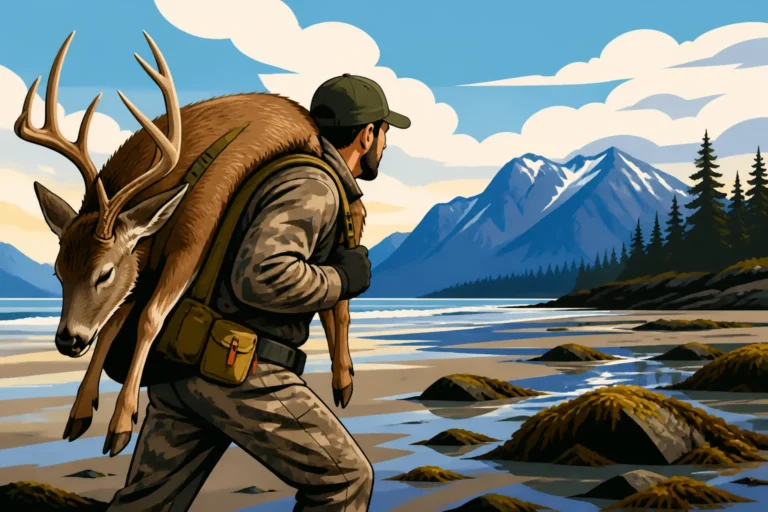
Congratulations, you've got a deer down in the high country! Now the real work of getting it off the mountain begins. In early August, temperatures can still be quite mild, and meat care is paramount to prevent spoilage. You'll need to field dress and quarter the animal quickly. Depending on the size of the deer and your physical condition, you might need to make multiple trips to pack out all the meat, especially if you're hunting solo. Pack plenty of game bags – breathable, durable ones are essential, especially in Alaska's often-wet coastal environments. Consider options that are designed for breathability even in damp conditions, as discussed in Game Bags That Breathe in Coastal Rain. Hang the meat in the shade if possible, off the ground, to allow it to cool quickly and protect it from scavengers. Even in August, bears are active, so securing your meat is important. If you anticipate warm weather, rapid cooling is critical, much like managing Meat Care in 50-Degree September Weather. Always be bear aware when working a kill site, and have bear spray or a firearm readily accessible. Packing out an entire deer, even a Sitka blacktail, from steep terrain requires a sturdy pack frame and excellent physical conditioning. You can learn more about the demands and equipment needed for Backpack Hunting in Alaska: Gear Weight and Meat Loads.
Essential Gear for Your Early August Alpine Hunt
Success in the alpine isn't just about skill and perseverance; it's also heavily dependent on the gear you choose to bring. Every item in your pack should serve a purpose, be durable, and be reliable. Cutting corners on gear in Alaska's mountains is a recipe for misery, if not outright danger.
| Gear Category | Essential Items | Why It's Crucial |
|---|---|---|
| Optics | 10x Binoculars, Spotting Scope (20-60x or 15-45x), Tripod | Locate game at long distances, verify legal antler size, scan terrain. |
| Navigation | GPS device (with downloaded offline maps), Satellite Communicator (e.g., Garmin inReach), Map, Compass | Essential for safety, tracking progress, marking locations, and emergency communication in areas without cell service. See Alpine Navigation Without Cell Service. |
| Clothing | Layering system (base, mid, outer/shell), Rain Gear (jacket/pants), Warm Hat, Gloves | Adapt to rapidly changing weather; stay dry and warm. |
| Footwear | Sturdy, waterproof hiking boots (broken in), Camp shoes/Crocs, Wool socks | Support, traction, blister prevention, river crossings. |
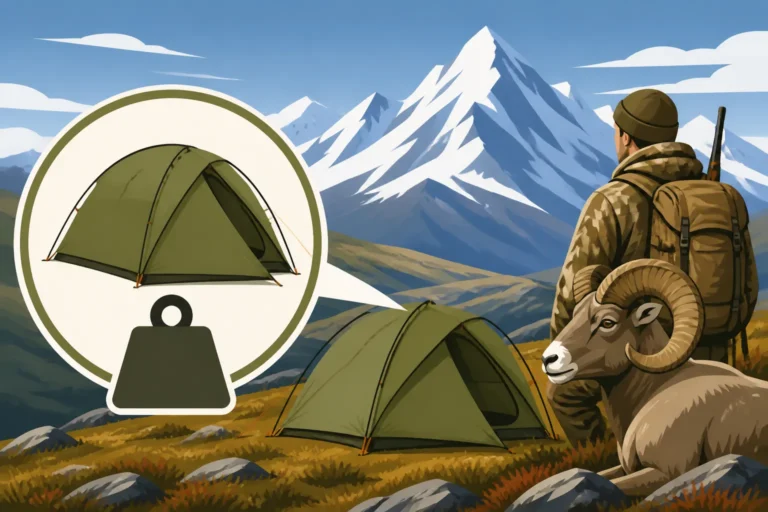
| Shelter | Lightweight tent or bivy sack, Sleeping bag (15-20°F rating), Sleeping pad | Protection from elements, warmth, crucial for multi-day hunts. (Consider Two-Man Tent Weight for a Sheep Hunt for packability) |
| Field Processing | Sharp knife, Bone saw (optional), Game bags (synthetic, breathable), Rope | Efficient and sanitary meat recovery, vital for preservation. |
| Safety & Survival | First-aid kit, Bear spray, Fire starter, Water filter/purifier, Headlamp with extra batteries, Emergency whistle, Repair kit | Address injuries, deter bears, provide light, purify water, fix minor gear issues. |
| Food & Water | High-calorie, lightweight backpacking meals, Water bottles/bladder | Maintain energy and hydration for strenuous activity. |
| Miscellaneous | Quality backpack with frame, Trekking poles, Camera, Sunscreen, Bug repellent | Carry gear, aid balance/reduce strain, capture memories, protect from sun/insects. |
Optics: Your Most Important Tool
For alpine hunting, your glass is arguably more important than your rifle. You'll spend far more time looking through binoculars and a spotting scope than you will looking through a rifle scope. High-quality 10x binoculars are indispensable for general scanning, but a good spotting scope (20-60x or 15-45x) on a sturdy tripod is critical for picking apart distant mountainsides and, most importantly, for field judging a deer's antler size and legality. Brands like Vortex, Leupold, and Swarovski are popular choices among Alaskan hunters for their durability and optical clarity. You want optics that perform well in low light and maintain clarity even in the humid, often-hazy conditions of coastal Alaska. A lightweight yet stable tripod is essential for comfortable, extended glassing sessions. Remember, you can't shoot what you can't see, and in the open alpine, seeing first is everything. GoHunt often has detailed reviews and recommendations for top-tier optics suitable for rigorous Alaska conditions.
Footwear and Clothing for Variable Conditions
Alaska's alpine can dish out all four seasons in a single day. Your clothing system needs to be versatile, allowing you to adapt quickly to changing temperatures, wind, and precipitation. A layering system is key: a moisture-wicking base layer, insulating mid-layers (fleece or synthetic puffy), and a bomb-proof waterproof and windproof outer shell are essential. Don't skimp on rain gear; cheap stuff will fail you when you need it most. Look for high-quality GORE-TEX or similar proprietary fabrics that truly shed water while remaining breathable. As for footwear, sturdy, waterproof hiking boots with excellent ankle support are a must. They need to be well broken-in to prevent blisters, which can quickly derail a hunt in rugged terrain. Many hunters also carry a lightweight pair of camp shoes or Crocs for evening comfort. Merino wool socks are superior to cotton for warmth, moisture management, and blister prevention. Remember to pack extra socks!
Packing for Success: Weight and Efficiency
Every ounce counts when you're packing into remote alpine country. A quality backpack with a robust frame system is crucial, not just for carrying your gear in, but for handling the heavy meat loads on the way out. You'll need enough capacity for several days' worth of food, shelter, sleeping system, water purification, and all your hunting essentials. Trekking poles are highly recommended for stability on uneven terrain, reducing strain on your knees, and aiding river crossings. Beyond the big items, think about the small but critical elements: a comprehensive first-aid kit, a reliable headlamp with extra batteries, fire starters, and a repair kit for gear malfunctions. Given the lack of cell service in many alpine areas, a satellite messenger or phone like a Garmin inReach is a critical safety device for communication and emergencies. It's not just about what you bring, but how efficiently you pack it, distributing weight evenly and securing everything to prevent shifting on steep climbs and descents. Always ensure you have a check-in plan with someone back home, using your satellite device, as detailed in InReach Check-In Schedules for Solo Hunts.
Disclaimer
Hunting in Alaska involves inherent risks, including but not limited to severe weather, dangerous terrain, and encounters with wildlife. The information provided in this guide is for informational purposes only and should not replace proper training, thorough research, or professional guidance. Always adhere to all Alaska Department of Fish and Game regulations and ensure you have the necessary licenses and tags. Prioritize safety and responsible hunting practices at all times.