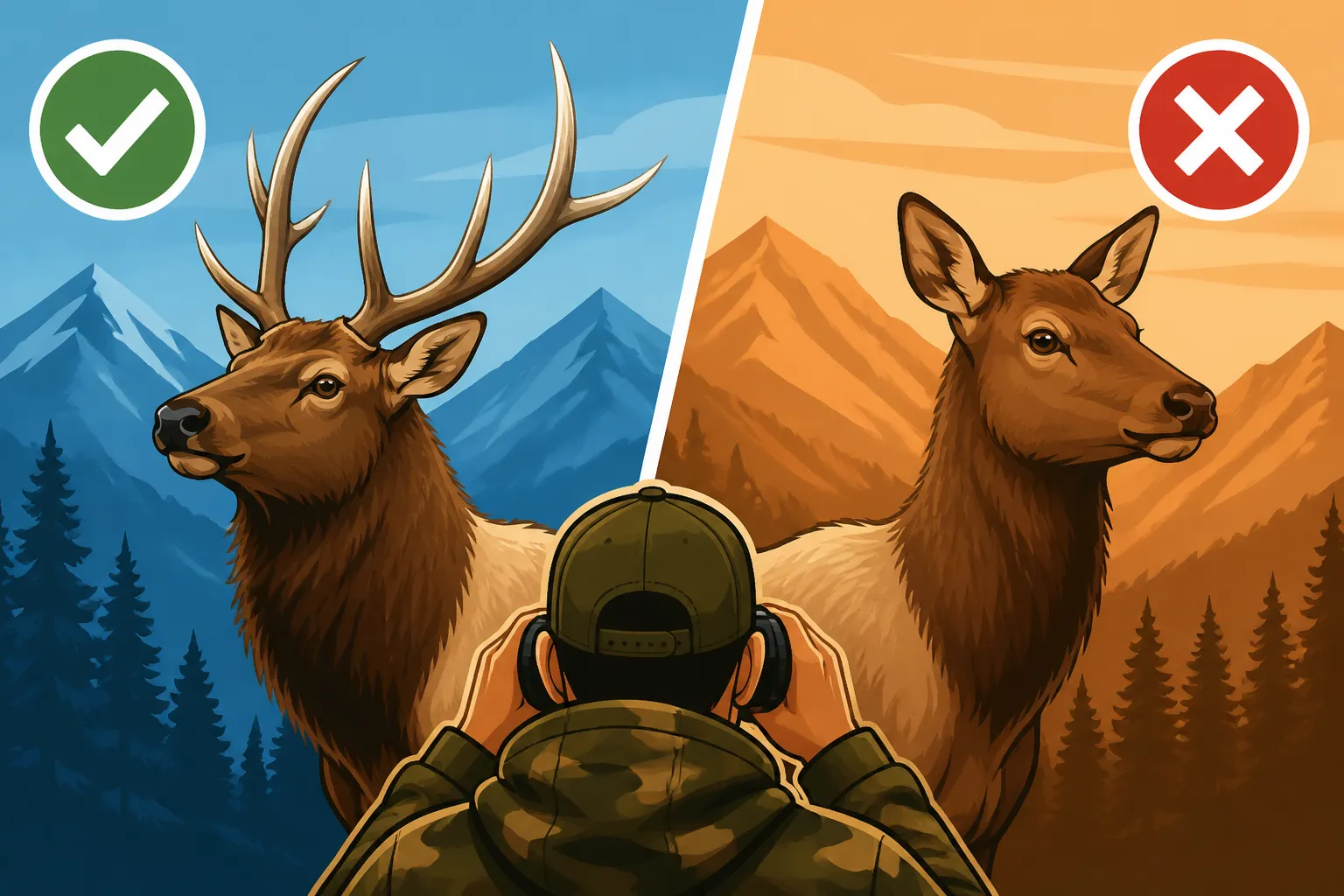
Telling a Spike-Fork Bull From a Yearling
It’s a scenario no Alaska hunter wants: you’ve finally spotted a moose, your heart is pounding, but then the doubt creeps in. Is that a legal spike-fork bull, or is it a small yearling you absolutely cannot shoot? Mistaking these two can lead to a costly citation or, equally frustrating, letting a legal animal walk. This guide is dedicated to helping you confidently differentiate between a spike-fork bull and a yearling moose in the field, ensuring you stay within the law and make the most of your hunting opportunity.
Understanding Alaska's Antler Restrictions
Many of Alaska's most popular hunting units, particularly those with road access or higher hunting pressure, employ antler restrictions to manage moose populations effectively and improve bull-to-cow ratios. These regulations are designed to protect younger bulls, allowing them to mature and contribute to the gene pool. The nuances of these rules can be incredibly challenging to interpret in the heat of the moment, especially when you're looking at a bull that seems "just barely" legal. It’s not just about the size of the rack; it’s about the specific configuration of the antlers themselves. Understanding these foundational definitions is the first critical step to ethical and legal hunting.
The "Spike-Fork" Definition
When the regulations talk about a "spike-fork" bull, they are referring to a very specific antler configuration. Generally, a legal spike-fork bull is defined as a bull moose with at least one antler having a single unbranched spike, or an antler with a main beam and one point or fork off that main beam. This means there can't be more than one point on one of the antlers, or the antler must be a single spike. The key is typically the absence of multiple points, or palmation, that you'd see on an older, more mature bull. It sounds simple on paper, but in the field, with adrenaline pumping and perhaps suboptimal lighting, those details can blur. You really need to focus on each antler individually. Imagine a perfectly straight antler – that's a spike. Now imagine that straight antler with one small tine coming off it – that’s a fork. If it has two tines, or more, or if there's any significant palmation with multiple points, it might no longer qualify as a spike-fork. Alaska's Fish and Game regulations provide a very specific Spike-Fork Legal Definition in Alaska that hunters absolutely must internalize before heading into the field. This clarity is paramount to avoiding mistakes that could ruin a hunt.
What Constitutes a "Yearling" Moose
A yearling moose, on the other hand, is a moose that is typically between one and two years old. These young bulls are just starting to grow their first set of antlers, and often, these antlers can be quite small, sometimes appearing as simple spikes, or even just "nubs." This is where the confusion arises. A yearling often has a smaller body frame compared to an older, legal spike-fork bull, but size can be deceptive. Their antlers might indeed be single spikes, which would technically fit the "spike" part of the definition. However, these are the animals the regulations aim to protect, allowing them to grow into larger, more genetically valuable breeders. The critical differentiator often lies not just in the antler shape, but in the bull's overall body size, head-to-body proportion, and even their behavior, which we’ll delve into later. They are essentially still growing into their adult frame, looking gangly and less robust than a mature animal.
Why This Distinction Matters Legally
The legal ramifications of misidentifying a moose in an antler-restricted area are severe. If you mistakenly shoot a yearling bull that doesn’t meet the legal spike-fork criteria, you could face hefty fines, loss of your hunting license, confiscation of your weapon and equipment, and even potential jail time. These penalties are not just theoretical; they are enforced rigorously by Alaska Wildlife Troopers. It's not uncommon to hear stories of hunters who made an honest mistake but still faced the full force of the law. This is why understanding Why Antler Restriction Hunts End in Citations is so crucial. The state's management goals rely on hunters adhering to these rules, and ignorance is rarely an acceptable defense. The responsibility falls entirely on the hunter to make a positive identification before pulling the trigger. This isn't just about legality; it's about ethical hunting and preserving the resource for future generations. For many hunters, being aware of Alaska Moose Antler Restriction Areas is the very first step in planning a legal hunt.
Field Judging Techniques for Antler Identification
Field judging moose in Alaska, especially under pressure, requires a keen eye and practiced discipline. It's far more than just a quick glance. You're trying to quickly assess multiple characteristics while the animal might be moving, in poor light, or at a significant distance. This skill is honed over many hours with optics, studying photographs, and, ideally, observing live animals without the pressure of a tag in your pocket. The goal is to develop a systematic approach that reduces the chance of error.
Visual Cues for Spike-Fork Bulls
When you're looking for a legal spike-fork bull, you're primarily focused on the antlers themselves. As mentioned, a "spike" means one main beam with no tines or palmation, and a "fork" means one main beam with a single fork. This is often seen on younger, but not necessarily yearling, bulls. The pedicles, where the antlers attach to the skull, will usually be more developed, and the antlers themselves will generally have more mass than a yearling's nascent growth. Pay close attention to the antler tips – do they terminate in a single point, or is there any hint of multiple points or flattened palmation beginning to form? Even a small, unbranched brow tine coming off the main beam could sometimes qualify, but it’s critical that the rest of the antler remains a spike or a single fork. Look for symmetry or asymmetry; sometimes one antler will be a spike and the other a fork, which is still legal. Compare its body size to nearby cows or other known-age moose if possible. A legal spike-fork bull, while still young, will typically have a more robust body than a true yearling. Many hunters practice Field Judging a Legal Bull Under Alaska Antler Rules using binoculars and spotting scopes on known animals during summer to train their eyes.
Identifying Yearling Moose Characteristics
Yearling moose often present a very different overall picture. Their body mass is usually much smaller; they often look "leggy" or less filled out than even a two-and-a-half-year-old bull. Their head might seem disproportionately large for their slender body. The antlers, if present, will typically be very small, often just nubs or short, thin spikes, sometimes barely extending past their ears. These nubs or short spikes lack the mass and development you’d see on an older spike-fork. They may also still be accompanied by a cow, though this isn't a definitive indicator as cows will eventually push them off. Observing their behavior can also be telling. Yearlings tend to be less confident, sometimes sticking closer to their mother or other larger moose. Don't be fooled by distance – what looks like a spike at 400 yards could have multiple small points or palmation that's simply difficult to discern. Always take your time. If you're hunting in areas like Unit 13A Between the Denali and Glenn Highways, where antler restrictions are common, you'll likely encounter a mix of ages, making careful identification even more important.
Here's a quick comparison table to help:
| Feature | Spike-Fork Bull (Legal) | Yearling Bull (Illegal if antler-restricted) |
|---|---|---|
| Antler Shape | One antler a single spike or a single fork (main beam + 1 point). | Often nubs, very short spikes, or small, thin single spikes. Rarely any branching. |
| Antler Mass | Noticeably thicker, more developed pedicles and main beams. | Thin, delicate, minimal mass. May barely clear the ears. |
| Body Size | More robust, larger frame, starting to fill out. | Small, "leggy," gangly appearance. Disproportionate head size. |
| Head Proportion | More proportionate to body size. | Head may appear large relative to its thin body. |
| Behavior | More independent, sometimes still with other bulls. | May still be closely associated with a cow. Less confident. |
| Overall Impression | Young but showing signs of growing into adult moose. | Clearly still growing, immature appearance. |
Common Mistakes and How to Avoid Them
The biggest mistake hunters make is rushing the shot. Adrenaline is a powerful thing, and when you finally spot a moose, there's a primal urge to act quickly. However, in antler-restricted areas, this haste can be disastrous. Another common error is judging antlers solely on silhouette or from a single angle. What looks like a spike from the front might have a small fork or even palmation that’s only visible from the side. Poor lighting, especially at Glassing at First Light Versus Midday or last light, can obscure critical details. Fatigue can also lead to misjudgment, making you less patient and less thorough in your assessment. To avoid these pitfalls, always use high-quality optics. Set up your spotting scope or binoculars on a tripod if possible to maintain steady viewing. Don't rely on a single glance. Observe the animal for several minutes, if possible, allowing it to move and present different angles. Use a rangefinder, not just for distance, but to give yourself time to thoroughly examine the antlers. If you find yourself thinking "maybe," that's your cue to hold off. There's no such thing as "maybe legal" in Alaska hunting. Many hunters also find value in resources like those provided by GoHunt for understanding and preparing for complex hunts.
Practical Tips for Confident Identification
Confident identification comes from preparation, patience, and practice. It’s a skill that combines technical knowledge of the regulations with practical fieldcraft. Every moment you spend scouting, researching, and honing your observation skills contributes to your ability to make the right call when it counts. Don't underestimate the mental game involved; staying calm and objective is as important as having sharp eyes.
Using Optics Effectively
Your optics are your best friends when field judging. Forget just glassing for general movement; you need to be scrutinizing every detail of an animal’s rack. A good quality pair of 10x binoculars is essential, but for serious antler judging, a spotting scope on a sturdy tripod is almost indispensable. Companies like GoHunt often review various optics, and a clear, high-magnification scope can resolve fine details at impressive distances. When you first spot a moose, get your binos on it, then immediately get your spotting scope dialed in. Zoom in slowly, examining each antler from the base to the tip. Count points, look for palmation, and ensure there are no hidden tines. Check both sides of the antler. For example, some bulls might have a spike on one side and a fully developed, albeit small, palm on the other. This would make it illegal in a spike-fork unit. Take your time. If the moose is moving, try to anticipate where it will stop or slow down to get a better look. Remember, a quick glance from a high-power scope doesn't replace a steady, prolonged examination. Downloading offline maps before a fly-in hunt can also help identify potential glassing knobs and approach routes, allowing for more stable viewing positions.
Observing Behavior and Body Proportions
Beyond the antlers, a moose's overall appearance and behavior can offer crucial clues. Yearling bulls, as discussed, often appear gangly and less muscular than older bulls. They might have a thinner neck and a less developed shoulder hump. Their movements might be less deliberate, almost skittish compared to a mature bull. They also tend to be shorter in height. A legal spike-fork bull, while still relatively young, will start to show more adult characteristics – a thicker neck, a more pronounced shoulder hump, and a generally stockier build. Consider the head-to-body ratio; a yearling's head might seem too large for its body, while an older bull’s head will appear more integrated. Also, pay attention to associations. While not a hard and fast rule, a yearling is more likely to be found with a cow, especially early in the season, whereas a truly independent spike-fork bull might be alone or with other younger bulls. These subtle nuances are crucial when you’re dealing with the pressure of trying to Mistaking a Legal Bull for a Sublegal One. Even small details in body language or gait can offer valuable confirmation of age and maturity.
When in Doubt, Don't Shoot
This is arguably the most important rule in all of Alaska hunting, especially in antler-restricted areas. If, after careful observation with your best optics, you still have any doubt whatsoever about whether the bull in front of you meets the legal criteria, do not shoot. It is far better to let a legal animal walk than to risk a violation that carries severe consequences. Many seasoned Alaska hunters will tell you stories of animals they passed on because they weren't 100% certain, and not one regrets it. The satisfaction of a legal, ethical harvest far outweighs the frustration of a missed opportunity. This principle also extends to challenging conditions. If the light is fading, the animal is partially obscured, or the distance is pushing the limits of your confidence, the answer is always to wait or pass. Think of it this way: the Alaska Department of Fish and Game regulations are designed to be unambiguous. If your field judgment is ambiguous, you haven't met the standard. Just as you'd ensure you're squared away on Sighting In a Rifle After a Bush Flight before ever pulling the trigger on game, you must be 100% certain of your target's legality. This respect for the law and the animal is the hallmark of a responsible hunter in Alaska. GoHunt advocates for responsible hunting practices and stresses the importance of understanding regulations.
Disclaimer
Please remember that hunting regulations in Alaska can change frequently. While this guide provides general information, it is your responsibility to review the current Alaska Department of Fish and Game regulations specific to your hunting unit and season before engaging in any hunting activity. Always confirm legal definitions and requirements directly from official sources.