Asking a Guide About Typical Shot Distances
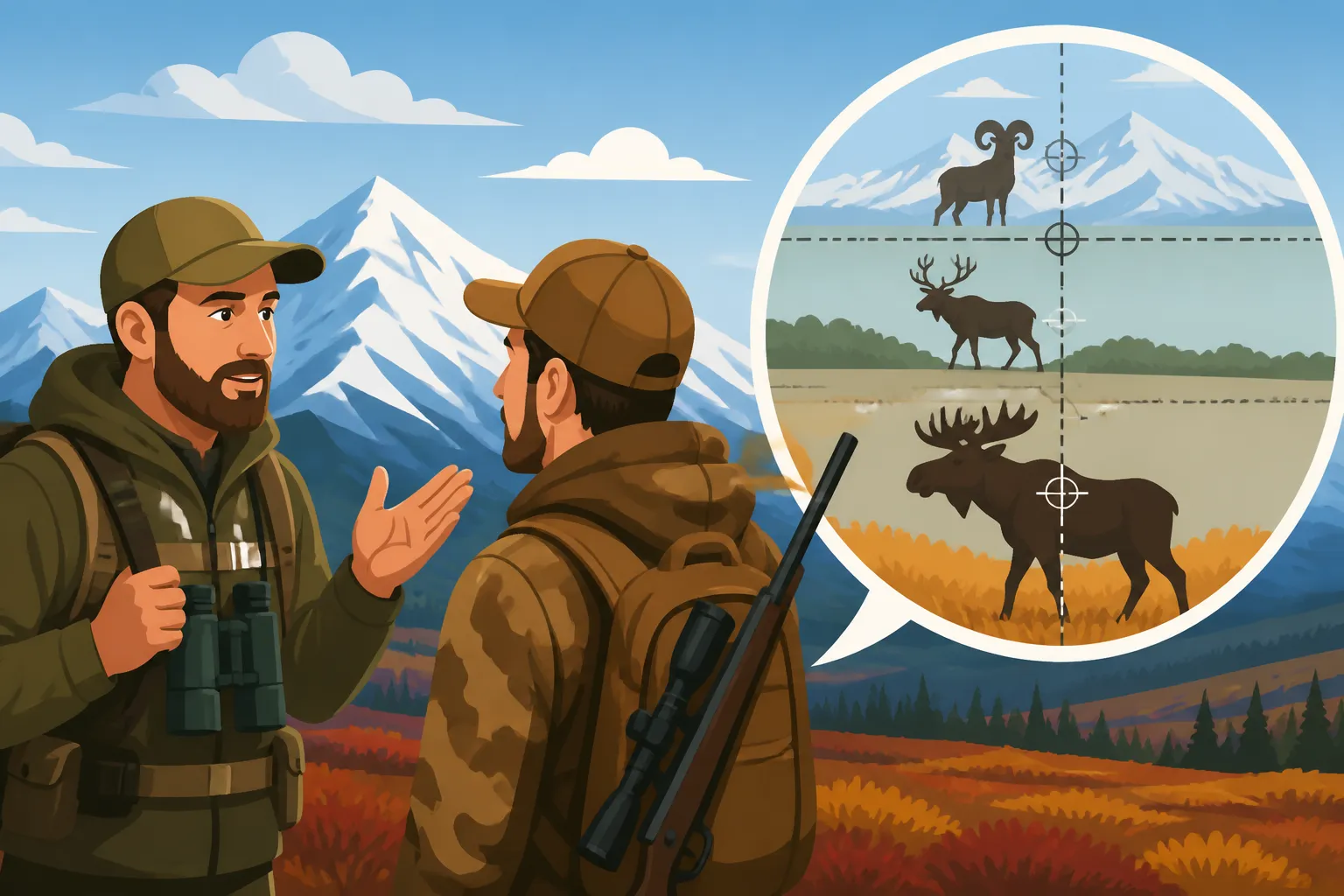
One of the biggest anxieties for any hunter planning an Alaska adventure, especially if it's your first time or if you're venturing into truly remote country, revolves around shot distance. You pour your heart and soul, not to mention a significant amount of money, into a dream hunt, and the last thing you want is to be unprepared when that moment of truth arrives. It's perfectly natural to wonder what kind of shots you'll be presented with, because the reality is, a 30-yard shot in dense timber is a world away from a 400-yard cross-canyon shot on a Dall sheep. This guide will walk you through how to effectively communicate with your guide about expected shot distances, understand the variables involved, and prepare yourself for success.
Why Understanding Expected Shot Distances Is Crucial
It might seem like a simple question, but asking your guide about typical shot distances is far more than just curiosity. It's about setting realistic expectations, ensuring ethical hunting practices, and ultimately, contributing to the success of your hunt. Nobody wants to find themselves in a once-in-a-lifetime situation only to realize they are not adequately prepared for the shot at hand.
Setting Realistic Expectations for Your Hunt
When you book a guided hunt, you're investing in an experience, and a big part of that experience is the moment you pull the trigger. If you've spent years practicing at 100 yards at your local range, but your Alaska sheep hunt typically involves 300-400 yard shots, you're setting yourself up for potential disappointment and a stressful situation in the field. Talking about shot distances early on helps align your preparation with the reality of the hunt. It lets you know if you need to dedicate more time to long-range practice, or if your current skill set is likely to be sufficient. It's about being honest with yourself and your guide about what you can confidently achieve.
Think about it: you've spent countless hours researching, saving, and perhaps even physically training for this trip. The last thing you want is to arrive in camp, hike for days, finally spot that trophy bull moose, only to have your guide tell you the shot is 350 yards across a bog, and you've never practiced beyond 200. That gut-wrenching feeling of inadequacy is avoidable with good communication beforehand.
Ensuring Ethical and Responsible Hunting
Ethical hunting means making a clean kill, every time. This isn't just about bagging an animal; it's about respect for the game and minimizing suffering. Taking a shot beyond your effective range drastically increases the risk of a wounded animal that might escape, only to suffer a prolonged death. No hunter wants to be responsible for a wounded animal that vanishes into the vast Alaskan wilderness.
Your guide's primary responsibility is to help you successfully and ethically harvest an animal. They want to put you in the best position for a clean shot. However, they can only do that effectively if they understand your capabilities. If they consistently tell you to prepare for 200-yard shots, but you know your personal limit is 150 yards under field conditions, it's vital to communicate that. It allows them to adjust their tactics, perhaps waiting for the animal to move closer or trying a different approach, rather than pushing you into a risky shot you're not confident in making. This conversation establishes a trust that's crucial for a successful partnership in the field.
Preparing Your Gear and Skills Appropriately
Knowing the typical shot distances directly impacts your gear choices and your practice regimen. If a guide mentions that most shots on their caribou hunts are within 150 yards, a standard hunting rifle setup is likely perfect. If, however, they tell you to expect shots regularly stretching to 300 or even 500 yards for Dall sheep, your rifle, scope, and even your choice of ammunition might need adjustment. You might consider a ballistic reticle, a scope with dialing turrets, or a rangefinder with angle compensation.
Beyond gear, your personal skill set is paramount. Are you proficient with shooting from various field positions, like off a backpack, using shooting sticks, or prone? How well can you estimate range in challenging terrain? Do you practice quickly acquiring targets and making shots under pressure? The answers to these questions become critical when considering what your guide has told you about shot distances. For example, if you know you'll be shooting offhand or from awkward positions on Alaska sidehills, your practice needs to reflect that. Shooting Positions on Alaska Tundra and Sidehills can provide some insight into what you might encounter.
Factors Influencing Typical Shot Distances in Alaska
Alaska is a land of immense diversity, from dense coastal rainforests to vast open tundra and rugged mountains. This varied landscape, combined with the behavior of different game species and even your guide's personal style, profoundly impacts the distances at which shots are typically taken.
Terrain and Habitat
The environment you're hunting in is arguably the biggest determinant of shot distance.
- Open Tundra and Alpine: For species like caribou, sheep, or even interior grizzly bears, open country often means longer shots. In places like the Brooks Range for sheep or the flat, wide basins for caribou, game can be spotted from a great distance, and closing that gap can be incredibly difficult due to lack of cover. A 300-yard shot might be considered "close" in this type of environment. Glassing the Alaska Range: Finding Game Before You Move highlights how much country you might be trying to cover with your optics.
- Dense Timber and Brush: In contrast, hunting black bear or moose in heavy spruce forests or willow thickets will almost certainly mean much closer shots. Visibility is severely limited, often to 50 yards or less. A classic moose hunt in river bottom country, especially during the rut, frequently involves shots under 100 yards, sometimes even within spitting distance if you're calling them in. Calling Bull Moose During the Alaska Rut often means they come in close.
- Coastal Areas: For Sitka blacktail deer or coastal brown bears, you might encounter a mix. Beach hunting for deer could yield open shots across a tidal flat, while pushing through dense alder thickets might present opportunities at very close range. Brown bears along salmon streams often offer close encounters, but they can also be spotted across vast estuaries.
Game Species and Their Behavior
Different species have different habits and tolerances for human presence, which directly affects how close you can get.
- Dall Sheep: These animals live in high, open country. While they can be surprisingly approachable at times, getting into position often means navigating steep, broken terrain, and a long shot might be the only option. Expect shots that range from 200 to 400 yards, and occasionally even further depending on the situation and the hunter's ability.
- Moose: Often found in willow flats, river bottoms, and burn areas. Moose are large, and while they can be wary, they're also often found in cover where closing the distance is easier. Calling strategies can bring them in very close. Shots are frequently within 150 yards, and often much closer. Recovering a moose in a beaver slough, as discussed in Recovering a Moose Downed in a Beaver Slough, is a prime example of close-quarters work.
- Caribou: Known for their nomadic movements across the open tundra. While they are often in large herds, getting a clean shot on a particular animal can be challenging. They are constantly moving, and cover is scarce. Shots can range from 100 to 300 yards, sometimes more if you catch them stalled.
- Brown/Grizzly Bear: These hunts can vary wildly. Coastal brown bears feeding on salmon might offer close-range opportunities, while interior grizzlies in alpine basins might necessitate longer shots. The guide's strategy (spot and stalk vs. baiting for black bears) plays a huge role. For coastal bears, Rifle Calibers for Coastal Brown Bear are often chosen for their stopping power at potentially close range.
Guide's Philosophy and Experience
Every guide has a unique approach to hunting. Some guides pride themselves on getting clients as close as possible, emphasizing fair chase and minimizing risk. Others, especially those in open country where stalks are difficult, might be comfortable with, and even prefer, clients who can consistently make longer shots.
- Aggressive Stalkers: Some guides are absolute masters at reading terrain and wind, using every bit of cover to get you within spitting distance of your quarry. They might spend hours on a stalk to reduce a 300-yard shot to 75 yards.
- Long-Range Advocates: Other guides, particularly those operating in vast, open areas, understand that often, the best opportunity presents itself at a greater distance. They will vet their clients for long-range proficiency and might set up shots that some hunters would consider extreme. It’s essential to ask about their philosophy.
- Safety First: Ultimately, all reputable guides prioritize safety and ethical kills. They won't push you into a shot they don't believe you can make, but they need your honest input on your capabilities.
Weapon Choice
The type of weapon you bring to Alaska also dictates typical shot distances.
- Rifle: Rifles offer the greatest flexibility in terms of range. With proper practice and a capable setup, ethical shots can be made from 50 to 500+ yards, depending on the hunter's skill and conditions.
- Archery: Bowhunting, whether traditional or compound, is inherently a short-range game. Most ethical bow shots are taken within 60 yards, often much closer. If you're planning a Bowhunting Alaska Big Game in Archery-Only Areas hunt, you absolutely must discuss the guide's expectations for close-range opportunities.
- Muzzleloader: Similar to archery, muzzleloader hunting generally involves shorter ranges than modern rifles, typically under 150 yards, sometimes up to 200 with specific setups. Muzzleloader Hunts in Alaska Draw Areas have their own unique considerations.
How to Effectively Discuss Shot Distances with Your Guide
This conversation shouldn't be a one-time thing; it should be an ongoing dialogue from initial booking inquiries through to your time in the field. Being clear and transparent will benefit everyone involved.
Initial Booking Inquiries
This is where you lay the groundwork. When you're first reaching out to potential outfitters, perhaps through a platform like BookYourHunt or while doing your own research, make this a key question. Don't just ask "What's a typical shot distance?" Be more specific.
- "For [Species X] in [Hunting Area Y], what would you consider the average shot distance your clients take?" This helps narrow it down. For example, a guide might say, "For moose in the river bottoms here, most shots are within 100 yards, often 50-75. For sheep, however, be prepared for 250-400."
- "What's the longest shot a client has successfully taken with you on this hunt, and what's the shortest?" This gives you a range of possibilities and indicates their comfort level with longer shots.
- "Are you typically able to close the distance, or do the animals and terrain usually dictate longer shots?" This gets to their hunting philosophy.
- "What kind of accuracy do you expect from your clients at these distances, under field conditions?" This is a crucial question. They might say, "I need you to be confident putting three shots into a 6-inch circle at 300 yards, off a bipod."
- Be honest about your current capabilities. Don't exaggerate. If your comfortable maximum is 200 yards, say so. This allows the guide to advise you on necessary preparation or to confirm if their hunt style aligns with your skills. Many hunters use resources like GoHunt to prepare for these types of questions, understanding that detailed planning starts long before the hunt.
Pre-Hunt Communication and Preparation
Once you've booked your hunt, the conversation about shot distances should evolve into how you're preparing.
- Share your practice regimen: "I've been practicing regularly out to 300 yards, primarily from prone and off shooting sticks. I'm consistently hitting a 6-inch target. Does that align with your expectations?"
- Discuss gear: "I'm bringing a [caliber] rifle with a [scope type]. I have a reliable rangefinder. Is there any specific gear you recommend for ranging or shooting stability for the distances you mentioned?" Make sure your rifle is properly sighted in before you fly, as discussed in Sighting In Before You Fly to a Remote Alaska Camp.
- Talk about contingencies: "What happens if we have an opportunity at a distance beyond my comfort zone? Would you prefer we try to close the distance, or pass on that animal?" This creates a safe space for you to communicate if you're not feeling confident in a specific moment.
During the Hunt in the Field
The conversation doesn't stop once you're in the field. Conditions can change rapidly, and what seemed like a comfortable shot at home might feel very different when you're cold, tired, and your heart is pounding.
- Communicate your confidence (or lack thereof): When an animal is spotted and a shot opportunity presents itself, your guide will typically give you a range and an assessment of the shot. If you feel it's too far, or the angle is too steep, or you don't have a stable rest, immediately communicate that. "Guide, I'm not comfortable with that 450-yard shot. Can we try to get closer?" A good guide will respect that.
- Confirm range and conditions: Double-check the range with your own rangefinder if possible, and assess wind conditions. Your guide might call out a range, but it's your responsibility to confirm and make the final decision to shoot based on your own abilities.
- Discuss alternatives: If a shot isn't ideal, ask about alternatives. "Is there another approach? Can we wait for it to move?" Sometimes patience is the best tactic.
Preparing for Varied Shot Opportunities
Alaska demands versatility. You might plan for a 150-yard shot, but conditions on the day could push that out to 300, or bring it in to 50. Being prepared for a range of possibilities is key.
Mastering Your Weapon Beyond the Bench
The shooting bench is a fantastic tool for sighting in and initial practice, but it doesn't replicate hunting conditions.
- Practice from field positions: Practice shooting prone, kneeling, sitting, and off shooting sticks or a bipod. Utilize your backpack as a rest. These are the positions you'll actually use in Alaska.
- Simulate stress: Practice quick target acquisition, shooting after a strenuous hike, or in varying weather conditions if safe to do so. This builds mental resilience and muscle memory.
- Know your rifle's ballistics: Understand your rifle's drop and drift at different ranges with your chosen ammunition. This knowledge, combined with a good rangefinder, empowers you to make accurate adjustments in the field.
- Practice with cold bore shots: Your first shot, often the most important, will be from a cold barrel. Practice making that first shot count.
Physical Conditioning and Mental Toughness
Physical fitness directly impacts your shooting ability in the field. A strenuous stalk up a mountain can leave you winded and shaking, making even a routine shot difficult.
- Build endurance: Focus on cardiovascular fitness. Hiking with a loaded pack, simulating the loads you might carry on a hunt, will prepare you for the physical demands of Alaska. Backpack Hunting in Alaska: Gear Weight and Meat Loads gives an idea of what those loads can entail.
- Practice breathing and trigger control under duress: Learn to control your breathing and calm your heart rate before a shot, even when tired. This mental discipline is as important as physical strength.
- Develop a strong shooting foundation: Good fundamentals – proper grip, stance, sight picture, and trigger control – remain critical regardless of the distance or conditions. Don't neglect the basics.
Knowing Your Personal Limitations
This is perhaps the most important aspect of preparation. It takes courage and self-awareness to admit your limitations, but it's essential for ethical hunting and a successful hunt experience.
- Experiment to find your true maximum effective range: Don't guess. Practice at various distances until you know, with absolute certainty, what your personal maximum ethical range is under field conditions. This isn't your "best day ever" range; it's the range where you can consistently place a lethal shot even when tired, cold, or excited.
- Prioritize a clean kill over a long shot: There's no shame in passing on a shot that feels too risky. The mark of a true hunter is knowing when not to shoot. Your guide will respect you more for it, and you'll maintain your integrity.
- Communicate openly and often: Keep the lines of communication with your guide open. They are there to help you, and the more they know about your skills and comfort levels, the better they can guide you to a successful and ethical harvest.
By understanding the variables, asking the right questions, and diligently preparing, you'll arrive in Alaska confident and ready for whatever shot opportunity the wild throws your way.
| Factor | Impact on Typical Shot Distance | Example Species/Terrain | Key Takeaway for Preparation |
|---|---|---|---|
| Terrain/Habitat | Open country = longer shots; Dense cover = shorter shots | Dall Sheep (alpine), Caribou (tundra) vs. Moose (willows), Black Bear (timber) | Practice long-range for open hunts, quick acquisition for dense hunts. |
| Game Species Behavior | Flighty/open country species = longer shots; Cover-seeking = shorter shots | Caribou, Sheep vs. Moose, Deer | Adapt stalking expectations and practice accordingly. |
| Guide's Philosophy | Some prioritize close stalks, others are comfortable with longer shots | Varies by guide and hunt style | Ask about their typical approach to closing distance. |
| Hunter's Weapon | Rifle > Muzzleloader > Archery | All species | Understand your weapon's effective range and limitations. |
| Hunter's Skill/Fitness | Higher skill/fitness = broader range of ethical shots | All species | Invest in physical training and diverse shooting practice. |
Disclaimer
This article is for general informational purposes only and does not constitute professional advice. Laws, prices and regulations vary by location and change over time. Consult a qualified professional for guidance on your specific situation.