Boat-Based Deer Hunting on Alaska’s Island Coastlines
Navigating Alaska's vast wilderness for a hunting adventure can feel incredibly overwhelming, especially when you're dreaming of those elusive Sitka blacktail deer that call the rugged coastal islands home. Traditional access routes are often nonexistent, leaving many hunters frustrated and wondering how to even begin. But what if the very challenge of access could be turned into your greatest asset? This guide is designed to empower you with the knowledge and confidence to pursue incredible boat-based deer hunting opportunities along Alaska's remote island coastlines.
The Allure of Boat-Based Sitka Blacktail Hunting
There's something uniquely captivating about hunting Alaska's island deer. It's a blend of big game pursuit and maritime adventure that simply can't be replicated on the road system. The sheer logistics, however, are what often deter even seasoned hunters. But with the right approach and equipment, using a boat isn't just a means to an end; it's an integral part of the experience, opening up a world of possibilities that remain untouched by land-locked hunters.
Accessing Remote Island Haunts
One of the most compelling reasons to embrace boat-based hunting for Sitka blacktail deer is the unparalleled access it provides. Imagine entire islands, or vast stretches of coastline, that are simply unreachable by vehicle or even a long, arduous hike through dense, unforgiving terrain. That's the reality of much of Southeast Alaska, particularly within the sprawling Alexander Archipelago and other island chains like Kodiak and Prince William Sound. Your boat becomes your floating base camp, allowing you to explore countless coves, inlets, and beaches that see minimal human pressure. You can pull anchor and relocate if conditions aren't ideal, giving you a flexibility that a fixed camp simply can't offer. This mobility not only maximizes your hunting opportunities but also greatly enhances the wilderness experience, making you feel truly immersed in Alaska's wild heart.
Compared to hunting close to roads, which can often feel crowded, setting out on a boat takes you to a different league of solitude. It strips away the distractions and immerses you in a raw, primal hunt where your resourcefulness and understanding of the environment are paramount. The challenges are greater, but the rewards—a hard-earned deer from a pristine, remote island—are immeasurably more satisfying.
Understanding Sitka Blacktail Habitat Along the Coast
Sitka blacktail deer are incredibly resilient creatures perfectly adapted to the temperate rainforest environment of coastal Alaska. Their habitat is a mosaic of dense old-growth timber, open muskegs, rocky beaches, and steep, brushy hillsides. They are often found near the water, especially during low tide when they forage on exposed seaweed and beach grasses. This close proximity to the ocean is precisely what makes boat-based hunting so effective and, frankly, necessary.
These deer exhibit distinct seasonal movements. In the early season, particularly late summer and early fall, some deer may be found higher up in the alpine zones, feeding on lush forbs and berries. If you're planning for these times, understanding Hunting Sitka Blacktail Deer in the Alpine Before Snow can provide valuable insights, even if you're accessing the alpine via boat. As the season progresses and the weather turns colder, deer tend to move down towards the more protected coastal strips and lower elevations, where forage is more accessible and snow depth less of an issue. The dense rainforest provides crucial cover from predators and harsh weather, making these areas key spots to focus your efforts. Understanding these movements, and how they relate to the changing tides and available forage, is crucial for successful boat-based hunting. It's not just about finding a beach; it's about understanding why a deer might be there at a specific time.
Choosing Your Vessel and Essential Gear for a Seaworthy Hunt
Embarking on a boat-based deer hunt means your vessel is more than just transportation; it's your lifeline, your camp, and your primary hunting platform. Selecting the right boat and outfitting it with essential gear can make or break your trip, dictating your range, comfort, and safety.
Skiffs, Cabin Cruisers, and Kayaks: Matching Your Ride to Your Hunt
When it comes to choosing a boat for coastal deer hunting, you have a spectrum of options, each with its own advantages and drawbacks.
Smaller skiffs, typically 16-20 feet, are incredibly popular, especially for shorter trips or when used as tenders for a larger mother ship. Their shallow draft allows access to small coves and enables easy beaching on sandy or gravel shores, which is ideal for getting boots on the ground quickly. They're maneuverable and relatively easy to trailer and launch, making them a favorite for Skiff Hunting Deer Along Saltwater Beaches. However, skiffs offer minimal protection from the elements, meaning you'll be exposed to rain, wind, and sea spray, which can be brutal in Alaska. Their range and carrying capacity are also limited, making them best suited for day trips or as a utility craft rather than a primary live-aboard vessel for multi-day expeditions.
On the other end of the spectrum are cabin cruisers, which offer significantly more comfort, protection, and range. These boats, often 24 feet or larger, provide enclosed shelter, heating, cooking facilities, and sleeping quarters, making them perfect for multi-day hunts with larger groups or in colder, wetter weather. You can carry more gear, more fuel, and even recover a downed deer more easily. Their deeper draft, however, means they can't access very shallow areas, and beaching them safely can be a challenge. They are also more expensive to purchase, maintain, and operate. For serious expeditions into remote areas, a sturdy cabin cruiser offers a true floating base camp experience.
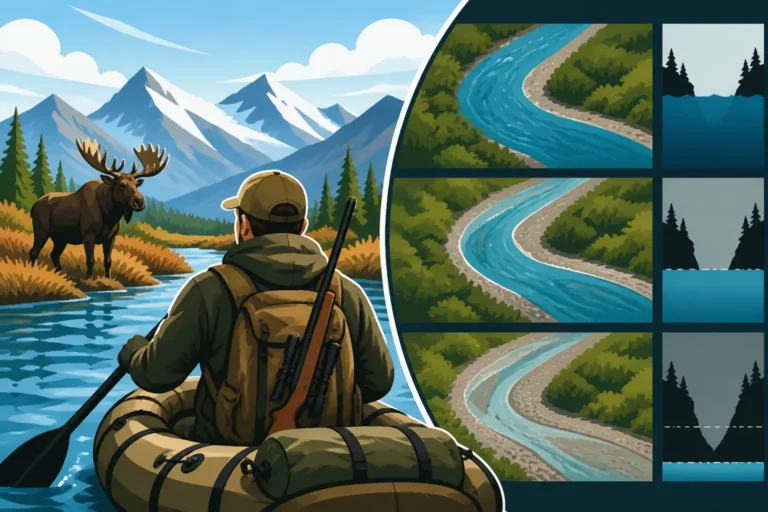
For the minimalist, adventurous hunter, kayaks or even packrafts can open up incredible, stealthy opportunities. Their quiet nature allows for incredibly close approaches to shore, and they can access the absolute shallowest waters. This method is ideal for solo or duo hunts where the focus is on a quiet, low-impact experience. The major downsides are limited gear capacity, slower travel speeds, and extreme vulnerability to weather and sea conditions. Safety is paramount with these smaller craft, and you must be highly aware of your limitations and the conditions at all times.
Here’s a quick overview of typical boat types and their best applications:
| Boat Type | Pros | Cons | Best Use Case |
|---|---|---|---|
| Skiff | Shallow draft, easy beaching, highly maneuverable | Exposed to weather, limited range/capacity, less stable | Day hunts from a base, close to launch, calm coastal waters |
| Cabin Cruiser | Shelter from weather, longer range, comfortable, stable | Deep draft, less agile, expensive to operate/maintain | Multi-day expeditions, larger groups, rougher water, live-aboard |
| Kayak/Packraft | Stealthy, ultimate shallow water access, quiet | Limited capacity, weather-dependent, slow, less safe | Solo/duo minimalist hunts, very calm waters, short distances |
Essential Gear for a Coastal Expedition
Regardless of your chosen vessel, outfitting it with the right gear is non-negotiable for safety and success in Alaska's marine environment. Beyond your standard hunting rifle or bow (and if you're an archery hunter, you know Archery Tackle That Survives Ten Days of Rain is a must-have), you need a robust set of marine-specific safety equipment. This includes a reliable VHF radio for communication, a GPS unit with pre-loaded charts, flares, a comprehensive first-aid kit, a ditch bag with emergency supplies, and personal flotation devices (PFDs) for everyone on board. For colder waters, survival suits are a critical investment that could save lives.
Your boat itself requires a specific set of tools and supplies. You'll need multiple anchors suitable for various bottom types, plenty of sturdy rope, extra fuel in approved containers, spare parts for your engine, and a comprehensive repair kit for minor breakdowns. Redundancy is key in remote Alaska; if one system fails, you need a backup plan. Always carry a reliable bilge pump, and ideally, have a manual backup.
For personal gear, think layers and waterproofing. Coastal Alaska is synonymous with rain and dampness. High-quality rain gear, waterproof bags for all your essentials, and durable, waterproof boots are not just recommended, they are absolutely essential. Cold, wet feet or gear can quickly turn an incredible adventure into a miserable, potentially dangerous, situation. Brands like Grundéns and Xtratuf are staples for a reason in this environment. When you're packing, consider tools that can stand up to the elements; even a navigation app on your phone is better when paired with a waterproof, shockproof case. Checking resources like GoHunt for gear recommendations can also help you choose reliable equipment that withstands the unique demands of Alaska's coast.
Navigating Alaska's Dynamic Coastal Waters
Alaska's coastlines are beautiful but unforgiving. The success and safety of your boat-based deer hunt hinge significantly on your ability to understand and navigate these dynamic waters. This means more than just knowing how to drive a boat; it means reading the ocean itself.
Reading Tide Tables and Current Charts
One of the most critical factors for any coastal activity in Alaska, especially hunting, is understanding the tides. The tidal swings in many parts of Southeast Alaska, for example, can be enormous, often exceeding 15-20 feet. This means a beach that was completely exposed and accessible at low tide can be entirely submerged and impassable just six hours later. Failing to account for this can lead to being stranded, having your boat float away, or even being caught by the incoming water while processing a deer. Prior to your trip and daily in the field, diligently consult Tide Tables and Beach Deer Hunting. These tables will tell you the times of high and low tide and their respective heights, allowing you to plan your movements, beach landings, and retrieves accordingly.
Currents are another major consideration, particularly in narrow passages, around headlands, or near river mouths. Strong currents can make boat travel difficult, dangerous, or even impossible for smaller vessels. They can affect your speed, fuel consumption, and ability to steer, especially if you're trying to land or pick up hunters. Current charts, often integrated into marine navigation software or paper charts, show the direction and velocity of currents at various tidal stages. Understanding these can help you choose the safest and most efficient routes, avoid dangerous rips, and plan your approach to an island shore without fighting a losing battle against the ocean.
Effective planning around tides and currents is paramount. If you shoot a deer on the beach, you have a limited window to process and pack it out before the tide comes in. Similarly, you need to ensure your boat is anchored securely and safely, considering the changing water levels. It's a constant mental calculation, but mastering it means the difference between a smooth hunt and a high-stress scramble.
Understanding Weather and Sea Conditions
Alaska's coastal weather is notoriously fickle and can change dramatically in a matter of hours. What starts as a calm, sunny morning can quickly devolve into heavy rain, thick fog, or gale-force winds. These sudden shifts are not just inconvenient; they can be incredibly dangerous. High winds can whip up large waves, making travel in smaller boats hazardous and leading to seasickness in even larger vessels. Thick fog can reduce visibility to mere feet, turning navigation into a terrifying ordeal, especially near rocky shorelines.
Before and during your hunt, diligently monitor marine weather forecasts. Modern satellite communication devices can provide updated forecasts even in remote areas. However, always remember that forecasts are just predictions; observe the local conditions constantly. Learn to read the clouds, the wind, and the behavior of the water around you. If conditions are deteriorating, or a strong weather system is predicted, prioritize safety over hunting. It's far better to hunker down in a protected cove, even if it means losing a day of hunting, than to risk your boat and lives in rough seas.
This foresight is crucial for safe operations. Knowing when to simply Anchoring Overnight on a Deer Hunt in a sheltered bay instead of trying to push through a building storm could be the most important decision you make all trip. Your boat's size and design will dictate how much rough weather it can safely handle. Always err on the side of caution; the mountains and deer will still be there tomorrow.
Effective Hunting Tactics from the Water's Edge
Once you've mastered the marine logistics, the actual hunting begins. The unique environment of Alaska's islands requires specific tactics to effectively locate, approach, and harvest Sitka blacktail deer from a boat-based platform.
Spotting Deer from the Boat and Shoreline Approaches
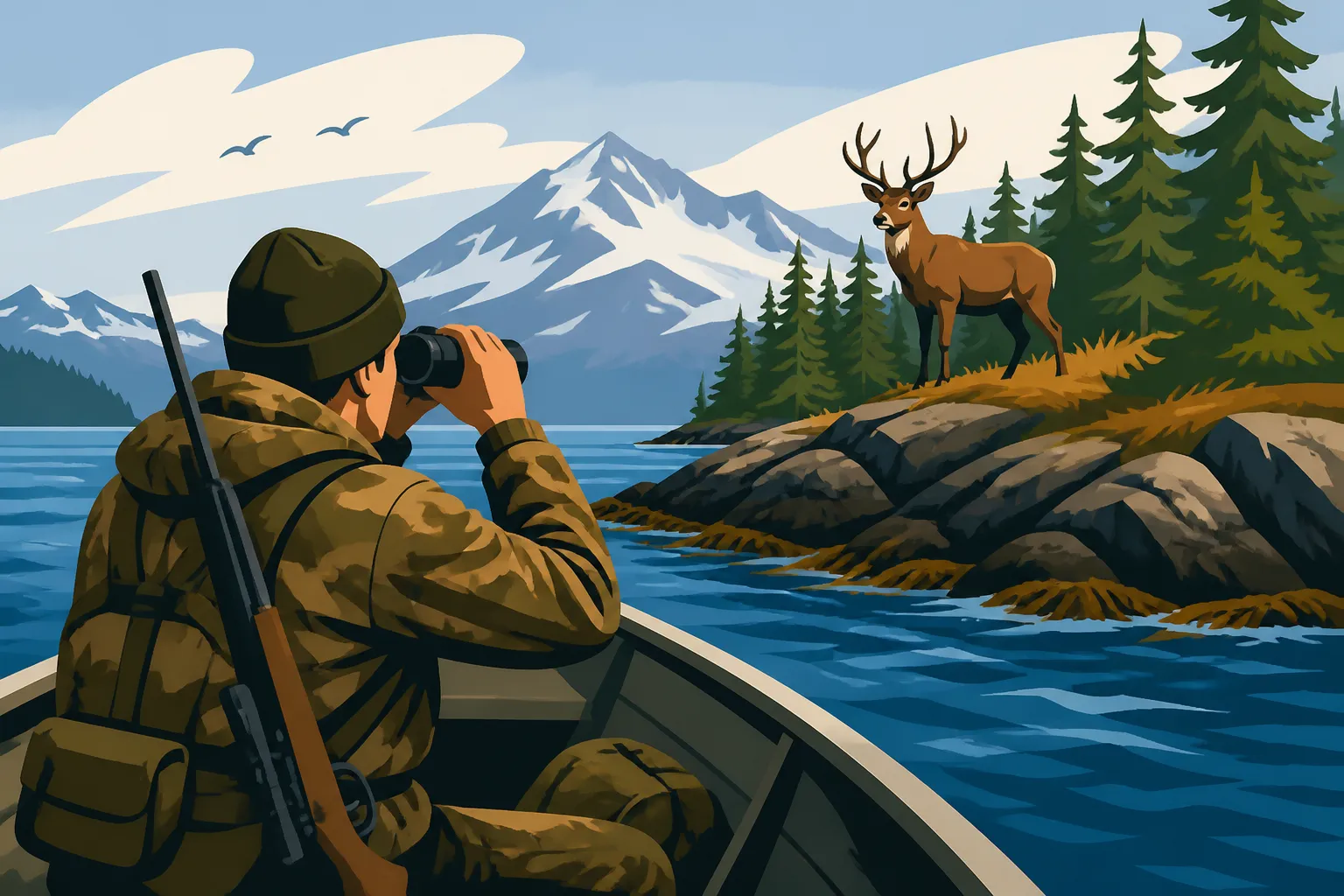
Glassing from the boat is often the first step in locating deer on these islands. Use high-quality binoculars and spotting scopes to methodically scan shorelines, exposed tidal flats, muskegs, and the edges of the forest. Deer frequently feed on seaweed and beach grasses at low tide or browse on shrubs along the tree line. Look for movement, contrasting colors against the green and brown landscape, or the tell-tale shape of a deer. GoHunt's mapping tools or topographical apps can help identify potential feeding areas or natural clearings that might be productive to glass.
Once a deer is spotted, the challenge shifts to a stealthy approach. This often involves anchoring your main vessel a safe distance away and then deploying a quieter, smaller craft like a skiff, kayak, or even a packraft to reach shore. Approach the land quietly, using the wind and terrain for cover. Pay close attention to wind direction as you near the beach, as deer have an excellent sense of smell. You want the wind in your favor, blowing from the deer towards you, to avoid detection. Sometimes, a quiet electric trolling motor on a skiff can make a huge difference in closing the distance without spooking game.
Choosing your landing zone is equally important. Look for a spot that offers concealment as soon as you step ashore, allowing you to quickly move into the cover of the timber or brush. Avoid noisy, rocky beaches if possible, and opt for softer gravel or mud flats. Ensure your boat is securely anchored or beached to prevent it from drifting away while you're focused on the stalk.
Navigating the Island Terrain for Success
Stepping ashore on an Alaskan island often means entering a world of dense, challenging terrain. The rainforests are thick, characterized by towering Sitka spruce and western hemlock, often with an impenetrable understory of salal, huckleberry, and devil's club. Downed timber creates natural obstacles, and muskegs can be deceptively deep and arduous to traverse. Slow, deliberate movement is key. Rushing will only lead to noise, exhaustion, and potentially getting tangled in the vegetation.
When hunting in such dense cover, two primary tactics come to mind: still hunting and deer drives. For solo hunters or small groups, still hunting is often more effective. This involves moving incredibly slowly, stopping frequently to glass and listen, taking a few steps, then pausing again. Let your eyes do the work, trying to pick apart the dense foliage for any sign of a deer. Look for horizontal lines (deer bodies) in a vertical world (trees and brush). Understanding Deer Drives Versus Still Hunting in Southeast Alaska Timber can help you decide which approach is best for your group size and the specific terrain you encounter. Drives, where multiple hunters push deer towards others, can be effective in clearing small pockets of timber, but they require excellent communication and coordination, which can be difficult in remote areas.
Always look for existing deer trails—they are often the path of least resistance through the thick brush. Fresh tracks, droppings, and browse marks are all indicators of recent deer activity. Understanding how deer use the terrain, where they bed down during high tide or heavy rain, and their escape routes will significantly increase your odds of success. They will use natural corridors, benches, and saddles to navigate the steep terrain.
Field Care and Logistical Challenges After the Kill
Congratulations, you've harvested a Sitka blacktail! Now the real work begins. Getting that animal from the point of kill to your boat, and then preserving the meat and trophy in Alaska's often-wet and humid coastal environment, presents a unique set of challenges that must be anticipated.
Packing a Deer Off a Beach at Low Tide
Imagine the scenario: you've successfully stalked and shot a deer on a beach that was exposed during low tide. The tide, however, waits for no one. This is a common situation in coastal Alaska, and it highlights the urgent need for quick, efficient field dressing and quartering. You often have a rapidly shrinking window of opportunity before the incoming tide reclaims the beach and makes your recovery efforts exponentially harder, if not impossible. Speed is of the essence.
The first step is often to quickly field dress the deer to begin cooling the carcass and reduce weight. Then, quartering the animal is usually the most practical approach. Unless you have a very large boat and a short distance, attempting to drag a whole deer through dense brush or across a soft beach is a monumental task. Break the deer down into manageable pieces: the four quarters, backstraps, tenderloins, and sometimes the neck and rib meat. For a detailed guide on this process, especially under time pressure, refer to Packing a Deer Off a Beach at Low Tide. This will make carrying the meat far easier, whether you're using game bags, a pack frame, or even a small game cart on relatively clear ground.
Getting the meat from the kill site back to your boat can be physically demanding. If you're alone, you might need to make multiple trips. Consider the type of terrain you'll be traversing—mud, dense brush, rocky shores—and plan your route. Loading the heavy quarters into a small skiff, especially if it's bobbing in the water, requires careful balance and strength. It's a critical moment where patience and teamwork (if you have a partner) pay off. Never rush and risk injury or losing your precious meat to the elements.
Meat and Trophy Preservation in a Humid Environment
Coastal Alaska's notorious humidity and frequent rain present a significant challenge for preserving game meat. Unlike dry interior climates, simply hanging meat in the shade often isn't enough to prevent spoilage. Bacteria thrive in warm, moist conditions. The absolute priority is to cool the meat as quickly as possible. This means getting the hide off promptly, quartering the animal, and then getting the meat into breathable game bags. Don't use plastic bags, as they trap heat and moisture, accelerating spoilage. High-quality, breathable game bags are essential, and specifically, Game Bags That Breathe in Coastal Rain are a game-changer for these conditions.
Once the meat is in bags, you need to find a way to get air circulation around it. If you're back at your boat, hanging the quarters in a cool, shaded, breezy spot is ideal. If you're ashore, finding a sturdy branch to hang the meat out of reach of scavengers is crucial. For tips on how to do this effectively, even in challenging conditions, consult Hanging Meat Out of Bear Reach. In warmer September weather, meat care is even more critical; quick cooling is the only way to ensure quality.
Trophy preservation, particularly for the cape (hide for a shoulder mount) and skull, also requires diligent attention in a wet environment. Prevent the cape from getting overly wet or dirty. If you plan a life-size mount, skinning carefully and promptly is crucial. For detailed advice on this, many principles from Cape and Skull Care for a Brown Bear Hide can be adapted for deer. Even if you can't do a full salt cure in the field, getting the hide fleshed, spread out, and exposed to air as much as possible is important before you can get it to a freezer or taxidermist. Keep the skull clean and dry to prevent bone degradation.
Safety, Regulations, and Responsible Hunting Practices
Hunting in Alaska is an incredible privilege that comes with significant responsibilities. Especially in remote, boat-accessed areas, safety and strict adherence to regulations are paramount, not just for your success but for the preservation of the resource and your well-being.
Staying Safe in Bear Country and Remote Waters
Coastal Alaska is home to both brown and black bears, some of the densest populations in the world, particularly in areas rich with salmon streams. Encountering bears is not a matter of "if," but "when." You must maintain constant vigilance, especially when at a kill site where the smell of blood can attract bears from a considerable distance. Understanding Bear Safety While Butchering a Kill in Alaska is not just good advice, it's a critical survival skill. Always be scanning your surroundings, make noise, and keep your hunting partner informed of your location.
Carrying appropriate bear deterrents is non-negotiable. This typically means a powerful firearm and/or bear spray, carried in an easily accessible holster. Know how to use them effectively and practice deploying them. Proper food storage in your boat and camp is also vital to avoid attracting bears. All food should be secured in bear-resistant containers or hung out of reach. Never leave food unattended, and always process game away from your sleeping quarters if possible.
Beyond bear safety, remote water travel demands meticulous planning for potential emergencies. Your boat should be well-maintained and stocked with essential repair tools. Have multiple forms of communication, such as a VHF radio, a satellite phone, or a personal locator beacon (PLB) or satellite messenger device. If you're hunting solo or in a small group, sharing your InReach Check-In Schedules for Solo Hunts with a trusted contact back home is a responsible practice. Always file a float plan with someone who knows your itinerary and when to expect your return, and stick to that plan.
Adhering to Alaska's Hunting Regulations
Alaska has complex and detailed hunting regulations designed to manage its diverse wildlife populations sustainably. It is your personal responsibility to obtain and thoroughly understand the most current Alaska Department of Fish and Game (ADF&G) regulations for the specific game management unit (GMU) you will be hunting in. Regulations cover everything from season dates and bag limits to legal hunting methods and antler restrictions. Ignorance of the law is never an excuse.
Key regulatory requirements for deer hunting in Alaska typically include possessing a valid Alaska hunting license and an Alaska Deer Harvest Ticket Requirement. Always ensure your tags and permits are in order before you head out. Be aware of any emergency orders that might close a season early due to low quotas or adverse conditions. GoHunt and the ADF&G website are excellent resources for staying up-to-date on these vital details. For instance, if you're hunting in the Prince of Wales area, understanding the specific Deer Populations on Prince of Wales Island and associated regulations is crucial.
Beyond legal compliance, responsible hunting practices are the cornerstone of our sport. This includes ethical shot placement to ensure a clean kill, full salvage of all edible meat (as required by law in Alaska), and practicing Leave No Trace principles. Pack out all your trash, including spent shell casings, and strive to leave the wilderness as pristine as you found it. By being a responsible hunter, you not only ensure the longevity of the resource but also uphold the positive image of the hunting community.
Disclaimer
The information provided in this guide is for informational purposes only and is not a substitute for official regulations. Hunters are solely responsible for knowing and following all current Alaska Department of Fish and Game regulations, which can change frequently. Always consult the most recent ADF&G hunting regulations before planning or undertaking any hunt in Alaska. Safety in the Alaskan wilderness is paramount; hunters must be prepared for extreme conditions and potential hazards.