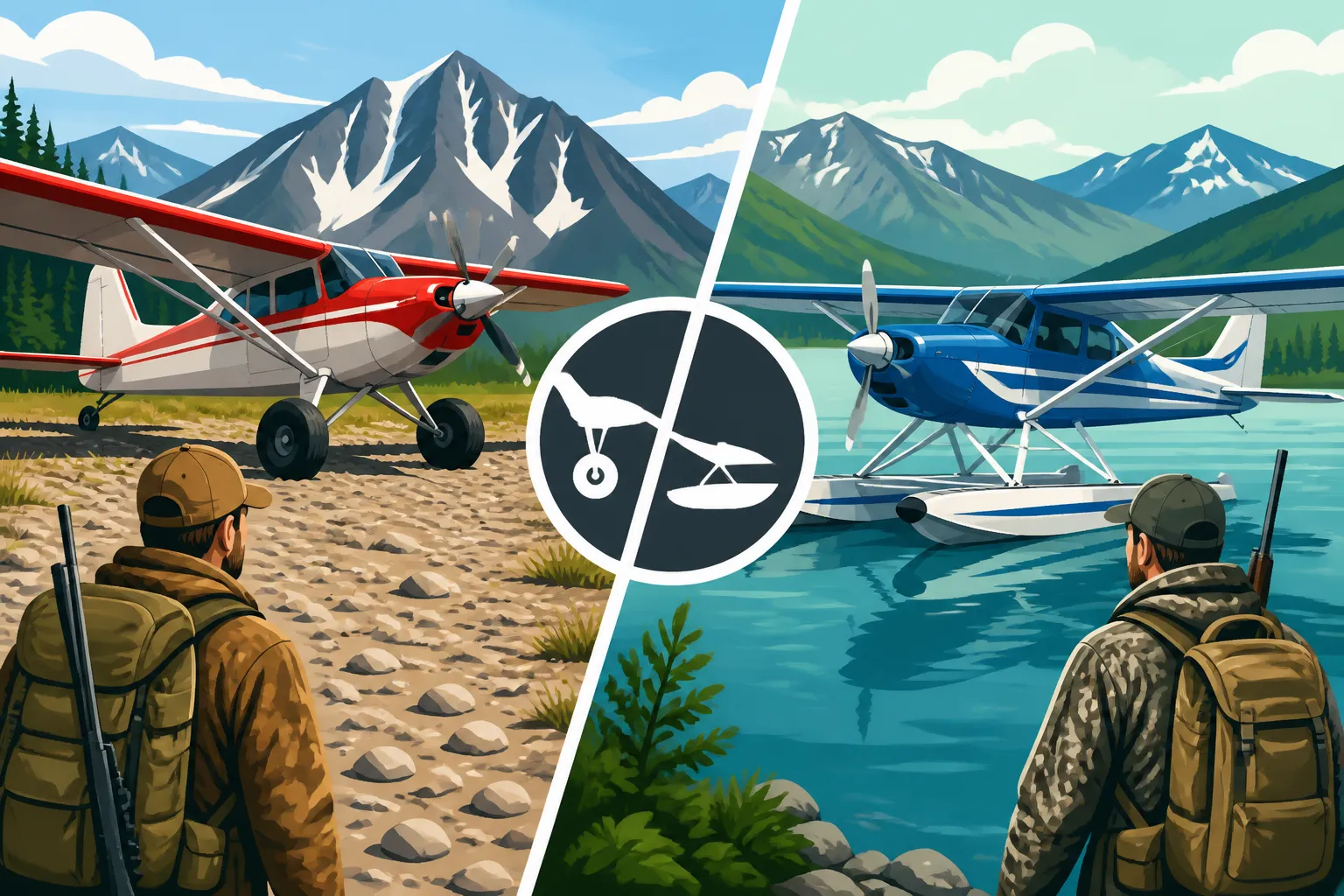
Wheel Plane Versus Float Plane Landing Sites
Stepping into the vastness of Alaska for a hunt often means leaving the road system far behind. The sheer scale of the wilderness, the lack of infrastructure, and the necessity of reaching pristine game habitat mean that for many, a bush plane isn't just a convenience – it's the only way in. The critical decision then becomes: will you be landing on wheels or floats? This guide will break down the intricacies of choosing between wheel plane and float plane landing sites, helping you understand the unique challenges and opportunities each presents for your Alaskan hunting adventure.
The Essential Role of Bush Planes in Alaska Hunting
Alaska's hunting landscape is unlike almost anywhere else. When you look at a map, you quickly realize that roads are few and far between, mere ribbons connecting scattered towns. The true bounty, the vast majority of prime hunting grounds, lies deep within the bush, far from any paved surface.
Why Air Access is Non-Negotiable for Remote Ventures
Imagine trying to reach prime Dall sheep country high in the Alaska Range, or a secluded Interior Alaska drainage known for its massive bull moose. Without a bush plane, these dreams would remain just that – dreams. Rivers are often too swift or shallow for jet boats for extended travel, and the terrain is simply too rugged, brushy, or marshy for foot travel over many miles, especially when you consider packing out hundreds of pounds of meat. Air access transforms the impossible into the possible, opening up incredible opportunities to experience true wilderness hunting. It cuts days, if not weeks, off travel time, allowing hunters to maximize their precious time in the field. Without the hum of a propeller, many of Alaska's most sought-after species in their prime habitats would be utterly inaccessible.
Understanding Air Taxi Services and Regulations for Hunters
When you hire a pilot to fly you into the Alaskan bush, you're typically engaging an air taxi service. These professionals are licensed transporters, experts at navigating the often-treacherous Alaskan skies and landing in places that seem impossible. It's crucial to understand their role: they provide transportation, not guiding services. They can drop you off, pick you up, and provide advice on general hunting areas, but they cannot actively assist you in finding or taking game. This distinction is vital for nonresidents, as certain species like brown bear, Dall sheep, and mountain goat require you to be accompanied by an Alaska-licensed guide or a second-degree relative. Always have a clear understanding of what your air taxi can and cannot legally do. Many reputable air taxis will provide comprehensive briefings on Fly-In Hunting: Working With an Alaska Transporter Pilot and explain specific regulations, such as Alaska's same-day-airborne rule, which prohibits hunting certain big game species on the same day you've flown in an aircraft. They'll also be your lifeline to the outside world, so reliable communication and clear check-in plans are paramount, as detailed in Signal Devices and Check-In Plans for Solo Alaska Hunts.
Navigating the Backcountry with Wheel Planes and Gravel Strips
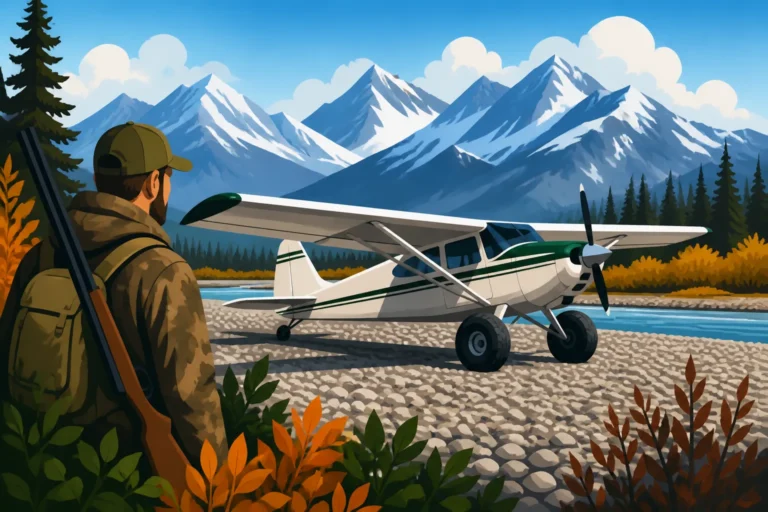
Wheel planes, especially rugged "bush wheel" equipped aircraft like Super Cubs, Cessna 180s, and 206s, are the workhorses of interior Alaska. They excel at accessing vast stretches of open country, from high alpine plateaus to braided river systems.
Identifying Ideal Wheel Plane Landing Zones in Alaska
Wheel planes need a relatively flat, firm, and long enough surface to land and take off safely. In Alaska, this often means utilizing natural "airstrips" such as expansive gravel bars within riverbeds, dry lake beds, or even stretches of firm, relatively flat tundra. The key is finding surfaces free of large rocks, deep ruts, or thick brush that could snag a wheel. A good gravel bar, for instance, might look like a perfect ribbon from above, but a pilot will be looking for specific characteristics: sufficient length for takeoff and landing given the load and elevation, a surface that's not too soft or riddled with sinkholes, and clear approaches free from tall trees or sudden changes in terrain. Sometimes, these landing zones are barely visible, a testament to the skill of the bush pilots who routinely utilize them. Hunters often scout these areas using satellite imagery tools like onX Hunt or GoHunt to identify potential landing strips, cross-referencing with their air taxi for feasibility. More on finding these spots can be found in Gravel Bar Landings for Wheel Planes in Alaska.
When you're looking at a potential landing site on a map, perhaps a wide-open flat near a game trail, remember that what looks flat from a satellite image can be deceptively sloped or uneven on the ground. Pilots are also keen on having good exit strategies, meaning if one end of the strip becomes unusable due to a rain-swollen river or unexpected obstacle, they have another direction to take off. The consistency of the surface is also paramount; a short section of soft sand or mud in an otherwise firm gravel bar can be enough to turn a successful landing into a bogged-down nightmare.
Advantages and Limitations of Wheel Plane Hunts
The biggest advantage of a wheel plane is its versatility and often its ability to reach higher elevations. If you're chasing Dall sheep high in the mountains or caribou on expansive, rolling tundra, a wheel plane can often put you much closer to your objective. They can access areas away from major water bodies, opening up vast tracts of land that float planes simply cannot touch. This often means less competition from other hunters who might be restricted to river systems or large lakes. Furthermore, in areas where water levels fluctuate wildly, like glacial rivers, a gravel bar might be a more reliable landing strip than a constantly changing river section. They can handle a wider range of weather conditions, especially wind, compared to float planes which are very susceptible to choppy water.
However, wheel planes have their limitations. They are tied to land-based landing sites, meaning you might still have a significant hike to reach water for camp or for packing out a moose downed in a swampy area. Finding suitable, legal landing strips can be challenging, and you're relying on the pilot's intimate knowledge of the area or very precise scouting. If your target species is in thick, willow-choked river bottoms, or you plan on Float Hunting Alaska Rivers for Moose and Caribou, a wheel plane might not offer the most direct access to the prime habitat. The ride can also be bumpier on rougher strips, and dust can be a significant issue in dry conditions. Also, a wheel plane generally cannot ferry meat across a large lake or down a river to a more accessible pickup point, which a float plane might be able to do.
Accessing Water-Rich Country with Float Planes and Aquatic Landings
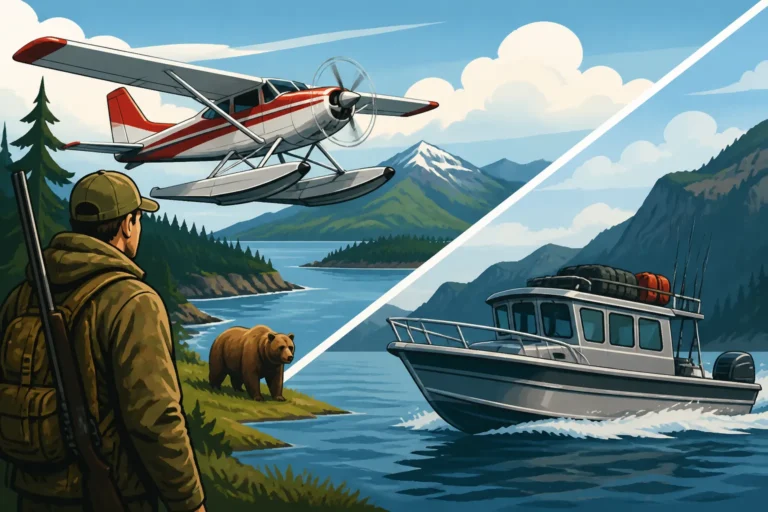
Float planes, recognized by their distinctive pontoons, are the quintessential image of Alaskan bush flying. They are perfectly suited for the vast network of lakes and rivers that crisscross much of the state, particularly in moose and waterfowl country.
Characteristics of Safe Float Plane Landing Sites
For a float plane, the entire runway is water. This means pilots are looking for lakes or wide, calm sections of rivers that offer sufficient length for takeoff and landing, adequate depth to prevent prop or float damage, and clear approaches free from obstacles like tall trees, power lines, or sudden rises in terrain. Small, sheltered coves on larger lakes can be ideal, providing protection from wind-generated waves. The absence of submerged hazards like shallow rocks, snags, or sandbars is critical. Pilots will often fly low over a potential landing zone first, checking the water's surface for any ripples that might indicate shallows or unseen obstacles. The calmer the water, the smoother and safer the landing and takeoff. You'll often see them utilize pristine wilderness lakes that seem utterly untouched, delivering hunters directly to productive moose country or migratory bird staging areas. For more details on these aquatic landing spots, check out Float Plane Lakes in Interior Alaska.
When assessing a river as a potential float plane landing site, pilots are not just looking for width, but also current. A fast current can significantly shorten the effective runway for takeoff and landing, and also makes mooring and unloading challenging. Protected oxbow lakes or slow-moving river sections are often preferred. Water clarity is also a factor; turbid, glacial rivers can hide hazards more easily than clear, still lake water. For this reason, pilots are very selective about where they set down, often relying on years of experience flying specific drainages. Knowing how to choose a float hunt river by water level and length, as covered in Choosing a Float Hunt River by Water Level and Length, can also help you identify areas suitable for float plane operations.
The Trade-Offs of Choosing a Float Plane for Your Hunt
The primary advantage of a float plane is direct access to water-dependent habitats. If your dream is to hunt moose in a vast wetland complex, or call ducks and geese on an remote lake, a float plane is your best friend. They can drop you right on the water's edge, often minimizing long hikes from a gravel strip. For moose hunters, landing directly on a lake or river means you have immediate access to water for cooling meat, and if you're lucky, you might even be able to load an animal directly into a raft or boat for transport back to camp, which can save immense amounts of effort. Loading a Bull Moose Into a Raft is a huge benefit if your hunt goes well. Float planes are also generally quieter upon landing and taking off from water, which can be less disruptive to wildlife in the immediate vicinity compared to a sometimes noisy wheel plane on a gravel bar.
However, float planes are highly susceptible to weather conditions. Wind creates waves, making landings and takeoffs dangerous or impossible. Fog can ground them for days. This means your pick-up might be delayed if the weather turns sour, and you need to build extra days into your schedule for contingencies, as discussed in Building Extra Days Into a Fly-In Schedule. They are also limited to water access, meaning if your ideal hunting spot is a few miles inland or high on a ridge, you'll still have a significant hike. Float planes also tend to be slower than many wheeled aircraft, and their operating costs can sometimes be higher due to specialized maintenance. The biggest frustration for float plane hunters can be those unexpected wind days that keep you stuck in camp, watching prime hunting time tick away.
Making the Crucial Choice: Wheel Plane vs. Float Plane for Your Hunt
The decision between a wheel plane and a float plane isn't just about what's available; it's about matching the aircraft to your specific hunting goals, the terrain, and the species you're pursuing.
Matching Your Aircraft to Terrain, Species, and Hunt Style
Before you even pick up the phone to an air taxi, consider your target. Are you after Dall sheep in the jagged peaks of the Brooks Range? A wheel plane is almost certainly your only option, landing on high-elevation gravel bars or tundra strips to minimize the brutal climb. If you're looking for moose in the marshy lowlands and willow thickets of Interior Alaska, a float plane will often put you right where the big bulls are, perhaps even allowing you to glass from the water. Caribou can be found on both open tundra (wheel plane territory) and along river systems (float plane accessible), so your specific unit and the herd's migratory patterns will dictate the best approach.
When planning, use tools like onX Hunt or GoHunt to scrutinize satellite imagery of your chosen Game Management Unit. Look for extensive river gravel bars, dry lake beds, or open tundra flats for wheel plane access. For float planes, identify a network of lakes or wide, slow-moving river sections. Think about not just getting in, but also getting out with an animal. A moose downed a mile from a gravel strip is a lot different than one downed a mile from a lake you flew into. Scouting a Unit From Satellite Imagery Before You Fly will be your best friend here, allowing you to identify potential landing zones and plan your routes.
| Feature / Consideration | Wheel Plane (e.g., Super Cub, Cessna 180/206 with Tundra Tires) | Float Plane (e.g., Cessna 180/206, De Havilland Beaver, Otter on Floats) |
|---|---|---|
| Landing Surface | Gravel bars, dry lake beds, firm tundra, unimproved strips | Lakes, wide and calm river sections, protected coves |
| Terrain Access | Open country, higher elevations, areas away from major water | Water-rich habitats, wetlands, river systems |
| Key Species | Dall sheep, caribou, mountain goat, some interior moose, bears | Moose, waterfowl, some caribou, coastal brown bear (if water accessible) |
| Weather Sensitivity | Less impacted by wind; more by soft ground after rain | Highly impacted by wind (waves), fog, high water |
| Logistics (Meat) | Carry meat to airstrip; harder if animal is far from land | Can potentially move meat across water; good for cooling meat in water |
| Camp Setup | Typically on dry ground near airstrip | Often right on lakeshore or riverbank |
| Scouting | Look for firm, level, obstacle-free land segments | Look for adequate depth, clear approaches, sheltered water |
Essential Pre-Flight Planning and Pilot Communication
Regardless of your choice, effective communication with your air taxi pilot is paramount. They are the experts on what is safe and feasible. Share your high-resolution maps from onX Hunt or GoHunt with them, pointing out potential landing sites you've identified. Ask them about their preferred spots, alternate landing zones, and typical weather patterns for your chosen area during your hunt dates. Discuss payload limits carefully, as Weight Limits on a Super Cub Drop can significantly impact how much gear and meat you can bring in or out.
Always have a primary landing site and at least one or two backup options. Weather can change quickly in Alaska, and what was a perfect gravel bar or calm lake on Monday might be unflyable by Friday. Discuss contingency plans for delayed pickups due to weather and how you'll communicate with them from the field. A good pilot will appreciate your thoroughness and will work with you to ensure a safe and successful trip, emphasizing that flexibility is key in Alaskan bush operations. Don't be afraid to ask about their experience in the specific area you want to hunt; local knowledge is invaluable.
Disclaimer
This article is for general informational purposes only and does not constitute professional advice. Laws, prices and regulations vary by location and change over time. Consult a qualified professional for guidance on your specific situation.