Steese Highway Caribou and Moose Country
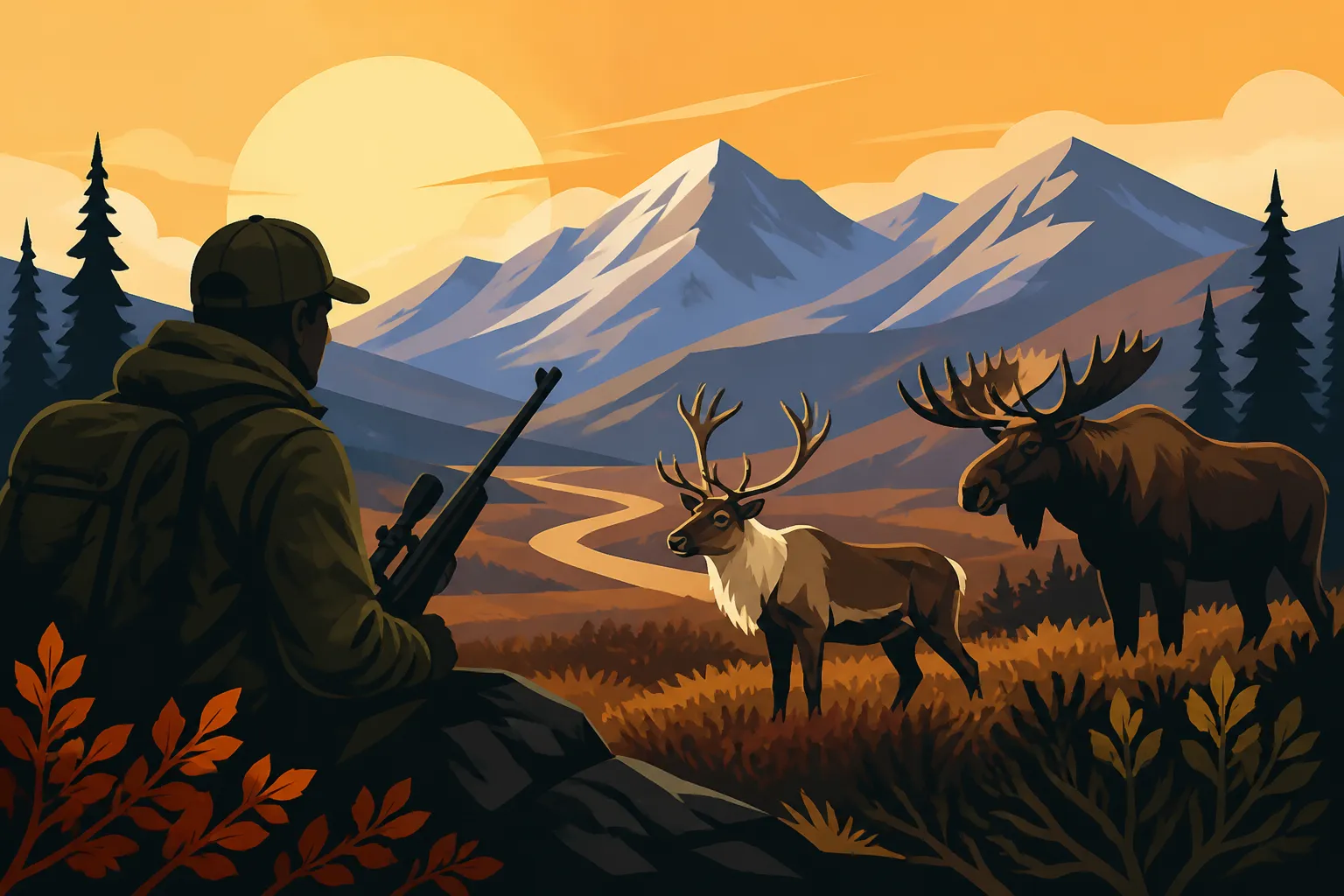
Heading out for a hunt in Interior Alaska can feel like stepping into a wild, untamed canvas, but finding accessible yet productive hunting grounds for iconic species like moose and caribou can be a real head-scratcher. Many hunters, especially those without the deep pockets for fly-in trips, wrestle with how to tap into these remote opportunities without getting completely lost or running afoul of regulations. This guide is here to unravel the mysteries of hunting the Steese Highway corridor, offering practical advice and insights for chasing caribou and moose in this rugged, beautiful part of the state.
Understanding the Steese Highway Corridor for Hunting
The Steese Highway, stretching northeast from Fairbanks towards Circle, isn't just a scenic drive; it's a lifeline into some incredible hunting country. Unlike the often heavily roaded areas closer to Anchorage, the Steese offers a unique blend of relatively easy access right off the pavement, coupled with vast stretches of true wilderness just a short hike or ATV ride away. It’s a place where you can camp near the highway, yet still feel completely immersed in the Alaskan backcountry.
The Lay of the Land: Access and Regulations
The Steese Highway itself provides direct access to Game Management Units (GMU) that are famous for both moose and caribou. You'll primarily be operating within areas like GMU 20E, often referred to as "Fortymile Country" because of its proximity to the Fortymile River drainage and, more famously, the Fortymile Caribou Herd. This herd is a major draw for hunters, and the Steese is one of the primary arteries for reaching its range.
However, "roadside" doesn't mean "unregulated." Just like any other part of Alaska, the Steese corridor has its own specific rules. For example, there are often restrictions on where you can shoot from the road, how far off the road you need to be to discharge a firearm, and specific limitations on motorized vehicle use. It's not uncommon to find areas designated as "no-shooting zones" close to cabins, campgrounds, or specific trails. Always consult the current Alaska hunting regulations booklet and unit-specific maps. The boundaries for these rules can feel confusing, running along arbitrary lines or marking off areas that seem to have no obvious reason for restriction, but ignoring them can lead to serious legal trouble. You're responsible for knowing where you are and what the rules are for that specific spot.
Navigating Land Ownership and Private Claims
One of the biggest headaches for any hunter trying to figure out where they can legally hunt along a road system in Alaska is land ownership. The Steese Highway corridor, like many areas of the Interior, is a patchwork quilt of different land statuses: state lands, federal lands (often managed by the Bureau of Land Management), and crucially, Alaska Native Corporation lands, and even private mining claims. It's not always obvious where one type of land ends and another begins, and hunting on land where you don't have permission is trespassing, plain and simple.
Imagine you're glassing a beautiful ridge, spotting what looks like a promising bull moose, only to realize after a mile-long hike that you've crossed onto private property without even seeing a sign. This happens all the time, and it's a frustrating situation that can quickly ruin a hunt. This is where modern mapping tools become absolutely indispensable. Applications like onX Hunt, for instance, allow you to overlay public and private land boundaries directly onto your satellite maps, often showing parcels with specific ownership information. This is a game-changer for avoiding unintentional trespassing and ensuring you're hunting legally. Before you even leave home, you should be meticulously pouring over these maps, identifying potential access points and understanding the land grid. For a deeper dive into this, you might find How to Check Alaska Land Status Before a Hunt quite helpful.
It's not just about avoiding trouble; knowing land ownership can also guide your strategy. Some Native Corporations, like Doyon, which owns significant acreage in the Interior, may offer access permits for a fee, or restrict access entirely. Knowing these boundaries ahead of time allows you to make informed decisions about where to focus your efforts.
Hunting Moose Along the Steese Highway
The Interior of Alaska is prime moose country, and the areas accessible from the Steese Highway are no exception. These magnificent animals thrive in the mixed forest and willow habitats found throughout the region, offering a robust hunting experience for those willing to work for it.
Identifying Moose Habitat Near the Road System
Moose are creatures of habit, often favoring specific types of habitat that provide both food and cover. Along the Steese, you'll find them in willow thickets along rivers and creeks, in the low-lying boggy areas, and especially in areas that have experienced wildfires in the past. Burnt-over areas, particularly those 5 to 15 years post-fire, are often a buffet for moose, as young willow and birch regrowth provides excellent browse. Understanding What Moose Eat in a Ten-Year-Old Burn can give you a real edge in finding these spots.
Look for areas where the road parallels a river or stream, or where side roads and ATV trails branch off into lower, wetter ground. Dense stands of spruce and birch offer cover, but the actual feeding areas will be more open, brushy zones. Moose sign—tracks, browsed willows, rub trees, and droppings—will be your best indicators. Often, the biggest bulls aren't right next to the highway, but rather a few miles off, in those pockets of ideal habitat that offer a little more solitude. This means planning for some hiking or using legal off-road vehicle access if permitted.
Strategies for Road-Accessible Moose Hunting
Hunting moose along the Steese Highway means blending patience with strategic movement. Still-hunting, where you move slowly and deliberately through promising habitat, stopping frequently to glass and listen, can be very effective. Early mornings and late evenings are prime times, as moose are often most active during these cooler parts of the day.
Calling is another powerful tactic, especially during the rut. A well-executed cow call or rake can often bring a curious bull out of the thick timber, allowing you a shot. You might want to brush up on Calling Bull Moose During the Alaska Rut before heading out. Sometimes, the frustration comes when a bull answers but refuses to leave his thick cover. You might hear him grunting, even crashing through brush, but he simply won't step into the open. In these situations, patience is key. Sometimes backing off and trying again later, or moving to a different position to get a better angle, is your best bet.
Remember that moose are huge animals. If you're fortunate enough to take one down, the work truly begins. Quartering a bull moose alone in the field is a massive undertaking, and having a solid plan for Quartering a Bull Moose Alone in the Field and getting that meat back to the highway is critical. It's easy to underestimate the sheer volume and weight of meat involved.
Chasing Caribou in the Fortymile Country Accessible by the Steese
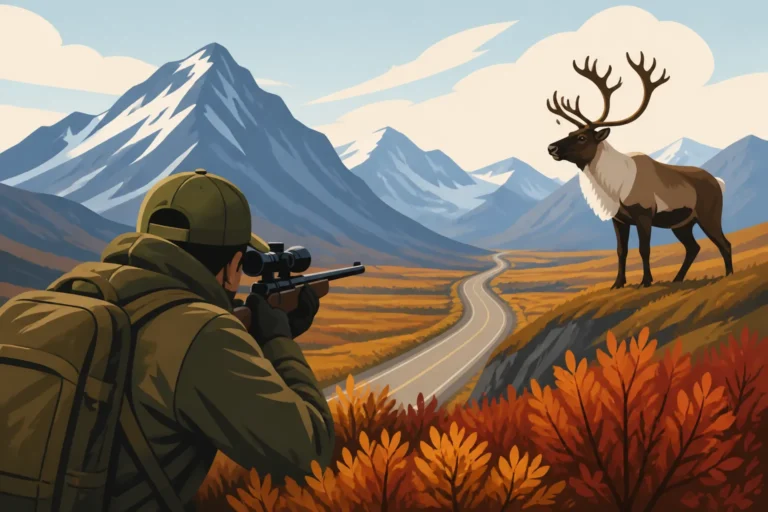
The Steese Highway is arguably most famous for its connection to the Fortymile Caribou Herd, one of Alaska's iconic migratory herds. Hunting these animals is a completely different ballgame than moose, often involving long-range glassing and quick decisions based on herd movements.
The Fortymile Caribou Herd and Its Movements
The Fortymile Caribou Herd is renowned for its vast migrations, moving across huge swaths of Interior Alaska and Yukon, Canada. Their movements are largely dictated by weather, food availability, and insect harassment. One day, thousands of caribou might be pouring across a ridge near the highway; the next, they could be 50 miles away. This unpredictability is both the allure and the challenge of caribou hunting.
Understanding Fortymile Caribou Herd Range and Migration is crucial, but even with that knowledge, you need to be prepared for the herd to be anywhere within their vast domain. Hunters often rely on reports from fellow hunters, air taxis, and even the Alaska Department of Fish and Game (ADF&G) for updates on herd location. However, by the time you hear a report and drive to the area, the herd might have already moved on. This is where perseverance and flexibility come into play. Many hunters spend days glassing open country, scanning for distant specks that might resolve into a moving ribbon of caribou.
Legalities and Logistics for Caribou Hunters
Hunting the Fortymile Caribou Herd typically falls under specific registration permit hunts or sometimes general season harvest tickets, depending on the year and the specific management unit. It's imperative to understand the current regulations, including bag limits, season dates, and any antler restrictions. These can change from year to year based on herd health and population objectives. Checking the ADF&G website or picking up a regulation booklet is not just recommended, it's mandatory.
Logistically, caribou hunting often means covering a lot of ground. While some hunters might get lucky with a herd passing within a short walk of the highway, more often you'll need to utilize an ATV (where permitted) or be prepared for significant hiking into the rolling tundra and sparse timber country characteristic of the Fortymile. Your planning should include contingencies for packing out meat, as a large bull caribou can still weigh several hundred pounds. Game bags that breathe well are essential for cooling meat, especially if you're hunting during the early season when temperatures can still be quite warm. Meat Care in 50-Degree September Weather is a good resource to review.
| Feature | Moose Hunting on Steese | Caribou Hunting on Steese |
|---|---|---|
| Primary Habitat | Willows, bogs, river bottoms, burn scars | Open tundra, rolling hills, sparse timber |
| Movement Pattern | More sedentary, habitat-dependent | Highly migratory, unpredictable mass movements |
| Hunting Style | Still-hunting, calling, waiting in prime areas | Extensive glassing, long walks, intercepting migrations |
| Accessibility | Often found within a few miles of road/ATV trails | Can be right on road or many miles off, highly variable |
| Meat Transport | Heavy, labor-intensive pack-out, often from thick brush | Moderate weight, often from open country, easier access |
| Season Timing | Primarily September rut, some late season | Late August through September/October, often quota-based |
| Key Challenge | Locating solitary animals, heavy pack-out | Finding the herd, unpredictable movements, weather changes |
Essential Considerations for a Steese Highway Hunt
Regardless of whether you're targeting moose or caribou, a hunt along the Steese Highway demands careful planning and a realistic understanding of what remote Alaska can throw at you.
Gear and Preparation for a Remote Road Hunt
Even though you're not "flying in," a Steese Highway hunt can feel just as remote as a bush trip. Cell service is spotty at best, and often non-existent once you leave the immediate vicinity of Fairbanks. This means you need to be self-sufficient and prepared for any eventuality.
Your gear list should prioritize durability, weather protection, and reliability. Good rain gear is non-negotiable, as Interior Alaska weather can shift from sunny to pouring rain and back again in a single day. Layering systems for clothing are essential to adapt to temperature swings. Navigation tools are paramount; a reliable GPS unit with pre-loaded maps (including land ownership layers from resources like onX Hunt) is crucial, backed up by a compass and physical maps. Knowing Downloading Offline Maps Before a Fly-In applies equally to road system hunts where cell service is unreliable.
For camping, a sturdy tent capable of standing up to wind and rain is a must. A portable stove for cooking and melting snow/boiling water is vital. Don't forget a first-aid kit, emergency signaling devices like a satellite messenger or an InReach, and ample food and water. This isn't a place to skimp on preparedness.
Bear Safety and Meat Care in the Field
Hunting in Interior Alaska means you're hunting in bear country – both black bears and grizzly (interior brown bears). While encounters are often brief, it's always wise to be prepared, especially when you have game meat on the ground. When you make a kill, you become a magnet for bears. Having a plan for Bear Safety While Butchering a Kill in Alaska is not just a good idea, it's essential for your well-being. This might involve carrying bear spray, having a rifle readily accessible, or making noise while working to deter curious bruins.
Proper meat care is another critical component of a successful hunt. Alaska has strict salvage laws, meaning you must salvage all edible meat. This is not just a legal requirement but an ethical one. Getting the hide off and the meat cooled quickly is paramount to preserving its quality. Game bags are your friends here; they protect the meat from flies and dirt while allowing it to cool. Once the meat is quartered, elevating it off the ground, preferably in the shade or a breezy spot, will aid in cooling. Consider Hanging Meat in Warm September Weather and securing it away from scavengers if you need to leave it overnight.
After the hunt, you'll need to report your harvest if you're on a harvest ticket or registration permit hunt. Failing to meet Alaska Harvest Report Deadline After the Hunt can result in penalties, so always keep that in mind.
Hunting the Steese Highway for moose and caribou offers a truly authentic Alaskan experience without the full cost and complexity of a remote fly-in trip. With thorough preparation, a good understanding of the regulations, and a healthy dose of self-reliance, you can have a rewarding adventure in this wild and beautiful part of the state.
Disclaimer
This article is for general informational purposes only and does not constitute professional advice. Laws, prices and regulations vary by location and change over time. Consult a qualified professional for guidance on your specific situation.