Admiralty Island Brown Bear Density
If you're dreaming of an Alaska brown bear hunt, chances are you've heard the whispers about Admiralty Island. It's legendary for good reason, often referred to as "The Fortress of the Bears." But what does "bear density" actually mean for a hunter? It's more than just a number; it shapes every aspect of a hunt, from where you scout to how you set up camp. This guide will peel back the layers, explaining why Admiralty boasts such a dense population of brown bears and how that reality impacts your hunting strategy and safety in this iconic Alaskan wilderness.
Understanding Brown Bear Density on Admiralty Island
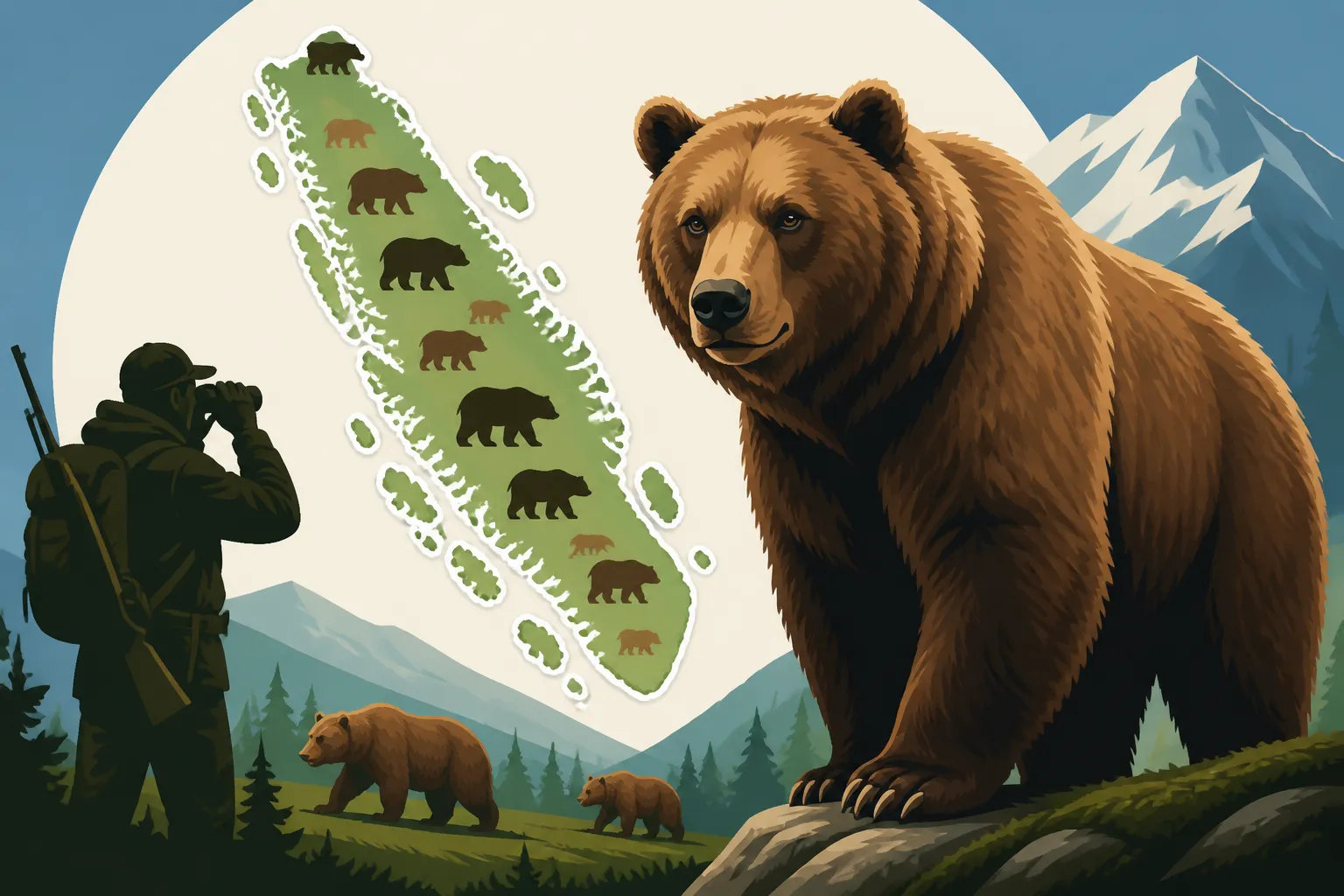
Admiralty Island isn't just known for its brown bears; it's practically synonymous with them. This island, one of the largest in Southeast Alaska, is a prime example of how specific environmental conditions can lead to an incredibly robust population of a particular species. When folks talk about high bear density here, they're not just throwing around hyperbole; the numbers, combined with the habitat, create a unique hunting experience.
Why Admiralty is a "Fortress of the Bears"
The nickname "Fortress of the Bears" isn't a marketing gimmick; it’s a reflection of the sheer abundance of brown bears that call this island home. Imagine an island that's largely undeveloped, boasting vast tracts of old-growth temperate rainforest, crisscrossed by countless salmon-rich streams, and dotted with berry patches that extend for miles. This isn't just good bear habitat; it's perfect bear habitat. The island's remote nature, coupled with its protective status (much of it is designated as the Admiralty Island National Monument), has limited human encroachment and development, allowing bear populations to thrive with minimal disturbance. This undisturbed environment provides everything a brown bear needs to flourish, year after year.
This isolation also means a lack of major road systems, further contributing to the wildness and the difficulty of access, which, ironically, protects the very resources that sustain the bears. Without constant human pressure or habitat fragmentation, bears can move freely, find mates, and raise cubs with a high degree of success. The robust genetic diversity and consistent food sources contribute to a population that remains strong and healthy, year after year.
What High Density Means for a Hunter
For you, the hunter, this high density translates into both incredible opportunity and significant challenges. On the opportunity side, it means you're almost guaranteed to encounter bear sign, and your chances of seeing bears, potentially even multiple bears, are considerably higher than in many other parts of Alaska. This isn't a place where you hunt "for" a bear; it's a place where you hunt among bears. It's a truly immersive experience in prime brown bear country.
However, the challenges are equally real. High density means you must maintain a heightened state of awareness at all times. Every thicket, every bend in the trail, every salmon stream could hold a bear. This necessitates meticulous planning, sound bear safety protocols, and often, the guidance of an experienced professional. Butchering a kill, for instance, takes on an entirely new level of caution when you know there are dozens, if not hundreds, of other bears in the immediate vicinity who might be drawn to the scent. It also means understanding bear behavior and movement patterns becomes paramount, as multiple bears might be using the same corridors or feeding areas. This environment truly tests your preparedness and your resolve.
Habitat and Food Sources that Drive Bear Numbers
The secret to Admiralty's prolific brown bear population lies directly in its incredibly rich and diverse ecosystem. This isn't just any island; it's a perfectly calibrated environment that provides an abundance of high-quality food sources throughout the year, supporting a healthy and thriving bear community. Understanding these factors is key to understanding where bears will be and when.
Salmon-Rich Streams and Tidal Flats
Perhaps the single most critical factor contributing to Admiralty's high bear density is its network of salmon-rich streams. The island is riddled with countless waterways that host prodigious runs of all five Pacific salmon species at various times throughout the summer and fall. From early sockeye and pink salmon in July and August to coho and chum later in the season, there's a continuous buffet for bears. These salmon runs provide an enormous protein and fat boost, essential for bears to put on the necessary weight for denning through the long Alaskan winter. Bears will congregate along these streams, especially in the estuaries and lower reaches where the fish are concentrated. Observing these waterways, both visually and through mapping tools like onX Hunt, can reveal critical bear travel corridors and feeding grounds. You might find yourself Salmon Runs and Alaska Coastal Bear Size playing a significant role in your scouting.
Beyond the streams, the tidal flats and estuaries themselves are also crucial. During low tide, bears will actively forage for various invertebrates, small fish, and even carrion washed up on the shore. This coastal fringe habitat offers yet another rich food source, particularly when salmon runs might be temporarily lower or between distinct species cycles. These intertidal zones are often dense with vegetation bordering the forest, providing excellent cover for bears moving between the beach and the interior.
Lush Forest Understory and Berry Patches
While salmon get a lot of the credit, the island's dense, old-growth temperate rainforest provides a consistent and diverse array of vegetative food sources for bears, especially in spring and early summer before the salmon arrive. The forest floor is carpeted with various greens, sedges, and forbs that are highly nutritious for emerging bears. As the season progresses, blueberry, salmonberry, huckleberry, and elderberry bushes explode with fruit, creating vast berry patches that become critical feeding areas. Bears will spend hours, even days, gorging themselves on these caloric powerhouses, building fat reserves.
These berry patches are often found in open clearings, along old logging roads (where they exist, though less common on Admiralty), avalanche chutes, or at the edges of the muskegs. Identifying these areas, sometimes through satellite imagery or by understanding the local flora, is essential for predicting bear movements outside of salmon season. A bear isn't just a carnivore; it's an opportunistic omnivore, and the plentiful plant life on Admiralty provides a constant, reliable food base that supplements its protein intake and helps sustain the large population. This lush understory is what truly sets Alaska Brown Bears on the Coast Versus Interior Grizzlies apart in terms of diet.
Hunting Implications of High Density
Hunting in an area with such high brown bear density changes the entire dynamic of the experience. It amplifies everything: the excitement, the strategy, and especially the need for absolute vigilance. This isn't a casual stroll; it's a deep immersion into a wild landscape where you are a guest in the bears' home.
Increased Chance of Encounters and Bear Sign
The most obvious implication is the dramatically increased chance of encountering bears. You're simply going to see more bear sign – tracks, scat, rubs on trees, dug-up ground from foraging – than almost anywhere else. This sign isn't just incidental; it tells a story about bear movements, feeding patterns, and potentially, recent activity. Learning to read this sign effectively is paramount. Fresh tracks in the mud along a salmon stream, for instance, mean a bear has been there very recently, possibly just minutes or hours before you arrived.
This constant presence of sign requires you to adjust your pace, your noise levels, and your overall awareness. You can't assume you're alone. Your senses need to be constantly engaged, looking for movement, listening for rustling in the dense undergrowth, and smelling for that distinct bear odor. While some hunters might feel overwhelmed by this, for many, it's precisely this heightened sense of wilderness that draws them to Admiralty. It's truly a test of your woodsmanship.
Here's a quick look at common bear signs and what they might indicate:
| Bear Sign | What It Looks Like | What It Tells You |
|---|---|---|
| Tracks | Large paw prints, distinct claw marks, sometimes toes spread. | Size of bear, direction of travel, freshness (wet, sharp edges = recent). |
| Scat (Droppings) | Varies widely by diet (grass, berries, fish, meat). | Diet of the bear, freshness (warm, moist = very recent). |
| Tree Rubs | Scratches, fur, or sap on tree trunks (often smaller trees). | Bears marking territory, rubbing off winter coat, or scratching an itch. |
| Dug-up Ground | Areas of overturned soil, torn-up moss, or disturbed roots. | Bear foraging for roots, bulbs, grubs, or small rodents. Location of a food source. |
| Beds | Flattened areas in tall grass, thickets, or under logs. | Resting spots; freshness can indicate recent presence. |
| Trails | Well-worn paths through dense vegetation. | Regular travel corridors between feeding, bedding, and water sources. |
Enhanced Focus on Bear Safety and Protocols
In a high-density area like Admiralty, bear safety isn't just a suggestion; it's an operational imperative. Every single aspect of your hunt, from how you approach a new area to how you handle your kill, needs to be filtered through the lens of bear awareness. This means not only carrying appropriate deterrents but also knowing how to use them and having a plan. Bear Spray Versus Rifle at Close Range is a discussion every hunter in this region needs to have with themselves and their partners.
When you do make a kill, the urgency and complexity of Bear Safety While Butchering a Kill in Alaska are magnified. The scent of blood and exposed meat will travel far, and bears are incredibly efficient at pinpointing such smells. You'll need to work quickly, efficiently, and always with at least one person on guard, scanning for approaching animals. It's not uncommon for multiple bears to show interest in a fresh kill, requiring decisive action and a clear understanding of when to stand your ground and when to retreat. This is why many hunters, especially non-residents, choose to hire an experienced guide for Admiralty Island hunts; their expertise in these situations is invaluable.
Navigating Admiralty Island for Bear Hunters
Admiralty Island presents a unique set of navigational and logistical challenges for hunters, largely due to its remote, roadless nature and its dense, often unforgiving terrain. Success here hinges on meticulous planning, the right equipment, and a healthy respect for the wilderness.
Accessing Remote Hunting Areas
Getting onto Admiralty Island usually involves a floatplane or a boat. Floatplanes can drop you off on one of the many freshwater lakes or sheltered saltwater coves, providing access to the interior or specific drainages. This method requires careful coordination with an air taxi service, considering weight limits and pick-up schedules. If you're using a boat, you'll be navigating the island's extensive coastline, often searching for suitable beach landings or river mouths that allow you to push into the interior. Either way, preparing for your Fly-In Hunting: Working With an Alaska Transporter Pilot or planning your Boat-Based Deer Hunting on Alaska's Island Coastlines (for deer, but the principles of island access are similar) is crucial.
Once on the island, travel is primarily by foot, sometimes pushing through incredibly dense rainforest or traversing challenging muskegs. There are no developed trails in most hunting areas, so you'll be forging your own path or following game trails. This means that even a short distance can take a significant amount of time and effort. Using advanced mapping applications like onX Hunt is absolutely essential for understanding terrain, elevation changes, and identifying potential travel corridors or challenging obstacles before you're standing in front of them. It helps you visualize your approach to a promising area, mark potential glassing knobs, and avoid getting disoriented in the thick timber.
Terrain and Vegetation Challenges
Admiralty Island's terrain is a major factor in how you hunt. The coastal areas are often steep, with cliffs dropping directly into the ocean, or feature tide flats that can be treacherous. Inland, you'll find a mix of dense rainforest, which can be almost impenetrable in places, and open muskegs – boggy, wet areas dominated by stunted spruce and sphagnum moss. Moving through the rainforest involves scrambling over fallen logs, pushing through thick brush, and navigating slippery, moss-covered ground. It's physically demanding, and visibility is often limited to a few dozen yards.
The muskegs, while offering more open sightlines, are wet, soft, and tiring to traverse. They often hold water, making waterproof footwear an absolute necessity. Understanding these varied terrains is critical for planning your approach, especially when scouting for bears. For example, bears often use the edges of muskegs or the less dense vegetation along stream corridors for travel, avoiding the thickest parts of the forest. Tools like GoHunt can provide valuable satellite imagery and topographical maps, helping you identify these features and plan your routes more effectively from afar. This pre-scouting is vital given the difficulty of on-the-ground travel.
Effective Scouting and Glassing Strategies
Despite the dense vegetation, effective scouting and glassing are still paramount. You'll need to identify vantage points where you can overlook open areas like berry patches, avalanche slides, or portions of salmon streams. This might mean climbing to a ridgeline or finding a strategic opening in the timber. Patience is key. Bears often move at dawn and dusk, but on Admiralty, they can be active at any time, especially when salmon are running. Setting up a comfortable glassing spot and dedicating long hours to patiently observing is often more productive than constantly moving through the noisy forest.
Because of the limited visibility in much of the habitat, focusing on choke points, game trails leading to water or food, and areas where bears are forced into the open is a solid strategy. Using high-quality optics, like a powerful spotting scope, is crucial for picking apart distant hillsides or the opposite bank of a wide stream. You're not just looking for a whole bear; you're looking for a patch of fur, a flicker of movement, or an anomaly in the landscape that indicates a bear's presence. Remember, in dense country, you often hear a bear before you see it, so listen as intently as you watch. Being prepared for varying weather conditions, common to Southeast Alaska, will also extend your glassing time in the field.
Disclaimer
This article is for general informational purposes only and does not constitute professional advice. Laws, prices and regulations vary by location and change over time. Consult a qualified professional for guidance on your specific situation.