Dalton Highway Access in Unit 26B
For many hunters, the very name "Dalton Highway" conjures images of raw, untamed wilderness and the ultimate challenge of an Alaskan hunt. While it offers unparalleled access into the vastness of the state's Arctic, successfully navigating the regulations and extreme conditions, especially within Game Management Unit 26B, is far from straightforward. This comprehensive guide will illuminate the intricacies of hunting along the Dalton, helping you plan a safe, legal, and potentially rewarding adventure.
The Dalton Highway: Your Arctic Lifeline in Unit 26B
The Dalton Highway, known colloquially as "The Haul Road," is an iconic artery slicing through Alaska's interior and North Slope. It’s a route that demands respect, meticulous preparation, and a keen understanding of its unique rules and the landscapes it traverses. For hunters, it represents a rare opportunity to drive into areas that would otherwise require expensive and complicated air taxi services, putting remote Arctic game within reach.
What is the Dalton Highway?
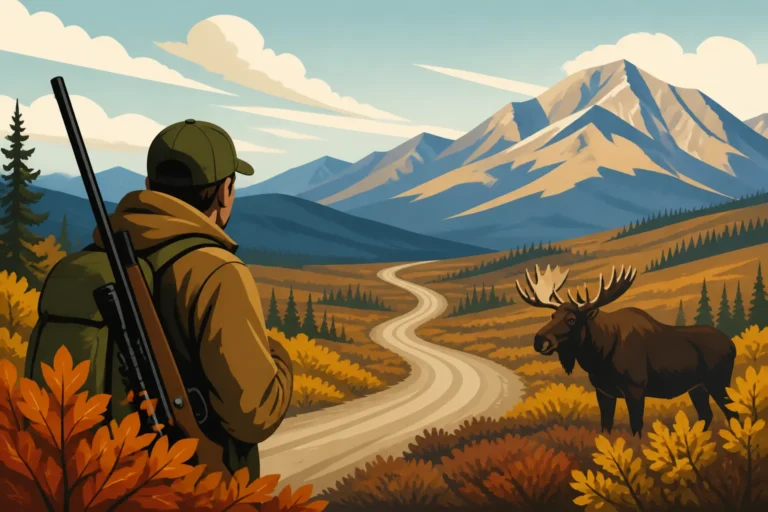
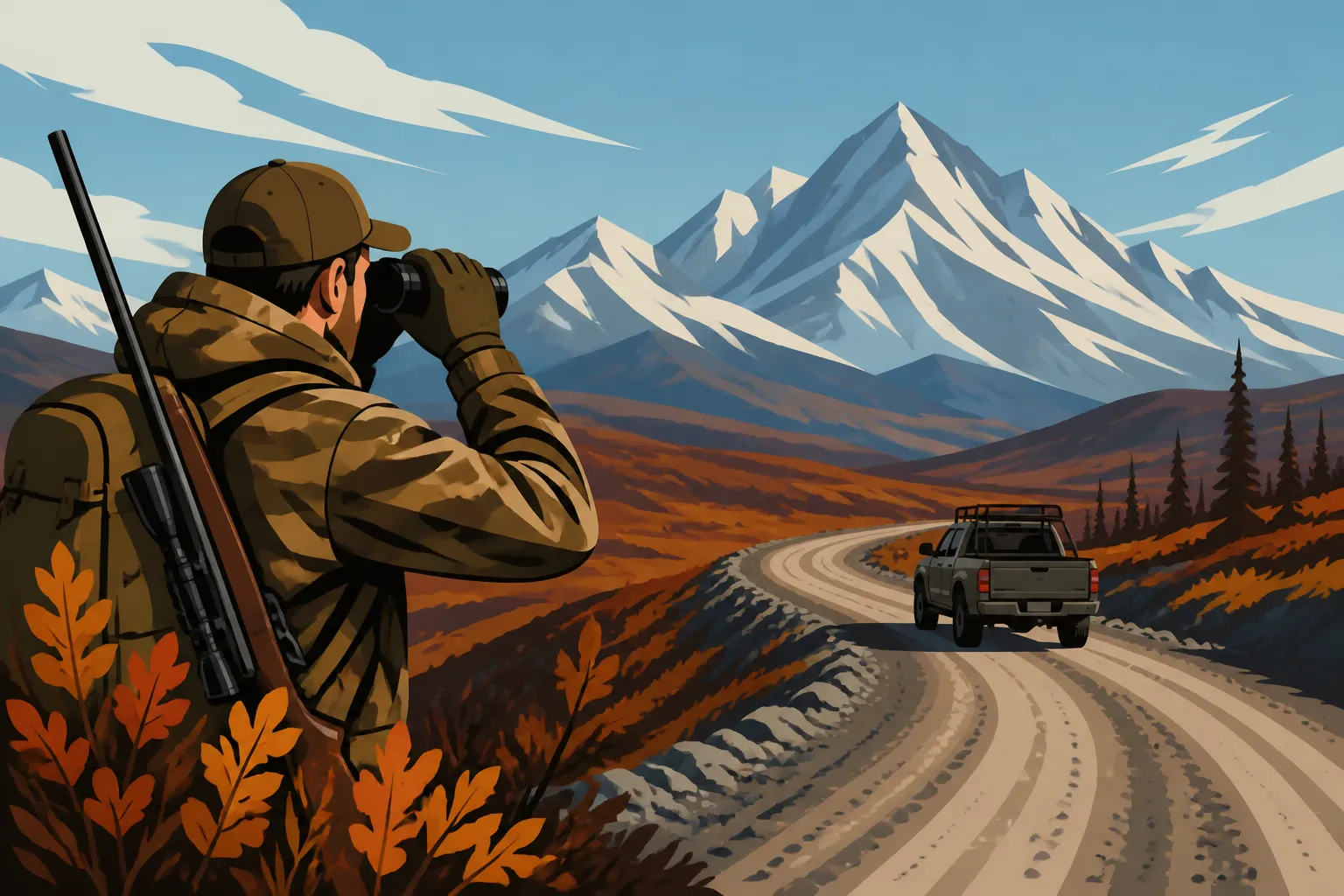
Originally built to support the Trans-Alaska Pipeline System, the Dalton Highway stretches approximately 414 miles from Livengood, just north of Fairbanks, all the way to Prudhoe Bay on the Arctic Ocean. It's largely a gravel road, notoriously rough in places, known for its truck traffic, deep potholes, and ever-changing conditions. Forget cell service; it's practically nonexistent for most of the route. This isn't your average drive; it's an expedition in itself. Along its length, you'll cross the Yukon River, the Arctic Circle, and the mighty Brooks Range, entering a landscape that transitions from boreal forest to open tundra. It’s this transition that makes it so appealing to hunters, providing access to diverse habitats.
When you're considering a hunt off the Dalton, you're not just driving a road; you're immersing yourself in an incredibly harsh, beautiful, and unforgiving environment. The isolation is real, and any mechanical trouble or emergency can become a serious ordeal without proper planning. This road isn't just a means to an end; it's a significant part of the challenge and adventure of hunting Unit 26B.
Unit 26B: The Land You're Entering
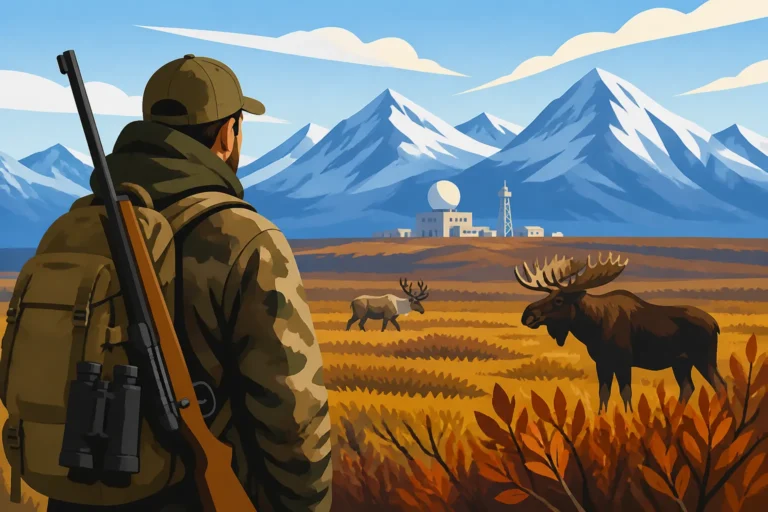
Game Management Unit (GMU) 26B is a massive chunk of Alaska, primarily encompassing the area directly west of the Dalton Highway, extending north from the Brooks Range almost to the Arctic Ocean. This unit is characterized by vast, treeless tundra, rolling hills, and numerous rivers and drainages. The eastern boundary of Unit 26B often butts right up against the Dalton, making it the primary gateway for many hunters.
Hunting here means embracing the vastness of the Arctic. Visibility can be incredible, but game can be scattered across immense distances, often moving through drainages or over subtle rises that offer concealment. The weather is a constant factor: expect strong winds, sudden temperature drops, and the potential for early snow, even in what might seem like milder fall months. Understanding the geography and potential travel corridors of game within this unit is paramount, and this often means combining detailed maps, like those available through onX Hunt, with satellite imagery scouting before you ever set foot on the ground. Hunters venturing into 26B are typically chasing caribou, but opportunities for moose, black bear, and wolf also exist, albeit often with different challenges and regulations.
Permits, Corridors, and Critical Rules for Hunting the Dalton
Hunting off the Dalton Highway, particularly within Unit 26B, isn't as simple as pulling over and walking into the tundra. Alaska has specific and often complex regulations for this unique access corridor. Ignoring these rules can lead to serious legal trouble and a ruined hunt, so understanding them thoroughly is your first step to success.
The Five-Mile Corridor Rule
This is perhaps the most critical rule for anyone planning to hunt the Dalton Highway. Alaska state regulations establish a strict "five-mile corridor" on either side of the Dalton Highway where the discharge of firearms is prohibited. This means you cannot shoot a game animal within five miles of the centerline of the road. This rule is in place for public safety, given the high volume of industrial traffic and general public traversing the route, and to prevent "road hunting."
What does this mean for you? It means you'll need to gain access to areas beyond this five-mile buffer before you can legally hunt with a firearm. This often involves significant hiking or using ATVs on designated trails to reach the legal hunting zone. Imagine seeing a magnificent caribou bull just inside that five-mile mark; it's a heartbreaking scenario, but you must respect the boundary. Tools like onX Hunt are invaluable here, as they often have layers that clearly delineate these restricted corridors, allowing you to know exactly where you are in relation to the legal hunting boundary. Always measure your distance carefully, and if there's any doubt, err on the side of caution. Dalton Highway Corridor Firearm Restrictions is a must-read for anyone considering this area.
Federal vs. State Land and Special Restrictions
The land along the Dalton Highway is a patchwork of ownership, primarily state lands and federal lands, including those managed by the Bureau of Land Management (BLM). Additionally, there can be Native Corporation lands interspersed, which typically require explicit permission and often a fee to access. While the five-mile corridor applies broadly, understanding the underlying land status is crucial for more detailed planning.
For instance, much of Unit 26B's federal land is within the Arctic National Wildlife Refuge (ANWR) or the Gates of the Arctic National Park and Preserve. While hunting is generally allowed in the preserve portions of these federal lands, it is strictly prohibited in the park areas and certain refuge sections. You need to know which specific parcels you're on. Always consult the most current Alaska Department of Fish and Game (ADF&G) regulations for the unit you plan to hunt and cross-reference with land status maps. This is where detailed mapping software truly shines. Without this knowledge, you could inadvertently trespass or hunt illegally. For a broader overview, check out Land Status in Alaska: State, Federal and Native Corporation.
Controlled Use Areas and Aircraft Restrictions
Unit 26B, like many remote areas of Alaska, may fall under or be adjacent to Controlled Use Areas (CUAs). These areas are established to regulate hunter access, often restricting the use of aircraft for hunting or even for transporting hunters and gear during specific seasons. For example, some CUAs might prohibit flying into or out of an area on the same day you hunt, or they might ban the use of aircraft entirely during certain periods.
While the Dalton Highway provides road access, it's vital to be aware of any CUA boundaries if your hunt plans include venturing significantly off the road or if you're considering a partial fly-in/fly-out strategy in combination with the highway. Always double-check if your intended hunting zone within 26B is part of a CUA and what specific restrictions apply. An overlooked CUA regulation could lead to your entire hunt being invalidated and severe penalties.
| Rule Category | Key Regulation | Impact on Hunters | How to Prepare |
|---|---|---|---|
| Firearm Discharge | Five-mile corridor on either side of the Dalton Highway prohibits firearm discharge. | Must hike or travel at least 5 miles from the road centerline before shooting. | Use GPS/mapping apps (e.g., onX Hunt) with distance tools. Be precise, err on caution. |
| Land Ownership | Mix of State, Federal (BLM, ANWR, Gates of the Arctic), and Native Corporation lands. | Access varies; hunting is restricted or prohibited in certain federal park/refuge areas; Native lands require permits. | Obtain detailed land status maps; contact Native Corporations for permission. Research specific preserve/park rules. |
| Controlled Use Areas | Specific areas may restrict or prohibit aircraft use for hunting or transport during certain seasons. | Limits options for rapid access or egress if within CUA boundaries. | Consult ADF&G regulations for 26B and surrounding units for CUA designations. Plan ground travel alternatives. |
| Dalton Highway Specifics | Road is primarily gravel, active industrial traffic, extreme weather, no cell service, limited services. | Demands robust vehicle, extensive emergency supplies, and self-sufficiency. | Heavy-duty tires, extra fuel, satellite messenger, survival gear, spare parts, knowledge of basic vehicle repair. |
Logistics and Safety for Your Dalton Highway Adventure
Embarking on a hunt along the Dalton Highway is not for the faint of heart. The remote nature of Unit 26B, combined with the challenges of the highway itself, demands meticulous logistical planning and an unwavering focus on safety. This isn't just about packing your rifle; it's about preparing for every conceivable scenario in a place where help is days away, not hours.
Essential Gear and Vehicle Prep
Your vehicle is your lifeline on the Dalton. You'll need a robust, high-clearance 4×4 truck with heavy-duty tires (at least 10-ply). Carry two full-size spare tires, not just one, and know how to change them yourself. Tools for tire repair, an air compressor, and extra fuel (enough for at least 200 miles beyond your planned travel) are non-negotiable. Breakdowns are common, and tow services are astronomically expensive and slow to arrive.
Beyond the truck, think about shelter. A sturdy wall tent and stove, or expedition-grade backpacking tents, are essential for surviving the often brutal Arctic weather. Pack plenty of warm layers, good rain gear (because "waterproof" often isn't enough when it's constantly raining or snowing horizontally), and a reliable sleeping system rated for well below freezing. For navigation, a dedicated GPS unit is paramount, backed up by paper maps. Cell service is virtually nonexistent, so a satellite messenger device or satellite phone, like those offered by InReach or Garmin, is absolutely critical for communication and emergency calls. Let someone back home know your detailed itinerary and check-in plan. Signal Devices and Check-In Plans for Solo Alaska Hunts offers invaluable advice here. Remember, you're not just bringing hunting gear; you're bringing survival gear.
Planning Your Off-Road Movement
Once you've cleared the five-mile corridor, how will you actually hunt? The tundra is often wet, marshy, and crisscrossed by braided rivers and creeks. Foot travel can be incredibly arduous, especially when carrying heavy gear or, ideally, a load of meat. ATVs are a common method of access, but even then, designated trails must be followed, and many areas are simply too wet or sensitive for motorized travel. Always consult BLM or ADF&G maps for approved ATV trails and understand the local restrictions. You cannot just drive anywhere you please off the Dalton.
Consider the potential for packrafting across rivers if your target area lies beyond major water crossings, but remember the inherent dangers of cold, swift water. If you plan to hike, invest in serious ankle support and knee-high rubber boots for crossing wet terrain. The physical demands of hunting in Unit 26B are immense. You need to be in peak physical condition, capable of hiking miles with a heavy pack over uneven, saturated ground. Scouting your potential routes on detailed topographic maps or even with modern mapping platforms like GoHunt and onX Hunt can help you identify drier ridges or more stable ground for travel, minimizing your time slogging through the bog. For comparison on similar terrain, review tips for ATV Access Tactics on Alaska's Denali Highway, as many of the same challenges apply.
Emergency Preparedness and Bear Safety
The remoteness of Unit 26B means self-sufficiency is key. What happens if someone gets injured? What if you encounter a bear at close quarters?
Beyond your satellite communication device, carry a comprehensive first-aid kit with training on how to use it. A bear encounter is a very real possibility, especially with interior grizzlies and black bears present. Carry bear spray, know how to use it, and have a reliable firearm for backup. When quartering an animal, especially a caribou that might attract attention, practice excellent meat care, keeping your kill site clean and hanging meat out of reach if possible. Always hunt with a partner, if feasible, and have a clear emergency plan for everything from a twisted ankle to a severe weather event. Remember, there are no convenience stores or hospitals for hundreds of miles.
Targeting Game: What to Expect in Unit 26B
Unit 26B is famous for its vast, open landscapes, which directly influence the types of game you'll pursue and the strategies you'll employ. While caribou are undoubtedly the stars of this region, other opportunities exist for those willing to put in the effort.
Caribou: The Main Draw
For most hunters venturing into Unit 26B off the Dalton, caribou are the primary target. The region can be influenced by the movements of several large herds, most notably the Western Arctic Herd, which ranges over a vast area of Northwest Alaska. Their movements are often unpredictable, dictated by weather, forage, and traditional migration routes. You might see thousands of animals, or none at all, depending on timing and luck. Caribou Herds of Alaska and How They Move provides essential background on these magnificent animals.
Hunting caribou here typically involves a lot of glassing and patient hiking. Find a high point, set up your spotting scope, and scan the horizon for hours. Caribou often appear as moving specks against the distant tundra. Once spotted, a stalk can be a marathon, using the subtle folds and dips in the terrain for cover. Expect long shots in windy conditions, so practice shooting from field positions, not just a bench rest. Quartering a caribou in the open tundra requires efficient work, especially if the weather is warm, to cool the meat quickly and protect it from scavengers.
Other Species and Opportunities
While caribou dominate, Unit 26B also offers chances at other species:
- Moose: Though less common than farther south, moose can be found along river systems and in patches of willow habitat. They tend to be more scattered and require different hunting tactics, often focused on smaller, localized areas rather than vast open country. Alaska Moose: Where the Biggest Bulls Live can give you an idea of moose behavior, though the specific habitat in 26B differs from prime moose country.
- Black Bear: Black bears are present throughout the unit, often found scavenging along rivers or feeding on berries in the fall. They are typically hunted opportunistically, and understanding Alaska Black Bear Seasons and Bag Limits is crucial. Remember to carry a bear tag if you plan to pursue them.
- Wolf: Wolves are present in Unit 26B and can be a challenging, but rewarding, pursuit. They are highly intelligent and notoriously difficult to hunt. Spot-and-stalk from a high vantage point is often the most effective method in this open country, especially when observing caribou movements. Hunting wolves often requires immense patience and skill, and hunters often combine it with other big game hunts. Learn more in Wolves and Wolverine as Alaska Game Animals.
Season Dates and Quotas
Alaska's hunting seasons and bag limits are highly dynamic and can change annually based on herd health and management objectives. For Unit 26B, you'll find general season dates for some species, while others, particularly caribou, may be managed under registration or draw permits. Registration hunts often have quotas and can close by emergency order on short notice once the quota is met. This means you must check the current regulations immediately before your hunt, sometimes even daily if a quota closure is imminent.
A GoHunt membership, for example, can be an excellent resource for staying on top of permit applications, drawing odds, and regulation updates, though you should always verify directly with the ADF&G website. Never assume last year's regulations are current. Alaska Hunting Seasons and Tag Rules Explained is an excellent starting point, but always drill down to the specific regulations for Unit 26B for your planned season. Paying close attention to herd movements and population data is key to understanding your potential success in this unique, challenging, but ultimately rewarding Alaskan hunting ground.
Disclaimer
This article is for general informational purposes only and does not constitute professional advice. Laws, prices and regulations vary by location and change over time. Consult a qualified professional for guidance on your specific situation.