Buying an Alaska Tag After the Season Opens
It’s a scenario many of us have faced: you’re scrolling through a hunting forum, chatting with a buddy, or just glance at the calendar, and suddenly it hits you – a hunting season for a species you’ve always wanted to pursue in Alaska is open, or about to open, and you completely forgot to buy the necessary tag. The immediate panic sets in: did I miss my chance? Can I even buy a tag after the season starts? This guide is here to untangle the complexities of Alaska’s hunting tag system and explain exactly what your options are when you find yourself in this all-too-common predicament.
Understanding Alaska’s Tag System: Not All Permits Are Created Equal
Alaska’s hunting regulations can feel like navigating a maze, and the rules around acquiring tags are no exception. The crucial thing to understand is that not all "tags" are the same, and their availability after a season opens varies wildly. This isn't like picking up a fishing license on the way to the lake; some permits have strict application windows that close months before the season even begins.
Locking Tags: The Standard Big Game Purchase
These are what most people think of when they hear "hunting tag." They are required for species like moose, caribou, bear (brown and black), deer, and elk, among others. These are physical tags that you attach to the animal immediately after a kill.
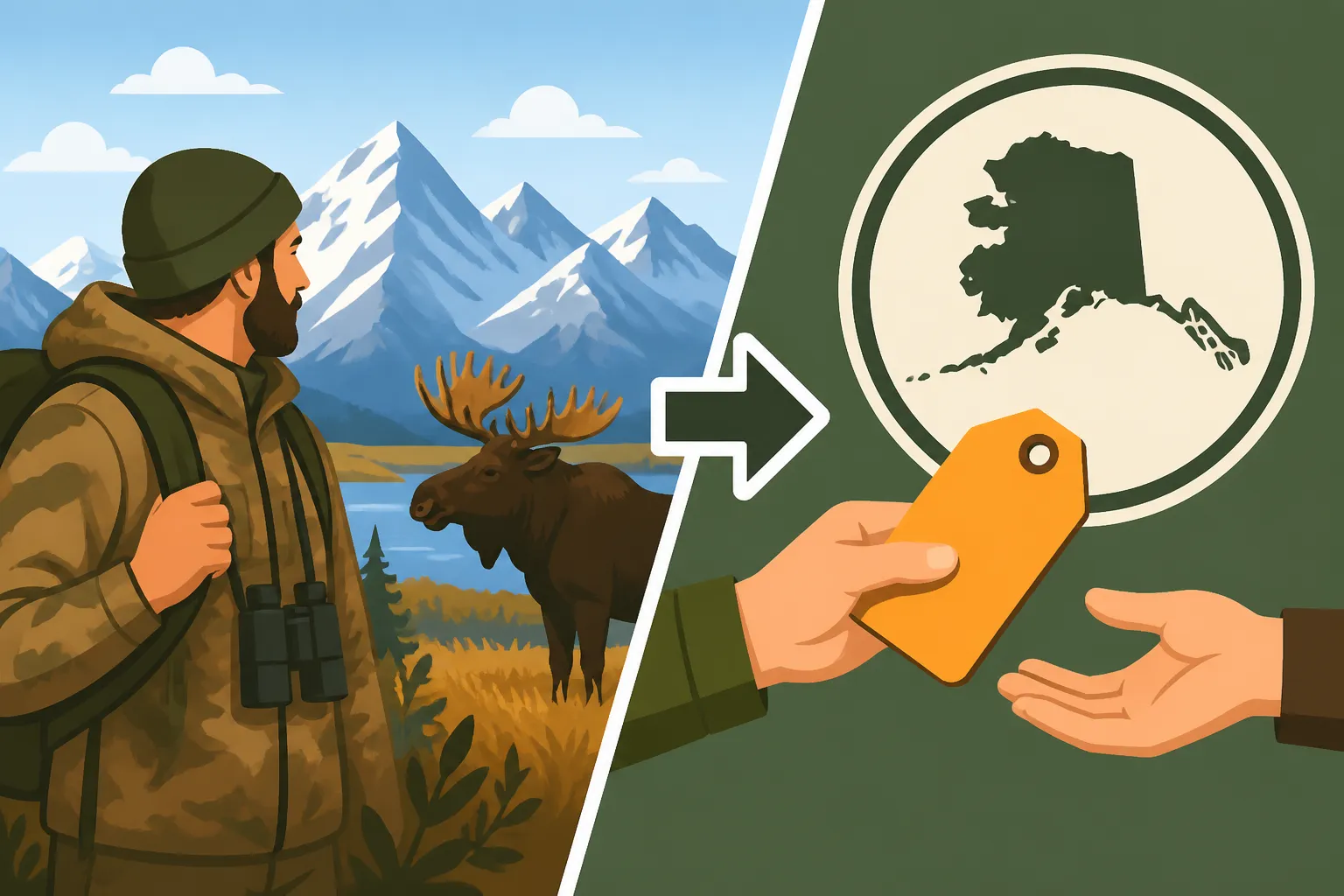
The good news here is that, generally speaking, you can purchase these big game locking tags even after the season has opened for a specific game management unit (GMU) or species. The Alaska Department of Fish and Game (ADF&G) offers a few convenient ways to do this. For instance, you can often purchase them online through the ADF&G website. Once bought, you'll typically receive a printable confirmation that serves as your temporary tag, followed by the physical tag mailed to you. You can also visit an ADF&G office or a licensed vendor, like many sporting goods stores, air taxi operators, or even some small general stores in rural communities, to buy them over the counter. This flexibility is a huge relief for those spontaneous trips or when plans change last minute. For a deeper dive into these specific tags, check out our guide on Alaska Big Game Locking Tags and What Each Costs.
Harvest Tickets: Your Free, Essential Permit
Many of Alaska’s hunting opportunities, especially for species that are plentiful or managed more broadly, don't require a paid locking tag. Instead, they require a "harvest ticket." Think of these as free, mandatory reporting tools. Species like small game (rabbits, grouse), some furbearers, and often even wolves and wolverine, fall into this category.
The fantastic news about harvest tickets is that they are almost always available for immediate acquisition, even if the season is already underway. You can usually print them directly from the ADF&G website at home, or pick them up at any ADF&G office or licensed vendor. The key is simply having one before you hunt. You might be out in the field and decide to take a legal wolf if the opportunity arises, and as long as you can pull up the ADF&G website on a satellite device or have a pre-printed one, you're usually good to go. The real importance of a harvest ticket isn't the cost, but the reporting requirement after a successful harvest, which helps biologists manage game populations. For more information on the distinctions, see Alaska Locking Tag Versus Harvest Ticket Difference.
Registration Permits: First-Come, First-Served, Until Quota
Registration hunts, often identified by an "RM" (Registration Moose) or "RG" (Registration Goat) code, represent a middle ground. These hunts are managed by requiring hunters to register before hunting in a specific area, and they often have quotas. Once the quota is met, the hunt closes.
The ability to obtain a registration permit after a season opens is entirely dependent on whether the quota has been filled or if the hunt has been closed by emergency order. If the hunt is still open and the quota hasn't been met, you can often register online or in person right up until the hunt is closed. ADF&G will typically update its website daily (sometimes even hourly) with the status of these hunts, so it's critical to check before you head out. This is where real-time information becomes paramount. If a hunt has a high quota or is in a very remote area, you might have a good chance. However, popular road-system hunts can fill up incredibly fast. Our article on Alaska Registration Permits Sign-In Requirement covers the specifics you'll need to know.
Draw Permits: A Strict Application Window
Now, for the bad news. If the hunt you're interested in is a "draw permit" hunt, often identified by a "DM" (Draw Moose) or "DS" (Draw Sheep) code, then attempting to acquire a tag after the season opens is simply not an option. Draw hunts are highly coveted, limited-entry opportunities for specific species, areas, or unique timeframes. They have a very strict application period, usually running from November 1st to December 15th each year.
Once this application window closes, that's it. The draw takes place, permits are allocated, and there's no way to get one until the next application cycle. This is a common frustration for hunters who are new to Alaska or simply missed the deadline. You can't just walk into an ADF&G office and ask for a draw permit in August if the application closed in December. These hunts are designed to limit pressure on specific populations or areas, and the draw system is an unyielding gatekeeper. Understanding this is key to long-term planning for those dream hunts. Dive into the specifics of the application timeline in our guide on Alaska's November 1 to December 15 Draw Application Window.
The Reality of Buying Locking Tags Mid-Season
So, you've confirmed your desired hunt requires a locking tag, and the season is open. What's the practical process for getting that tag in your hand (or at least, your email inbox)?
Online Purchase and Print-at-Home
This is by far the most convenient method for most hunters. The ADF&G website offers a robust licensing and tag purchase system. You can purchase your annual hunting license and any necessary locking tags directly through their portal. The process is straightforward: create an account (or log in), select the license and tags you need, pay with a credit card, and then you'll typically receive an email with a link to print your temporary license and tag.
The print-at-home option is a game-changer. It means that even if you're in a remote lodge with internet access, or just realized your oversight the night before heading into the bush, you can secure your legal hunting documents. Remember, you must have these documents in your possession while hunting. A digital copy on your phone usually isn't enough; regulations typically require a physical printout. Ensure your printer works, or that you have access to one before you head off-grid.
In-Person Options: ADF&G and License Vendors
If online isn't an option, or you prefer the human touch, you can always visit an ADF&G office during business hours. They can process your license and tag purchases right there. This can be especially helpful if you have questions about specific regulations or want to grab a physical copy of the current regulations booklet.
Additionally, many authorized license vendors across the state sell licenses and locking tags. These often include tackle shops, sporting goods stores like Sportsman's Warehouse or local general stores in smaller communities. Calling ahead to confirm their hours and if they stock the specific tags you need is always a good idea, especially in smaller towns. They can often provide valuable local insights, too. Just be aware that their operating hours might not align with your 24/7 hunting brain.
Waiting Periods and Practical Considerations
While you can technically buy many tags after the season opens, there are often practical considerations that act as a de facto waiting period. For example, if you buy a tag online, the physical tag might take a week or more to arrive by mail. While the printable temporary tag is usually sufficient, some hunters prefer the official, durable locking tag.
More importantly, remember the "same-day-airborne" rule if you're flying into a remote area. This rule states that you cannot hunt big game on the same day you have been airborne in a fixed-wing aircraft. So, if you're flying into a camp and realize you forgot a tag, even if you buy it immediately upon landing, you still can't hunt until the next day. This isn't a "waiting period" on the tag itself, but a crucial regulatory timing constraint that impacts when you can use that newly acquired tag. Our article Alaska's Same-Day-Airborne Rule and What It Bans covers this in detail.
When a Late Purchase Just Isn't an Option
As mentioned, there are definite circumstances where realizing a season is open and you don't have a tag means you're simply out of luck for that particular hunt, for that year. It's a tough pill to swallow, but understanding these limitations can save you a lot of frustration and wasted travel.
The Immovable Deadlines of Draw Hunts
We touched on this, but it bears repeating: draw permits have ironclad deadlines. If the application period for an Alaska draw permit hunt closed in December, there is no possible way to participate in that hunt for the upcoming season, regardless of when the actual season opens. This includes highly sought-after permits for species like bison, muskox, and many specific sheep, goat, and moose hunts.
This is why planning well in advance is so critical for Alaskan hunting, especially for non-residents targeting trophy animals. Platforms like GoHunt can be invaluable for staying on top of these deadlines, as they compile state regulations and application windows. Missing a draw deadline means waiting another full year for the opportunity to apply again. There are no "late entry" options, no standby lists, and no last-minute purchases.
Quota-Closed Registration Hunts
Imagine you're driving up the Denali Highway, heading towards Unit 13 for a caribou hunt, and you check the ADF&G website for the RM830 registration hunt. You see the season is open, but then you notice, "Quota Fulfilled – Hunt Closed." This is another scenario where a late decision leaves you empty-handed. Registration hunts often have a specific number of animals that can be harvested by permit holders. Once that number is reported, ADF&G issues an emergency order to close the hunt, sometimes with very little notice.
This is a dynamic situation that requires diligence. You might technically be able to register for a hunt after it opens, but if the quota is reached before you hit the field, or even while you're driving, your permit becomes invalid. Always check the very latest emergency orders and hunt status updates directly from ADF&G before you leave cell service or commit to a hunting area. Staying current with these updates can be the difference between a successful trip and a disheartening drive home.
Species-Specific Restrictions and Guide Requirements
Certain species in Alaska, particularly for non-residents, require the services of a registered guide. These include brown/grizzly bear, Dall sheep, and mountain goat. You cannot hunt these species as a non-resident without either a registered guide or an Alaskan resident relative (second-degree of kindred) accompanying you.
Even if you successfully purchase a locking tag for one of these species after the season opens, if you don't have a guide booked, that tag is essentially useless unless you meet the "relative" exemption. Booking a reputable guide is a process that often starts years in advance, with deposits and contracts, making a last-minute guided hunt nearly impossible for these popular species. So, while you might technically buy the tag, you won't be able to legally hunt with it. Our article on Hiring an Alaska Registered Guide-Outfitter details this process.
Strategies to Avoid the Last-Minute Rush
The best defense against missing out on an Alaska hunting opportunity is proactive planning. The vastness of the state, the complexity of its regulations, and the sheer effort involved in most hunts demand it.
Year-Round Planning and Regulation Review
Don't wait until August to start thinking about a September moose hunt. Alaska's hunting regulations are typically published in the spring (late April/early May) for the upcoming regulatory year (July 1st through June 30th). This is your golden opportunity to review season dates, bag limits, antler restrictions, and any changes from previous years.
Consider printing out or saving digital copies of the relevant sections of the regulations booklet for the units you're interested in. Highlight key dates and rules. Many seasoned Alaska hunters start sketching out their next year's hunt plans as soon as the current year's regulations are released, if not earlier. This includes figuring out species, specific GMUs, and methods (e.g., Float Hunting Alaska Rivers for Moose and Caribou versus road access).
Utilizing Online Resources and Notification Tools
The internet is your best friend for staying current. The ADF&G website is a treasure trove of information, with updated regulations, emergency orders, harvest reports, and mapping tools. Spend time exploring it.
Beyond official sources, private services and hunting community platforms can be incredibly helpful. Websites and apps like GoHunt specialize in compiling hunting regulations, application deadlines, draw odds, and success rates across various states, including Alaska. Subscribing to their newsletters or utilizing their "Insiders" programs can provide timely reminders for draw application windows and season opening announcements that you might otherwise miss. Many also offer interactive maps that overlay public and private land, which is critical for understanding Land Status in Alaska: State, Federal and Native Corporation. These tools act as a second set of eyes, ensuring you don't overlook critical dates.
The Value of a Pre-Season Checklist
Before any hunt, especially in Alaska, a detailed checklist is indispensable. This should cover everything from gear (including specific items like those needed for Backpack Hunting in Alaska: Gear Weight and Meat Loads) to licenses and tags. Build one that specifically calls out "Licenses & Tags Purchased."
Here's a simplified example of a checklist section for your tags:
| Task | Status | Notes |
|---|---|---|
| Alaska Hunting License Purchased | [ ] Purchased | Validity period: July 1 – June 30 |
| Moose Locking Tag (Unit 20A) | [ ] Purchased | If draw, applied by Dec 15 and won; if general, bought online. |
| Caribou Locking Tag (Unit 13) | [ ] Purchased | Check quota if registration hunt. |
| Wolf Harvest Ticket | [ ] Printed | Free, but required for reporting. |
| Black Bear Locking Tag (Spring) | [ ] Purchased | If applicable, confirm season dates. |
| ADF&G Regulations Booklet | [ ] Downloaded | Current year's edition. |
| Emergency Orders Checked | [ ] Confirmed | Reviewed current status for all target hunts. |
By creating and rigorously following such a checklist, you significantly reduce the chances of arriving at the trailhead or air charter base only to realize you're missing a crucial piece of paper. It’s not just about compliance; it’s about making sure your hard-earned hunting opportunity isn’t derailed by a simple administrative oversight.
Disclaimer
The information provided in this guide is for general informational purposes only and does not constitute legal advice. Hunting regulations in Alaska are complex and subject to change. Always consult the most current Alaska Department of Fish and Game (ADF&G) regulations, emergency orders, and official publications before planning or engaging in any hunting activities. It is the hunter's sole responsibility to understand and comply with all applicable state and federal hunting laws.