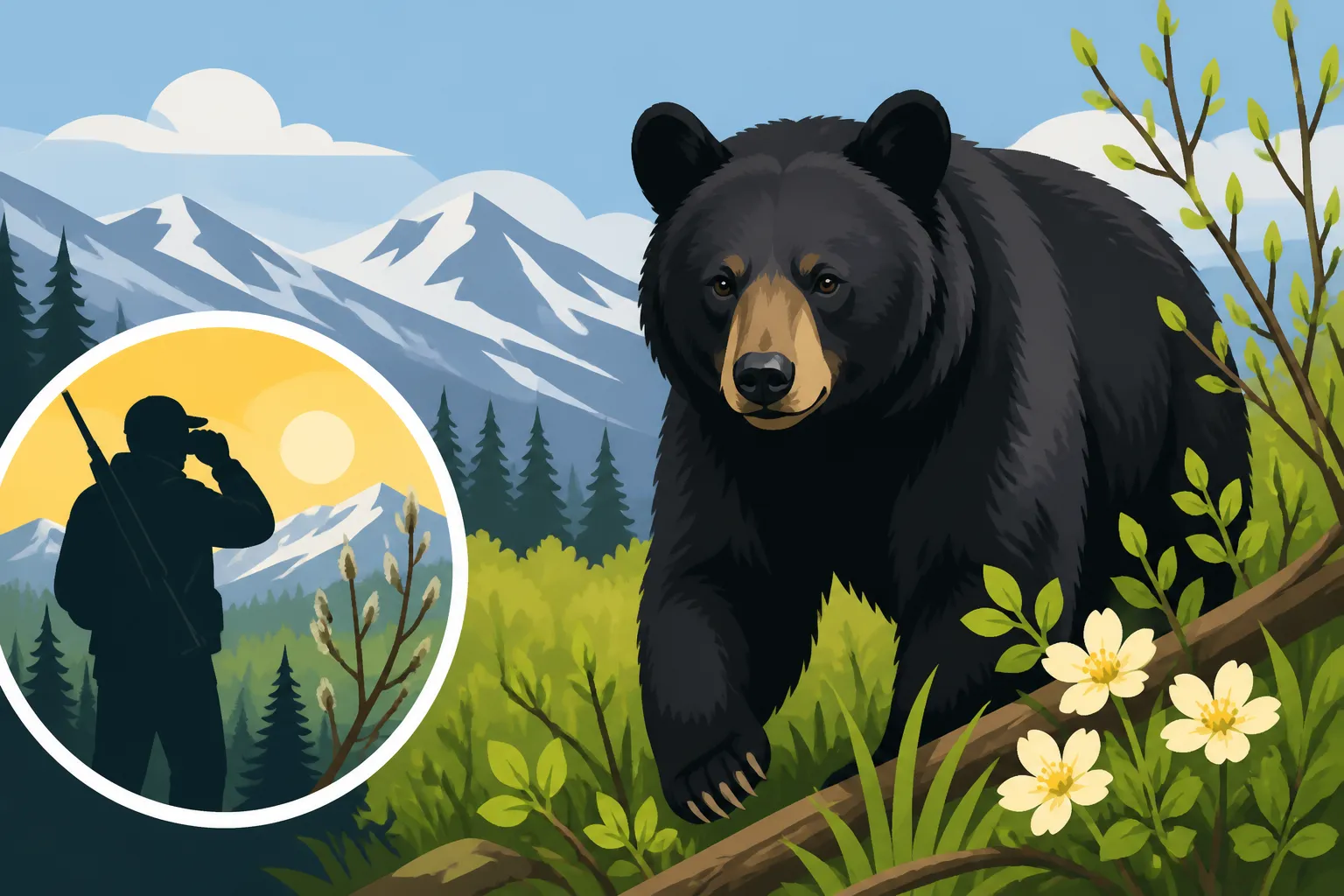
When Black Bears Emerge in Spring
That long winter can feel like an eternity, especially when you're itching to get back out into the Alaska wilderness for some spring bear hunting. Waiting for those black bears to shake off their winter slumber and emerge from their dens is a crucial part of planning, and it's not always a straightforward date on the calendar. This guide will walk you through the many factors that influence when black bears typically emerge in spring, helping you better anticipate their movements and plan your hunt.
The Deep Sleep's End: Factors Influencing Black Bear Emergence
Black bears in Alaska are true hibernators, entering a deep state of torpor that slows their heart rate, metabolism, and body temperature. But this isn't a "set it and forget it" kind of process; their wake-up call is a complex interplay of environmental cues, primarily driven by the changing season.
Temperature and Snowpack: The Wake-Up Call
The most obvious and impactful factors dictating when a black bear will emerge are the ambient air temperature and, consequently, the snowpack. As the sun climbs higher in the spring sky, bringing longer days and warmer temperatures, the snow begins to melt. For bears still tucked away in their dens, this rise in temperature, even if subtle, signals that winter's grip is loosening. They need a sustained warming trend, not just a single warm day. A sudden cold snap after a brief warm spell can actually delay emergence or even cause a bear to retreat back into its den for a short period.
Beyond just the mercury rising, the depth and persistence of snow on the ground play a huge role. Imagine a bear wanting to emerge, but its den entrance is still buried under several feet of hard-packed snow. It simply can't get out easily, or even if it could, the ground outside offers no accessible food. Deep, lingering snow cover, especially at higher elevations or in more northern latitudes, will inevitably push back the emergence date. Conversely, areas with lighter snow loads or southern exposures that melt out quickly will often see the earliest bear activity. Many hunters use advanced mapping tools, often found on platforms like GoHunt, to analyze historical snow depth data and predict melt-out patterns for specific areas. This can be invaluable for pinpointing potential early-season hotspots.
Denning Behavior and Location Differences
Not all dens are created equal, and their location significantly impacts emergence timing. Black bears are incredibly resourceful den builders, utilizing everything from excavated holes under the root wads of large spruce trees to rock crevices, hollow logs, or even digging out burrows on steep hillsides. The characteristics of these dens and their surrounding environment can create microclimates that affect when a bear feels it's time to venture out.
A den located on a south-facing slope, for instance, will receive more direct sunlight throughout the day. This increased solar radiation will warm the den area and melt surrounding snow much faster than a den situated on a north-facing slope or in a dense, shaded timber patch. Bears denning at lower elevations or closer to coastal areas might experience milder winter conditions and earlier spring thaws, leading to earlier emergence compared to bears in the interior or high mountain ranges. Think about the Sitka blacktail deer hunter on Prince of Wales Island versus the interior moose hunter in Unit 20A; their seasons and bear encounters will naturally differ due to these geographical nuances. Understanding these den preferences and how local topography dictates snow melt is key to anticipating when bears will start to roam. Hunters often begin scouting south-facing avalanche chutes or old burn areas first, as these are frequently the earliest places to green up and attract hungry bears. You can learn more about Spring Bear Hunting on South-Facing Snow Slides.
Who Wakes Up First? Age, Sex, and Reproductive Status
While environmental factors set the general stage, the individual bear's biological condition plays a significant role in determining its personal wake-up call. Not all bears emerge at the same time; there's a predictable pecking order to who steps out into the spring air first.
Boars Leading the Charge
Generally speaking, the big, mature male black bears, often called boars, are the first to emerge from their dens in the spring. There's a simple reason for this: they have fewer biological obligations to consider. Unlike sows, they aren't nursing or protecting cubs, and their primary drive after hibernation is to replenish their body weight, establish territory, and eventually find mates. They've also typically accumulated more fat reserves during the previous fall, allowing them to withstand the rigors of early spring when food might still be somewhat scarce.
These larger boars are often seeking out the earliest green-up spots or potential winter kill sites. Their eagerness to get out and feed makes them prime targets for early spring hunters. They're driven by hunger and a desire to reclaim their territory, making them less cautious than a sow with cubs. Identifying these individuals requires patience and good optics, and knowing the tell-tale signs of a boar versus a sow can make all the difference in a hunt. Checking historical data on mapping applications like GoHunt can help you identify areas where large boars might concentrate their post-denning activities.
Sows and Cubs: The Last to Leave
At the other end of the spectrum are the sows with newborn cubs. These mothers and their vulnerable offspring are almost always the very last to emerge from their dens. The reason is simple: protection and nourishment. Newborn cubs are tiny, often weighing less than a pound, and are completely dependent on their mother. The den provides a safe, warm, and secure environment during their critical first weeks of life. The sow continues to nurse them in the den, allowing them to grow stronger and develop before facing the outside world.
When a sow finally does emerge, her cubs are typically 2-3 months old, larger, more mobile, and better equipped to handle the cooler spring temperatures and potential dangers. This delayed emergence is a crucial survival strategy for the species. Hunters must exercise extreme caution and be absolutely certain of their target identification to avoid mistakenly harvesting a sow with cubs. Alaska's regulations are very clear on this, and responsible hunters prioritize ethical harvesting above all else. Understanding Sows With Cubs and the Legal Line is paramount for any spring bear hunter.
Subadults and Transient Bears
In between the early-emerging boars and the late-staying sows with cubs are the subadults and other transient bears. These include younger males who haven't yet reached their prime, non-breeding sows, or bears that might be seeking new territories. Their emergence timing can be a bit more variable, often falling somewhere between the earliest boars and the latest family units.
Younger bears might emerge earlier than sows, driven by a similar hunger to the boars, but perhaps with less fat reserves to carry them through as long. They are often pushed out of prime territories by larger, more dominant bears and may be found foraging in less ideal areas. This can make them harder to predict, but also potentially more accessible in areas less frequented by the dominant males. These bears are generally seeking to avoid conflict and find reliable food sources, gradually expanding their foraging range as spring progresses and green-up becomes more widespread.
Early Season Foraging: What's on the Menu?
Once a black bear has finally pushed its way out of the den, its immediate priority is to find food. The spring landscape in Alaska, especially early on, isn't exactly a buffet. Bears are incredibly adaptable omnivores, and their initial foraging strategies are critical for replenishing lost calories and regaining strength after months of hibernation.
Green-Up and the First Sprouts
The first signs of spring are often the most important to a hungry bear. As snow melts, especially on sunny, south-facing slopes, in old burns, or along stream bottoms, the earliest plant growth begins to emerge. These tender, green shoots of sedges, horsetails, and willows are packed with easily digestible nutrients and water, which are exactly what a bear's system needs after months of dormancy. Bears will actively seek out these "green-up" areas, often concentrating their efforts in specific avalanche chutes or south-facing hillsides where the sun hits first.
Imagine scanning a mountainside with your spotting scope – you're not just looking for a bear shape, you're looking for those patches of vibrant green, knowing that's where the bears will likely be. This focused foraging behavior can make early spring bears somewhat predictable, at least in terms of their general location. Understanding how to Reading Contour Lines for Sheep Benches can also help you identify those prime, sun-exposed slopes that will melt first and offer early forage. This initial diet of vegetation is crucial before more calorie-dense food sources become available later in the season.
Winter Kills and Scavenging Opportunities
While fresh greens are a welcome sight, black bears are also opportunistic scavengers. After a long, hard Alaska winter, there are often winter-killed animals, such as moose or caribou, scattered across the landscape. A bear emerging from its den, still with a significant calorie deficit, will not pass up the opportunity for a high-protein, high-fat meal. Locating and feeding on a winter kill can provide a quick and substantial boost of energy, allowing the bear to regain strength faster than solely relying on sparse plant growth.
This means that during the very early spring, bears might not only be found in green-up areas but also near known wintering grounds for other big game, or along river systems where carcasses might have washed up. Hunters scouting for early bears will often keep an eye out for concentrations of ravens or other scavengers, which can indicate a recent kill. While not their primary diet for the entire spring, these scavenging opportunities are a vital part of a bear's post-hibernation recovery strategy.
Coastal Versus Interior Food Sources
The available food sources, and thus the foraging behavior, can differ significantly between Alaska's coastal and interior black bear populations. Coastal bears, found along the panhandle or on islands like Kodiak and Prince of Wales, often have access to different early-season foods. Beyond emerging vegetation, they might patrol beaches for marine carrion – dead fish, seals, or other marine mammals washed ashore. This provides an additional, often calorie-rich, food source that interior bears simply don't have. This difference in diet contributes to the larger size often seen in coastal brown bears, but black bears also benefit from these marine resources. You can read more about Black Bear Weight in Coastal Alaska.
Interior bears, on the other hand, are almost entirely reliant on vegetation, insects, and the occasional winter kill until berry season arrives much later. Their spring diet is heavily focused on those first green shoots, and their movements are dictated by where these plants are most abundant. Hunters targeting interior black bears might focus on river valleys, lower elevation slopes, and burn areas where new growth is most vigorous. Knowing the specific region you're hunting in is crucial for understanding what an emerging bear will be looking for.
Alaska Black Bear Emergence Timeline (General)
Please note, these are general guidelines, and actual emergence will vary significantly based on the specific year's weather, elevation, and geographic location. Always check local regulations and conditions.
| Factor | Early Emergence (Approx.) | Late Emergence (Approx.) |
|---|---|---|
| Location/Elevation | Southern coast, low elevations | Interior, high mountain passes |
| Snowpack | Light, rapid melt | Deep, persistent snow |
| Temperature | Consistent warming trends | Fluctuating, late cold snaps |
| Bear Type (Boars) | March – Early April | Mid-April – Early May |
| Bear Type (Subadults) | Mid-April | Late April – Mid-May |
| Bear Type (Sows w/ Cubs) | Late April – Mid-May | Late May – Early June |
| Primary Food Source | Fresh green sprouts, winter kills | More widespread green-up, insects |
Remember, this table provides a general picture. A mild spring in Southeast Alaska might see bears out in March, while a harsh, snowy spring in the Brooks Range could mean bears don't consistently emerge until May or even early June. Always consult current conditions and local fish and game reports for the most accurate information. Also, familiarize yourself with Alaska Black Bear Seasons and Bag Limits for your intended hunting unit.
Disclaimer
This article is for general informational purposes only and does not constitute professional advice. Laws, prices and regulations vary by location and change over time. Consult a qualified professional for guidance on your specific situation.