What Dall Sheep Eat Above Timberline
When you're out there, glassing those impossibly steep, rocky slopes, trying to pick out a patch of white against the vastness of the Alaska Range, it’s easy to get fixated solely on the sheep themselves. But truly understanding where to find Dall sheep, and more importantly, why they're there, often comes down to knowing their dinner menu. It's a frustrating riddle sometimes, isn't it? You scout a gorgeous basin, full of what looks like perfect habitat, only to find it devoid of game, while another seemingly less appealing spot holds a band of rams. This guide is going to pull back the curtain on exactly what Dall sheep eat above timberline, and how understanding their diet can dramatically improve your scouting and hunting success.
The Alpine Environment: A Dinner Plate of Extremes
The world above timberline in Alaska is a place of breathtaking beauty, but also brutal extremes. For Dall sheep, it's home, and they've evolved to thrive in a landscape that would starve most other creatures. Their survival hinges on finding sustenance in places where the growing season is fleeting, the winds are relentless, and the soil is thin and rocky.
Surviving the Extremes: Alpine Plant Adaptations
Imagine trying to grow anything with a few short weeks of warmth, followed by months of freezing temperatures, scouring winds, and deep snow. That's the reality for alpine plants. They aren't your lush valley grasses; these are hardy, resilient species that have developed incredible adaptations. Many grow low to the ground, forming dense mats that cling to the earth, protected from the whipping winds. Others have tiny, tough leaves or even hairy surfaces to reduce moisture loss and insulate against the cold. Their root systems often go deep, anchoring them in thin soil and allowing them to access nutrients from crevices in the rock.
These adaptations mean that the forage available to Dall sheep is often compact and intensely flavored, packing a nutritional punch in a small package. While there isn't the sheer biomass you'd find in a lower elevation meadow, what is there is precious. Understanding these adaptations helps you realize why a sheep might prefer a seemingly barren, wind-swept ridge—it's not necessarily about the quantity, but the quality and accessibility of the forage it provides year-round. It's a constant battle for survival, and every bite counts.
General Foraging Habits of Dall Sheep
Dall sheep are primarily grazers, meaning their diet largely consists of grasses and grass-like plants. However, they are also opportunistic browsers, especially when preferred forage is scarce or snow-covered. Their day-to-day life above timberline is a continuous cycle of feeding, resting, and moving to new feeding grounds. They're incredibly efficient at extracting nutrients from sparse vegetation. You'll often see them methodically working their way across a slope, nipping at tiny plants that you might barely even notice.
Their movements throughout the day and across seasons are heavily dictated by the availability and quality of food. In the early morning and late evening, they tend to be most active, taking advantage of cooler temperatures and potentially less wind to graze openly. During the hotter parts of the day, or when weather rolls in, they might bed down near prime feeding areas, digesting and conserving energy. Their ability to cover vast, rugged terrain with relative ease means they can travel significant distances between feeding spots and bedding areas, making them truly masters of their high-altitude domain. This constant search for optimal forage is why understanding their diet is so crucial to predicting their movements.
Key Forage Species for Dall Sheep
So, what exactly are these hardy creatures munching on in the thin air? It's a surprisingly diverse menu, changing with the seasons and what the unforgiving landscape offers. From tough grasses to delicate wildflowers and even humble lichens, each plays a vital role in sustaining these magnificent animals.
Grasses and Sedges: The Alpine Staples
When you think of a sheep's diet, grasses are probably the first thing that comes to mind, and for Dall sheep, it's no different. Various species of tough, cold-hardy grasses form the bedrock of their diet, especially alpine fescues and arctic bluegrass. These grasses grow in tussocks or dense mats, often on well-drained slopes and ridges where snow cover might be less persistent or melts earlier. They provide essential carbohydrates and fiber, crucial for a ruminant's digestion and energy.
Sedges, which are grass-like plants often found in wetter areas, also play a critical role, particularly in spring and early summer when they green up quickly. While visually similar to grasses, sedges often have triangular stems and thrive in moister conditions, providing a slightly different nutritional profile. Knowing where these types of plants are likely to grow—on benches, near seeps, or in sheltered pockets—can help you focus your glassing efforts. Some experienced hunters use mapping tools, like those found on GoHunt, to identify areas with particular soil types or moisture patterns that might indicate prime grass and sedge growth, even before they set foot on the mountain. These basic forage types keep sheep going throughout the year, but especially when the succulent broad-leaf plants aren't available.
Forbs and Wildflowers: Seasonal Treats
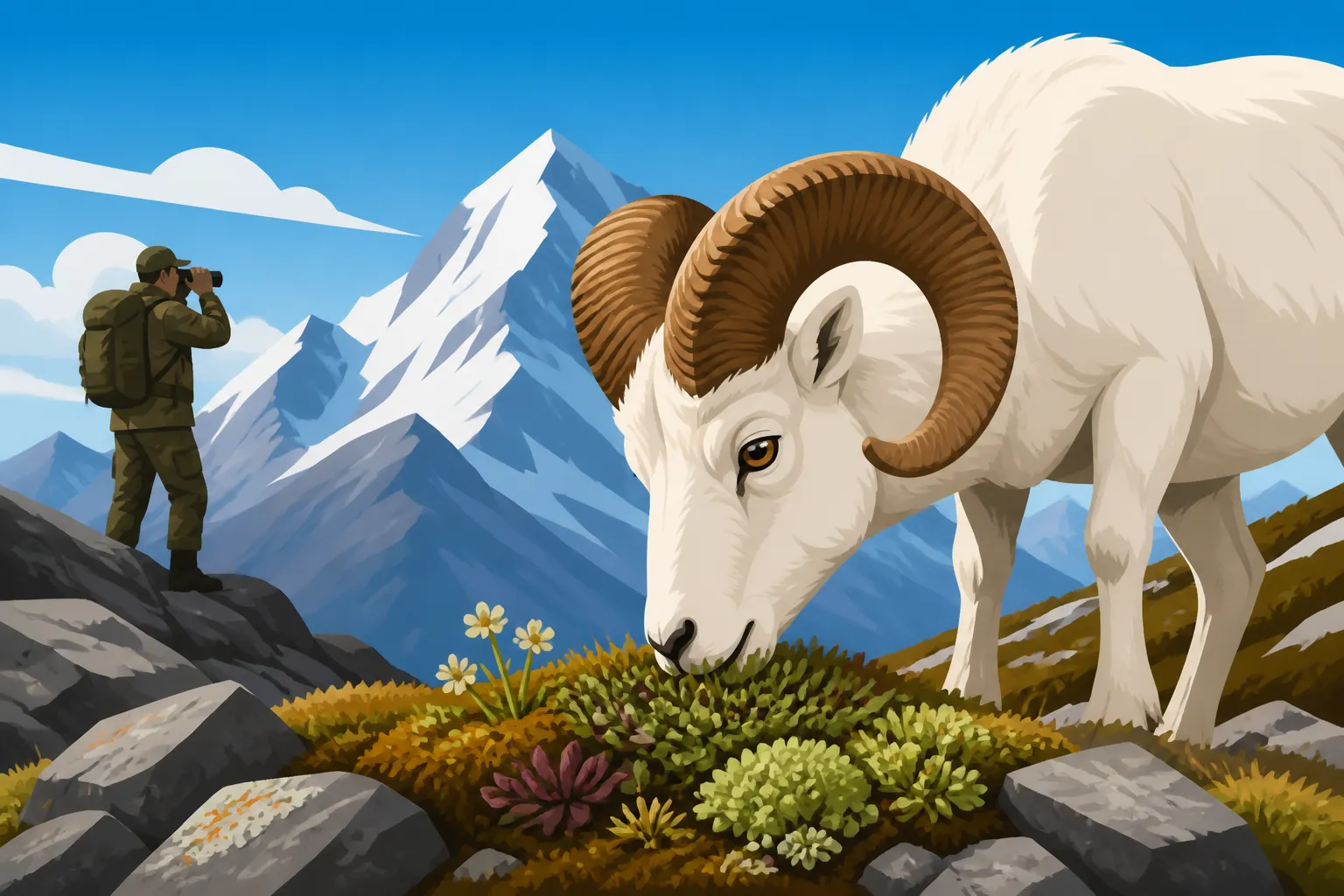
Beyond the grasses and sedges, Dall sheep eagerly consume a variety of forbs—broad-leafed flowering plants. While perhaps not as abundant as grasses, these wildflowers and small shrubs are incredibly important for their higher protein content, vitamins, and minerals. Think of plants like dwarf willow, mountain avens, various saxifrages, and even arctic poppies. These are the nutritional powerhouses that help ewes put on milk for their lambs and rams build the bone and muscle needed for those impressive horns.
During the short, intense growing season of summer, these forbs are like candy for the sheep. You'll often see sheep specifically targeting patches of these plants, especially where they grow in sheltered bowls or on south-facing slopes that get maximum sun exposure. The lush, new growth provides a critical boost of energy and nutrients, essential for putting on fat reserves before the lean winter months. Understanding the timing of the "green-up" and where these forbs are most concentrated can be a game-changer for locating sheep, particularly during August and September hunts. It’s during this period of high-quality forage that you’ll see the most significant Ram Horn Growth Rings and Age, directly linking their diet to their trophy potential.
Lichens and Mosses: Winter Sustenance
When the snow flies and everything green is buried under feet of white, Dall sheep turn to a less palatable but utterly vital food source: lichens and mosses. While not offering the same rich nutritional value as summer forbs or grasses, these organisms are surprisingly resilient and often accessible on wind-swept ridges, exposed rock faces, and beneath thin snow crusts. Lichens, in particular, are composite organisms (a fungus and an alga living symbiotically) that can withstand extreme cold and desiccation, making them a reliable winter food source.
Sheep will spend hours painstakingly scraping these off rocks with their incisors, or digging through shallow snow to uncover them. This is a survival diet, focusing on energy maintenance rather than growth. Observing signs of this winter feeding—scraped rocks or small craters in thin snow—can give you clues about traditional wintering areas, which are often the same places they'll frequent at the tail end of fall season. This knowledge is especially important when considering Where Dall Sheep Winter in the Brooks Range or other high mountain systems. It's a testament to their incredible hardiness that they can sustain themselves on such meager fare for months on end.
Mineral Licks and Water: Essential Beyond Greenery
While the array of plants above timberline provides the bulk of their sustenance, Dall sheep require more than just green matter to thrive. Just like us, they need critical minerals and, of course, water. These elements are often harder to come by in the high country but are absolute magnets for sheep when found.
The Draw of Mineral Licks
Anyone who has spent time Reading Sheep Country From a Glassing Knob has likely heard of the legendary "mineral licks." These aren't just folklore; they are geological hotspots where minerals like calcium, magnesium, and phosphorus leach out of the ground, creating a vital supplement for sheep. These minerals are essential for bone development, muscle function, and, crucially, horn growth in rams and milk production in ewes. You'll often see distinct, excavated patches of earth, sometimes a reddish or grayish color, with numerous trails converging on them – clear indicators of a well-used lick.
Sheep typically frequent these licks most intensely in the spring and early summer, right when ewes are nursing lambs and rams are in the early stages of antler growth. It's a busy social hub, and observing a lick can give you incredible insight into the local sheep population. Utilizing mapping applications, you might even be able to identify geological features or soil compositions that could indicate potential lick locations from satellite imagery before you ever hike in. This kind of advanced scouting, sometimes with tools like GoHunt, can save you precious days in the field, guiding you directly to areas where sheep are actively seeking out these vital supplements.
Water Sources in the High Country
In the rugged, high-altitude environment, access to water can be surprisingly tricky. While snowmelt provides abundant moisture in spring, and summer rains contribute, persistent sources of standing or flowing water are less common than you might think. Dall sheep rely on perennial springs, small glacial runoff streams, and even lingering snow patches as their primary water sources. Unlike some desert animals, sheep need to drink regularly, especially during warmer periods and when feeding on drier forage.
Consequently, sheep movements are often tied to the proximity of reliable water. A prime feeding area might only be utilized if there’s a water source within a reasonable distance. When Setting Up a Spike Camp Above a Sheep Basin, it's not just about finding sheep, but also ensuring you're near a reliable water source for yourself and that the sheep also have access. In a harsh, arid mountain range, a trickle of water can be as attractive as a lush patch of green forage. These limited water points often act as natural funnel points, making them key areas to observe for sheep activity.
Seasonal Shifts in Diet and Hunting Implications
The Alaskan alpine landscape is a dynamic place, and what Dall sheep eat is directly tied to the rhythm of the seasons. Understanding these shifts isn't just academic; it's a practical tool for hunters trying to pattern sheep movements and increase their odds of success.
Spring and Summer: The Green-Up Feast
As the snow recedes in late spring and early summer, a burst of green energy erupts across the mountainsides. This is the "green-up," and for Dall sheep, it's a period of intense feeding and rebuilding after the long, lean winter. Fresh grasses, succulent forbs, and wildflowers emerge, providing a high-protein, energy-rich diet that is crucial for recovery. Ewes, especially, need this nutrient boost to support milk production for their rapidly growing lambs, while rams begin to regenerate their strength and grow their new horns.
During this time, sheep will often concentrate on south-facing slopes and lower elevation alpine meadows where the snow melts earliest and new growth is most vigorous. This is when lambs gain the most weight and ewes regain lost condition. For hunters, while most seasons open later in summer, knowing these early season hotspots can inform later scouting. Sheep might continue to utilize these areas throughout the summer or at least travel through them. A strong, early season diet directly correlates with healthier animals and potentially larger horns, which can be critical when performing Full-Curl Judging From Below the Ram. Observing where these plants thrive is key to finding the healthiest animals.
Fall and Winter: Fattening Up and Surviving
As summer wanes and the chill of fall sets in, the sheep's dietary strategy shifts dramatically. The focus moves from growth and reproduction to accumulating critical fat reserves for the coming winter. They'll continue to feast on any remaining green forage, but as temperatures drop and plants go dormant, their diet becomes less diverse and more challenging to find. This is when hunters are typically in the field, and understanding this transition is paramount.
In late summer and early fall, rams and ewes alike are still topping off their reserves, often found in lush basins that offer the last good feed. As winter approaches, and snow begins to cover lower-lying vegetation, sheep will move to wind-swept ridges and steep, rocky areas where snow is either blown away or too shallow to bury lichens and tough grasses. This is a battle of attrition, and only the fittest will survive the harshest conditions. Knowing these winter range preferences can inform your late-season hunting strategies. The direct impact of a poor fall diet is evident in events like How Deep Snow Kills Sheep Lambs, highlighting the delicate balance of their existence. Identifying these tougher, wind-scoured areas is often a key to finding sheep in the challenging late season.
Seasonal Dall Sheep Diet Overview
Here's a quick look at how a Dall sheep's diet changes throughout the year, and what it means for their health and location.
| Season | Primary Forage | Nutritional Importance | Typical Location | Hunting Implications (if applicable) |
|---|---|---|---|---|
| Spring | Fresh grasses, new sedge growth, early forbs | High protein, rapid growth for lambs, milk production | South-facing slopes, snow-free patches | Good for locating ewe/lamb bands, healthy animals |
| Summer | Diverse forbs, lush grasses, dwarf willow | High energy, fat accumulation, horn growth | Alpine meadows, sheltered bowls, mineral licks | Prime time for rams, focus on rich forage |
| Early Fall | Remaining green forbs & grasses, some woody browse | Final fat accumulation, preparation for rut | Accessible basins, last green-ups, transition areas | Good activity around forage, rams still high |
| Late Fall | Dormant grasses, lichens, mosses, dry woody browse | Maintenance, survival, low energy | Wind-sweept ridges, exposed rock faces | Sheep pushed to exposed areas, tough going |
| Winter | Lichens, mosses, dried grasses on wind-swept areas | Minimal sustenance, survival | High, exposed ridges, escape terrain | Not a typical hunting season, but informs winter range |
Understanding what Dall sheep eat above timberline isn't just a detail; it's a fundamental piece of the puzzle that links habitat, behavior, and successful hunting. By thinking like a sheep and focusing on their food sources, you'll be one step closer to finding that ram of a lifetime.
Disclaimer
This article is for general informational purposes only and does not constitute professional advice. Laws, prices and regulations vary by location and change over time. Consult a qualified professional for guidance on your specific situation.