Ptarmigan Species Found in Alaska
It's easy to get caught up in the allure of Alaska's massive big game, spending countless hours planning for a moose, caribou, or sheep hunt. But in doing so, many hunters overlook a smaller, equally rewarding pursuit: ptarmigan. These hardy birds offer a fantastic opportunity to extend your hunting season, explore diverse landscapes, and bring home some truly delicious table fare. This guide will dive deep into the world of Alaska's ptarmigan, helping you understand each species, where to find them, and how to successfully hunt these resilient alpine and tundra dwellers.
Understanding Alaska's Ptarmigan Species
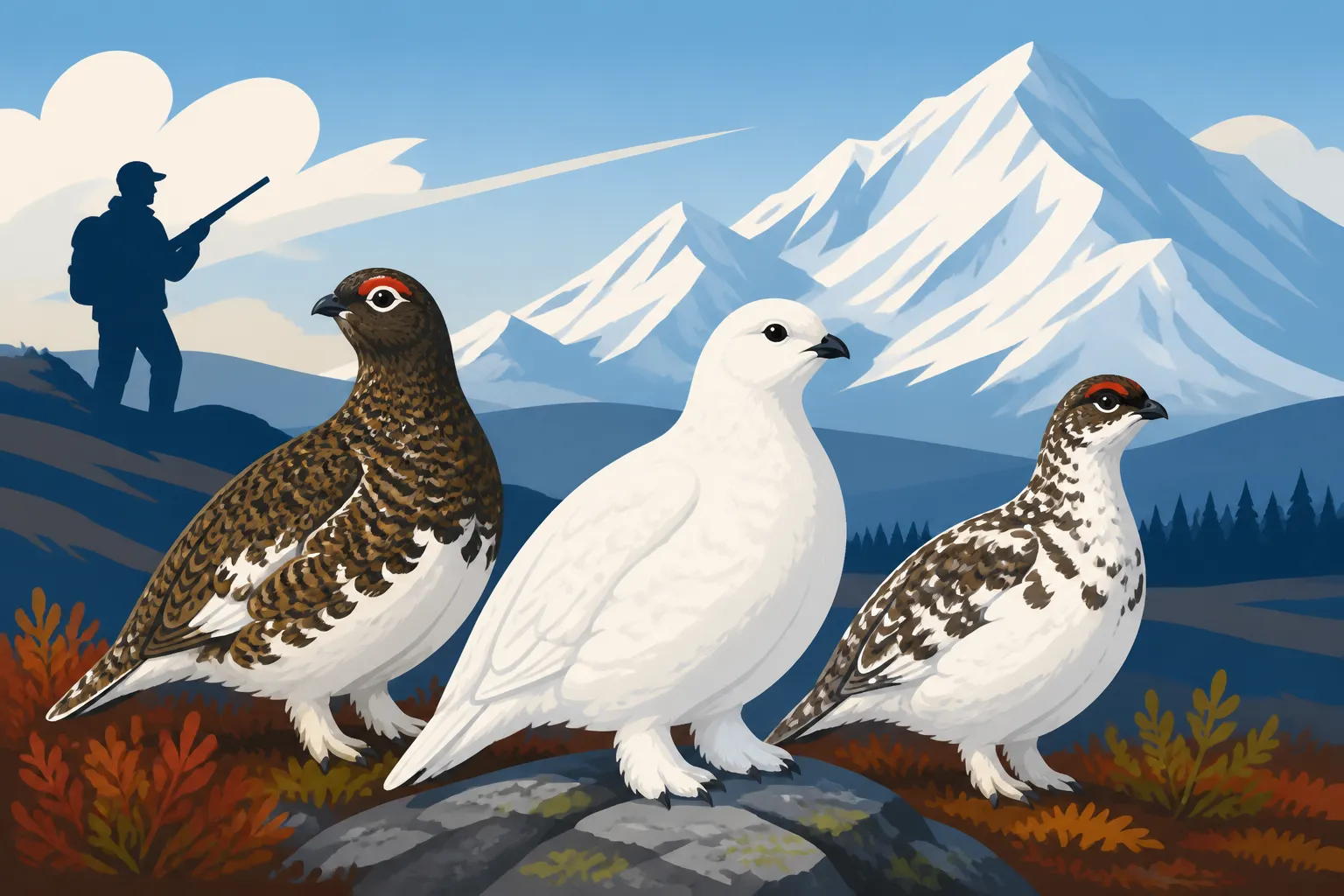
Alaska is home to three distinct species of ptarmigan, each adapted to slightly different niches within the state's vast and varied ecosystems. While they all share the remarkable ability to change their plumage with the seasons, from mottled browns in summer to brilliant white in winter, subtle differences in appearance, habitat, and calls help identify them. Knowing these distinctions is key to locating your quarry in the field.
Willow Ptarmigan: The State Bird
The Willow Ptarmigan, Lagopus lagopus, proudly holds the title of Alaska's state bird, and for good reason. They are the most widely distributed and often the most numerous of the three species, commonly found across the Interior, Southcentral, and Western parts of the state. These birds are the largest of the ptarmigan, easily identified by their robust size and the distinct red combs above their eyes, which are particularly prominent on males (cocks) during the breeding season. In summer, their plumage is a rich, mottled reddish-brown, perfectly camouflaging them among the dense willows and low-lying brush. As winter approaches, their feathers transform to a pristine white, save for their black tail feathers, making them virtually disappear against the snow.
You'll typically find Willow Ptarmigan in brushy habitats, especially along river bottoms, in vast willow thickets, and in areas of dwarf birch and alder at lower elevations. Their diet largely consists of the buds, catkins, and twigs of these very plants, making these dense patches prime locations to search. Their call is a distinctive, almost conversational "go-back, go-back, go-back" sound, sometimes ending with a guttural cackle. It's a sound that once you've heard it, you won't forget, and it's often the first clue that you're in ptarmigan country. Because of their preference for more accessible brushy areas, often lower down from the truly rugged alpine, Willow Ptarmigan hunts can be an excellent introduction for those new to small game in Alaska.
Rock Ptarmigan: High Country Specialists
Ascending in elevation, you'll encounter the Rock Ptarmigan, Lagopus muta. These birds are true residents of the high country, favoring the transition zones just above the timberline and stretching into the rocky alpine tundra. They are generally smaller than their willow-dwelling cousins and possess a more finely barred or mottled plumage in summer, tending towards grayish-browns that blend seamlessly with lichen-covered rocks and gravel. A key identifier for the Rock Ptarmigan is the black line that runs from their bill through their eye, a feature absent in the White-tailed Ptarmigan. Like the Willow, they turn pure white in winter, but often retain some black markings on their tail.
Rock Ptarmigan are incredibly well-adapted to their harsh, exposed environment. They frequent rocky slopes, scree fields, and barren plateaus where vegetation is sparse but offers enough sustenance. Their diet includes berries, seeds, and the leaves of various alpine plants. Hunting these birds often means covering significant ground in challenging terrain, the kind of hiking you might experience while on a sheep hunt. Their call is notably different from the Willow Ptarmigan – a harsh, raspy "kraaah" or "ah-ka-ka-ka" that sometimes sounds like rocks clattering down a slope. Spotting a Rock Ptarmigan requires a keen eye and often a slow, deliberate approach, as their camouflage in their namesake habitat is exceptional.
White-tailed Ptarmigan: Alpine Ghosts
For the ultimate alpine challenge, hunters seek the White-tailed Ptarmigan, Lagopus leucura. This is the smallest of the three species and, arguably, the most specialized. True ghosts of the high alpine, White-tailed Ptarmigan inhabit the highest, most rugged and barren landscapes, often clinging to the edges of permanent snowfields, rock gardens, and sparse lichen-covered talus slopes. What truly sets them apart visually is their pristine white tail feathers, which they retain year-round, unlike the black tails of the other two species. They also lack the black eye-line of the Rock Ptarmigan. Their summer plumage is a delicate blend of gray and brown, often with very fine barring, allowing them to melt into the mosaic of rocks and sparse alpine flora.
Their diet consists mainly of small alpine plant matter, buds, and catkins, often dug out from under shallow snow. Hunting White-tailed Ptarmigan is a testament to perseverance, as their chosen habitat demands serious elevation gain and navigating difficult terrain. They are experts at holding tight, relying on their incredible camouflage to avoid detection, often flushing at your feet only when you've almost stepped on them. Their call is the softest and least frequently heard of the three – a series of quiet, almost pigeon-like hoots or muffled clucks. Finding these elusive birds often feels like a special reward, a testament to the effort put into reaching their remote, breathtaking world.
Where to Find Ptarmigan in Alaska
Locating ptarmigan isn't just about knowing their species; it's about understanding their habitat choices, seasonal movements, and how to effectively scout for these adaptable birds. Alaska's vastness means "ptarmigan country" can look incredibly different from one region to the next, yet their fundamental needs remain the same.
Habitat Preferences by Species
Each ptarmigan species has carved out a unique ecological niche, dictated by the availability of food, cover, and specific environmental conditions. Recognizing these preferences is your first step to a successful hunt.
Willow Ptarmigan thrive in environments dominated by dense woody vegetation, especially willow, birch, and alder. In interior Alaska, this means river valleys like those along the Susitna, Tanana, or Yukon, where extensive riparian brush provides both food and concealment. On the Kenai Peninsula, you'll find them in the vast shrub fields and along the edges of spruce forests. Coastal lowlands, particularly those with a mix of brushy tundra, also host good populations. They often prefer areas with a mix of tall and dwarf shrubbery, allowing them to feed, roost, and find refuge from predators. Don't overlook old burns where willow and birch are regenerating vigorously, as these areas often become moose magnets, but also fantastic ptarmigan habitat after a few years of regrowth.
Rock Ptarmigan, as their name suggests, are strongly tied to rocky, open terrain above the timberline. Their ideal habitat is a mosaic of broken rock, scree, alpine meadows, and sparse low-lying tundra vegetation. They are common across the Alaska Range, Brooks Range, and other major mountain systems. Look for them on wind-swept ridges where snow might be thinner, exposing patches of forage, or in bowls and drainages where rock outcroppings provide shelter. These birds are masters of camouflage among the gray and brown rocks, often blending in so perfectly that they seem to materialize out of thin air. When you're "Reading Contour Lines for Sheep Benches", keep an eye out for adjacent areas that might be perfect Rock Ptarmigan habitat, as sheep and rock ptarmigan often share similar high-country preferences.
White-tailed Ptarmigan take alpine living to the extreme. They are found in the highest, most barren, and rugged reaches of Alaska's mountains, often inhabiting elevations above where Rock Ptarmigan are typically encountered. Think permanent snowfields, talus slopes, rock glaciers, and sparse alpine meadows high in the Chugach, Wrangell, or Talkeetna Mountains. Their world is one of extremes, where weather can change in an instant, and vegetation is incredibly scarce. These hardy birds forage on lichens, mosses, and the tender buds of dwarf alpine plants, often digging through shallow snow to access food. Their extraordinary camouflage makes them exceptionally difficult to spot, even at close range.
Seasonal Movements and Elevations
Ptarmigan, like many Alaskan game species, exhibit seasonal movements tied to breeding cycles, food availability, and snow conditions. Understanding these patterns is crucial for timing your hunt.
In spring and early summer, ptarmigan are dispersed for breeding. Males establish territories and display to attract mates, their calls echoing across the tundra and alpine slopes. During this time, they are generally found in smaller groups or pairs, making them harder to locate. As summer progresses into fall, often coinciding with the prime hunting seasons, ptarmigan begin to coalesce into larger coveys. This post-breeding aggregation makes them more vulnerable and easier for hunters to find. They might move slightly lower in elevation in search of abundant berry crops, like crowberries or blueberries, which provide vital energy reserves before winter. This transition period, usually late August through September, is often the best time to pursue them.
Once heavy snows arrive in late fall and winter, ptarmigan fully don their white plumage. Their movements become more restricted, driven by the need to find food and shelter from the elements. Willow Ptarmigan might concentrate in sheltered river valleys or dense brush where willow buds are accessible. Rock and White-tailed Ptarmigan, despite living in the high country, will often seek out wind-swept ridges where snow is scoured away, exposing forage, or find sheltered south-facing slopes. However, deep, soft snow can make foraging difficult, sometimes forcing them to move lower than usual, especially in exceptionally harsh winters. Knowing these patterns helps narrow down your search area, whether you're planning a dedicated ptarmigan hunt or just adding a small game option to a big game trip.
Scouting for Ptarmigan Hotspots
Effective scouting is a cornerstone of any successful hunt, and ptarmigan are no exception. While accidental encounters happen, a thoughtful approach significantly increases your odds. Before you even set foot in the field, use topographical maps and satellite imagery to identify likely habitats based on the species you're targeting. Look for willow-choked creek bottoms for Willow Ptarmigan, or extensive alpine tundra and rock fields above timberline for Rock and White-tailed Ptarmigan. Tools like GoHunt can provide valuable data on specific game management units, including general habitat descriptions that might hint at good ptarmigan areas.
In the field, visual cues are paramount. Look for droppings – small, dark pellets often found under willow bushes or on prominent rocks. Tracks in soft dirt or snow can also reveal their presence, though they're often subtle. Listen intently for their distinct calls; a calling bird is much easier to pinpoint. One of the best ways to find ptarmigan is often by combining their pursuit with a big game hunt. When you're on a multi-day backpack hunt for sheep or moose, those incidental encounters can quickly turn into a productive ptarmigan harvest. When "Downloading Offline Maps Before a Fly-In", make sure to mark potential ptarmigan habitats alongside your big game objectives. Pay attention to areas with good cover and food sources, as ptarmigan won't be far from where they can eat and hide.
Hunting Techniques and Strategies for Ptarmigan
Hunting ptarmigan in Alaska can range from a leisurely stroll along a river bottom to a grueling climb into the high alpine. Your strategy and gear will largely depend on the species you're after and the terrain you'll be covering. Flexibility and preparation are key to success.
Essential Gear for Ptarmigan Hunts
While ptarmigan are small game, the environments they inhabit demand serious gear considerations. For firearms, a light shotgun is generally preferred. A 20-gauge or 28-gauge with smaller shot sizes (like 6 or 7.5) is ideal for these fast-flying birds. Some hunters opt for a .410 for a true challenge. However, many big game hunters carry a .22 pistol or rifle for small game encountered incidentally. If you're pondering "Shooting Small Game With a Big Game Rifle", remember that while possible, it's often overkill and can damage the meat. A dedicated small game firearm or a versatile combination gun is a better choice if ptarmigan are a primary target.
Beyond the gun, layered clothing is absolutely critical. Alaska's weather, especially in the alpine, can turn on a dime. You'll need good waterproof and windproof outer layers, and insulating layers underneath. Sturdy, broken-in hiking boots are non-negotiable, especially for Rock and White-tailed Ptarmigan where you'll be covering steep, uneven terrain. Always carry a reliable navigation system; a GPS unit is excellent, but also have a physical map and compass as a backup. Pay attention to "GPS Battery Life in Cold Camps" and carry spare batteries. For alpine hunts, the same principles apply as for a sheep hunt, where "Alpine Navigation Without Cell Service" is the norm and you need to be self-reliant. Don't forget small game bags for your birds, plenty of water, and some high-energy snacks.
Approach and Flushing Tactics
Ptarmigan are renowned for holding tight, often flushing at very close range. This tendency requires a specific approach. When hunting, move slowly and deliberately, scanning the ground ahead of you with your eyes, not just your feet. Using binoculars, even at close range, can help you pick out a camouflaged bird against the background. Try to hunt into the wind; this not only helps carry your scent away from the birds but also makes their flush more predictable as they usually launch into the wind.
Employ a zig-zag pattern or make frequent pauses, which can often unnerve hidden birds and cause them to flush. When a bird flushes, your reaction time needs to be quick. These are small, fast targets, and often they'll fly low and fast to gain cover. If you're lucky, you might get a second shot at a bird from the same covey, as they often don't fly far. Always mark the spot where the bird went down, mentally noting a prominent rock or bush, as their camouflage makes retrieving them surprisingly difficult, even in open terrain. If you're hunting in thick willows for Willow Ptarmigan, a dog can be invaluable for finding downed birds in dense cover.
Dog Work and Training for Ptarmigan
Hunting ptarmigan with a well-trained bird dog can elevate the experience to another level. Both pointing breeds, like Brittanys, English Setters, and Pointers, and flushing dogs, such as Springer Spaniels and Labradors, can be highly effective. A pointing dog will help you locate birds that are holding tight, allowing you to walk in and prepare for the flush. A flushing dog, on the other hand, will actively work cover to put birds into the air, which can be particularly useful in dense willow thickets where visibility is limited.
However, hunting ptarmigan with a dog in Alaska presents unique challenges. The vast, open terrain of the alpine tundra can make scenting conditions tricky, especially on dry or windy days. Dogs need to be in excellent physical condition to handle the long miles and rugged climbs. Training is paramount: a dog must be steady to wing and shot, meaning they don't break prematurely when a bird flushes or a shot is fired. They also need to be reliable retrievers to minimize lost birds, especially in areas with deep vegetation or rocky terrain. While it takes significant effort to train a dog for Alaskan conditions, a good ptarmigan dog can dramatically increase your success rate and add immense enjoyment to your hunt. Just like you'd prepare for a major expedition, ensuring your canine companion is ready is a crucial part of the planning.
Regulations, Seasons, and Bag Limits
Understanding the regulatory framework for ptarmigan hunting in Alaska is straightforward but requires diligent attention to detail. Unlike big game, small game regulations are generally less complex, but there are still important rules to follow.
General Alaska Small Game Rules
To hunt ptarmigan in Alaska, all hunters, both residents and non-residents, must possess a valid Alaska hunting license. The good news is that no specific small game tags or locking tags are required for ptarmigan, unlike big game species where "Alaska Big Game Locking Tags and What Each Costs" can add significantly to your budget. Your standard hunting license covers small game. It's crucial to remember that Alaska's hunting regulatory year typically runs from July 1 to June 30, and regulations can change annually. Therefore, always obtain and thoroughly review the most current Alaska Hunting Regulations booklet from the Alaska Department of Fish and Game (ADF&G) before heading into the field. This booklet is your ultimate authority on open seasons, bag limits, and any specific area restrictions.
One of the benefits for non-residents is that ptarmigan hunting does not require the services of a registered guide. This offers a fantastic opportunity for non-resident hunters to experience Alaska's wilderness and enjoy a self-guided hunting adventure, which is not the case for certain big game species like brown bear, Dall sheep, or mountain goat. While some big game regulations might discuss "Alaska Hunter Education and Orientation Requirements," generally, these are less stringent for small game, though safe firearm handling is always paramount regardless of the target species.
Species-Specific Regulations
While general rules apply, bag and possession limits for ptarmigan can vary slightly by species and across different game management units. For Willow and Rock Ptarmigan, typical daily bag limits are quite generous, often around 20 birds per day, with a possession limit of 40. White-tailed Ptarmigan, being less numerous and inhabiting more remote areas, often have slightly lower limits, perhaps 10 birds daily with a possession limit of 20. However, these numbers are illustrative; it is absolutely imperative to check the current ADF&G regulations for the specific unit you plan to hunt. Ignoring this step could lead to citations and penalties.
Ptarmigan seasons are typically long, often running from August 10th through March 31st in many areas. This extended season allows hunters to pursue them in various conditions, from late summer through the heart of winter. This can be a perfect opportunity to tag along on a late-season deer hunt or a winter trapline venture. Again, specific dates and any special restrictions or closures due to emergency orders can be found in the current regulations booklet. Always be aware of any local closures or land access restrictions, especially when hunting on Native Corporation lands or specific federal refuges. Using mapping resources like GoHunt can often highlight these nuances.
Ethical Considerations and Conservation
As with all hunting, ethical conduct and a commitment to conservation are essential when pursuing ptarmigan. Practice fair chase principles; while it can be tempting to shoot a ptarmigan on the ground given their tight-holding nature, it's generally considered more sporting to take them in flight. Only shoot birds on the ground if absolutely necessary, such as dispatching a crippled bird. Always strive for clean, humane kills.
Respect the habitat you're hunting in. Pack out all your trash, including spent shotgun shells. Minimize disturbance to the environment. While formal harvest reporting is typically not required for small game in the same way it is for big game with "Alaska Harvest Ticket Reporting Deadlines", responsible hunters still keep track of their take. This self-awareness helps maintain a sustainable harvest. Ptarmigan populations are generally robust across Alaska, but like any wildlife, they are susceptible to habitat changes, severe winters, and predation. By hunting ethically and responsibly, you contribute to the continued health of these unique game birds for future generations.
Preparing Your Ptarmigan Harvest
After the thrill of the hunt, comes the satisfaction of preparing your hard-earned ptarmigan. These birds offer delicate, flavorful meat that is a true culinary delight, especially when cared for properly in the field.
Field Dressing and Meat Care
Proper field care starts immediately after the shot. The small size of ptarmigan means they cool quickly, but getting the internal organs out is still important, especially in warmer weather. Many hunters simply pluck or skin the breast in the field, then remove the guts, leaving the rest for later. Alternatively, you can field dress the entire bird by making a small incision and removing the entrails, then allow the bird to cool. For full plucking, it's often easier if the bird is still warm.
Once field dressed, the primary goal is to cool the meat rapidly and keep it clean. Small, breathable game bags are perfect for carrying ptarmigan. Avoid putting them directly into plastic bags, which can trap heat and moisture, promoting bacterial growth. This is particularly important if you're hunting during early seasons when ambient temperatures might still be warm. The principles outlined in "Meat Care in 50-Degree September Weather" apply here, even for small game; air circulation is your friend. If you're on an extended trip, consider how you'll keep your birds cool. Hanging them in the shade, suspended from a branch to allow air to circulate, is ideal. For long-term storage, freezing them whole or as breasts is best.
Recipes and Culinary Delights
Ptarmigan meat is lean, mild, and has a delicate flavor that some compare to a cross between pheasant and grouse. It's truly a gourmet wild game meat and a fantastic reward for your efforts. The breasts are the most commonly utilized part, but the legs and thighs, while smaller, are also excellent, especially in stews or braised dishes.
For a simple yet delicious preparation, try pan-searing ptarmigan breasts. Season them with salt, pepper, and your favorite herbs (thyme or rosemary work wonderfully), then sear quickly in butter or olive oil until golden brown and cooked through. Be careful not to overcook, as the lean meat can dry out quickly. Whole ptarmigan can be roasted in an oven or, if you're still in camp, slowly cooked over a fire, perhaps wrapped in bacon to add moisture and flavor – a fantastic option mentioned in "Waterfowl and Ptarmigan as Camp Meat". The lean, wild taste pairs wonderfully with rich sauces, wild mushrooms, or berry reductions. Don't be afraid to experiment! Whether it's a quick camp meal or a special dinner at home, ptarmigan offers a unique and satisfying culinary experience for the Alaskan hunter.
| Species | Typical Habitat | Summer Appearance | Winter Appearance | Distinctive Call | Size (relative) | Hunting Difficulty |
|---|---|---|---|---|---|---|
| Willow Ptarmigan | Willow thickets, alder, river bottoms, tundra edges | Mottled reddish-brown body, red combs (males) | Pure white body, black tail feathers | Guttural "go-back, go-back" clucking call | Large | Moderate |
| Rock Ptarmigan | High alpine tundra, rocky slopes, scree fields | Finely barred grayish-brown, black eye-line | Pure white body, black tail feathers, black eye-line | Harsh, raspy "kraaah" or "ah-ka-ka-ka" | Medium | Challenging |
| White-tailed Ptarmigan | Highest, most rugged alpine, permanent snowfields | Delicate gray/brown barring, white tail feathers | Pure white body, white tail feathers | Soft, muffled hooting or pigeon-like clucks | Small | Most Challenging |
Disclaimer
Please remember that this guide provides general information based on common practices and regulations in Alaska. Hunting rules, seasons, and specific area restrictions can change annually. Always consult the most current Alaska Department of Fish and Game (ADF&G) regulations booklet for the year you intend to hunt. It is your responsibility to know and follow all applicable laws. This information is not a substitute for official legal advice or government regulations.