Alaska-Yukon Moose Body Size and Antler Spread
Standing face-to-face with an Alaska-Yukon moose in the vast wilderness is an experience that often leaves hunters awe-struck, but it also brings the immense challenge of accurately field judging. The sheer scale of these animals, combined with complex antler regulations, can make determining a legal bull incredibly tricky, leading to uncertainty and missed opportunities. This comprehensive guide is designed to peel back the layers of this challenge, providing you with detailed insights into the body size and antler spread of Alaska-Yukon moose, and equipping you with practical strategies to confidently assess a bull when it counts.
Understanding the Sheer Scale of Alaska-Yukon Moose
When you talk about moose in Alaska, you're not just talking about any moose. You're talking about the Alaska-Yukon subspecies, Alces alces gigas, the largest member of the deer family on Earth. Their size is truly monumental, and it's something that often gets underestimated until you’re actually standing in their presence, or, more likely, looking at one from a considerable distance across a vast drainage. This incredible bulk isn't just for show; it's an adaptation to survive the harsh Alaskan environment, allowing them to push through deep snow and withstand brutal winters.
The Imposing Body Mass and Height
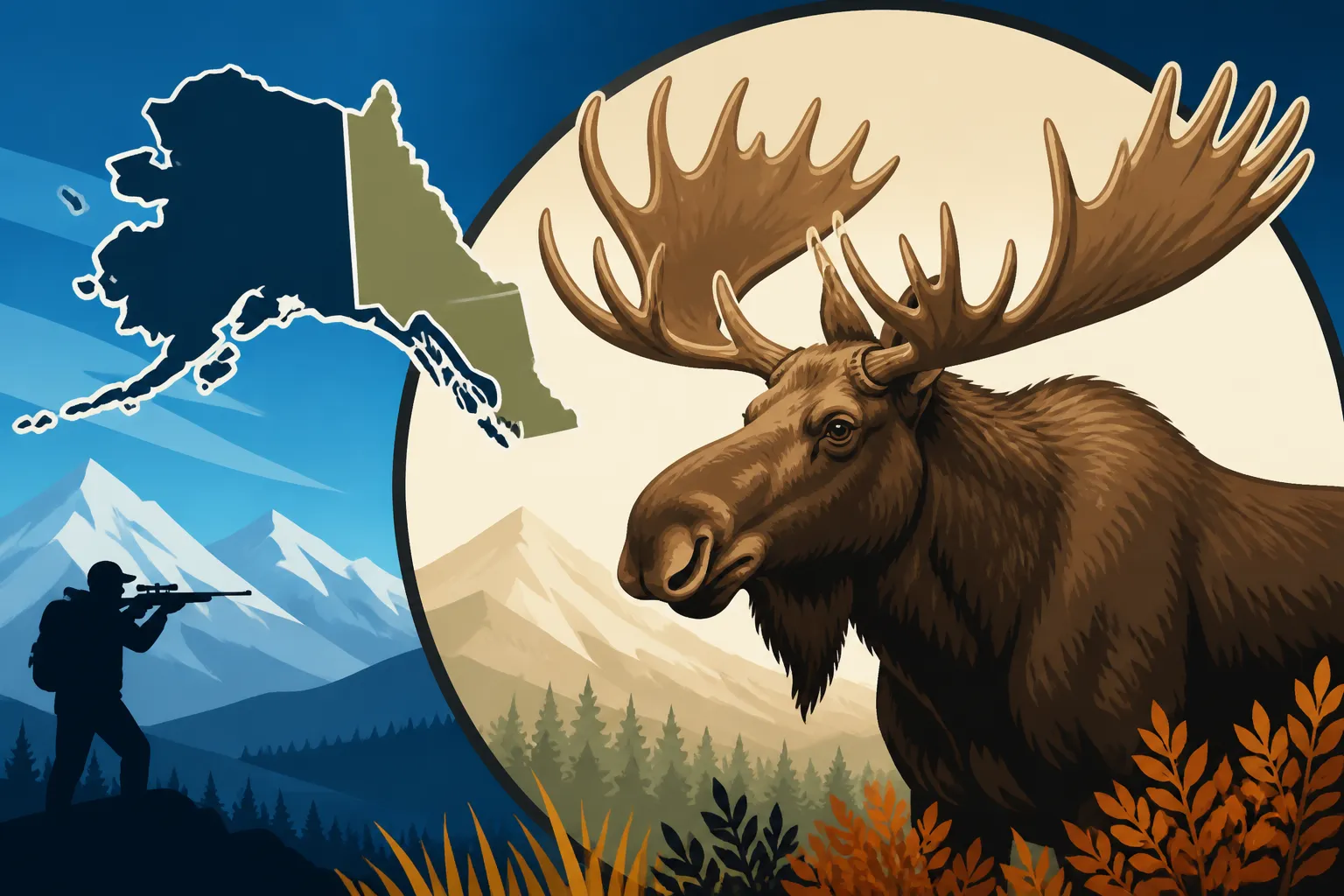
Picture this: a creature taller than many horses, with a body mass that can easily rival a small car. That's the reality of a mature Alaska-Yukon bull moose. On average, a bull will weigh in the range of 1,200 to 1,600 pounds, but truly dominant, prime-age bulls, especially those in areas with excellent forage, can push well past the 1,800-pound mark. There have even been anecdotal reports of bulls approaching a ton, which is a truly staggering thought when you consider you might be quartering one alone in the field.
Their shoulder height is equally impressive, typically standing between 6 to 7.5 feet, meaning the top of their shoulder humps can reach eye-level for many adults. Add to that the towering antlers, and a large bull can easily stand 9 to 10 feet tall from hoof to antler tip. Their body length, from nose to tail, often spans 8 to 10 feet. When you’re trying to discern a legal bull from a sub-legal one, especially if you're not familiar with the species' full growth potential, it's easy to get fooled by what seems like a "big" animal, only to realize later it was still a young one with much more growing to do. To really get a sense of just How Big Alaska-Yukon Bull Moose Get, you need to train your eye to these specific dimensions.
Visual Cues of a Mature Bull's Physique
Beyond the raw numbers, there are distinct visual cues that signify a truly mature bull. It’s not just about height and weight; it’s about proportion and development. A young bull might be tall and lanky, but a mature bull will be heavy. Look for a deep, barrel-chested body, indicating significant muscle and fat reserves. The brisket, the chest area between the front legs, will appear very deep and well-developed, almost as if it's dragging low.
The neck of a mature bull, particularly during the rut, will be incredibly thick and muscular, much wider than its head. This is a tell-tale sign of age and dominance, as they build up this musculature for sparring with other bulls. They'll also typically have a well-defined dewlap (the flap of skin hanging under the throat), which tends to be more prominent and developed on older bulls. Younger bulls, while still large, often appear more proportionate, with a less massive neck and a less "stocky" overall build. Comparing a bull to any cows or calves in its vicinity can also provide invaluable context for its overall size. A truly big bull will dwarf even a large cow, making her look almost petite by comparison.
Deciphering the Majestic Antler Spread
The antlers of an Alaska-Yukon moose are perhaps their most defining and awe-inspiring feature. Unlike deer antlers, which are often branch-like, moose antlers are broad and palmate, resembling giant shovels or hands, hence the term "palm." These magnificent racks grow anew each year, reaching their peak in size and mass when a bull is in its prime, usually between 7 and 10 years old. Judging these antlers accurately is paramount for any hunter in Alaska, not just for trophy potential but, more importantly, for legal compliance.
Average Spreads and Record-Book Potential
When we talk about antler spread, we're referring to the widest point between the two antler tips. For a mature Alaska-Yukon bull, this can be an astounding measurement. While there's a wide range, a good, mature bull will typically have an antler spread anywhere from 50 to 70 inches. Some exceptional bulls, those with superior genetics and prime habitat, can push into the 70s and even exceed 80 inches. These are the giants that capture hunters' imaginations and often find their way into the record books.
It’s crucial to remember that a 50-inch spread is often a key legal minimum in many Game Management Units (GMUs) in Alaska. While it might sound like a massive measurement, it can be incredibly deceptive in the field. A bull that looks "huge" could still be under that 50-inch mark, especially if he has a heavy, compact rack rather than a wide one. Understanding the Average Antler Spread on a Mature Alaska Bull is critical, but learning to accurately gauge it is a skill that takes practice and careful observation.
The Intricacies of Palmation and Points
Beyond the sheer spread, the architecture of a moose's antlers is complex and important for judging. "Palmations" are the broad, flattened sections of the antler, extending from the main beam. A mature bull will have well-developed, expansive palms, often with deep indentations or "fingers" along the edges. Young bulls often have narrow, less developed palms, sometimes looking more like heavy spikes with small paddle-like structures.
"Tines" are the individual points projecting from the palms. While not always a specific legal requirement like brow tines, the number and length of tines contribute to the overall impression of a quality rack. The "brow tines" are particularly important in some regulations. These are the points that project forward, often over the bull's face, resembling small shovels. Some GMUs require a bull to have, for instance, a minimum of three brow tines on one side to be legal. Learning How to Count Brow Tines on a Live Bull can be a difficult task in the field, as they can be obscured by brush, angle, or distance.
Another important feature is the "shovel" or "dropper tines," which are points that can extend downwards from the lower edge of the palm. While not as common on every bull, they add to the character and mass of a trophy. A rack with good mass, meaning the thickness and depth of the antlers, even if the spread isn't record-breaking, still makes for a very impressive animal.
Factors Influencing Moose Body and Antler Development
It's not just luck that produces colossal Alaska-Yukon moose. A complex interplay of environmental conditions, genetics, and age dictates how big a bull will grow, both in body and antler size. Understanding these factors helps you predict where you might find larger animals and what to look for when evaluating a bull's potential.
The Critical Role of Nutrition and Habitat
Imagine trying to build a skyscraper without enough materials – it just won't happen. The same principle applies to moose. Excellent nutrition is the bedrock of impressive body and antler development. Moose are primarily browsers, meaning they feed on the leaves, twigs, and bark of woody plants. Their diet largely consists of willow, birch, and aspen, especially new growth.
Habitat quality directly translates to moose quality. Areas that have experienced wildfires 5 to 20 years prior are often prime moose habitat because burns stimulate a flush of nutritious young willow and other browse species. Riparian areas, river and stream corridors, also provide a constant supply of fresh forage. In regions with abundant, high-quality forage, moose grow faster, larger, and produce more substantial antlers. Conversely, in areas with sparse or poor-quality browse, bulls will typically have smaller bodies and less impressive racks. For example, knowing What Moose Eat in a Ten-Year-Old Burn can direct you to areas where you might find more robust animals. This explains why some GMUs consistently produce larger moose than others – it's often a direct reflection of their habitat.
Genetics and Age as Driving Forces
While nutrition provides the building blocks, genetics dictates the blueprint. Just like humans, moose inherit traits from their parents that determine their potential for growth. Some bloodlines simply have the genetic coding to grow larger bodies and more massive antlers. This is why you'll often see clusters of impressive bulls in certain regions or drainages; the genetic pool there favors larger animals.
Age, of course, is the most straightforward factor. A bull needs time to grow. Moose typically experience their most rapid body and antler growth between the ages of 2 and 5 years. They usually reach their peak antler development between 7 and 10 years old, at which point their racks are at their largest in both spread and mass. After this prime, antler size can plateau or even begin to decline as the bull ages further, sometimes becoming less symmetrical or losing mass.
Harsh winters, especially those with deep, persistent snow, can also set back a bull's growth. The energy expenditure required to survive a tough winter leaves less energy for antler growth in the spring. This is why you might see variability in antler size from year to year even on the same bull, reflecting the previous winter's severity. Understanding Why Bulls Drop Antlers in Midwinter and the subsequent growth cycle can give you insights into their yearly development.
Field Judging Strategies for Body Size
When that moment arrives and a moose emerges from the willows, your heart will pound, and "moose fever" might try to cloud your judgment. This is precisely when practiced field judging techniques become invaluable. Focusing on body size first can often tell you if you're looking at a truly mature bull, regardless of the antlers.
Using Familiar Objects for Scale
The vastness of Alaska can play tricks on your eyes, making distances seem shorter and animals appear smaller than they are. One of the best ways to counteract this is to use familiar objects in the field as a reference. If you have a partner, comparing the moose's height to their standing height can give you a quick estimate. If the moose is significantly taller at the shoulder than a full-grown adult, you know you're looking at a substantial animal.
Another trick involves comparing the moose's body to nearby trees or even your own gear. For example, if you're looking at a moose near a clump of willows, try to mentally estimate how many "willow heights" tall it is. If you're using a spotting scope or binoculars, you can sometimes use your rifle barrel (carefully, safely, and unloaded, of course) or the length of your trekking poles, if you set them up, to get a rough sense of scale. A truly massive moose will often look disproportionately large next to most natural objects in its environment.
When scouting with tools like the GoHunt app, you can often get a sense of the scale of trees or features in satellite imagery, which can help you calibrate your eye for the landscape. This kind of advanced digital scouting can give you a mental advantage before you even step foot in the field, helping you better interpret what you see.
Assessing Overall Proportion and Behavior
Beyond specific measurements, a mature bull simply looks different. It carries itself with a certain gravitas. Look for an animal with a deep, robust body, where the chest is notably thicker and lower than its belly. Its legs might seem relatively shorter in comparison to its massive body, giving it a stocky, powerful appearance. Younger bulls, even those with decent antler growth, often still have a "leggy" or more athletic build, lacking the deep, heavy girth of a prime animal.
Observe its behavior. Mature bulls, especially solitary ones, often move with a deliberate, slow pace. They seem unhurried, almost regal. If there are other moose around, pay attention to its dominance. Does it push other bulls or cows away from prime feeding spots? A bull that clearly dominates its space is often a mature, strong animal. While not a definitive rule, a bull exhibiting dominant behavior is more likely to be in its prime physically.
| Feature | Average Alaska-Yukon Bull | Reference Object/Rule | Notes |
|---|---|---|---|
| Weight | 1,200 – 1,600 lbs | Mid-size car | Can exceed 1,800 lbs in prime conditions; very substantial |
| Shoulder Height | 6 – 7.5 feet | Tall adult male (6 ft) | A huge animal will easily clear 7 feet at the shoulder |
| Antler Spread | 50 – 70 inches | 50-inch rule: ear-tip width x 1.25 | Many legal requirements hover around 50 inches |
| Brow Tines | Varies | 3 on one side rule | Critical for legality in certain GMUs; often hard to see clearly |
| Palm Width | 12 – 24 inches | Dinner plate (10-12 in) | Good palmation is a sign of maturity and strong genetics |
| Neck Thickness | Very thick, especially during rut | Wider than its head | A primary indicator of age and dominance in a bull |
| Dewlap Size | Large and developed | Prominent flap | Tends to be more pronounced on older, mature bulls |
Mastering Antler Spread and Legal Requirements
This is where the rubber meets the road for many Alaska moose hunters. Beyond the sheer thrill of seeing a moose, accurately judging its antler spread and legal points is often the difference between a successful, legal harvest and a costly mistake. Alaska’s antler regulations are designed to manage moose populations and promote a healthy age structure, but they place a significant burden on the hunter's field judging skills.
The 50-Inch Rule and Beyond
The infamous "50-inch rule" is perhaps the most common and challenging antler restriction. In many areas, a bull must have an antler spread of at least 50 inches, or have at least four brow tines on one side (though this can vary by GMU, sometimes it's three, or even a combination). Fifty inches is a lot of antler, and it's notoriously difficult to judge accurately, especially at a distance, in broken country, or with poor light.
A common field trick for the 50-inch rule is to use the moose's ears as a reference. A moose's ear-to-ear spread, when extended out straight, is roughly 40 to 45 inches. So, for a bull to be 50 inches wide, its antlers need to extend noticeably wider than its ears. Think of it as a significant amount beyond the ear tips. If the antlers just barely clear the ears, it's likely still under 50 inches. This can be one of the most stressful parts of a moose hunt, trying to definitively judge Measuring a 50-Inch Spread Against Your Rifle or any other reference point.
Another method involves using your rifle barrel. If your rifle is a standard 36-40 inches long, you can use it to mentally compare. It’s not perfect, but it can give you a rough estimate. For example, if the entire rack looks to be about one and a half rifle lengths wide, you’re likely in the legal zone. Some hunters even use GoHunt or similar digital mapping tools during scouting to get a feel for the landscape, which can help in visualizing distances when planning potential shooting lanes.
Counting Brow Tines and Spike-Fork Regulations
Beyond the spread, specific brow tine counts or spike-fork definitions can be legal requirements. A "spike-fork" bull typically means a bull with antlers that are either spikes (single unbranched beams) or have only one fork per antler. Regulations that define a legal bull as "a spike-fork or a bull with a minimum of three or four brow tines on one side" are common in various GMUs.
The challenge with brow tines is their visibility. They are often the lowest points on the antler, projecting forward, and can easily be hidden by brush, the angle of the animal's head, or simply distance. It's often impossible to definitively count them without perfect conditions and strong optics. This is why patience is key. You might need to wait for the bull to turn its head, step into a clearing, or offer a better angle. Be extremely conservative if you cannot clearly distinguish the brow tines, as a mistake here can lead to a citation for taking a sub-legal animal. For more detailed information on specific rules, you can consult articles like Brow Tine Counts on Alaska Antler-Restricted Bulls or even Spike-Fork Legal Definition in Alaska.
When assessing a bull for legality, don't rush. Take a deep breath. Use your optics to pick apart every detail. A quick glance is rarely enough. Look for the defining features, be it the spread beyond the ears, the number of distinct brow tines, or the characteristics of a true spike-fork. If you have any doubt, it's always best to pass and wait for a bull that clearly meets the regulations. Remember, the goal is a legal, ethical harvest, and that starts with confident identification. Learning to judge Field Judging a Legal Bull Under Alaska Antler Rules takes time and experience, so don't be afraid to err on the side of caution.
Common Field Judging Mistakes and How to Avoid Them
Even the most seasoned hunters can make mistakes when field judging moose, and it’s usually due to a combination of factors: excitement, poor conditions, or simply not taking enough time. Recognizing these common pitfalls is the first step toward avoiding them and ensuring a legal and ethical hunt.
The "Moose Fever" Effect
It's a real phenomenon. The moment a massive bull steps out of the timber, your adrenaline surges, your heart pounds, and your focus can become tunnel visioned on the animal itself, rather than the critical details required for accurate judging. This "moose fever" can make a 40-inch rack look like a 60-inch spread, or turn a two-brow-tine bull into a legal four-tine. The sheer size of an Alaska-Yukon moose, coupled with the difficulty of the hunt, often amplifies this effect.
To combat moose fever, you need a pre-planned strategy. First, always take a deep breath. Slow down your heart rate if you can. Force yourself to consciously run through a mental checklist: body size, ear-to-ear spread comparison, specific brow tine count, palmation. Don't let your eyes just see "big antlers"; make them see "50 inches past the ears" or "four distinct brow tines." If hunting with a partner, communicate your observations clearly and calmly. A second, cooler set of eyes can often catch details that your adrenaline-fueled vision might miss. Remember that patience not only helps with judging but also with making a good shot.
Lighting, Angle, and Distance Distortions
The Alaskan wilderness is beautiful, but its conditions can conspire against accurate field judging. Low light at dawn or dusk, when moose are most active, can obscure details and make antlers look larger or smaller than they are. Shadows can make brow tines disappear or create phantom points. Similarly, a moose standing on a steep hillside, either above or below you, can drastically distort its apparent size and antler spread. A bull uphill from you will often look smaller, while a bull downhill can appear much larger, especially in spread.
Distance is perhaps the biggest culprit. What looks like a clearly legal bull at 200 yards can be a sub-legal animal at 500 yards. The vast, open country of Interior Alaska, or even the sprawling flats, can make judging distance incredibly challenging. Using a good rangefinder is non-negotiable for determining shot distance, but it doesn't solve the judging problem.
To overcome these distortions, always try to reposition yourself if possible. If the light is bad, wait. If the angle is awkward, try to get to higher ground or move laterally for a better view. If the distance is extreme, and you cannot definitively judge, get closer, or pass. Never gamble on legality. It's better to walk away from a potential trophy than to take an illegal animal. Understanding how factors like Glassing at First Light Versus Midday can affect visibility and judgment is crucial for planning your approach and ensuring you have the best possible viewing conditions. Utilizing tools like GoHunt for mapping can also help you identify potential vantage points or approaches to reduce the impact of these environmental factors.
Disclaimer
Hunting in Alaska carries inherent risks, and regulations can change. The information provided in this guide is for general informational purposes only and is not a substitute for thoroughly reading the current Alaska hunting regulations booklet. Always consult the most up-to-date regulations from the Alaska Department of Fish and Game (ADF&G) before planning or embarking on any hunt. Hunters are responsible for knowing and adhering to all applicable laws and regulations.