Alaska Board of Game Meeting Cycle
Navigating the ever-changing landscape of Alaska hunting regulations can feel like a full-time job, leaving many hunters frustrated and confused about why seasons shift, bag limits change, or new methods are introduced. This comprehensive guide aims to demystify the Alaska Board of Game’s meeting cycle, helping you understand how these vital decisions are made and, crucially, how you can make your voice heard in the process.
Understanding the Alaska Board of Game's Role
The Alaska Board of Game isn't just some bureaucratic entity; it's the primary regulatory body responsible for conserving and developing Alaska’s wildlife resources and for adopting regulations governing hunting, trapping, and fur dealing. Think of them as the ultimate arbiters of how, when, and where you can pursue game across the Last Frontier. Their decisions directly impact everything from the opening and closing dates of a moose season in Unit 13 to the legal definition of a full-curl ram in the Brooks Range. For hunters, understanding their function is paramount to success and compliance.
Why the Board of Game Matters to Hunters
Every single season date, every bag limit, every legal hunting method you follow in Alaska originates from a decision made by the Board of Game. They weigh scientific data, public testimony, and local knowledge to craft regulations that aim to sustain wildlife populations while providing for harvest opportunities. This means that a seemingly minor change to a specific hunt, like altering the legal shooting hours for waterfowl or adjusting the boundaries of an antler restriction area for moose, can have a profound impact on your hunting strategy and success. It's not just about knowing the current rules; it’s about understanding the framework that creates those rules and anticipating potential shifts. Without this insight, you might find yourself planning a hunt only to discover the regulations have changed, leaving you scrambling. This is particularly true for complex areas or species, where regulations can be highly specific and nuanced. For instance, knowing when and where to find the most up-to-date information is critical for avoiding an unintended violation, especially when dealing with specific rules like those governing Alaska's Same-Day-Airborne Rule and What It Bans.
The Regulatory Jargon: Proposals, Cycles, and Units
The Board of Game operates on a structured schedule, typically following a triennial cycle to review regulations for different regions of the state. This means they don't revisit every single regulation every single year. Instead, they focus on specific geographical regions, or Game Management Units (GMUs), in rotation. For instance, one year might be dedicated to Interior and Arctic regulations, the next to Southcentral and Southeast, and so on. This cyclical approach is designed to give thorough consideration to regional issues without overwhelming the process annually. Hunters interested in a particular area, like Hunting Unit 13 and the Nelchina Basin, need to know which year that region's regulations will be under review. The regulations themselves are often initiated through "proposals," which are formal requests for changes submitted by the public, Alaska Department of Fish and Game (ADF&G) staff, or the Board members themselves. Understanding this "proposal" system is key to influencing future hunts. Each proposal will have a specific "agenda item" and be discussed in detail during the relevant meeting cycle.
The Triennial Meeting Cycle Explained
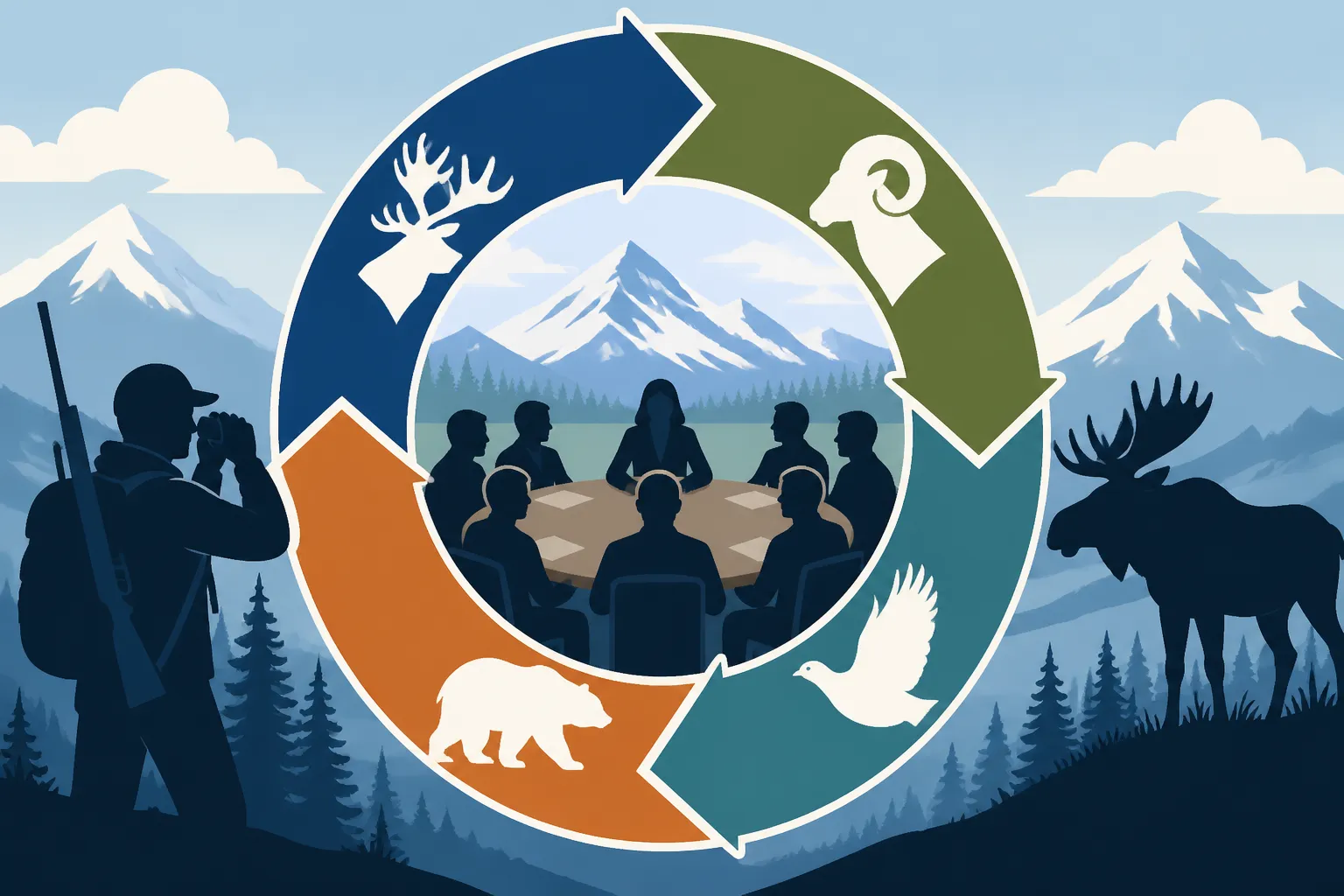
The Board of Game's triennial meeting cycle is both a blessing and a curse. On one hand, it provides stability, preventing constant, unpredictable changes to regulations. On the other, it means that if you have a burning issue for a particular region, you might have to wait a year or two for that region's cycle to come up. This structured approach allows for in-depth discussion and public input on specific regions without trying to tackle the entire state's regulations at once. It’s an essential part of How Alaska Sets Its Hunting Seasons.
Breaking Down the Three-Year Schedule
Generally, the Board of Game rotates its focus across different regions of Alaska. While the exact regional breakdown can vary slightly from cycle to cycle, a common pattern involves:
- Year 1: Interior, Western, and Arctic Alaska. This might cover large areas like Units 18, 20, 21, 22, 23, 24, 25, and 26. Hunters in these vast areas can expect regulations concerning species like caribou, moose, Dall sheep, and brown bears to be under the microscope.
- Year 2: Southcentral and Southeast Alaska. This often includes Units 1-7, 13, 14, 15, and 16. Discussions in this cycle might heavily focus on species such as Sitka blacktail deer, mountain goats, moose, brown bears, and black bears. These regions often have denser populations and road system access, leading to different management challenges.
- Year 3: Statewide Regulations, Cross-Regional Issues, and Miscellaneous Proposals. This year addresses issues that aren't specific to one region, such as general licensing requirements, statewide predator management strategies, or amendments to Alaska Hunter Education and Orientation Requirements. It also serves as a catch-all for proposals that didn't fit neatly into the regional cycles or that require immediate statewide consideration.
This cycle is crucial because if you want to propose a change to deer regulations on Kodiak Island (Unit 8), you'd need to pay attention when the Southcentral/Southeast cycle is active. Keeping tabs on the current year's focus is something experienced hunters, often using resources like GoHunt, prioritize.
| Meeting Cycle Year | Primary Focus Region(s) | Example Game Units Covered | Key Species Often Discussed (Examples) |
|---|---|---|---|
| Year 1 | Interior, Western, Arctic | 18, 20, 21, 22, 23, 24, 25, 26 | Caribou, Moose, Dall Sheep, Brown Bear, Wolf |
| Year 2 | Southcentral, Southeast, Kodiak | 1-7, 8, 13, 14, 15, 16 | Moose, Sitka Blacktail Deer, Mountain Goat, Brown Bear, Black Bear |
| Year 3 | Statewide & Miscellaneous | All Units (General topics) | Predator Control, License Issues, General Methods, Trapping, Fur Dealing |
Note: The exact units and regional groupings can shift based on specific needs and Board directives each cycle, so always check the most current schedule.
Emergency Orders and Off-Cycle Decisions
While the triennial cycle provides a predictable rhythm, nature and unforeseen circumstances don't always adhere to a schedule. This is where emergency orders come into play. An emergency order allows the Department of Fish and Game, often in consultation with the Board of Game Chair, to modify hunting seasons, bag limits, or methods outside of the regular meeting cycle. These orders are typically issued to address immediate concerns, such as a sudden, dramatic decline in a game population, unexpected weather events impacting game, or issues related to public safety. For example, a severe winter leading to high moose mortality might trigger an emergency closure of a moose season to protect the remaining animals. Similarly, if a caribou herd drastically shifts its migration pattern, necessitating a rapid adjustment to a hunting boundary, an emergency order would be the mechanism. These are critical for managing dynamic wildlife populations and ensuring compliance with Alaska Emergency Orders That Close a Season Early is paramount for hunters.
How Hunters Can Participate and Influence Regulations
Many hunters feel disenfranchised from the regulatory process, believing their opinions won't make a difference. However, the Alaska Board of Game places a strong emphasis on public input. Your experience in the field, your observations, and your well-reasoned proposals can genuinely shape the future of hunting in Alaska. It takes effort, but your voice is an important part of conservation and management.
Submitting a Proposal to the Alaska Board of Game
If you've ever thought, "There has to be a better way to manage this hunt," then submitting a proposal is your opportunity to effect change. Anyone can submit a proposal, whether you're an individual hunter, a conservation group, or a hunting organization. The process generally involves:
- Identifying the Issue: Clearly define the problem or opportunity you want to address. Is it a season date, a bag limit, a method of take, or an access issue?
- Researching Current Regulations: Understand the existing regulation, its intent, and its historical context. This might involve diving into the current Alaska Hunting Seasons and Tag Rules Explained document.
- Drafting the Proposal: Use the official proposal form provided by ADF&G. Be concise, clear, and provide a strong justification for your proposed change. State the specific Game Management Unit(s) affected, the species, and the current regulation you wish to amend.
- Providing Rationale: Explain why your proposed change is necessary. Back it up with data, observations, or logical arguments. Do you believe it will enhance conservation, improve hunter opportunity, or address a safety concern?
- Meeting the Deadline: Proposals must be submitted by a specific deadline, usually in the spring or early summer, prior to the Board meeting cycle that covers your region. Missing this deadline means waiting another three years for that region’s cycle to come around again. The entire process of Submitting a Proposal to the Alaska Board of Game requires diligence and attention to detail.
Public Testimony and Written Comments
Even if you don't submit a formal proposal, you can still participate by providing public testimony or written comments. This is your chance to support or oppose existing proposals or to share your perspectives on issues being discussed.
- Written Comments: These can be submitted online, via mail, or email to the Board of Game staff. They are typically accepted up until a few days before a scheduled meeting. Your comments should be specific, respectful, and clearly state your position on a particular proposal or issue. Highlighting your personal experiences and observations can be very powerful, especially if they support or contradict scientific data. Websites like GoHunt often offer breakdowns of proposals, making it easier to understand the context and formulate your comments.
- Public Testimony: Attending a Board of Game meeting and delivering verbal testimony is perhaps the most direct way to engage. Meetings are open to the public, and specific time slots are allocated for testimony. While daunting for some, speaking directly to the Board members allows for a more personal connection and the opportunity to answer questions. Testimony slots are usually limited, so prepare your points succinctly and be ready to adapt if the discussion takes an unexpected turn. Always remember to be polite, articulate your points clearly, and avoid repeating information already presented. Your unique perspective as a hunter on the ground is invaluable to the Board.
Tracking Decisions and Staying Informed
Once proposals are submitted and meetings are held, the Board makes its decisions. But the work doesn't stop there for the proactive hunter. You need to know where to find these decisions and how to interpret them for your upcoming hunts. The regulatory landscape is always shifting, and staying on top of it is crucial to having a successful, legal hunt.
Where to Find Meeting Schedules and Agendas
The primary source for all Board of Game information is the Alaska Department of Fish and Game (ADF&G) website. They maintain a dedicated section for the Board of Game, where you can find:
- Meeting Schedules: This outlines the upcoming meeting dates, locations, and the regional focus for each meeting. It's the first place to check if you're planning to submit a proposal or offer testimony.
- Agendas: Prior to each meeting, a detailed agenda is published, listing all proposals to be discussed, their submitters, and the current regulation they aim to change. This is your roadmap for understanding what's on the table.
- Proposal Books: These extensive documents contain the full text of every proposal, along with staff comments and analysis from ADF&G biologists. Reading through these gives you a deep understanding of the issues.
- Meeting Handouts and Webcasts: Many meetings are webcast live, and recordings are often archived. Supporting documents and presentations used during the meeting are also typically made available.
Additionally, reputable hunting news sources and platforms like GoHunt often provide summaries and analyses of significant proposals and meeting outcomes, helping hunters quickly grasp changes that could impact their plans. These summaries can be a great starting point, but always verify information with the official ADF&G site. You can also find specifics on Where Alaska Posts Season Changes directly on the ADF&G website.
Interpreting New Regulations and Emergency Orders
Once the Board makes a decision, it becomes part of the regulatory framework. These changes are then published in the official hunting regulations booklets, but this can take some time. Here's how to ensure you're always operating under the most current rules:
- Official Regulations Booklets: These are published annually and are the definitive guide to the legal hunting seasons and methods. Always ensure you have the most current version for the regulatory year you are hunting in, as When Alaska's Hunting Regulatory Year Begins can affect which booklet you need.
- Emergency Orders: Pay close attention to any emergency orders, as these supersede the printed regulations booklet. ADF&G publishes these online, often with email alerts if you sign up. They can open or close seasons, modify bag limits, or change legal methods with little notice. For instance, understanding Why Antler Restriction Hunts End in Citations sometimes comes down to an emergency order changing a previous legal definition or boundary.
- ADF&G News Releases and Public Announcements: The department regularly issues news releases regarding regulatory changes, season openings, and closures. Following these closely is key, especially if you hunt in areas prone to dynamic wildlife shifts.
- Hunter Forums and Resources: While not official, active hunting forums and specialized hunting platforms like GoHunt can be excellent places to discuss and clarify regulations with other experienced hunters. However, always confirm any information from these sources with official ADF&G publications. Understanding these changes ensures you’re prepared, whether you're aiming for a trophy bull or just some camp meat, like Waterfowl and Ptarmigan as Camp Meat.
Staying informed about the Alaska Board of Game's meeting cycle and its outcomes is a critical skill for any dedicated Alaska hunter. It empowers you to not only comply with the law but also to actively participate in the management of the incredible wildlife resources we all cherish.
Disclaimer
Please remember that hunting regulations in Alaska are subject to change. Always consult the most current Alaska Department of Fish and Game (ADF&G) regulations and emergency orders before planning and executing any hunt. This guide is for informational purposes only and does not supersede official state regulations.