Strapping Gear Loads for a Bush Flight
The thought of cramming all your hunting gear into a tiny bush plane, crossing your fingers that it all fits and stays secure, can add a layer of anxiety to even the most seasoned Alaska hunter. From strict weight limits to the sheer logistics of safeguarding your expensive equipment against the elements and rough handling, preparing for a bush flight is a critical part of the hunt. This guide will walk you through the essential strategies for efficiently packing, strapping, and securing your gear, ensuring a smoother, less stressful journey into the remote Alaskan wilderness.
Understanding Bush Plane Limitations and Weight Restrictions
Stepping into the world of Alaska bush flying means quickly coming to terms with the unique constraints of small aircraft. Unlike commercial flights, where a few extra pounds might incur a fee, in bush aviation, every ounce matters not just for your wallet, but for safety and feasibility.
Why Weight is Everything in Bush Aviation
The operational limits of a bush plane like a Cessna 185, a Super Cub, or a Beaver are drastically different from larger passenger jets. These aircraft are designed for short takeoffs and landings on unimproved strips, lakes, or gravel bars, often in challenging weather or at higher elevations. Their performance – how much they can lift, how far they can fly, and how safely they can do it – is directly tied to their total weight. Overloading a bush plane can lead to a dangerously extended takeoff roll, difficulty gaining altitude, reduced maneuverability, and increased fuel burn, making the flight perilous for everyone aboard. Your pilot isn't just being particular when they talk about weight; they're ensuring your survival and adhering to strict Federal Aviation Administration (FAA) regulations. It’s a reality that even experienced outfitters and transporters, like those you might research on sites like GoHunt, will emphasize repeatedly.
Calculating Your Total Payload
Before you even start packing, you need a realistic understanding of your allocated payload. This isn't just the weight of your gear; it includes you. Most bush planes have a maximum useful load that is split between passengers, gear, and fuel. When you book a flight, your transporter will provide a per-person weight allowance, typically ranging from 50 to 100 pounds for gear, sometimes more for larger aircraft or shorter flights. However, this is rarely a hard limit that can't be adjusted. It's an average, and the pilot always has the final say based on factors like air temperature, altitude of the landing strip, and fuel requirements. It's absolutely crucial to weigh everything you plan to bring, including your rifle, bow, food, water, and even the clothes on your back. Don't guess; get an accurate scale. Many bush pilots have a scale right at the air-taxi office, and you can bet they'll use it. For more specific details on what to expect, read up on Weight Limits on a Super Cub Drop.
The Impact of Fuel on Gear Capacity
Fuel is heavy, typically around 6 pounds per gallon. The amount of fuel a pilot needs to carry directly reduces the amount of payload available for you and your gear. For shorter flights to nearby lakes or strips, less fuel is needed, leaving more capacity for your equipment. Longer flights, especially those into truly remote areas with no possibility of refueling, will require the plane to be topped off, significantly cutting into the available gear weight. A savvy pilot will optimize this balance, but it’s a non-negotiable factor. Always discuss the flight distance and potential fuel loads with your air taxi service beforehand. This way, you can anticipate potential reductions in your personal gear allowance and plan accordingly, potentially even having to coordinate Splitting Gear Across Two Air Taxi Loads if your group's total weight exceeds a single flight's capacity. This proactive communication can save you a lot of last-minute scrambling and potential extra charges at the airstrip.
The Art of Efficient Packing and Gear Selection
Once you understand the unforgiving nature of bush plane weight limits, the next step is to master the art of efficient packing. This isn't just about saving space; it's about minimizing weight, maximizing durability, and ensuring accessibility for critical items.
Prioritizing Essential Gear
Every item you pack for an Alaska hunt must earn its place. Start by categorizing your gear into "absolute essential," "highly recommended," and "nice-to-have." In Alaska, "absolute essential" typically includes shelter, sleeping system, navigation tools, first-aid, food, water purification, and hunting weapons/ammunition. Everything else should be critically evaluated. Ask yourself: "Can I survive and hunt effectively without this?" If the answer is no, it stays. If it's yes, consider leaving it behind or finding a lighter alternative. Resources like Gear Lists Alaska Guides Send Before a Hunt can be invaluable in helping you differentiate between wants and needs. For instance, while a heavy canvas wall tent might be luxurious, a lighter backpacking tent could be the smarter choice for a fly-in hunt where every pound is scrutinized.
Consolidating and Minimizing Volume
Weight isn't the only concern; bulk can be just as problematic. Oddly shaped, rigid items take up precious cargo space that could otherwise be utilized efficiently. Consolidate small items into larger bags, use compression sacks for sleeping bags and puffy jackets, and remove unnecessary packaging. If you’re bringing a rifle, consider breaking it down if possible and using a soft case rather than a bulky hard case, provided it offers adequate protection. For specific items like ammunition, check out Ammunition Limits on Alaska Bush Flights to understand federal regulations and how best to pack it. Remember, these planes are often crammed full, and irregularly shaped items can create awkward voids, reducing the total volume the plane can actually carry. Using cylindrical or rectangular bags often packs better than oddly shaped ones.
Choosing the Right Bags and Containers
The type of bags you use makes a huge difference. Forget your wheeled luggage; it's not made for bush strips. Soft duffel bags, especially those made of heavy-duty, water-resistant material, are king. They conform to the aircraft's irregular cargo hold, are easier to load and unload, and generally weigh less than hard cases. Dry bags are excellent for protecting critical items like your sleeping bag, extra clothes, and optics from moisture, which is a constant battle in Alaska. While some items, like your rifle, might require a hard case for initial travel to Alaska, switching to a more flexible soft case or breaking the rifle down for the bush flight segment can save significant space and weight.
Here's a quick comparison of common packing containers:
| Feature | Soft Duffel Bag (Heavy Duty) | Dry Bag (Heavy Duty) | Hard Case (Pelican, etc.) | Frame Pack (Internal/External) |
|---|---|---|---|---|
| Pros | Flexible, conforms to space, lighter, often durable | Waterproof, floatable, keeps critical gear dry | Excellent protection for fragile items (e.g., optics) | Designed for carrying heavy loads once on the ground |
| Cons | Less protective for fragile items, not fully waterproof | Less structured, can be awkward for large loads | Heavy, rigid, takes up fixed space, prone to damage on rough strips | Less protective in flight, straps can snag, often bulky |
| Best Use | Main gear bag, clothing, food | Sleeping bags, electronics, maps, extra layers | Rifles, high-end optics (carefully considered) | Day pack for hunting, packing out meat |
| Bush Flight Suitability | Excellent | Excellent for specific contents | Poor (due to weight/bulk), use sparingly | Good (if used as a main gear bag and padded) |
Consider how your gear will be transferred from the plane to your campsite. If you're backpacking in, your sturdy backpack (internal or external frame) can double as a primary gear hauler for the flight, just be sure to secure all straps to prevent snagging. For float hunters, remember to consider the capacity of your raft or packraft; this choice directly impacts your overall gear philosophy. Explore topics like Packraft Weight Versus Load Capacity to inform your decisions.
Strapping and Securing Your Load for Air Transport
Once your gear is packed into appropriate bags, the next crucial step is securing it. This isn't just about keeping things together on the tarmac; it's about preventing shifting in flight, potential damage, and ensuring easy loading and unloading for the pilot.
Essential Strapping Materials
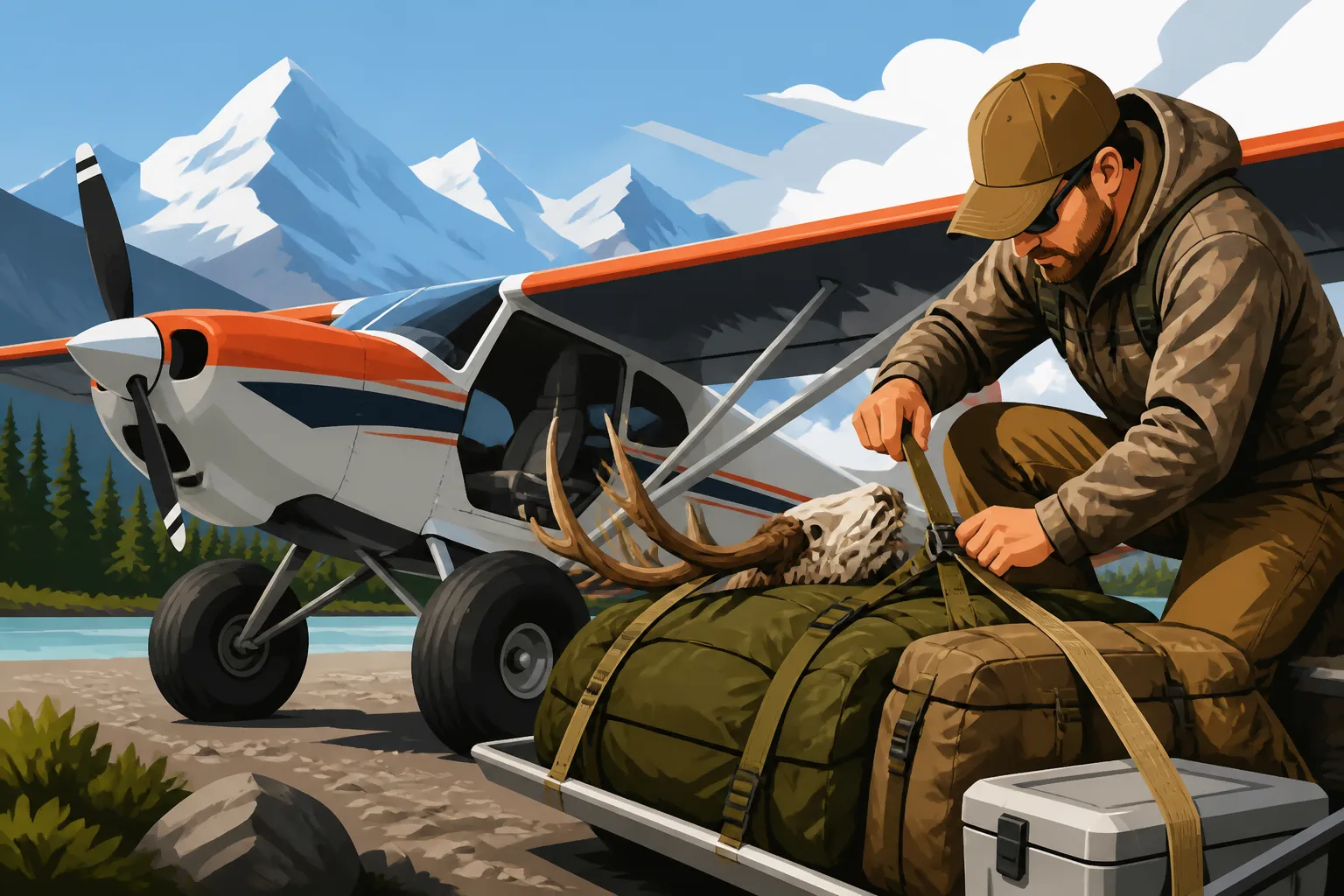
Don't skimp on quality when it comes to straps. Cheap bungee cords or thin rope are not suitable for securing valuable hunting gear. Invest in heavy-duty cam buckle straps or ratchet straps (though cam buckles are often preferred by pilots as they are quicker to adjust and less prone to overtightening). Good quality straps made from durable nylon or polyester webbing are essential. They should be at least 1-inch wide, and ideally 1.5 to 2 inches for heavier loads. Keep several lengths handy: shorter ones for individual bags and longer ones for bundling multiple items together. Having a few spare straps is always a good idea, as they can get lost or damaged in transit. Many outdoor brands, readily found through research on platforms like GoHunt, offer excellent options specifically designed for rugged use.
Techniques for a Secure Load
The goal is to create a compact, stable, and easily manageable load. Think of your gear as building blocks.
- Consolidate Bags: If you have several smaller bags, try to bundle them together into one larger unit with multiple straps. This reduces the number of individual items the pilot has to handle and secures them more effectively against shifting.
- Cross-Pattern Strapping: Don't just run straps in one direction. Use a cross-pattern, both horizontally and vertically, to cinch everything down tightly. The goal is to make the entire bundle feel like one solid piece.
- Tuck Loose Ends: Loose strap ends are a pilot's nightmare. They can snag on controls, doors, or other cargo. Ensure all excess webbing is tightly tucked away or tied off.
- Protect Vulnerable Items: If you have items with sharp edges (like a shovel or axe) or fragile components, pad them well and position them so they won't damage other gear or the aircraft. Rifles, even in soft cases, should be placed carefully to avoid bending or scope damage. Learn more about Scope Damage From Float Plane Vibration to understand these risks.
- Identify Key Gear: Mark bags clearly with your name and contact information. Consider using colored tape or unique identifiers. If you're part of a larger group, distinguishing your gear from others makes the loading process much smoother.
Protecting Your Gear from the Elements
Alaska weather is famously unpredictable. Your gear will be exposed to rain, wind, and possibly snow on the tarmac, during loading, and possibly even during the flight in an unsealed cargo hold. Even if the day starts sunny, a squall can roll in unexpectedly.
- Waterproof Everything: Assume everything will get wet. Line your duffel bags with heavy-duty garbage bags or contractor bags. Use individual dry bags for critical items like sleeping bags, electronics, maps, and extra clothing.
- Secure Covers: If your rifle is in a soft case, ensure it’s covered or treated to be water-resistant. Many hunters will even wrap their entire gear bundle in a large tarp or a heavy-duty plastic sheeting, secured with straps, to create an extra layer of protection. This also helps keep everything together if a strap breaks.
- Elevate When Possible: Once at camp, get your gear off the ground immediately, especially in wet environments. This prevents water from wicking up from the saturated earth. This is a critical step, especially when you consider Game Bags That Breathe in Coastal Rain and how they prevent spoilage.
Working with Your Transporter Pilot
Your relationship with your bush pilot is paramount. They are the experts in the terrain, the aircraft, and the ever-changing Alaskan weather. Good communication and respectful cooperation will make your trip infinitely smoother.
Communication is Key
From the moment you book your flight, maintain open lines of communication with your air taxi service.
- Be Transparent About Weight: Provide accurate weight estimates for yourself and your gear well in advance. If your plans change, or you acquire unexpected gear, inform them immediately. It's far better to address potential issues on the ground than to surprise your pilot with an overloaded plane.
- Discuss Dimensions: While weight is primary, unusually long or bulky items (e.g., long rifles, hard cases for bows, pack frames with large meat shelves) should be mentioned. Some planes simply cannot accommodate items beyond a certain length or width without significant difficulty or safety concerns.
- Confirm Landing Site Details: Understand the nature of your landing site – gravel bar, lake, designated strip. This informs the pilot's decisions and your own packing choices.
- Listen to Instructions: When you arrive for your flight, listen carefully to your pilot's instructions regarding loading, seating, and any last-minute adjustments. They know their aircraft and the conditions better than anyone. They might suggest certain items go in specific places for balance or accessibility. For managing communications in the field, especially during unforeseen delays, learn about Radio or Satellite Check-Ins With a Pilot.
Pre-Flight Load Organization
Arriving at the air taxi office with your gear already organized and secured can make a tremendous impression and speed up the loading process.
- Pre-Weigh Everything: Have your bags pre-weighed and clearly marked with their individual weights. This saves time and avoids awkward moments at the scales.
- Group Your Gear: If you have multiple bags, try to consolidate them into as few bundles as possible. This makes loading easier and reduces the chance of anything getting overlooked.
- Separate Critical Items: Keep a small personal bag with immediate essentials (medications, important documents, small snacks, maybe a rain jacket) accessible, as your main bags might be stowed deep in the cargo hold. Your rifle or bow should be the last things loaded, making them the first things accessible upon arrival.
- Plan for the Return Trip: Don't forget that you'll likely have more weight on the way out, especially if you're successful with your hunt. Consider the potential for Quartering a Bull Moose Alone in the Field and the additional weight of meat and antlers. Plan to use your game bags and other gear to secure your trophy and meat for the return flight.
Dealing with Unexpected Changes
Alaska is the land of unexpected changes, and bush flights are often at the mercy of the weather.
- Weather Delays: Be prepared for delays. Wind, fog, low clouds, or heavy rain can ground planes for hours or even days. This is where planning for Building Extra Days Into a Fly-In Schedule becomes critical. Use these delays to double-check your gear, reorganize, or get some rest. Don't pressure your pilot to fly in unsafe conditions; their experience is your best safeguard.
- Pilot Discretion: The pilot has absolute authority over whether a flight proceeds and what payload it carries. If they deem a load unsafe or the weather too risky, accept their decision without argument. Your safety is paramount.
- Extra Gear Decisions: If you arrive with more gear than planned, you might face tough choices. You could pay for an extra flight (if available and feasible), send non-essential items back, or leave something behind. Having a contingency plan for this, even if it's just knowing what you could sacrifice, helps reduce stress. Remember that Extra Charges for Overweight Gear are a reality, and it's always cheaper to plan meticulously than to pay for last-minute solutions.
Careful planning and communication regarding your gear load for a bush flight are not just recommendations—they are integral parts of a successful and safe Alaskan hunting adventure. By respecting the limitations of the aircraft, packing thoughtfully, and working closely with your pilot, you can eliminate much of the stress and fully immerse yourself in the wilderness experience.
Disclaimer
The information provided in this guide is for general informational purposes only and does not constitute professional advice. Always consult with your air taxi service, registered guide, or the Alaska Department of Fish and Game for the most current regulations, safety protocols, and specific requirements for your hunt. Hunting in Alaska carries inherent risks, and proper preparation, safety gear, and experienced guidance are crucial.