Anchoring Overnight on a Deer Hunt
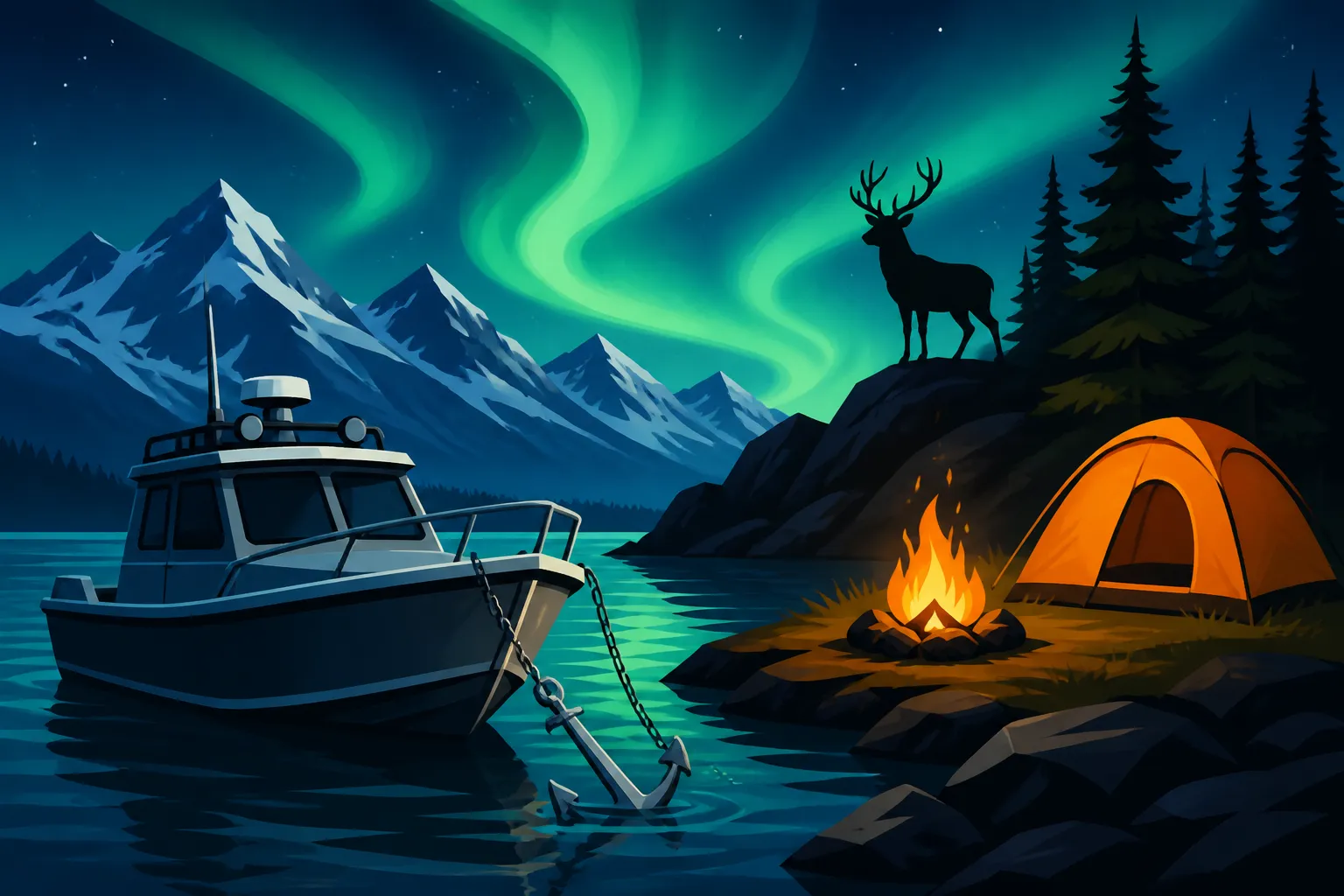
There's nothing quite like the feeling of chasing Sitka blacktail deer along Alaska's rugged coastlines, but the dream can quickly turn into a logistical nightmare if you're constantly running back to port. The reality of hunting these remote islands and inlets often demands that you stay out longer, which means safely anchoring your vessel overnight. It's a critical skill that directly impacts your success and safety, saving you precious daylight hunting hours and keeping you in the prime areas. This guide will walk you through the essential steps and considerations for anchoring your boat safely and effectively on an overnight deer hunt in Alaska.
Understanding Alaska's Coastal Challenges for Overnight Anchoring
Anchoring overnight in Alaska is a whole different beast than parking your boat in a calm lake. The forces at play are immense, unpredictable, and demand respect. Ignoring them can turn a peaceful night into a scramble for survival.
The Rhythms of Tides and Currents
Alaska's coastlines, particularly in areas like Southeast and certain parts of the Cook Inlet, are infamous for their extreme tidal swings. We're not talking about a foot or two; some areas can see 20-foot or even greater vertical changes between high and low tide. This isn't just an inconvenience; it can be downright dangerous if you're not prepared.
Imagine this scenario: you pull into a seemingly perfect, sheltered cove at high tide, drop anchor, and feel secure. You wake up in the middle of the night to a thud, only to discover your boat is now sitting on the exposed mudflats, listing precariously. Or, conversely, you anchor in what you thought was a good spot, only to find the outgoing tide has created a wicked current that's dragging your boat towards a rocky shoal. These aren't hypothetical horror stories; they're real frustrations experienced by many hunters who misjudge the power of Alaskan tides and currents.
This is why understanding and utilizing up-to-date Tide Tables and Beach Deer Hunting charts is non-negotiable. You need to know not just when high and low tide occur, but also the magnitude of the swing and the predicted current speeds in your chosen anchorage. A seemingly calm channel can become a raging river with a strong tidal current, putting immense strain on your anchor system. Always factor in how much water you'll have under your keel at the lowest tide, and visualize where your boat will swing on its anchor in both high and low water, considering any potential hazards like rocks, reefs, or other vessels.
Weather's Unpredictable Fury
Beyond the tides, Alaska's weather patterns are notoriously fickle. One minute it's flat calm and sunny, the next you have a squall ripping through with 40-knot winds, driving rain, or even snow, even in what you thought was a mild hunting season. These sudden shifts, often called "williwaws" in the fjords and inlets, can hit with little to no warning, testing the mettle of even the most robust anchoring setup.
The anxiety of seeing dark clouds roll in while you're anchored for the night is a shared experience among Alaskan boat hunters. Will your anchor hold? Will the boat swing into the rocks? Will the anchor line chafe through? These are legitimate concerns that underscore the importance of preparation. You simply cannot afford to skimp on reliable gear or skip having redundant systems in place.
Checking marine forecasts constantly is crucial, but always be prepared for the forecast to be wrong. Satellite communication devices, like those discussed in Signal Devices and Check-In Plans for Solo Alaska Hunts, are invaluable for getting updated weather reports when VHF isn't cutting it. Beyond forecasts, always have a "bail-out" plan – an alternative, more protected anchorage a short run away, or even a safe harbor if conditions deteriorate beyond what your current spot can handle. It’s far better to relocate in the dark than to fight a dragging anchor in a full-blown gale. Your peace of mind, and the safety of your vessel and crew, depend on it.
Essential Gear for a Secure Overnight Anchor
A solid anchoring setup isn't just about throwing a hook over the side; it's a carefully selected system designed to withstand the immense forces of nature. Cutting corners here is an open invitation for disaster.
Choosing the Right Anchor for Alaskan Conditions
The anchor itself is the heart of your system, and not all anchors are created equal, especially when facing Alaska's diverse and often challenging bottom compositions. You might encounter anything from soft, deep mud to gravel, rock, or hard sand, sometimes all within a single bay. Relying on a single, general-purpose anchor for every scenario is a gamble.
For most overnight anchoring in Alaska, you'll want an anchor designed for good holding power in varying bottoms. Plow-style anchors (like the Delta or CQR) and Claw-style anchors (like the Bruce) are popular choices because they perform well in a mix of mud, sand, and even some rock. They are designed to dig in quickly and reset if the boat swings 360 degrees with a tide change or wind shift. Danforth-style anchors can hold exceptionally well in soft mud or sand, but they don't reset as easily if pulled from another direction and can struggle in rock or hard clay.
Crucially, oversize your anchor. Don't just go with the manufacturer's minimum recommendation for your boat's length. Always err on the side of caution. If your boat typically calls for a 15-pound anchor, consider a 20 or 25-pound option for Alaska. The extra weight and fluke area will give you significantly more holding power when the wind howls or the currents surge. Furthermore, always carry a secondary, or kedge, anchor. This isn't just for emergencies; it can be deployed to reduce swing or provide additional holding power when you truly need to stay put.
Here's a quick reference for common anchor types and their suitability for different Alaskan bottom compositions:
| Anchor Type | Best for (Primary) | Good for (Secondary) | Less Effective In | Notes for Alaska |
|---|---|---|---|---|
| Plow (Delta, CQR) | Mud, Sand, Clay | Gravel | Hard Rock | Versatile, good resetting, often recommended for general cruising. |
| Claw (Bruce) | Sand, Mud, Rock | Gravel | Hard Clay | Excellent in rocky bottoms, good resetting, durable design. |
| Fluke (Danforth) | Soft Mud, Sand | Hard Clay | Rock, Gravel | High holding power in soft stuff, but can struggle to reset if dragged sideways. |
| Grapnel | Temporary (rock) | Retrieval | Mud, Sand | Only for very short stops in rocky areas or for retrieving items. Not for overnight. |
Rode, Chain, and Hardware The Critical Connection
An anchor is only as good as the system connecting it to your boat. This is where the "rode" comes in—the combination of chain and line that runs from your anchor to your vessel. In Alaska, you need substantial chain, and plenty of it. Chain provides weight, keeping the anchor's shank parallel to the seabed for optimal digging, and helps absorb shock. A common recommendation for overnight anchoring is a minimum of 25-50 feet of chain, even for smaller boats, with more being better if you anticipate rough conditions or deep water. For a truly secure setup, many experienced Alaskan boaters will run 100 feet or more of chain, especially on larger vessels.
The rode itself, typically a high-quality nylon line, is critical. Nylon has excellent stretch properties, which acts as a shock absorber, cushioning the tugs and jerks from waves and currents, preventing your anchor from breaking free. Your "scope" – the ratio of the length of your deployed rode (chain + line) to the vertical distance from the bow to the seabed – is paramount. A minimum 7:1 scope is generally recommended for overnight anchoring in moderate conditions, meaning if the water is 10 feet deep and your bow is 3 feet above the water, you need to deploy 7 x (10+3) = 91 feet of rode. In heavy weather, this ratio should increase to 10:1 or even higher. It’s always tempting to deploy less rode to avoid swinging too much, but this severely compromises holding power.
Don't forget the small but mighty hardware: quality swivels (to prevent line twist), stout shackles (properly moused with wire to prevent accidental opening), and a chain snubber. A snubber is a length of line attached to the anchor chain and then to a strong point on your bow, designed to take the strain off your windlass and provide additional shock absorption. When you're researching anchor setups, reliable sources like GoHunt often have detailed discussions and reviews on robust anchoring hardware that stands up to Alaskan abuse. Investing in top-tier gear here is not an extravagance; it's a necessity.
Essential Safety & Navigation Equipment
While not directly part of the anchoring system, having the right safety and navigation tools on board is paramount when you're spending a night, or several, in a remote Alaskan anchorage. You’re often far from any assistance, and self-sufficiency is key.
First and foremost, an anchor alarm on your GPS or chartplotter is an absolute lifesaver. This device allows you to set a perimeter around your anchor, and if your boat drifts outside that zone, an alarm sounds, giving you crucial minutes to react to a dragging anchor. Never rely solely on this, but it’s an indispensable tool, especially when you’re trying to get some much-needed sleep.
Communication is another critical layer of safety. A reliable VHF radio is standard, allowing you to monitor marine weather channels and communicate with other vessels or the Coast Guard in an emergency. However, VHF range is limited, especially in Alaska's mountainous terrain. For truly remote areas, a satellite messenger or phone is essential. Devices like the Garmin inReach, as discussed in Signal Devices and Check-In Plans for Solo Alaska Hunts, allow you to send and receive text messages, share your location, and trigger an SOS if needed, even when miles from cell service.
Don't forget the basics: flares, a loud horn, and a functional bilge pump are non-negotiable. Always ensure enough life jackets for everyone on board, and ideally, wear them anytime you're working on deck or in rough conditions. A capsize or man-overboard situation in cold Alaskan waters can be fatal in minutes. These tools are your lifeline when things go south, and being prepared means having them readily accessible and knowing how to use them, not just hoping you won’t need them.
Mastering the Overnight Anchoring Process
Knowing your gear is one thing; actually deploying it effectively and monitoring it throughout the night is another. A methodical approach can make all the difference between a secure night and a wake-up call of panic.
Scouting Anchorages and Deployment Strategy
The success of your overnight anchor starts long before you drop the hook. It begins with careful reconnaissance, both on paper and in person. When planning your Boat-Based Deer Hunting on Alaska's Island Coastlines trip, study charts and satellite imagery to identify potential anchorages. Look for protected coves, bays with sandy or muddy bottoms (indicated by chart symbols), and areas free of submerged rocks or reefs. Pay attention to the prevailing wind direction and how it might funnel into a bay, as well as fetch – the distance wind can travel over water, which dictates wave size.
Once on site, a slow approach is key. Look for visual cues of bottom composition – clear water might reveal sand or rock. Consider how your boat will swing on its anchor through a full tidal cycle and wind shift, ensuring you have ample "swing room" clear of any hazards, other boats, or shallow spots. This is also where you plan your approach and departure routes, ensuring you can get in and out safely regardless of tide or weather conditions.
The deployment itself should be a deliberate, step-by-step process:
- Approach Slowly: Motor slowly into the wind or current, whatever is stronger.
- Drop Anchor: When you reach the desired drop point, ensure the anchor is clear to fall and gently lower it to the bottom. Never throw it.
- Pay Out Rode: As your boat drifts backward with the wind/current, slowly pay out your chain and line, ensuring it doesn't foul. Maintain tension to allow the anchor to dig in. This is where calculating your required scope is critical.
- Set the Anchor: Once the appropriate scope is out, gently reverse your engine at idle for a minute or two. This action "sets" the anchor, driving it deeper into the seabed. You should feel resistance and watch for any signs of drag (e.g., your boat moving relative to a fixed shore object, or a consistent pull from the anchor).
- Check for Drag: After setting, keep monitoring. Use your anchor alarm and visual range bearings to shore. Watch how your boat settles. A properly set anchor will typically hold firm, and your boat will swing predictably. If you notice persistent movement or a lurching sensation, the anchor might be dragging, and you’ll need to reset it immediately.
It's frustrating when you pick a spot that looks perfect on the chart, only to discover hidden hazards or an unexpected current once you're there. Don't be afraid to pull up and try again. Your safety is worth the extra effort.
Monitoring Your Anchor and Dealing with Drag
Even with a perfectly deployed anchor, your job isn't done. Active monitoring, especially throughout the night, is crucial in Alaska's dynamic environment. This means keeping that anchor alarm engaged on your GPS or chartplotter. Set the radius conservatively at first, giving you plenty of warning if the boat starts to drift.
Beyond technology, regular visual checks are indispensable. Pick fixed objects on shore, like a prominent tree, rock formation, or hillside, and note their position relative to your boat. If those bearings start to change in a way inconsistent with a normal swing, you might be dragging. In low light, a powerful spotlight can help you check these bearings. Listen for unusual sounds; a sudden lurch or groan could indicate the anchor is re-setting after a brief drag, or worse, continuing to pull.
If you suspect your anchor is dragging, the immediate response is critical. First, try to "re-set" it by applying gentle reverse engine power to dig it in further. If that doesn't work, you'll need to weigh anchor and try to find a more secure position. This might involve deploying your secondary anchor to gain more holding, moving to a different spot in the same bay, or even heading to an entirely new anchorage. This is where prior scouting and having a "bail-out" plan pays off immensely.
The reality is, especially on a rough night, your sleep might be interrupted multiple times. It's not glamorous, but it's part of hunting Alaska's coastal areas. Many hunters find comfort in routine checks every few hours, or after a major tide change or wind shift. Resources found on communities like GoHunt forums often share experiences and tools for assessing anchor performance, like specialized apps that graph your boat's movement, which can provide invaluable peace of mind – or early warning. Never be complacent; constant vigilance is the price of a secure overnight stay. Whether you're anticipating a clear morning to go Packing a Deer Off a Beach at Low Tide or just hoping to weather a storm, a secure anchor is your first priority.
Practical Considerations for Multiday Deer Hunts
When you commit to an overnight or multiday deer hunt from your boat, you're not just anchoring; you're setting up a temporary, floating base camp. This involves a whole host of practical considerations that go beyond just the anchor itself.
Provisioning and Comfort in Remote Camps
Being comfortable and well-provisioned dramatically improves your hunting experience and your ability to stay focused. For a multiday hunt, you'll need to pack ample food, water, and fuel. Think about shelf-stable, easy-to-prepare meals. Water purification options are smart if you don't want to haul every drop. Fuel for your main engine, kicker, and any heaters or generators needs to be carefully calculated, with a substantial reserve.
The reality of spending days or a week in a small cabin cruiser or skiff is that space is at a premium, and the weather often means you're spending more time inside than out. A reliable heater is crucial for morale and preventing hypothermia in damp, cold Alaskan conditions. Diesel heaters are popular for their safety and efficiency, though propane options exist. Dry storage is paramount; everything from your sleeping bag to your extra layers needs to be protected from the ever-present dampness. Using Game Bags That Breathe in Coastal Rain for meat is excellent, but your personal gear needs similar protection from the elements. Keeping items like your bowstring dry, as discussed in Keeping a Bowstring Dry for Ten Days, is just one example of the constant battle against moisture.
Beyond the essentials, consider things like a small marine toilet or a bucket system, proper waste disposal, and even a compact battery bank to keep devices charged. The goal is to minimize daily chores and maximize hunting time, all while maintaining a reasonable level of comfort. It might be tight quarters, but a well-organized and dry boat can make a huge difference in your endurance and enjoyment.
Game Management and Bear Safety
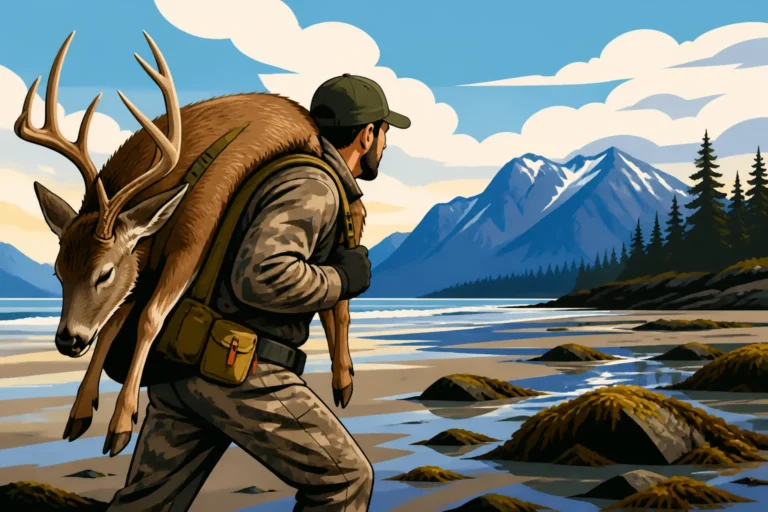
Successfully harvesting a deer adds another layer of complexity to your overnight boat hunt: managing your game and ensuring bear safety. Once you've got that Sitka blacktail on the beach, you need a plan for its care and transport back to the boat.
Field dressing quickly is essential to cool the meat, especially during early season hunts when temperatures can still be mild. Get the hide off and the quarters into breathable game bags. On the boat, your primary goal is to keep the meat cool and dry. A dedicated cooler with ice is ideal, but if space is limited, hanging meat in a shaded, well-ventilated area of the boat, away from your sleeping quarters, is critical. Even on a boat, flies and scavengers can find meat, so Hanging Meat in Warm September Weather with good airflow is paramount.
Bear safety is a constant concern in Alaska, even when you're on the water. Hauling a deer carcass onto your boat will attract bears. Your boat essentially becomes a floating bait station. This means meticulous cleanup, securing all food and meat in sealed containers, and being acutely aware of your surroundings. Never sleep with meat inside your cabin if it can be avoided. Many hunters opt for a secure, dedicated storage locker or even a large, sealed cooler stored on deck, away from the sleeping area.
Always have a bear defense plan. This means carrying a reliable firearm, such as a rifle chambered for Rifle Calibers for Coastal Brown Bear, or potent bear spray, readily accessible at all times. Be especially vigilant when moving meat to and from shore. The sounds and smells of a kill can travel far, and coastal brown bears are powerful and opportunistic. Knowing and practicing Bear Safety While Butchering a Kill in Alaska principles extends to your boat camp as well. A clean camp, whether on land or water, is your best defense against unwanted visitors.
Disclaimer
Please remember that hunting in Alaska involves inherent risks. The information provided in this guide is for informational purposes only and should not be considered a substitute for professional instruction, local knowledge, or official regulations. Always prioritize safety, adhere to all Alaska Department of Fish and Game regulations, obtain necessary licenses and tags, and be prepared for challenging wilderness conditions. Plan thoroughly, inform others of your travel plans, and ensure you have appropriate gear, training, and emergency protocols in place before venturing into the Alaskan backcountry.