Tide Tables and Beach Deer Hunting
Hunting Sitka blacktail deer along Alaska's wild coastlines is an experience like no other, but it comes with a formidable adversary: the tide. Many hunters, especially those new to coastal Alaska, underestimate just how quickly the ocean can reshape their hunting grounds, stranding gear, or even themselves. This guide will walk you through the critical skill of understanding and utilizing tide tables, transforming what could be a dangerous hindrance into a powerful hunting advantage.
The Unique Challenge of Beach Deer Hunting in Alaska
Hunting deer on Alaska's beaches isn't like still-hunting a timber stand or glassing an alpine basin. The environment is constantly in flux, dictated by the relentless rhythm of the ocean. This dynamic landscape presents both incredible opportunities and significant dangers that hunters must respect. Failing to understand the tides is a fast track to a miserable — or even perilous — situation.
Why Tide Awareness is Non-Negotiable
Imagine being dropped off by a skiff on a beautiful, expansive beach at low tide, with deer sign everywhere. You hike inland, following promising tracks, and before you know it, hours have passed. When you return, that same beach is gone, swallowed by a rapidly incoming high tide. The critical need for tide awareness stems from several factors: safety, access, and deer behavior. Safety is paramount; being cut off by a rising tide can strand you, isolate you from your skiff, or even put you in the path of hypothermia if you're forced to wade through frigid water. Access to prime hunting grounds, gutting sites, and most importantly, your extraction point, is entirely dependent on the tidal cycle. What looks like a clear path at low tide might be an impassable water barrier a few hours later. Moreover, deer themselves are acutely aware of the tides, and their movements are often influenced by them, meaning understanding the tide isn't just about human safety, but also about predicting where the deer will be.
It’s not just about knowing if the tide is high or low; it's about understanding the rate of change, which can be shockingly fast in many Alaskan areas. A "four-foot tide" might sound manageable, but if it's a four-foot tide over a very flat beach, that water can push inland hundreds of yards in a short amount of time. Conversely, a large tidal exchange on a steep, rocky shoreline might not change the accessible hunting ground much but could still make beaching a skiff difficult. The stakes are simply too high to wing it. You need a solid plan, and that plan starts with the tide table. This isn't just a recommendation; it's a fundamental requirement for anyone considering Skiff Hunting Deer Along Saltwater Beaches.
Common Pitfalls of Ignoring Tides
I’ve heard countless stories, and sadly, witnessed a few, of hunters making critical mistakes by not paying attention to the tides. One common pitfall is underestimating how quickly a high tide can cover a beach. Hunters might wander off following a buck, only to discover their gear cache, or even their boat, is now floating or completely submerged. This leads to lost equipment, ruined food, and a complete breakdown of the hunt. Another frequent issue is getting cut off. Hunters might cross a narrow neck of land or a small stream mouth at low tide, only for the incoming water to make it an impassable channel. Suddenly, you’re stuck on a small island, waiting for the next low tide cycle, which could be 6-12 hours away, or worse, forced to attempt a dangerous crossing.
Beyond safety and logistics, ignoring tides means missing out on crucial hunting opportunities. Sitka blacktail deer often feed on exposed beach vegetation, kelp, and other marine life at low tide. If you're not there when the smorgasbord is out, you're missing their primary feeding windows. Similarly, deer will often retreat to higher ground or timber as the tide comes in. If you arrive at high tide hoping to spot them on the beach, you'll likely find empty shores. Many hunters mistakenly believe that a general "low tide in the morning" is enough, but without specific times and heights, you're just guessing. This lack of precision means you're operating blind in a dynamic environment, which is never a good recipe for a successful — or safe — Alaskan hunt.
Decoding Alaska's Tide Tables for Hunters
Understanding tide tables might seem daunting at first glance, like reading a secret code, but once you grasp the basics, it becomes an indispensable tool for any coastal hunter. Think of it as a weather forecast, but for the water, and often far more predictable.
Understanding High Tides, Low Tides, and Exchanges
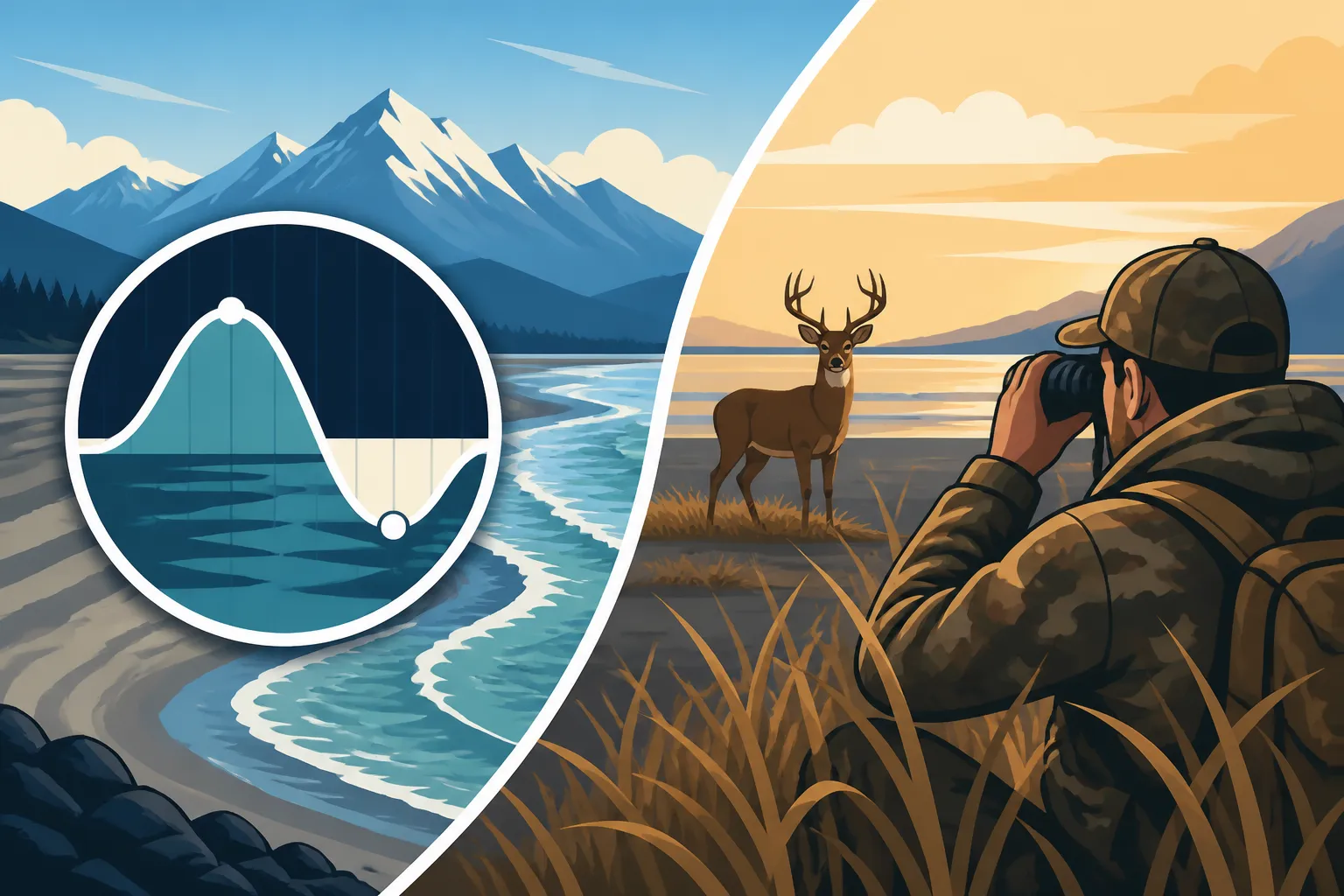
At its simplest, a tide table lists the predicted times and heights for high and low tides. High tide is when the water reaches its maximum height, covering the most ground, while low tide is when it recedes to its minimum, exposing the most beach. The difference between a high tide and the subsequent low tide (or vice versa) is called the "tidal exchange" or "range." Alaska's tidal exchanges can be massive, sometimes exceeding 20 feet in certain areas like Turnagain Arm near Anchorage. Even in more moderate regions like Southeast Alaska, a 10-15 foot exchange is common. This means a vast amount of beach can be exposed or covered in a relatively short period.
It's crucial to look not just at the 'low' or 'high' designation but at the actual height in feet. A "low tide" at +2 feet will leave a lot less exposed ground than a "low tide" at -3 feet. These negative low tides are particularly important as they expose the most ground, often revealing new feeding areas for deer and offering the easiest travel along the beach. Conversely, a high tide of +15 feet will cover far more territory than a high tide of +8 feet. You'll often see two high tides and two low tides within a 24-hour period, though the heights can vary significantly, leading to what are called "mixed semidiurnal" tides. The timing of these changes means roughly six hours between a high and a low, but this isn't exact and can be compressed or stretched depending on the location and specific tidal dynamics. Pay attention to the intervals between the listed times – a short interval often indicates a very fast moving tide.
Finding and Interpreting Tide Data
Accessing reliable tide data is easier than ever, thanks to modern technology. For hunters, I highly recommend using dedicated marine weather apps and websites. NOAA (National Oceanic and Atmospheric Administration) provides the raw data, and many apps package it into user-friendly formats. Popular options include Tide Charts, My Tide Times, or even general marine navigation apps that integrate tide data. Many modern hunting apps, like those offered by GoHunt, are also integrating this kind of essential outdoor information, allowing you to access tide predictions alongside topo maps and public land boundaries. This means fewer apps to juggle and a more integrated planning experience, which is incredibly valuable when you’re trying to keep track of a thousand details for an Alaskan hunt.
When you pull up a tide table, whether it’s on your phone or a printed sheet, identify the closest reporting station to your hunting area. Alaskan geography is vast and varied, so tides can differ significantly even within a few miles due to bays, channels, and currents. Always double-check the date to ensure you're looking at current predictions. Focus on:
- Date: Is it for today, tomorrow, or your planned hunt dates?
- Time: What are the exact times for high and low tides?
- Height: What are the heights in feet (or meters)? Pay close attention to negative low tides and unusually high high tides.
- Sunrise/Sunset: These are often listed alongside tides and help with planning legal shooting light.
Many apps also offer tidal current predictions, which can be critical if you're traveling by boat, but for beach deer hunting, the rise and fall of the water level are your primary concern. For instance, if you're planning to hunt in Southeast Alaska, you might look up the tides for Juneau or Sitka, but then use a tidal current chart or local knowledge to adjust for a remote island or bay. Always err on the side of caution; if the prediction seems ambiguous, assume the worst-case scenario.
Predicting Deer Movement Based on Tides
This is where the magic happens – turning tide data into hunting strategy. Sitka blacktail deer are masters of their coastal environment, and their movements are profoundly influenced by the ebb and flow of the ocean. They are not going to be caught flat-footed by the tide, and neither should you.
During low tide, particularly those negative tides that expose a vast intertidal zone, deer will often venture out onto the beaches and mudflats. They browse on exposed kelp, seaweed, and other marine vegetation rich in minerals and nutrients. This is a prime time to spot them feeding in the open. Imagine a deer delicately picking through a newly exposed rock garden, or standing belly-deep in the shallow water browsing on floating kelp. As the tide begins to come in, they'll often continue feeding for a short while, but as the water pushes further up the beach, they'll slowly filter back towards the timberline, moving up into the dense coastal forest or higher benches. This is when you can sometimes catch them moving from the beach into the timber, offering shots at the edge of the cover.
Conversely, during high tide, deer will typically be higher up in the dense spruce and hemlock, or on the lower mountain slopes. They won't usually be on the water's edge unless it's a very steep, rocky shoreline where there's little change in accessible ground. This means if you arrive at high tide, your best bet might be to push into the timber, or find trails that deer use to access the beaches at other times. Planning your approach to align with a dropping tide means you can slowly follow the deer out onto the beach, intercepting them as they come to feed. Planning your retreat with an incoming tide can help push deer towards you as they move up the slopes. Knowing these patterns allows you to optimize your hunting efforts, ensuring you're in the right place at the right time.
| Tidal Event | Deer Behavior (Typical) | Hunter Strategy |
|---|---|---|
| Negative Low Tide | Feeding on exposed marine vegetation, often far out on flats. | Stalk beaches, glass wide areas, approach feeding deer. |
| Rising Tide | Gradually moving off beaches, towards timberline/higher ground. | Position yourself at forest edge, intercept moving deer, or push in. |
| High Tide | Primarily in dense timber, higher benches, or lower mountain slopes. | Still hunt in timber, track deer moving away from the water, or wait. |
| Falling Tide | Moving down from timber, preparing to access newly exposed areas. | Position above beach, glass timber edge, await deer coming to feed. |
Strategic Hunting Techniques for Tidal Zones
Hunting in Alaska's tidal zones demands a different approach than inland hunts. It's a dance with the ocean, where timing, observation, and meticulous planning are your most valuable assets. You need to be aware of the constant change and adapt your strategies accordingly.
Timing Your Approach and Retreat
The success of a beach deer hunt often hinges on impeccable timing. You want to arrive at your chosen hunting area when the tide is either starting to drop or is already at a negative low. This maximizes the exposed beach, giving you the most ground to cover and the best chance of spotting deer moving out to feed. For many, this means being on the water well before first light, ready to launch your skiff or hit the beach as soon as legal shooting light allows. Imagine the scene: the first hint of dawn, a crisp coastal breeze, and you're already ashore, scanning the expansive low tide flats. This strategic positioning often yields the best results, as deer feel secure feeding far from the timber when the beach is wide open.
Equally important is timing your retreat. Never, ever, assume the tide will wait for you. If you’re planning to be picked up by a skiff or have to hike back to a specific point, ensure you know the time of the next high tide and give yourself ample buffer. I’ve seen hunters cut it too close, resulting in a frantic sprint along a rapidly disappearing beach, sometimes having to wade through chest-deep water with a heavy pack. If you manage to get a deer down, the tidal phase becomes even more critical. You need enough exposed beach to safely gut, skin, and quarter the animal. You certainly don't want to be in a situation where you're forced to work in knee-deep water or risk losing your kill to the incoming tide. This is where understanding Packing a Deer Off a Beach at Low Tide becomes absolutely crucial, ensuring you can manage your harvest effectively. Always aim to finish your hunt and be back at your extraction point before the tide starts to seriously push inland, especially if it’s a big tidal exchange.
Locating Deer Sign Between Tides
The intertidal zone, the area between the high and low tide marks, is a treasure trove of deer sign, but it requires a keen eye and an understanding of what to look for. As the tide recedes, it exposes fresh tracks in the sand or mud, indicating recent deer activity. Look for tracks along the forest edge where deer transition from the timber to the beach, but also venture further out onto the newly exposed flats. Deer will often follow predictable paths to access specific feeding areas or navigate around rocky outcrops. These "deer trails" in the sand are invaluable. You might also find droppings, especially where they've been feeding heavily on kelp or other marine vegetation.
Beyond tracks and droppings, pay attention to browse lines on shrubs and trees at the forest edge. Deer will often browse heavily on specific plants as they move up or down with the tide. Freshly bitten shoots are a clear indicator. Don't overlook the obvious either: beds in the tall grass or under low-hanging spruce branches near the high tide mark. While they might bed down in the timber during high tide, they often rest close to their feeding areas, ready to drop down as the water recedes. By methodically glassing and walking these newly exposed areas, you can piece together a clear picture of deer movement patterns, allowing you to intercept them. Remember, the tide essentially "resets" the canvas twice a day, offering fresh opportunities to read the landscape.
Safety Considerations in the Intertidal Zone
Hunting in the intertidal zone introduces unique safety challenges that go beyond standard wilderness precautions. The most immediate concern is being stranded or cut off by the tide. Always carry a reliable tide chart and know the times and heights for your specific location. Have a secondary escape route in mind, even if it means a tough bushwhack through the timber. Signal devices, like a satellite messenger or VHF radio, are not optional; they are essential for Signal Devices and Check-In Plans for Solo Alaska Hunts, or even with a partner. These can be life-savers if you find yourself in a bind.
Beyond being cut off, footing can be incredibly treacherous. Slick rocks covered in seaweed, soft mudflats, and hidden potholes can lead to falls, twisted ankles, or worse. Invest in proper footwear that offers excellent traction and is waterproof. Good quality Boot Requirements for Coastal Alaska Hunts are non-negotiable here. Be wary of large logs or debris that might be floating or unstable near the water's edge, especially after storms. And of course, you are in Alaska; coastal brown bears frequent these same beaches, especially during salmon season or when scavenging for carrion. Always be bear aware, carry appropriate bear deterrents, and know how to use them. While your primary target might be deer, you are still in brown bear country, and a surprise encounter is the last thing you want. Always prioritize your safety and the safety of your hunting partners over getting a deer.
Essential Gear and Preparations for Tidal Hunts
Success in Alaska's tidal deer hunting isn't just about strategy; it's also about having the right gear and making thorough preparations. The coastal environment is notoriously wet, rugged, and unforgiving, and your equipment needs to be up to the task.
Footwear and Clothing for Wet Conditions
When you're hunting Alaska's beaches, assume you're going to get wet. It's not a matter of if, but when. This makes your choice of footwear and clothing absolutely critical. For footwear, forget your breathable mountain boots unless you're only planning to hunt the timber well above the high tide line. You need rubber boots, and not just any rubber boots. Look for knee-high or even hip-wader style rubber boots with aggressive, non-slip soles. Brands like Muck Boots, XTRATUF, or LaCrosse are popular among Alaskans for a reason – they offer durable, waterproof protection. Ensure they fit well enough for comfortable walking, as you'll be covering miles of beach.
For clothing, layering is always key in Alaska, but with an emphasis on waterproof and quick-drying materials. A quality waterproof rain jacket and pants are non-negotiable. This isn't just for rain; it's for spray from the boat, wading through shallow water, and sitting on damp logs. Look for durable, breathable rain gear from brands like Sitka Gear, Kuiu, or Grundéns. Avoid cotton entirely; it loses its insulating properties when wet and takes forever to dry, leading to hypothermia risks. Wool or synthetic base layers, fleece mid-layers, and a synthetic puffy jacket are excellent choices. Don't forget waterproof gloves and a warm hat. Being cold and wet isn't just uncomfortable; it severely impairs your judgment and ability to hunt safely and effectively. You'll thank yourself for having invested in quality Rain Gear Guides Actually Recommend when that inevitable coastal squall rolls in.
Navigation and Communication
While beach hunting might seem straightforward – just follow the coast – it's easy to get disoriented, especially in dense fog, heavy rain, or when you push inland. A reliable GPS device, whether a dedicated unit like a Garmin inReach or a smartphone with robust mapping apps (like Gaia GPS or the mapping functions of GoHunt), is essential. Critically, ensure you have Downloading Offline Maps Before a Fly-In or boat drop-off, as cell service is virtually nonexistent in most remote coastal hunting areas. Mark your drop-off point, your intended hunting boundaries, and any potential escape routes or landmarks on your map.
Communication devices are equally vital. A satellite messenger or satellite phone is your primary lifeline in remote Alaska. These allow you to check in with loved ones, call for emergency assistance, or simply communicate with your pilot or boat operator for pickup arrangements. A handheld VHF marine radio is also a good idea if you're operating near marine traffic or other hunters on the water. Always have fully charged batteries and backups. When you're dealing with constantly shifting access points due to tides, knowing exactly where you are and being able to communicate your location is paramount.
Preparing for a Successful Pack Out
Bringing down a deer is only half the battle, especially on a tidal beach. The pack out requires forethought and specialized gear. First, have a plan for field dressing and quartering. You'll need a sharp knife, a small bone saw (like a Wyoming Saw), and plenty of sturdy game bags. For coastal hunts, look for breathable, heavy-duty game bags that resist tears and can handle getting wet without falling apart. Game Bags That Breathe in Coastal Rain are crucial for keeping meat clean and allowing it to cool properly, even in damp conditions.
Consider how you’ll transport the meat. If you’re hunting out of a skiff, you’ll want sturdy totes or coolers to protect the meat from saltwater and keep it cool. If you’re backpacking, a heavy-duty frame pack capable of handling awkward, heavy loads is essential. Remember the challenges of Packing a Deer Off a Beach at Low Tide; you might have to carry the entire animal or its quarters a significant distance across soft sand or slick rocks to your extraction point. Always have extra rope or cordage for securing loads and potentially hanging meat if you need to cool it or protect it from scavengers (including bears, which are abundant in coastal Alaska). Pre-plan your gutting location to be above the high tide line, if possible, to avoid having your work area inundated. This forethought saves immense grief and ensures you honor your harvest properly.
Disclaimer
Please remember that hunting in Alaska carries inherent risks, and conditions can change rapidly. This guide provides general information and recommendations but cannot substitute for proper training, experience, local knowledge, or adherence to all Alaska Department of Fish and Game regulations. Always prioritize safety, prepare thoroughly, and be aware of your surroundings.