Skiff Hunting Deer Along Saltwater Beaches
The idea of hunting deer along Alaska's rugged, saltwater beaches often conjures up images of pristine wilderness and abundant game, but the reality can throw a curveball of unpredictable tides, shifting weather, and the sheer logistical puzzle of getting a deer out of a remote cove. This guide aims to demystify the process of hunting deer from a skiff, providing you with the knowledge to safely and successfully navigate these challenging yet rewarding hunts.
Understanding the Allure of Coastal Deer Hunting
For many hunters, the thought of pursuing deer in the deep timber or high alpine is the default. However, Alaska's vast coastline offers a unique and incredibly productive deer hunting experience, particularly for the elusive Sitka blacktail deer. Hunting from a skiff allows access to areas unreachable by road, opening up vast stretches of prime habitat that see less pressure.
Coastal Deer Behavior and Habitat
Sitka blacktail deer on Alaska's coastlines, especially in Southeast Alaska and on islands like Kodiak and Prince of Wales, have adapted to a unique environment. Unlike their interior cousins, they often spend their time closer to the shore, feeding on nutrient-rich kelp and beach grasses, particularly during low tide. They utilize the thick coastal rainforest for cover, bedding down in the dense undergrowth and coming out to forage along the tide lines. Understanding this behavior is crucial; you're not looking for them in open fields, but often in the transition zone where forest meets sea.
The dynamic nature of the tide plays a huge role in how these deer use the landscape. At high tide, they might be pushed higher into the brush, making them harder to spot. As the tide recedes, new feeding grounds are exposed, drawing deer out onto the beaches and tidal flats. This constant shift means you need to be constantly observing and adapting your approach. Their diet, often supplemented by marine vegetation, can also influence the flavor profile of the meat, leading to lean, mild venison that many hunters highly prize.
Advantages Over Inland Hunts
There are several compelling reasons why hunters choose to pursue deer via skiff, rather than venturing deep into the interior. Firstly, accessibility. While remote, access via boat means you can cover vast distances of coastline, exploring numerous bays, inlets, and islands that are otherwise cut off. This mobility allows you to quickly relocate if a particular area isn't producing or if weather conditions change dramatically. You're not tied to a single camp, offering unparalleled flexibility.
Secondly, the "road system" for a skiff hunter is water. This often translates to fewer other hunters competing for space, particularly once you get beyond the easily accessible areas. You can often find secluded coves and untouched beaches where deer are less wary. The ability to scan large areas from the water with good optics also makes this a very efficient way to scout and locate game, especially in areas with thick cover where visibility is limited. It's a method that truly allows you to immerse yourself in the wild, feeling the rhythm of the tides and the coastal environment.
Key Deer Species: Sitka Blacktail
When you're out there with your skiff, the primary target will almost certainly be the Sitka Blacktail Deer of Alaska's Island Rainforest. These are smaller deer compared to their continental cousins, typically weighing between 80-120 pounds field dressed, but what they lack in size, they make up for in hardiness and the quality of their meat. Their beautiful dark coats and stocky build are perfectly suited to the damp, dense coastal forests they inhabit.
The population dynamics of Sitka blacktail deer can fluctuate significantly, often tied to harsh winters with deep snow. When the snow piles up in the high country, deer are driven down to the beaches, making them more visible and accessible to skiff hunters. Conversely, mild winters might mean deer stay higher, making beach hunting a bit more challenging. Understanding these cycles and checking reports for Deer Populations on Prince of Wales Island or Kodiak can give you a crucial edge in planning your hunt. Many hunters even use detailed mapping applications, sometimes found on platforms like GoHunt, to analyze historical snow depths and understand deer movement patterns.
Essential Gear and Preparations for a Skiff Hunt
A successful skiff hunt is as much about preparation as it is about hunting skill. The coastal environment can be unforgiving, with sudden squalls, dense fog, and powerful currents. Having the right gear, and knowing how to use it, can make the difference between a memorable adventure and a dangerous ordeal.
Choosing the Right Skiff and Motor
Your skiff is your lifeline and primary mode of transport. For coastal deer hunting, you need a boat that is seaworthy, stable, and capable of handling varying conditions. A rigid inflatable boat (RIB) or a sturdy aluminum skiff between 14-20 feet are popular choices. They should have enough space for gear, hunters, and most importantly, a deer or two. A good general rule is to always choose a boat slightly larger and more robust than you think you might need.
The motor is equally critical. A reliable outboard engine, typically 25-50 horsepower for a smaller skiff, is essential. Always carry a spare propeller, shear pins, and a basic tool kit. Many experienced hunters also bring a small, auxiliary kicker motor (e.g., 5-10 hp) as a backup. There's nothing worse than being stranded in a remote inlet with a dead main engine. The condition of your boat and motor should be meticulously checked before every trip, especially when considering Boat-Based Deer Hunting on Alaska's Island Coastlines.
Navigation and Safety Equipment
Beyond the boat itself, navigation and safety equipment are paramount. A reliable GPS unit with detailed marine charts is non-negotiable. Many hunters also carry a handheld GPS as a backup, and apps on smartphones can supplement these, especially when used in conjunction with a robust data provider or offline maps that tools like GoHunt often offer. A VHF radio is essential for communication with other boats or the Coast Guard, and a satellite communication device like an InReach or satellite phone provides an invaluable lifeline beyond VHF range.
Don't skimp on safety gear:
- Life jackets (PFDs): One for every person on board, easily accessible.
- Flare kit: For signaling distress.
- First-aid kit: Comprehensive and waterproof.
- Anchor and sufficient rode: Critical for Anchoring Overnight on a Deer Hunt or holding position in strong currents.
- Bailer or bilge pump: To deal with unexpected water.
- Tool kit: For minor engine repairs.
- Emergency blanket/shelter: For unexpected overnight stays on shore.
- Headlamps/flashlights: With spare batteries, as daylight hours can be short.
Personal Hunting Gear Considerations
The coastal environment in Alaska is notoriously wet and often cold, even in prime hunting seasons. Your personal gear needs to reflect this. Layering is key, starting with moisture-wicking base layers, insulating mid-layers, and a bombproof waterproof-breathable outer shell. Brands like Sitka Gear, Kuiu, and Helly Hansen are popular among Alaskan hunters for their durability and performance in harsh conditions. Don't forget waterproof gloves, a warm hat, and high-quality rubber boots (XtraTufs are practically a uniform in coastal Alaska).
For your rifle, choose a caliber suitable for deer, such as .270, .30-06, or .308, and ensure it's sighted in perfectly. Protect your optics with covers and consider a water-resistant case for transport in the skiff. When hunting along beaches, shots can often be at varying distances, and sometimes in low light or rain, so a reliable scope is vital. Consider carrying extra ammunition in a waterproof container. You'll also want good binoculars for spotting deer from the boat, a rangefinder, and a sturdy pack to carry your game out from the beach.
| Essential Skiff Hunting Safety & Nav Gear | Purpose | Notes |
|---|---|---|
| VHF Radio | Marine communication, weather reports | Fixed mount preferred, handheld as backup. |
| GPS (Chartplotter) | Navigation, marking waypoints, tide information | Waterproof, pre-loaded marine charts. |
| Satellite Communicator (InReach/Garmin) | Emergency communication beyond cell/VHF range | Crucial for remote areas, check-ins, SOS. |
| Marine First-Aid Kit | Trauma care, general injuries | Waterproof, comprehensive, easily accessible. |
| Life Jackets (PFDs) | Buoyancy for everyone | USCG approved, worn or easily reachable. |
| Anchor & Rode | Mooring, holding position | Sufficient length for anticipated depths/currents, appropriate weight. |
| Spare Propeller & Shear Pins | Engine repair | Crucial for preventing being stranded. |
| Bailer / Bilge Pump | Water removal | Manual bailer and/or electric bilge pump. |
| Flares / Signal Mirror | Distress signaling | Up-to-date, easily deployed. |
| Knife / Multi-tool | General utility, emergency | Easily accessible, good quality. |
| Headlamp / Flashlight | Low-light operations, emergencies | Waterproof, fresh batteries, spare set. |
| Emergency Repair Kit | Minor boat/motor fixes | Duct tape, zip ties, epoxy, basic tools. |
On-the-Water Tactics: Navigating and Spotting Deer
The beauty of skiff hunting lies in the dynamic interplay between land and sea. Mastering the art of navigation, understanding the tides, and developing keen spotting skills from the water are all key components of a successful hunt.
Reading Tide Tables and Current
The tides are arguably the most critical factor in coastal deer hunting. They dictate when and where deer will feed, and more importantly, when and where you can safely access beaches. Before you even leave the dock, you need to thoroughly study Tide Tables and Beach Deer Hunting for your intended hunting area. Understand the timing of high and low tides, and pay close attention to the tidal swing – the difference between high and low. Large tidal swings can expose vast mudflats or rocky shores that are impassable or dangerous at low tide, while also revealing prime feeding grounds for deer.
Currents, often associated with strong tidal exchanges in narrow passes or river mouths, can also pose significant challenges. Always navigate with caution in areas of strong current, especially when approaching shore. Aim to arrive at your chosen beach a few hours before low tide, giving you ample time to glass, spot deer, and make a plan for your stalk before the deer potentially move back into cover as the tide rises. Conversely, hunting a rising tide can push deer closer to the beach line, but you must be mindful of your exit strategy.
Spotting Techniques from the Water
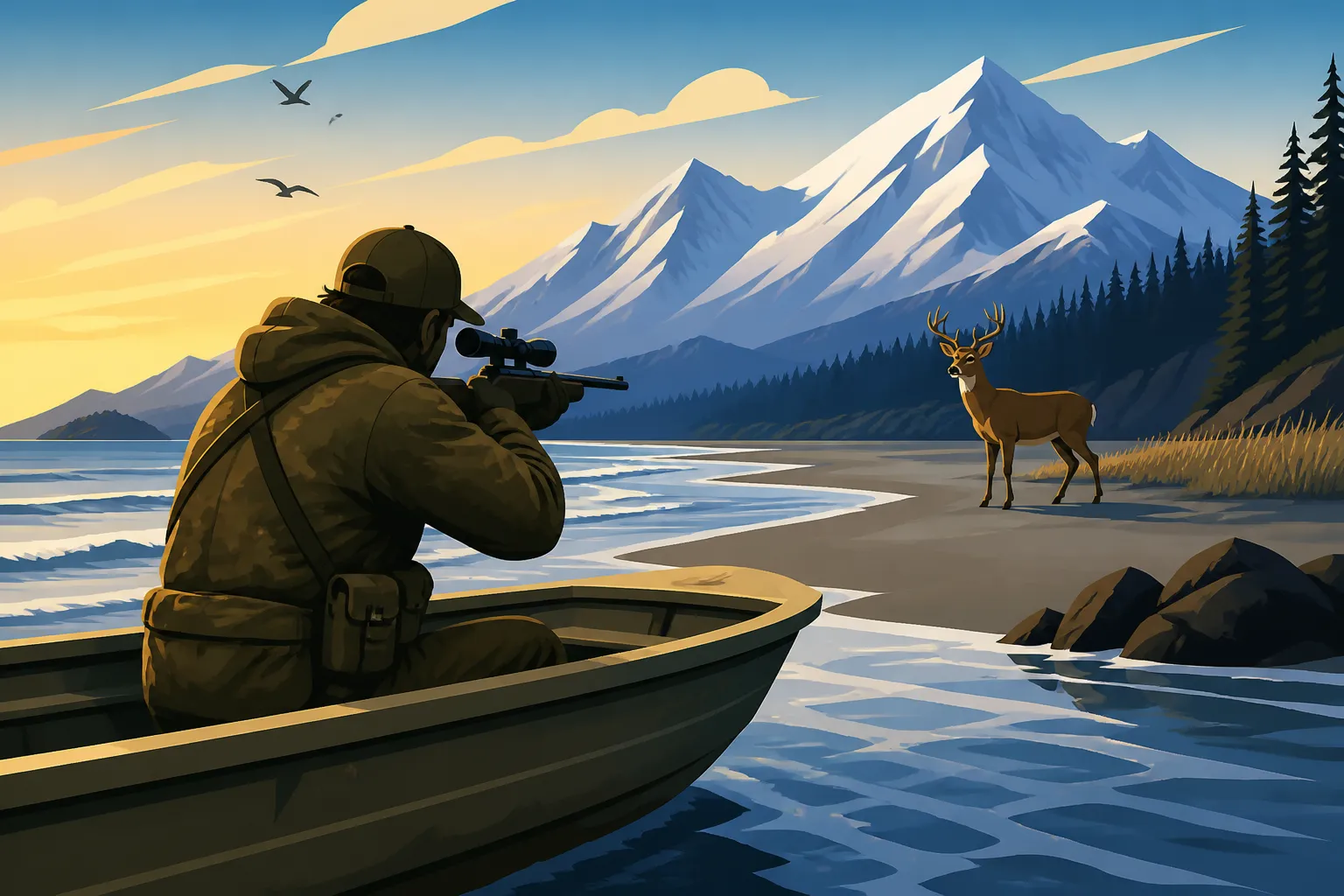
Glassing from the skiff is your primary scouting method. Use good quality binoculars, ideally 10×42 or 10×50, to systematically scan the tree line, beach, and any exposed rock formations. Deer will often be camouflaged against the dark forest or rocks, so look for abnormal shapes, horizontal lines breaking the vertical forest, or subtle movements. Pay extra attention to areas where green vegetation meets the beach, or where fresh tracks might be visible on sandy stretches. Using a spotting scope mounted on a tripod in the boat (if stable) can help confirm what you're seeing at longer distances.
Move slowly and deliberately along the coastline, maintaining a safe distance from shore to avoid spooking game. It’s often beneficial to motor to a good vantage point, cut the engine, and drift or anchor quietly while glassing. This reduces noise and allows you to cover an area thoroughly. The sun's position can also play a huge role; early morning or late evening often provides the best light for spotting, reducing glare off the water and illuminating deer against the darker background. Using mapping tools, like those available through GoHunt, can help you identify promising coves or drainages ahead of time, allowing for more efficient glassing.
Safe Landing and Stalking Approaches
Once you’ve spotted a deer, the real work begins. The first step is to execute a safe and stealthy landing. Look for beaches with firm sand or small gravel where you can easily pull your skiff up, out of the tide's reach. Avoid mudflats or large, slick rocks. Consider the wind direction and current; try to approach in a way that minimizes noise and keeps your scent from blowing towards the deer. Once ashore, secure your boat properly to prevent it from drifting away with the changing tide or getting tossed by waves.
From there, the stalk will depend heavily on the terrain. Often, this means navigating dense coastal brush, which can be noisy and challenging. Move slowly, using the wind and terrain to your advantage, and always be aware of your backdrop and potential shooting lanes. Remember that coastal areas are prime habitat for bears, so maintain situational awareness and carry bear spray or a large-caliber sidearm. Before you commit to a stalk, develop a clear plan for your approach and, critically, for your exit and how you will Packing a Deer Off a Beach at Low Tide once the work is done.
Field Dressing, Meat Care, and Logistics from the Coast
Successfully shooting a deer is only half the battle. In the remote, often wet coastal environment of Alaska, proper field dressing, meat care, and extraction are paramount to salvaging your hard-earned venison and ensuring a positive hunting experience.
Efficient Field Dressing on the Beach
Once your deer is down, time is of the essence, especially if the weather is warm. Get to the animal quickly and begin field dressing immediately. Position the deer on a slight incline if possible, to allow blood to drain away. Remove the entrails as cleanly as possible. For deer, many hunters opt for the gutless method if they don't plan to keep the ribs, as it keeps the carcass cleaner and minimizes exposure to dirt and flies. However, if you're taking the whole animal back, a traditional field dressing will work.
Work meticulously but swiftly. Have sharp knives, a game saw, and plenty of clean game bags ready. In a coastal environment, keeping the meat clean can be a challenge. Try to avoid dragging the deer through sand, mud, or saltwater. If you need to quarter the animal, do so on a clean tarp or a patch of solid ground. Remember, Alaska Moose Meat Salvage Requirements set a high bar for ethical meat recovery, and while deer are smaller, the principle of maximizing salvageable meat applies equally.
Protecting Meat from Contaminants and Bears
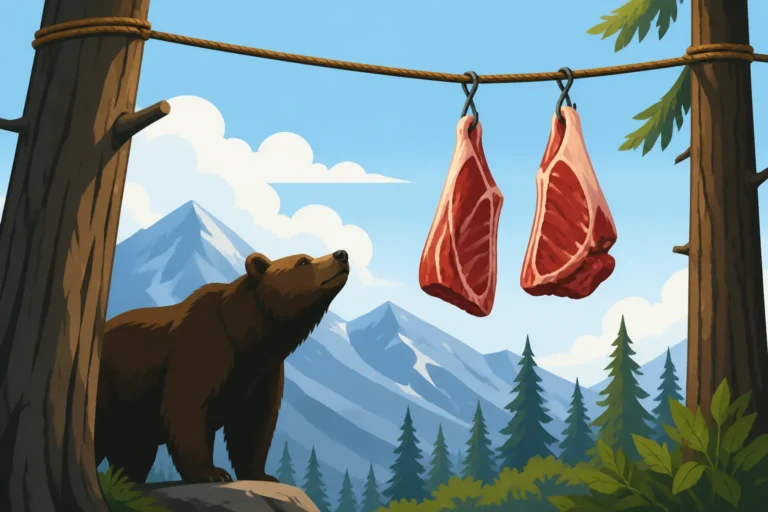
The Alaskan coast is home to abundant wildlife, and that includes bears – both brown and black. Once your deer is field dressed, your priority shifts to cooling the meat and protecting it. Get the quarters into breathable Game Bags That Breathe in Coastal Rain as quickly as possible. These bags allow air circulation, which is crucial for cooling, while keeping flies and debris off the meat. Hang the meat if you can, using strong rope and finding sturdy trees, ideally out of direct sunlight and well above bear reach.
However, hanging meat can be difficult in thick coastal forests or where suitable trees are scarce. In such cases, spreading the meat out on a clean tarp in the shade, allowing air to circulate around each piece, can help cool it down rapidly. Always be vigilant for bears in the area. Make noise, keep your sidearm or bear spray accessible, and consider doing the work with a partner who can stand guard. For further details, reviewing information on Bear Safety While Butchering a Kill in Alaska is highly recommended. The goal is to get the meat cooled and back to the skiff as quickly as possible to minimize risk.
Logistics of Packing a Deer Off a Beach at Low Tide
This is where the planning truly pays off. Moving a field-dressed or quartered deer from where it fell to your skiff can be physically demanding. If you were lucky enough for the deer to drop right on the beach, great. More often, you’ll be dragging or packing meat through dense brush and uneven terrain. This is where a good frame pack comes in handy if you've quartered the animal.
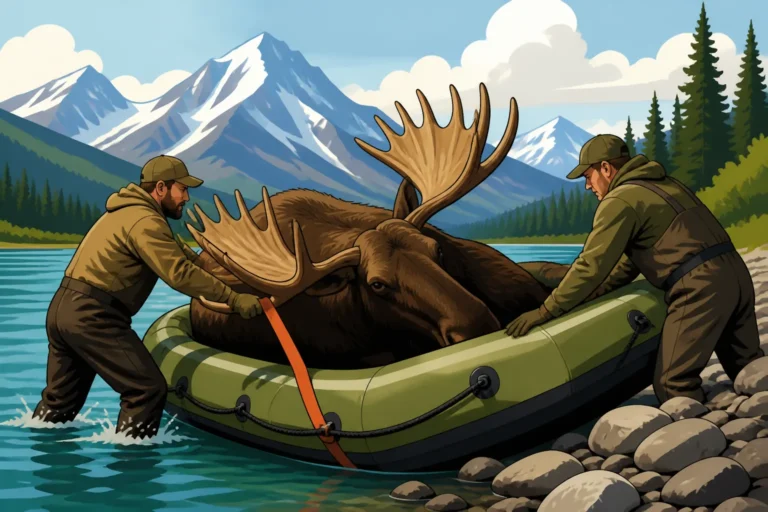
Timing with the tides is critical. If you harvested a deer during low tide and have a long way to go, you need to work fast before the tide comes in and potentially cuts off your access to the skiff or submerges your boat. Conversely, if you shot the deer at high tide, you might have less beach to work with, but more time before the water recedes too far. Always have a clear understanding of your retrieval route and the tidal schedule. When loading the deer into the skiff, distribute the weight evenly to maintain stability, and secure it firmly so it doesn't shift during transit. Having a partner to help with the heavy lifting can make this process infinitely easier and safer.
Disclaimer
Hunting in Alaska involves inherent risks. This guide provides general information and recommendations. Always consult the most current Alaska Department of Fish and Game regulations, secure appropriate licenses and tags, and prioritize safety. The information herein does not substitute for professional guidance or personal experience.