What to Budget for Tips on an Alaska Hunt
The sheer exhilaration of planning an Alaska hunt can quickly give way to a knot of anxiety when you start tallying up all the costs. Licenses, tags, airfare, gear, guide fees… it's a dizzying list, and for many hunters, the topic of tipping remains a murky, unspoken expense that causes real stress. No one wants to appear cheap or disrespectful, but it's tough to budget for something that feels so subjective. This guide aims to pull back the curtain on tipping etiquette for your Alaska hunt, helping you understand who to tip, why, and how much, so you can plan with confidence and focus on the adventure ahead.
Understanding the Tipping Culture in Alaska Hunting
Tipping is a long-standing tradition in the service industry, and hunting outfitters and their staff are no exception. In Alaska, where the work is often physically demanding, the hours are incredibly long, and the success of your trip relies heavily on their expertise and tireless effort, a tip isn't just a bonus—it's a significant part of their income and a direct reflection of your appreciation. Many guides and their crews view tips as a performance incentive, knowing that their dedication directly impacts their compensation.
It's not uncommon for hunters new to guided trips to feel a bit awkward about discussing tips, or even to overlook it entirely in their initial budgeting. This can lead to uncomfortable situations at the end of a strenuous hunt, scrambling to pull together funds. Understanding this culture from the outset empowers you to plan appropriately and ensures that the hardworking individuals who made your hunt possible feel justly rewarded. It's about recognizing the effort that goes into every aspect, from the scouting and camp setup to the field care of your trophy.
Who You'll Be Tipping: The Team Behind Your Hunt
When you book a guided hunt in Alaska, you're not just hiring one person. You're engaging a whole team that works cohesively to make your trip successful, safe, and enjoyable. Each member plays a crucial role, and recognizing their individual contributions is part of the tipping etiquette.
First and foremost, there's your Registered Guide-Outfitter or the Class-A Assistant Guide directly leading your hunt. This is the person whose experience, knowledge of the terrain, and ability to locate game are paramount. They bear the ultimate responsibility for your safety and the legality of your hunt. Then there are the packers, who often do the lion's share of the back-breaking work, from hauling gear into spike camps to packing out heavy meat loads across miles of rugged terrain. Don't underestimate their physical endurance and unwavering effort; they are the unsung heroes of many Alaska hunts. You might also have a cook back at base camp, providing warm, nourishing meals that are critical for morale and energy, or a camp jack who handles various chores, ensuring camp runs smoothly.
Finally, while often not directly employed by the outfitter in the same way, the air taxi pilot who flies you into and out of your remote camp is also providing a vital service. Their skill and judgment in challenging Alaskan conditions are indispensable. While their service is typically paid directly to the air taxi company, a separate tip for exceptional service is often considered. It's truly a team effort, and each person contributes to your overall experience. For more on the roles, check out Hiring an Alaska Registered Guide-Outfitter.
Why Tipping Matters: Showing Appreciation for Hard Work
Think about the immense effort that goes into an Alaska hunting trip long before you even set foot in camp. Guides spend countless hours scouting, maintaining equipment, setting up camps, and navigating complex regulations. During the hunt, they're up before dawn and often working late into the night, whether it's glassing for game, tracking an animal, skinning, caping, or simply ensuring your comfort and safety.
A tip is more than just a gratuity; it's a meaningful way to acknowledge this dedication and the often grueling conditions under which they operate. It validates their professionalism, their expertise, and their commitment to providing you with a memorable experience. Many guides and their crew members rely on these tips to supplement their seasonal income, which can be inconsistent due to weather delays, hunt success rates, or client cancellations. When you tip generously for good service, you're not just being polite; you're contributing to their livelihood and encouraging them to continue providing excellent service to future hunters. It fosters a positive relationship and ensures the best talent continues to work in the guiding industry, which benefits everyone who dreams of an Alaska hunt.
General Guidelines for Tipping Percentages
Figuring out the "right" amount to tip can feel like walking a tightrope. You want to be fair and appreciative without breaking the bank. While there's no universally mandated percentage, the hunting industry has developed some common expectations that can serve as a valuable starting point for your budget. These percentages are generally based on the total cost of your hunt, excluding things like licenses, tags, and personal gear purchases.
It's always a good idea to confirm tipping norms directly with your outfitter when you're booking the trip. A reputable guide will be transparent about their crew's compensation structure and what's customary. Don't be shy about asking during your initial conversations—it shows you're prepared and respectful of their hard work. Many outfitters understand this is a common question, especially for first-time Alaska hunters. Also, consider the specific services included in your hunt package; for a breakdown of typical inclusions, refer to What an Alaska Guided Hunt Price Includes.
Standard Tipping Ranges for Guides
For your primary guide, whether it's the registered outfitter or a lead assistant, the widely accepted tipping range typically falls between 10% and 20% of the total hunt cost. This range accounts for varying levels of service, hunt difficulty, and your personal satisfaction.
- 10-15% is generally considered a good tip for solid, professional service where expectations were met. The guide worked hard, was knowledgeable, kept you safe, and gave their best effort, even if the animals didn't cooperate.
- 15-20% or even higher is reserved for truly exceptional experiences. This might include a guide who went above and beyond in every aspect—from pre-hunt communication, immaculate camp conditions, relentless effort in the field, outstanding animal tracking and recovery, expert meat and trophy care, to just being fantastic company through challenging conditions. If your guide delivered a dream hunt under tough circumstances, a tip at the higher end reflects that extraordinary effort.
Remember, this percentage is usually calculated on the base hunt cost, not including travel to Alaska, the cost of your licenses, tags, or any trophy fees you might incur.
Tipping for Support Staff: Packers, Cooks, and Camp Jacks
The support staff often work just as hard, if not harder, than the guide in some respects, carrying heavy loads and keeping the camp running smoothly. Their contributions are essential to the success and comfort of your hunt.
- Packers: These individuals are critical for backpack or spike camp hunts. They lug heavy loads, assist with game recovery, and often help with field butchering and caping. A common tipping range for packers is $100-$200 per day, or a percentage of the overall tip pool designated by the outfitter if you hand a lump sum to the lead guide. If you have direct interaction with a specific packer who really impressed you, a personal cash tip is always well-received.
- Cooks: In a base camp setting, a good cook is gold. They provide the fuel you need for strenuous days, and good food significantly boosts morale. A tip of $50-$100 per day for the cook is a reasonable expectation.
- Camp Jacks/Assistants: These versatile crew members handle a multitude of tasks, from chopping firewood and filling water buckets to cleaning camp and running errands. They keep things running behind the scenes. A tip of $50-$75 per day is appropriate for their hard work.
Sometimes, you might give a lump sum to the head guide, who then distributes it among the crew. However, if you've had particularly good service from an individual, a personal tip given directly can be very impactful.
The Air Taxi Driver: A Separate Consideration
Air taxi pilots operate under their own distinct business model, and while their service is integral to many Alaska hunts, they are typically not part of the outfitter's tipping pool. Their rates are set for their flying service, but a tip for exceptional performance is still a thoughtful gesture.
For safe, on-time flights, especially when dealing with challenging weather conditions or going the extra mile to assist with gear loading/unloading, a tip of $50-$100 per flight segment (each way) is a common practice. If they perform an extraordinary service, like an unexpected weather-related re-route that still gets you to your destination safely, or they help locate a downed animal from the air within legal limits (refer to Alaska's Same-Day-Airborne Rule and What It Bans for specifics on what's allowed), you might consider more. It's a small way to acknowledge their critical role in getting you into (and out of!) the remote Alaskan wilderness safely.
Here's a quick reference table for budgeting typical tipping ranges:
| Role | General Tipping Guideline | Notes |
|---|---|---|
| Lead Guide | 10-20% of base hunt cost | 10-15% for good service, 15-20%+ for exceptional effort, difficult conditions, or outstanding results. |
| Packers | $100-$200 per day or proportional share of guide's tip | Crucial for meat hauling and camp logistics. |
| Cook | $50-$100 per day | Essential for camp morale and hunter energy. |
| Camp Jack/Assistant | $50-$75 per day | Supports camp operations, often handles various chores. |
| Air Taxi Pilot | $50-$100 per flight segment (each way) | Separate from outfitter's tip pool; acknowledges safe and timely transport in challenging conditions. |
Factors That Influence Your Tipping Budget
While general percentages provide a solid framework, tipping in Alaska isn't a one-size-fits-all equation. Several factors can, and should, influence where you land within those suggested ranges. Thinking about these elements helps you arrive at a fair and appropriate tip that truly reflects your experience and the efforts of the crew. It's not just about whether you harvested an animal; it's about the entire journey, the professionalism, and the genuine effort invested by your guide and their team.
Sometimes, the most memorable hunts are those where the challenge was immense, and the guide's effort shone brightest, even if the game remained elusive. Conversely, an easy hunt where an animal was taken quickly might still warrant a generous tip if the guide's preparation and professionalism were top-notch. It's a holistic assessment.
Exceptional Service Versus Standard Expectations
This is perhaps the biggest determinant for moving up or down within the tipping range. "Standard expectations" generally mean your guide provided a safe, legal, and well-organized hunt. They were knowledgeable, worked hard, and fulfilled the terms of your contract. For this, a tip in the lower to middle part of the suggested range (e.g., 10-15%) is appropriate.
Exceptional service, however, goes beyond the basic requirements. Did your guide go the extra mile? Did they manage unforeseen challenges—like a sudden storm, a busted piece of gear, or a difficult game recovery—with professionalism and grace? Were they patient, encouraging, and good company, turning potential frustrations into minor bumps in the road? Did they share their deep knowledge of the area, the animal's behavior, and local history in a way that truly enriched your experience? Perhaps they helped you improve your own hunting skills, teaching you valuable lessons about Glassing the Alaska Range: Finding Game Before You Move or Calling Bull Moose During the Alaska Rut. If they truly elevated the experience beyond what you expected, a higher tip (15% or more) is warranted. This is where personal connection and subjective satisfaction really come into play.
The Difficulty and Success of the Hunt
It's natural to feel more inclined to tip generously when you've successfully harvested your target animal. After all, that's often the primary goal of the hunt. However, it's crucial to separate "success" (filling your tag) from "effort" (the guide's performance). An ethical, professional guide will work tirelessly regardless of whether an animal presents itself.
Consider the difficulty of the hunt: was it a particularly challenging species or a difficult area? Did you have to overcome extreme weather, demanding terrain, or unusually wary game? A guide who puts in maximum effort under arduous conditions, even if the tag remains unfilled, often deserves a tip at the higher end of the scale for their sheer grit and dedication. Conversely, a walk-in-the-park hunt where an animal was taken quickly still benefits from a good tip, acknowledging the guide's expertise in putting you in the right place at the right time due to their extensive scouting and knowledge. The guide's commitment to the process, safety, and your experience should be the primary consideration, not just the outcome of the trigger pull.
The Duration and Nature of Your Trip
The length of your hunt can also play a role in how you structure your tips, particularly for support staff. A quick 3-day bear hunt might involve a single guide and minimal support, making a percentage tip straightforward. However, a 10-day backpack sheep hunt deep in the mountains will likely involve multiple packers, more intensive camp support, and prolonged effort from your lead guide.
For shorter, less complex trips, a percentage of the total hunt cost might be easier to calculate and distribute. For longer, more involved expeditions with a larger crew, considering daily rates for support staff in addition to a percentage for the guide can be a more equitable approach. Think about the cumulative effort. A packer on a 10-day trip has logged significantly more miles and carried heavier loads than one on a 3-day hunt. Similarly, the cook who provides meals for an extended period has a greater workload. The nature of the hunt—whether it's a lodge-based experience, a float hunt, or a remote spike camp—also dictates the level and type of support staff involved, thus influencing how many individuals you'll be tipping. Longer, harder hunts generally warrant higher overall tips to acknowledge the sustained effort. Backpack Hunting in Alaska: Gear Weight and Meat Loads offers a glimpse into the physical demands often present in these longer trips.
Group Size and Shared Responsibility
If you're hunting with a partner or as part of a small group, the tipping dynamic changes slightly. While the overall tip amount might remain similar to what an individual hunter would pay for the guide, the burden of that tip is shared. This can potentially allow each individual to contribute a slightly larger amount, collectively reaching a more generous total.
It's crucial to discuss tipping with your hunting partners before the trip begins. Agree on a percentage or a total amount you're comfortable with, and decide how it will be split. This prevents awkwardness at the end of the hunt and ensures a consistent approach. When it comes to support staff, the same daily rates often apply regardless of group size, as their workload doesn't necessarily decrease with fewer hunters. However, if your group size significantly impacts the workload (e.g., more meat to pack out, more diverse meal requests), you might adjust the support staff tips slightly upwards to reflect that. Clear communication within your group ensures everyone is on the same page and the crew is appropriately compensated.
Practicalities of Delivering Tips in Remote Alaska
Once you've determined your tipping budget, the next step is figuring out the best way to deliver those tips. Remote Alaska isn't always conducive to credit card machines or ATMs, so planning ahead for the practicalities of cash versus check is essential. The last thing you want to do after a successful hunt is scramble for payment methods.
This also includes thinking about when and how you present the tips. A thoughtful presentation can enhance the gesture, while a rushed or awkward exchange can diminish it. Remember, these are professional individuals, and your interaction should reflect that respect.
Cash or Check: Preparing Your Tip Funds
In the vast majority of cases in remote Alaska, cash is king. Many guides and their support staff live seasonally or in areas where banking access is limited. Cash provides immediate liquidity and is often preferred.
- Cash: Plan to bring your tip money in small denominations ($20s, $50s, $100s) to allow for easy distribution among various crew members. Keep it separate from your regular spending money and secured in a waterproof pouch. Consider bringing it in new, crisp bills as a sign of respect.
- Personal Check: While cash is preferred, a personal check made out to the lead guide or individual crew members can sometimes work, especially for larger amounts. However, confirm with your outfitter if checks are accepted and if there are any issues with them clearing in remote areas. It's often safer to stick to cash.
- No Credit Cards: Do not expect to use a credit card for tips. Wireless service is virtually non-existent in most bush camps, and outfitters generally don't carry card readers for tips.
The best strategy is to have your cash tips ready before you even leave home. This way, you're not worrying about logistics in the final moments of your adventure.
When and How to Present Your Tips
The general rule is to present your tips at the very end of the hunt, typically just before you depart from base camp or when the services of a specific crew member conclude.
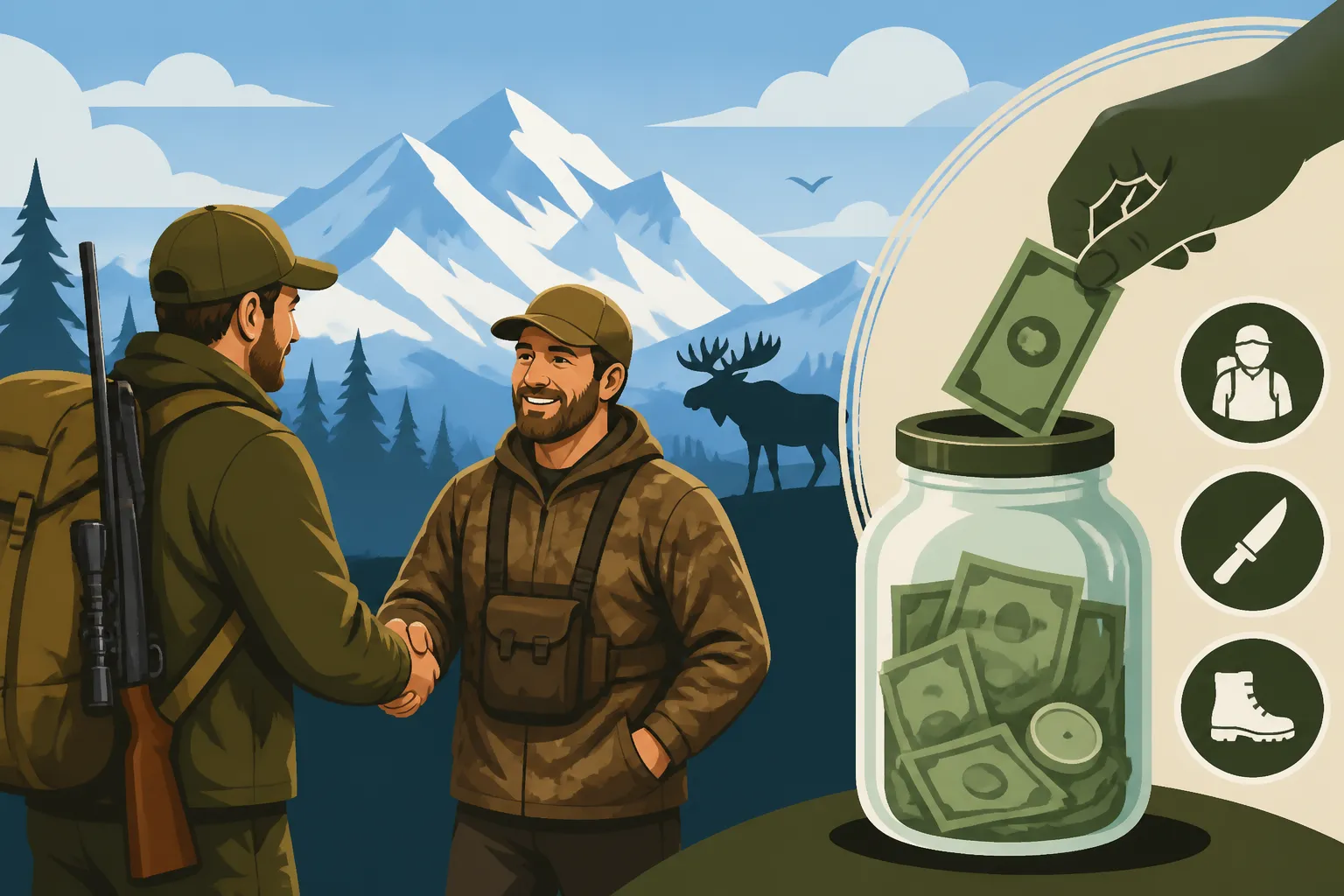
- For the Lead Guide: It's customary to give the guide their tip privately, perhaps along with a handshake and a genuine thank you. If you've decided to give a lump sum for the entire crew to the guide for distribution, present it to them with clear instructions on who it's for. A simple "Thank you so much for an incredible hunt, please share this with the crew" is perfect.
- For Support Staff: If you prefer to tip individual crew members directly (and this is often appreciated), do so discreetly and personally. Hand them an envelope or folded cash with a heartfelt thank you. This often happens on the last day, as they're helping you load out or preparing for their departure.
Avoid a public display of money, which can be awkward for everyone involved. A private, sincere thank you, coupled with a fair tip, goes a long way.
What If You're Unhappy with the Service?
This is a tricky situation that no one wants to face, but it's important to know how to handle it. If you genuinely feel that the service provided was subpar, unethical, or unsafe, you are not obligated to tip the standard amount, or even at all. However, this should not be a snap judgment based solely on not harvesting an animal.
- Evaluate Objectively: Did the guide genuinely fail in their duties? Were they unprepared, unprofessional, negligent, or did they engage in unethical practices? Or was it simply a tough hunt, bad weather, or bad luck?
- Communicate Concerns First: If you have serious concerns, it's often best to address them directly with the lead guide or outfitter before departure, if possible. A calm, direct conversation can sometimes resolve misunderstandings.
- Adjust Accordingly: If, after objective evaluation and possibly a discussion, you still feel the service was unsatisfactory, adjust your tip downwards to reflect your disappointment. In extreme cases of unethical behavior or negligence, withholding a tip is a strong signal, and you should also consider filing a complaint with the Alaska Board of Game or the Alaska Professional Hunters Association if the issues are severe. For information on checking guide licenses or filing complaints, refer to Alaska Guide Complaints and How to Check a Licence.
Remember, a guide's effort and professionalism should be the primary tipping criteria, not just whether you got your animal. Alaska hunting is inherently challenging, and an unfilled tag doesn't automatically equate to poor service.
Budgeting for Tips: Integrating It Into Your Hunt Finances
One of the biggest mistakes hunters make is leaving tips out of their initial hunt budget. This leads to that uncomfortable last-minute scramble we talked about earlier. By integrating tipping into your financial planning from day one, it becomes just another expected cost, allowing you to relax and enjoy the experience without lingering financial stress. Think of it as part of the total investment in your adventure.
When you're comparing outfitters or hunting packages, always factor in the additional cost of tips. A hunt that appears cheaper upfront might end up costing you more if you haven't accounted for gratuities. Being upfront with yourself about all potential expenses allows for a much smoother and more enjoyable planning process.
Early Planning: Making Tipping Part of Your Overall Budget
As soon as you start researching potential hunts and getting price quotes, mentally (or better yet, actually) add 10-20% of the base hunt cost for guide tips, plus a daily rate for any support staff you expect to have. This gives you a realistic total cost.
For example, if a guided moose hunt is advertised at a certain amount, immediately calculate an additional 15% for your guide, plus potential daily rates for a packer and cook if those are part of the camp setup. This comprehensive approach helps you compare different outfitters more accurately and ensures you have sufficient funds set aside. Don't forget about other miscellaneous costs like Trophy Fees on an Alaska Guided Hunt or the cost of shipping your meat home from bush Alaska. By planning ahead, you can avoid any unpleasant surprises and approach your hunt with confidence, knowing you've accounted for every financial aspect. This proactive budgeting is a hallmark of an experienced Alaska hunter.
Using Online Resources for Hunt Planning
The digital age has brought some fantastic tools to help hunters plan their adventures, including budgeting for all the nuanced costs like tips. Websites like BookYourHunt and GoHunt are excellent resources, not just for finding outfitters and available dates, but also for getting a more complete picture of hunt costs.
While these platforms typically list the base price of a hunt, they often include sections detailing what's included and what's extra (like licenses, tags, and sometimes even suggested tip percentages). Use these resources to research average costs for similar hunts, which can then help you estimate your tipping budget more accurately. Some outfitters listed on BookYourHunt or featured in articles on GoHunt might even provide explicit guidance on their tipping expectations, either on their profile or in a downloadable FAQ. While they won't list specific dollar amounts for tips due to the variable nature, the context they provide is invaluable. Always double-check with the outfitter directly, but these platforms offer a great starting point for gathering information and making informed decisions.
The Importance of a Clear Guide Contract
Before you commit to any guided hunt, you'll sign a contract with your outfitter. This document is your best friend for understanding what's included and what's not. A clear guide contract should explicitly detail the services provided, the hunt duration, the agreed-upon price, and any potential extra fees (like trophy fees, meat processing, or additional flight costs).
Crucially, some contracts might even mention tipping, either by stating that it's customary or by providing a suggested range. If tipping isn't mentioned, don't hesitate to ask your outfitter directly for clarification on their expectations and how their crew is compensated. This conversation should happen well in advance of your hunt, ideally during the booking process. Getting everything in writing and having all your questions answered upfront, including those about tips, ensures there are no ambiguities or unexpected expenses down the line. A transparent contract is the foundation for a good hunter-outfitter relationship and a stress-free hunt. For more on what to look for, read Alaska Guide Contracts and Deposits in Alaska.
Disclaimer
This article is for general informational purposes only and does not constitute professional advice. Laws, prices and regulations vary by location and change over time. Consult a qualified professional for guidance on your specific situation.