Closed Areas Around Alaska Airports
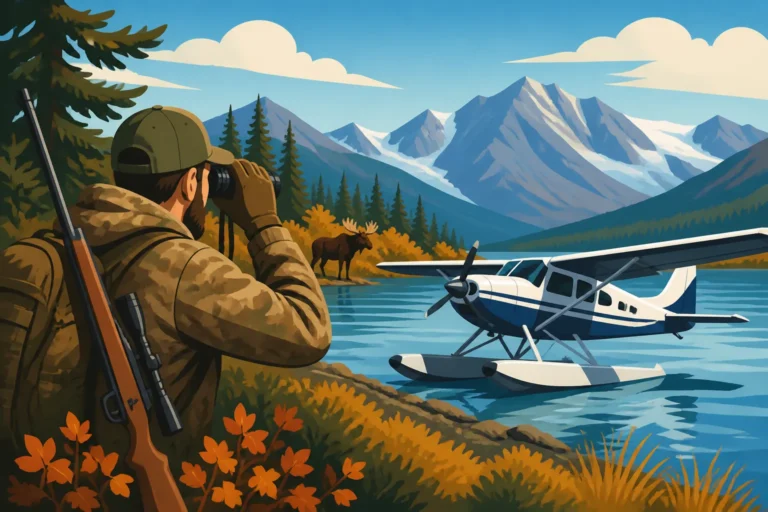
It’s a common scenario in Alaska: you’ve flown hours into the backcountry, the bush plane has just set you down on a gravel bar or a quiet lake, and the engine slowly sputters to a halt. The pilot gives you a thumbs-up, you unload your gear, and then a nagging thought creeps in: "Am I even allowed to hunt right here?" The truth is, many hunters planning an Alaskan adventure, especially those utilizing air transport, often overlook a critical detail: the existence of closed hunting areas around airports and airstrips. This guide is here to shed light on these vital restrictions, explain why they exist, and help you confidently navigate them to ensure a safe, legal, and ultimately successful hunt.
Why Hunting Near Airports Is Restricted in Alaska
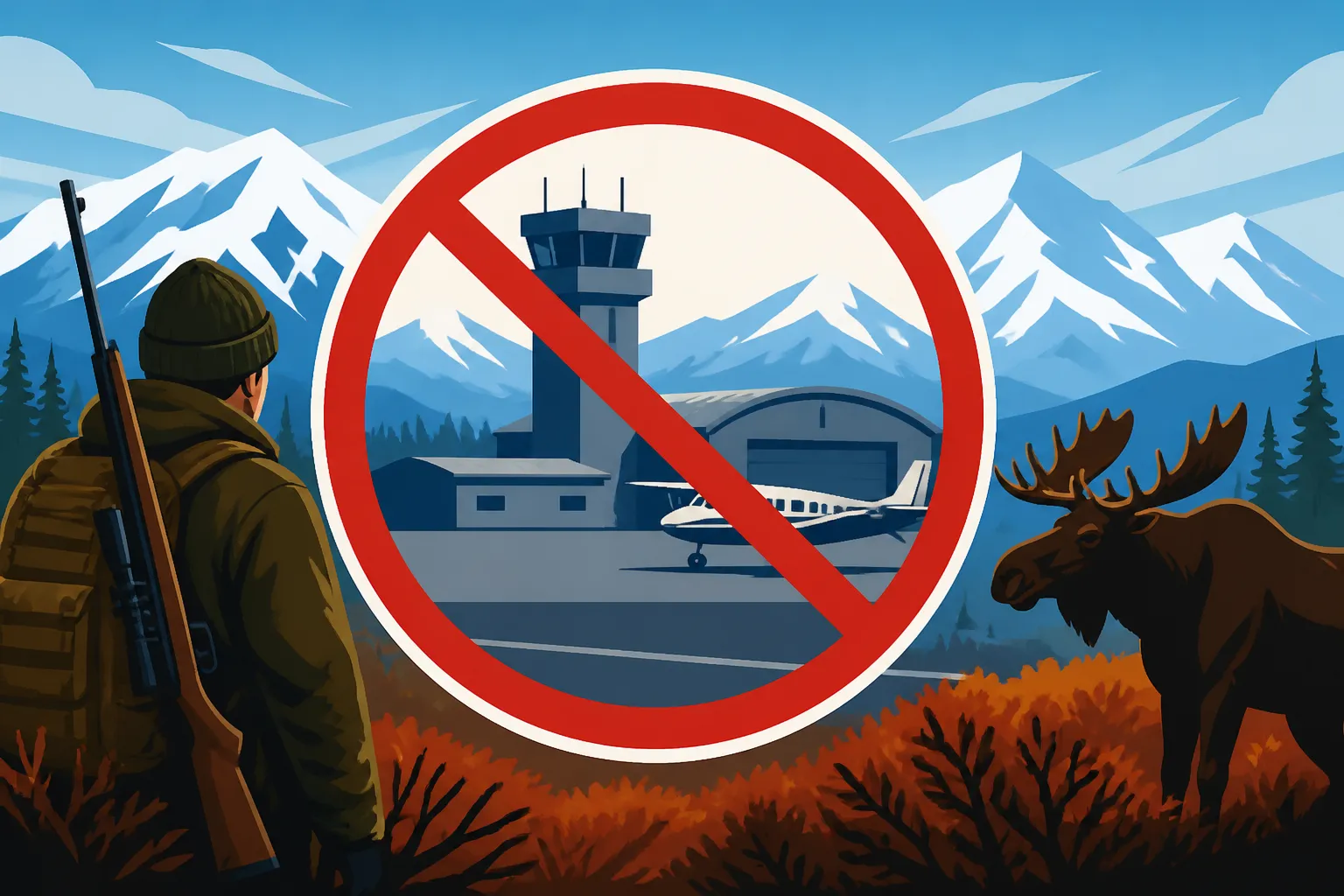
The idea of flying into a remote airstrip and immediately stepping out to hunt can be incredibly appealing, embodying the ultimate Alaska adventure. However, for very good reasons, Alaska has regulations in place that often create a buffer zone around active airfields where hunting is either severely restricted or outright prohibited. These aren't arbitrary rules; they're in place for the safety of people, the animals, and to maintain the integrity of hunting as a whole.
Prioritizing Public Safety and Aircraft Operations
Imagine a busy gravel strip, or even a small lake that sees regular floatplane traffic. Now imagine hunters discharging firearms in the immediate vicinity. The potential for accidents is obvious and severe. Aircraft takeoffs and landings are precision operations; pilots and passengers need clear lines of sight, predictable airspace, and absolutely no risk of stray bullets. It's not just about the planes in the air, but also the people on the ground – pilots, air taxi personnel, other hunters waiting for pick-up, or even local residents. A quarter-mile buffer or even a mile might seem like a lot of prime hunting ground, but when you consider the speeds and trajectories involved with a firearm, that distance shrinks dramatically.
Beyond direct projectile risk, the noise of gunfire can also be a significant distraction or even a hazard during critical flight phases, especially for smaller aircraft or in challenging weather conditions. These zones are established to create a predictable and safe environment for aviation, ensuring that the necessary infrastructure for accessing the vast Alaskan wilderness remains secure and functional for everyone.
Managing Wildlife and Public Perception
While safety is paramount, these closures also serve important wildlife management and public perception purposes. When hunting occurs too close to areas of human activity, animals can become habituated to people, leading to conflicts or making them easier targets due to their lack of natural caution. This can concentrate hunting pressure unnaturally, disrupting local wildlife patterns.
Furthermore, the public image of hunting is something all ethical hunters protect. Seeing game taken just off a runway, or even hearing gunshots directly adjacent to an airport facility, can create a negative impression for non-hunters and residents alike. It can lead to accusations of "road hunting" or "airport hunting" even if perfectly legal, and can erode public support for hunting access. These closed areas help to ensure that hunting maintains its wild, fair-chase character, even in proximity to the vital transportation hubs that make remote access possible. They aim to prevent situations that could otherwise lead to broader restrictions on hunting in the future.
Understanding the Specifics of Airport Closures
Alaska's vastness means there isn't a single, universal rule for every airport or airstrip. The specifics of hunting closures around airfields can vary significantly depending on the type of airport, its location (e.g., within a specific Game Management Unit or Controlled Use Area), and the governing body. It's crucial to understand these nuances, as a mistake can be costly.
Distances, Definitions, and Land Ownership
Many airports and airstrips in Alaska fall under some form of hunting restriction, often defined by a specific distance from the runway, terminal, or property boundary. These distances are not always intuitive. For instance, a small, unmaintained gravel strip used primarily by bush planes might have different rules than a larger, state-maintained airport serving small communities. The Alaska Department of Fish and Game regulations are the primary source of truth, but these often cross-reference specific land status or federal aviation regulations.
You might encounter zones that prohibit the discharge of firearms within a certain radius, which is distinct from prohibiting hunting altogether. Sometimes, you can still archery hunt, or trap, where firearms are forbidden. Land ownership also plays a huge role. An airstrip on federal land within a national preserve might have different rules than one on state land, or even land owned by a Native Corporation. Always remember that private or Native Corporation lands might have their own access and hunting restrictions on top of state regulations. Checking How to Check Alaska Land Status Before a Hunt is a crucial first step.
Exemptions and Special Considerations
It's not always a blanket ban. Some regulations might specify exemptions for certain species (e.g., waterfowl hunting may be allowed in designated areas, while big game hunting is not). Methods might also vary – for example, trapping could be permitted where firearm hunting is prohibited. Some larger airports have specific "airport safety zones" designated by the Federal Aviation Administration (FAA) that carry strict prohibitions on any activity that could interfere with aircraft.
Moreover, while not directly a "closure around airports," the "Same-Day-Airborne" rule is intrinsically linked to air travel and hunting in Alaska. This regulation dictates that you cannot hunt big game on the same day you have flown in an aircraft, including fixed-wing planes and helicopters. This rule is designed to prevent unfair advantage and ensure ethical hunting practices after accessing remote areas. So, even if you land outside a specific airport closure zone, you still need to adhere to the waiting period. Understanding Alaska's Same-Day-Airborne Rule and What It Bans is paramount for any fly-in hunt.
| Area Type | Typical Restriction Type | Common Distance/Rule | Examples of Impact for Hunters |
|---|---|---|---|
| Major Commercial Airports | No Discharge of Firearms | Varies, often 0.25 to 1 mile buffer | Cannot shoot in designated zones |
| Remote Public Airstrips | No Hunting/Firearm Discharge | Varies by GMU/local regulation | No hunting on or near the strip itself |
| Federal Lands (Preserves) | Specific Managed Closures | Case-by-case, sometimes no firearm discharge or species-specific bans | Check refuge/preserve rules; often stricter |
| Designated Controlled Use Areas | Motorized Access Bans/Seasonal | Varies, can affect access near strips | No ATVs beyond a certain point, no aircraft during certain seasons |
| Rivers/Lakes (Floatplane) | Same-Day-Airborne Rule | No hunting big game on day of flight | Must camp overnight before hunting |
Navigating and Verifying Closed Areas in the Field
The good news is that with modern tools and diligent planning, you can effectively identify and respect these closed areas, ensuring your hunt remains legal and ethical. Don't let the complexity deter you; rather, see it as an essential part of responsible preparation.
Essential Mapping Tools and Resources
In the Alaskan wilderness, traditional paper maps are your starting point, but modern technology is an absolute game-changer. GPS mapping applications like onX Hunt are invaluable. These apps often overlay property boundaries, game management unit lines, and, crucially, specific no-hunting or no-shooting zones, including those around airports. Before you leave home, spend time poring over your hunt unit on one of these platforms. Zoom in on any potential landing strips, gravel bars, or bodies of water where your air taxi might drop you. Look for red-shaded areas or specific designations that indicate restrictions. Download offline maps for your chosen area, as cell service will be non-existent in most remote Alaskan hunting grounds. This foresight will prevent you from inadvertently stepping into a restricted zone the moment you touch down.
Beyond digital maps, the Alaska Department of Fish and Game (ADF&G) regulations booklet is your Bible. Always carry a current copy (or a downloaded version on your device) and familiarize yourself with the sections pertaining to your specific Game Management Unit (GMU) and any Controlled Use Areas. These booklets explicitly detail airport closures and other restrictions. Websites like GoHunt also offer excellent resources for pre-hunt research, often summarizing complex regulations and providing insights into specific units, which can help you understand general patterns of closures or specific challenges in the area you're targeting.
Pre-Trip Planning and Communication
The best defense against unknowingly violating an airport closure is thorough pre-trip planning and clear communication. When booking your air taxi or choosing your drop-off point, discuss these concerns directly with your pilot or outfitter. Reputable Fly-In Hunting: Working With an Alaska Transporter Pilot services are intimately familiar with local regulations and can advise you on legal landing sites and the specific hunting rules around them. They often have preferred River Gravel Bars That Work as Landing Strips or Float Plane Lakes in Interior Alaska that they know are compliant with hunting regulations. Don't just assume they know your intent; explicitly ask about hunting restrictions around your proposed landing zone.
It’s also wise to contact the local ADF&G office for the unit you plan to hunt. Game biologists and enforcement officers can provide the most up-to-date and specific information regarding closures. They can clarify ambiguous regulations and warn you of any recent changes or localized issues. This proactive approach not only keeps you legal but also builds a positive relationship with the agencies that manage Alaska's incredible wildlife resources. Always leave a detailed trip plan with a reliable contact, outlining your drop-off and pick-up locations, which ties into essential practices for safety, as detailed in Signal Devices and Check-In Plans for Solo Alaska Hunts.
Recognizing Signs and Physical Boundaries
While technology and research are crucial, the physical environment can sometimes offer clues. Some larger airports might have posted signs indicating no-hunting or no-firearm zones. However, in truly remote areas, these signs are rare. This means you must rely on your pre-scouting and GPS. If you land on a narrow gravel bar and your GPS indicates you're within a restricted zone, you need to recognize that boundary, even if unmarked. Sometimes a distinct change in vegetation, a fence line, or even the visible edge of an airstrip might serve as a de facto boundary.
It's critical to be situationally aware. If you're near any semblance of human activity – a cabin, a landing strip, or even a well-used trail – assume there might be restrictions and verify your location. When discussing landing options with your pilot, they might suggest alternative, more remote gravel bars further downriver or lakes away from established infrastructure to ensure you're well outside any restricted zones, allowing you to focus on the hunt itself, whether it's Float Hunting Alaska Rivers for Moose and Caribou or Spot-and-Stalk Dall Sheep Hunting Above Alaska Timberline.
The Serious Ramifications of Violating Airport Closures
It's easy to think of a hunting regulation as just another rule, but violating closures around airports carries significant legal, ethical, and practical consequences that can severely impact your hunting career and reputation. These aren't minor infractions; they are taken very seriously by enforcement agencies and the hunting community.
Legal Penalties and Their Impact
Getting caught hunting in a closed area, especially one around an airport, can result in hefty fines, confiscation of your weapon and gear, and even the loss of your hunting license for a period of time, or permanently. Depending on the severity of the violation and any associated reckless behavior (like endangering others), you could face criminal charges. Imagine having your prized rifle, your scope, and even your harvested animal seized. The financial loss alone can be devastating, let alone the legal fees and court costs. For non-residents, a hunting license revocation in Alaska could impact your ability to hunt in other states due to reciprocity agreements.
Beyond the immediate penalties, such an incident creates a permanent record. This record can make it challenging to obtain hunting licenses or permits in the future, not just in Alaska, but potentially across the country. It impacts any future applications for drawing permits, like those outlined in How Alaska's Big Game Drawing Permits Work, and could prevent you from pursuing your passion for years to come.
Ethical and Safety Concerns
Aside from the legal ramifications, there's a profound ethical responsibility. As hunters, we are stewards of the land and its wildlife. Deliberately or carelessly hunting in a closed area, particularly one designated for public safety, undermines the ethical foundations of hunting. It shows a disregard for public safety, a lack of respect for regulations, and ultimately, a disrespect for the animals you pursue. This behavior reflects poorly on all hunters, not just the individual, and can fuel anti-hunting sentiments.
From a safety standpoint, a violation here puts others at risk. Imagine being the pilot landing a plane, or a family waiting for their flight, and hearing gunshots alarmingly close. This is not just a theoretical risk; it's a real and tangible danger. The hunting community relies on a shared commitment to safety, fair chase, and ethical conduct. When these principles are ignored, it erodes trust and can lead to irreversible damage to hunting privileges for everyone.
Impact on Future Access and Public Land Use
Every violation, especially those with public visibility, creates ripples. When a hunter breaks the rules near an airport, it can lead to increased scrutiny from land managers, law enforcement, and the general public. This heightened awareness can result in more restrictive regulations for everyone. Imagine an entire region losing access to a critical airstrip for hunting simply because a few individuals couldn't respect the existing boundaries. The consequence could be fewer opportunities for future generations, and more complex regulations to navigate for those who follow.
The availability of public lands for hunting in Alaska is a privilege, not an inherent right. It's a privilege that must be actively protected through responsible behavior. Respecting airport closures and all other hunting regulations ensures that the vast, wild beauty of Alaska remains accessible for future hunting adventures, from Backpack Hunting in Alaska: Gear Weight and Meat Loads to Float Hunting Alaska Rivers for Moose and Caribou. It's a small concession to make for the immense opportunities that Alaska offers.
Disclaimer
This article is for general informational purposes only and does not constitute professional advice. Laws, prices and regulations vary by location and change over time. Consult a qualified professional for guidance on your specific situation.