Dalton Highway Bow-Only Corridor
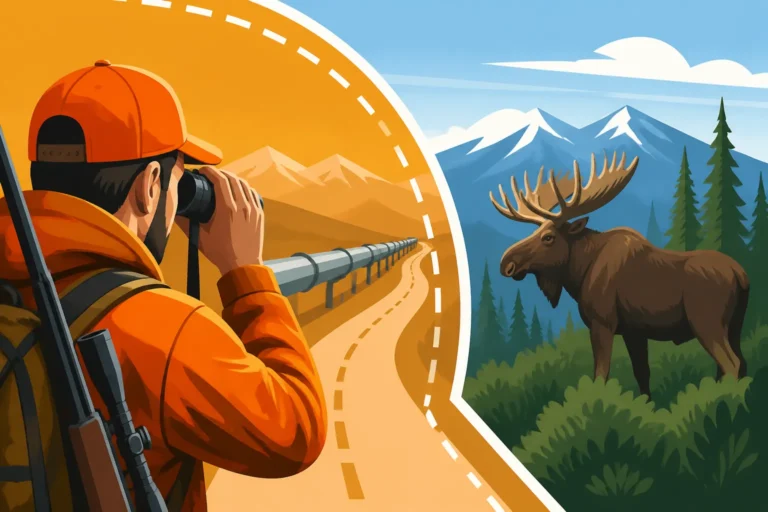
Heading north on the Dalton Highway, chasing that dream Alaska hunt, can be incredibly exciting. But if you're an archery hunter, or thinking of becoming one for this specific area, there's a critical detail that can make or break your trip: the Dalton Highway Bow-Only Corridor. This guide is here to untangle those regulations, ensuring you understand exactly where and how you can ethically and legally pursue game with a bow along this legendary route.
Understanding the Dalton Highway Bow-Only Corridor
The Dalton Highway, an iconic ribbon of gravel stretching into Alaska's Arctic, offers a truly unique hunting experience. However, its very nature as a vital supply route to Prudhoe Bay means that some very specific rules are in place to ensure public safety. One of the most important, and often misunderstood, is the designation of a "bow-only" corridor alongside much of the highway. It’s not just an arbitrary rule; it’s a direct response to the heavy industrial traffic, the potential for accidents, and the sheer volume of non-hunting public using the road.
This isn't your average hunting unit. The corridor is a strip of land, typically five miles wide on either side of the Dalton Highway, where the discharge of firearms is generally prohibited for hunting purposes. This means that if you're planning a hunt in this specific zone, your rifle, shotgun, or muzzleloader must stay packed away. For many, this comes as a shock, especially if they haven't thoroughly reviewed the regulations for Dalton Highway Corridor Firearm Restrictions beforehand. It creates a distinct challenge, pushing hunters to either adapt their methods or venture further afield.
The rationale behind this restriction is layered. Imagine a large transport truck barreling down the road, and simultaneously, a hunter just off the shoulder taking a shot at a caribou. The potential for a ricochet, a missed shot traveling beyond the target, or simply the perception of danger to road users and infrastructure is immense. The corridor ensures that hunting activities immediately adjacent to the highway are conducted in a way that minimizes risk to the public, focusing on methods that have a more limited range and impact zone. It’s a compromise that allows for some access while maintaining safety on a critical transportation artery.
The Five-Mile Corridor Rule Explained
The "five-mile corridor" is more than just a catchy phrase; it's a precise geographical boundary. Generally, this means an area extending five miles on either side of the centerline of the Dalton Highway. From the highway itself, that’s a pretty substantial piece of ground. For example, if you're pulling off at a gravel pit or a small turnout, you're immediately in this restricted zone. This five-mile boundary applies for the majority of the Dalton's length, excluding certain sections around Yukon River crossings or specific federal lands that may have their own overlapping regulations.
Understanding where this corridor truly begins and ends is absolutely paramount. It's not always marked with giant signs every mile, so relying on good maps is crucial. Tools like onX Hunt are incredibly valuable here because they can layer land ownership and regulatory boundaries right onto your GPS. You can literally see, in real-time on your device, whether you are inside or outside that five-mile buffer zone. This precision can mean the difference between a legal hunt and a costly citation. Without such tools, navigating these boundaries, especially in flat, featureless tundra, becomes a significant navigational challenge. Five-Mile Corridor Rules on the Dalton are something every hunter needs to internalize before ever setting tires on the gravel.
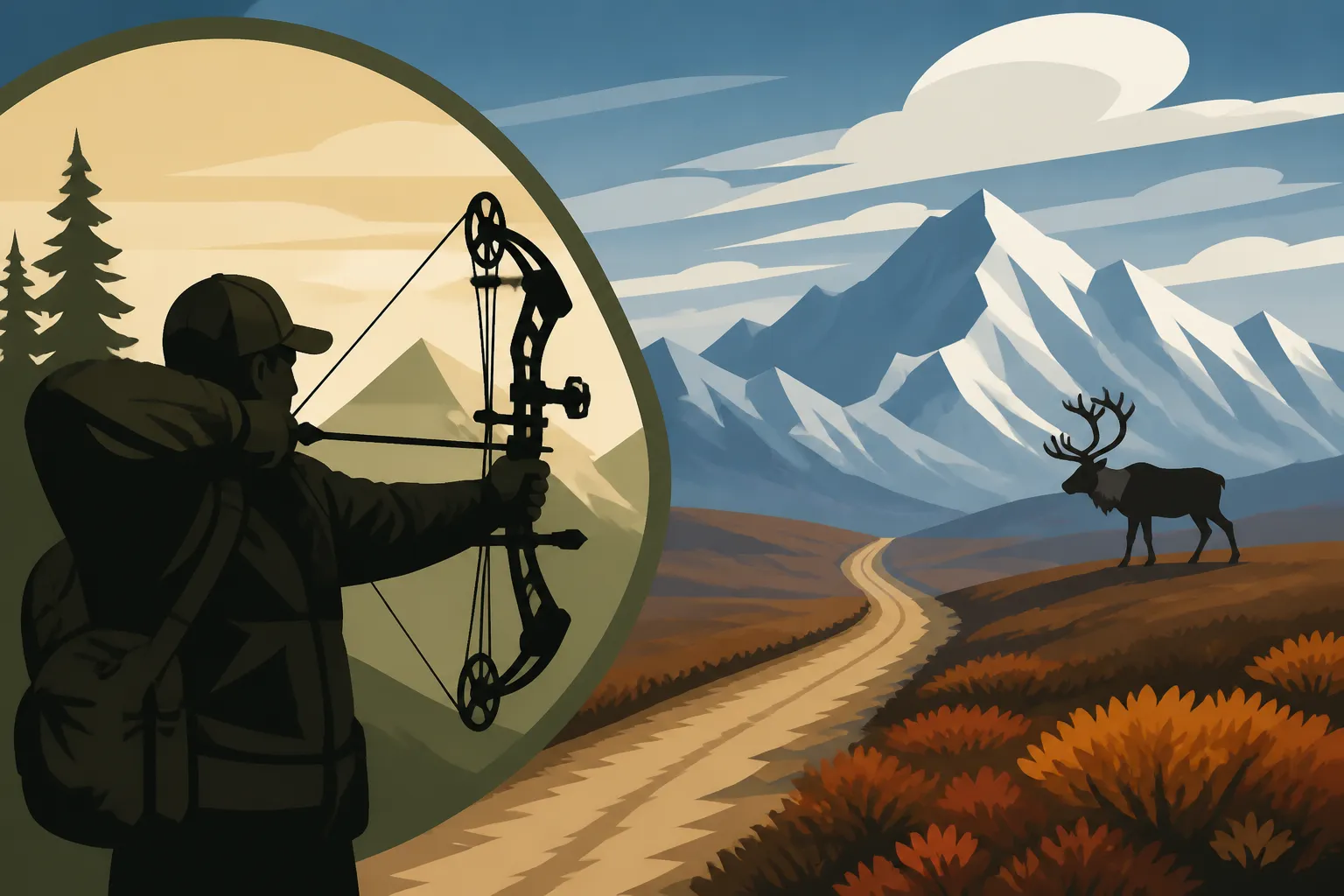
This corridor isn't just about prohibiting firearms; it’s about what is allowed. And what's allowed is archery. This means bowhunters have a unique opportunity here, but also a unique set of responsibilities. It’s a place where skill with a stick and string is not just preferred, but mandated.
Why Archery Only? Safety and Opportunity
The choice to make this corridor bow-only isn't arbitrary. Archery, by its nature, offers a far more limited effective range compared to modern firearms. A well-placed arrow will typically travel much shorter distances than a rifle bullet, and its energy dissipates far more rapidly. This inherent characteristic makes bowhunting a safer option in an area with potential human-wildlife conflict and high vehicle traffic. While any hunting carries risk, the risk profile of archery aligns better with the safety needs of this specific highway corridor.
For the dedicated bowhunter, this restriction actually creates a fantastic opportunity. It effectively removes competition from rifle hunters within this massive linear game unit. This means that the animals within the five-mile corridor, while still wary, won't have faced the same level of pressure from long-range rifle shots as those just outside it. You might find caribou, moose, or even bears that are slightly less skittish, offering potential for closer encounters. It's a trade-off: you give up the range and power of a firearm, but gain a potentially less pressured hunting ground.
Of course, this also means you need to be proficient with your bow. This isn't the place for an "I'll try bowhunting for the first time" kind of trip. You need to be confident in your shooting ability, understanding Alaska Archery Draw Weight Minimums for Big Game and proper broadhead selection, as well as your ability to stalk effectively in often open, unforgiving terrain. The corridor, therefore, becomes a proving ground for those truly dedicated to the art of bowhunting.
The "Bow-Only" Reality: Specifics for Archery Hunters
So, you've committed to the bow-only challenge of the Dalton. That's a bold move, and it comes with its own set of practical realities and regulatory nuances you absolutely need to nail down. This isn't just about slinging arrows; it's about understanding the environment, the game, and the precise legal framework governing your hunt.
Bow and Broadhead Requirements
Before you even think about hitting the road, let's talk tackle. Alaska has specific requirements for archery equipment when hunting big game, and the Dalton Highway corridor is no exception. For instance, there are minimum draw weights for various species. You can't just show up with any old bow and arrow combination. You need to ensure your setup meets the legal specifications for the animal you're pursuing. This typically means a certain poundage for your bow and specific types of broadheads.
When it comes to broadheads, Alaska's regulations are quite clear: you generally need a broadhead with at least two opposing cutting edges, and they cannot be barbed. Expandable or mechanical broadheads are usually permissible, provided they meet certain criteria for blade width when open. It's easy to overlook these details in the excitement of planning, but a game warden checking your gear will not be impressed if you're not compliant. Always review the current hunting regulations booklet; it’s your bible for these trips. Pay close attention to Broadhead Rules for Alaska Big Game to ensure your quiver is legal. Remember, even in a bow-only zone, a non-compliant broadhead makes your hunt illegal.
Scouting and Animal Behavior Within the Corridor
Hunting in the Dalton corridor means understanding that animals here are living adjacent to a major transportation route. Caribou, for instance, are notoriously nomadic and might cross the highway corridor frequently, but they can also be pushed away by the constant vehicle noise and presence. Moose might be found in willow thickets or along drainages, often seeking refuge from the more open areas. Bears, both black and brown, will utilize the corridor, especially if there's good forage, but they are generally less tolerant of human presence.
Pre-hunt scouting, even if it's just from satellite imagery, is paramount. Using detailed mapping software, you can identify potential bedding areas, feeding zones, and travel corridors that might intersect the five-mile buffer. Look for drainages, small stands of timber, or even slight rises in the terrain that could offer cover. The open, vast nature of much of the terrain means long-distance glassing is crucial, and understanding how the animals react to vehicles can help predict their movements. Scouting a Unit From Satellite Imagery Before You Fly can provide an invaluable head start, showing you contours and cover you might not otherwise know exist. Once on the ground, expect to do a lot of walking and utilize subtle terrain features for stalks.
The Challenges of Bowhunting in Open Country
Bowhunting, by its very nature, demands close-range shots. In the often wide-open, treeless tundra that characterizes much of the Dalton corridor, this presents a significant challenge. Stalking within effective bow range of 40-60 yards without detection requires immense patience, understanding of wind, and an intimate knowledge of terrain. You won't have dense forests to hide behind. Instead, you'll be using every small rise, every fold in the earth, and every patch of stunted willow to break up your silhouette.
Weather is another massive factor. The Arctic can throw everything at you: howling winds that make stalking a nightmare and affect arrow flight, driving rain, or even early snow. Maintaining focus and warmth in these conditions is essential. And of course, there's the ever-present concern of bear encounters, especially after a kill. While it might be bow-only for hunting, you still need to be prepared for Bear Safety While Butchering a Kill in Alaska, often carrying a sidearm or bear spray for defense. The Dalton corridor is wild Alaska, even with a highway running through it.
Planning Your Hunt Within the Corridor: Gear, Logistics, and Mindset
Hunting the Dalton Highway corridor successfully with archery gear requires a methodical approach, from your equipment choices to your personal mental fortitude. This isn't a casual road trip; it's an expedition that demands respect for the environment and meticulous preparation.
Essential Gear for a Dalton Archery Hunt
Given the remote nature of the Dalton Highway and the bow-only restriction, your gear choices are critical. Beyond your bow and arrows, here's what should be on your checklist:
- Top-tier Optics: Since you'll be spotting game at long distances and needing to close the gap on foot, a good pair of binoculars (10×42 or 10×50) and a spotting scope (20-60x or higher) are non-negotiable. Quality optics like those from Swarovski, Leica, or Vortex will save your eyes and reveal animals that lesser glass would miss.
- Navigation Tools: A reliable GPS unit with detailed topo maps, like those available through onX Hunt, is essential for staying within the corridor boundaries and navigating the trackless tundra. Always carry a physical map and compass as a backup, and know how to use them. Cell service is virtually non-existent for much of the highway's length, so downloading offline maps is crucial. Alpine Navigation Without Cell Service is a skill you'll absolutely need.
- Weather-Appropriate Clothing: The weather can change in an instant up north. Think layers: a good base layer, insulating mid-layers (fleece or puffy), and a bomb-proof outer shell that's both waterproof and windproof. Merino wool or synthetics are preferred; leave the cotton at home.
- Camping Setup: If you're planning multi-day excursions away from your vehicle, a lightweight, durable tent, sleeping bag rated for well below freezing, and a good sleeping pad are vital. Even if you're truck camping, having emergency bivy gear is smart.
- Game Processing Tools: Knives, game bags that breathe (essential for Game Bags That Breathe in Coastal Rain, even if not coastal, they protect meat), and a sturdy pack frame for packing out meat. Even a modest caribou can be a heavy load when you're miles from the road. Packing Out Meat in Alaska: The Salvage Law Hunters Must Follow is critical here – you cannot waste meat.
| Category | Recommended Item | Why it's Important for the Dalton Bow Corridor |
|---|---|---|
| Archery | Compound or Recurve Bow (legal draw weight) | Mandated weapon type for the corridor |
| Legal Broadheads (fixed blade or mechanical) | Compliance with state regulations | |
| Rangefinder (accurate to 80+ yards) | Essential for precise shot placement | |
| Optics | High-Quality Binoculars (10×42 or 10×50) | Spotting game in vast, open terrain |
| Spotting Scope (20-60x or higher) | Field judging and detailed observation | |
| Navigation | GPS Unit with Offline Maps (e.g., onX Hunt) | Crucial for boundary awareness (5-mile rule) |
| Physical Map and Compass | Backup in case of electronic failure | |
| Clothing | Layered System (base, mid, outer shell) | Adapting to rapid weather changes |
| Waterproof/Windproof Outerwear | Protection from harsh Arctic elements | |
| Shelter/Sleep | 4-Season Tent | Durability against strong winds and snow |
| Sleeping Bag (rated to 0°F or lower) | Staying warm in unpredictable temperatures | |
| Game Care | Sharp Knives, Bone Saw, Game Bags | Efficient and legal meat salvage |
| Pack Frame | Hauling heavy loads of meat over long distances | |
| Safety | Satellite Messenger (InReach, Zoleo) | Emergency communication where cell service fails |
| Bear Spray / Sidearm (for defense, not hunting) | Protection against unexpected bear encounters |
Logistics: Vehicle, Camping, and Meat Care
Your vehicle will likely be your base of operations. The Dalton Highway is rough on vehicles, so ensure yours is in top condition, with good tires (a spare is a must!), and plenty of fuel. Camping can be done responsibly along pull-offs or in designated areas. However, remember you're often in remote country with no services. Pack out everything you pack in.
Meat care is a serious consideration, especially if you harvest an animal far from the road. The goal is to cool the meat as quickly as possible to prevent spoilage. This means quartering the animal swiftly and getting those quarters into breathable game bags. Hanging meat in the open air, often from a tripod or a natural structure if you can find one, is ideal. If it's warm, this is even more critical. Hanging Meat in Warm September Weather details this process. Having a plan for transporting the meat back to your vehicle and then further south for processing is crucial. Many hunters will drive south to Fairbanks or Anchorage for proper cold storage and processing.
The Mental Game: Patience and Preparedness
Bowhunting is a mental game, and hunting the Dalton corridor elevates this to another level. You'll face long hours of glassing, often in challenging conditions, followed by demanding stalks. Frustration can set in quickly. The caribou might be on the other side of a river, the moose might be in a thicket you can't approach silently, or the wind might constantly betray your position.
Patience is your greatest virtue here. It means waiting for the right moment, for the animal to move into a more favorable position, or for the wind to shift. Preparedness isn't just about gear; it's about being mentally ready for setbacks, for adverse weather, and for the sheer physical exertion. It's about having a backup plan for your backup plan. This remote, stunning landscape will test you, but the rewards of a successful bowhunt here are truly unmatched.
Navigating the Regulations and Staying Legal
Alaska's hunting regulations can be complex, and the Dalton Highway corridor adds another layer of specificity. Ignoring these rules, even unintentionally, can lead to hefty fines, loss of equipment, and permanent loss of hunting privileges. Diligence is not just recommended; it's mandatory.
Game Management Units and Specific Regulations
The Dalton Highway passes through several Alaska Game Management Units and How They Are Numbered. While the bow-only corridor is a blanket rule over much of its length, the species-specific regulations—like season dates, bag limits, and legal animal definitions (e.g., Alaska Moose Antler Restriction Areas)—are still dictated by the specific Game Management Unit (GMU) you are in. You must know which GMU you are in and what its particular rules are for caribou, moose, bear, or any other species you might be pursuing.
For instance, a particular caribou herd might have different bag limits or season dates depending on whether it's the Fortymile or the Western Arctic herd, both of which can influence caribou presence near the Dalton. These regulations change, sometimes even with emergency orders during a season, so constantly checking the Alaska Department of Fish and Game website for updates is non-negotiable. Don't rely on last year's regulations or hearsay.
Avoiding Common Mistakes
One of the most common mistakes hunters make in the Dalton corridor is misunderstanding the five-mile rule. It's not "a few hundred yards" or "out of sight of the road." It is precisely five miles. Many hunters get caught when they pursue an animal that might be a mile or two off the road, think they're far enough, and then realize they're still within the restricted zone. Your GPS, especially with an accurate base map from providers like onX Hunt, is your best defense against this kind of navigational error. Confirm your position constantly.
Another common pitfall is the misuse of firearms. While you can transport a cased, unloaded firearm through the corridor, you cannot discharge it for hunting purposes within the five-mile buffer. This means if you stop to glass, or get out to hike, that rifle must stay stowed away. Even having it readily accessible but unloaded can sometimes be a gray area, so extreme caution is advised. If you plan to hunt outside the corridor with a rifle, ensure your route in and out of those areas does not involve any hunting activity within the restricted zone.
Finally, proper identification of legal game is always critical, but perhaps even more so when operating under specific regulations. If you're hunting moose, for example, accurately Field Judging a Legal Bull Under Alaska Antler Rules is a skill that must be honed before the hunt. Don't take a shot if you're not 100% certain of the animal's legality.
The Importance of Respecting Land Status and Rules
Beyond the bow-only corridor, hunters on the Dalton need to be aware of the varied land statuses. The highway cuts through state land, federal land (including Bureau of Land Management areas), and potentially some Native Corporation lands. While the five-mile corridor rule often applies broadly regardless of underlying land ownership, specific areas like the Yukon Flats National Wildlife Refuge might have additional rules or special permits required. This is where researching your specific route and potential hunting grounds becomes even more detailed.
Always assume that you need permission to access private or Native Corporation lands, even if they appear undeveloped. Public lands are generally open, but even then, there can be smaller designated areas with further restrictions. Understanding who owns the land you're standing on is fundamental to ethical and legal hunting in Alaska, especially along complex routes like the Dalton. Consulting with the Alaska Department of Fish and Game and the BLM offices in Fairbanks can provide up-to-date information on land status and local regulations. While GoHunt might offer fantastic general information about hunting units, the specific, granular details of corridor rules and localized land status often require direct consultation with the managing agencies.
Ultimately, hunting the Dalton Highway Bow-Only Corridor is a true Alaskan adventure. It demands respect for the regulations, a keen understanding of the terrain, and an unwavering commitment to fair chase archery. Prepare thoroughly, stay diligent with your navigation and regulations, and you might just find yourself with an unforgettable trophy and a profound appreciation for this unique piece of the Last Frontier.
Disclaimer
This article is for general informational purposes only and does not constitute professional advice. Laws, prices and regulations vary by location and change over time. Consult a qualified professional for guidance on your specific situation.