Federal Subsistence Boundaries in Unit 25C
Navigating Alaska's vast and wild landscapes for a hunt can be an incredible adventure, but let's be honest, figuring out exactly where you can legally hunt and under what rules sometimes feels like you need a law degree and a surveyor's map rolled into one. One of the trickiest areas for many hunters, especially those new to the Last Frontier or from outside its rural communities, involves understanding federal subsistence boundaries. This guide is going to walk you through the specifics of Federal Subsistence Boundaries, focusing on Game Management Unit (GMU) 25C, so you can hunt confidently and legally.
Understanding Alaska's Dual Management System
Alaska truly is unique, and that extends to how its fish and wildlife are managed. Unlike many states where one agency holds sway over most public lands, Alaska operates under a dual management system. This system can be a real head-scratcher if you're not prepared, and it's absolutely crucial for any hunter to grasp, especially when you're looking at areas like Unit 25C that have significant federal land holdings.
State vs. Federal Jurisdictions
At its core, Alaska has both state and federal agencies managing wildlife and land. The State of Alaska, through its Department of Fish and Game, manages hunting and fishing on most lands across the state. They set seasons, bag limits, and licensing requirements that apply to the majority of hunters, often referred to as "general season" hunters. This is what most folks are familiar with. However, a significant portion of Alaska is federal land – think National Parks, National Preserves, National Wildlife Refuges, and Bureau of Land Management (BLM) lands. On some of these federal lands, and for certain eligible users, federal laws and regulations take precedence.
This dual system came about due to federal legislation aimed at protecting subsistence hunting and fishing rights for rural Alaskans. It means that while the state might have one set of rules, the federal government might have another for its lands, often with different season dates, bag limits, or even species availability. It's not about one being "better" than the other, but rather two systems coexisting, sometimes overlapping, and sometimes creating distinct zones of rules. It’s like having two different rulebooks for the same football field, depending on who’s holding the ball. You really need to know which book applies to you and where you are. Alaska Game Management Units and How They Are Numbered provides a broader context for how these units are delineated across the state.
What is Federal Subsistence?
So, what exactly is federal subsistence? Simply put, it's a priority use of fish and wildlife resources on federal lands for "federally qualified rural residents" of Alaska. The intent is to ensure that those who live a subsistence lifestyle in rural areas have priority access to traditional foods. This isn't just a casual hunting trip; for many rural Alaskans, harvesting game is essential for feeding their families throughout the year.
The key here is "federally qualified rural residents." This means you generally need to reside in a specific rural community within Alaska and meet certain criteria to qualify. If you're an urban resident of Anchorage, Fairbanks, or Juneau, or certainly if you're a nonresident hunter, you typically do not qualify for federal subsistence priority hunts. You would instead be subject to the general state hunting regulations, even when hunting on federal lands that are also open to federal subsistence hunters. This is a critical distinction because federal subsistence regulations often have longer seasons or more generous bag limits than the state general seasons for the same areas and species. It's easy to see how this can create confusion and frustration for hunters trying to do the right thing.
Delving into Unit 25C: A Case Study in Complexity
When we talk about federal subsistence boundaries, Unit 25C serves as an excellent, if sometimes perplexing, example of how these regulations play out on the ground. It's an area where the lines between state and federal jurisdiction, and between different types of federal land, can feel less like clear boundaries and more like a messy watercolor painting.
Where is Unit 25C?
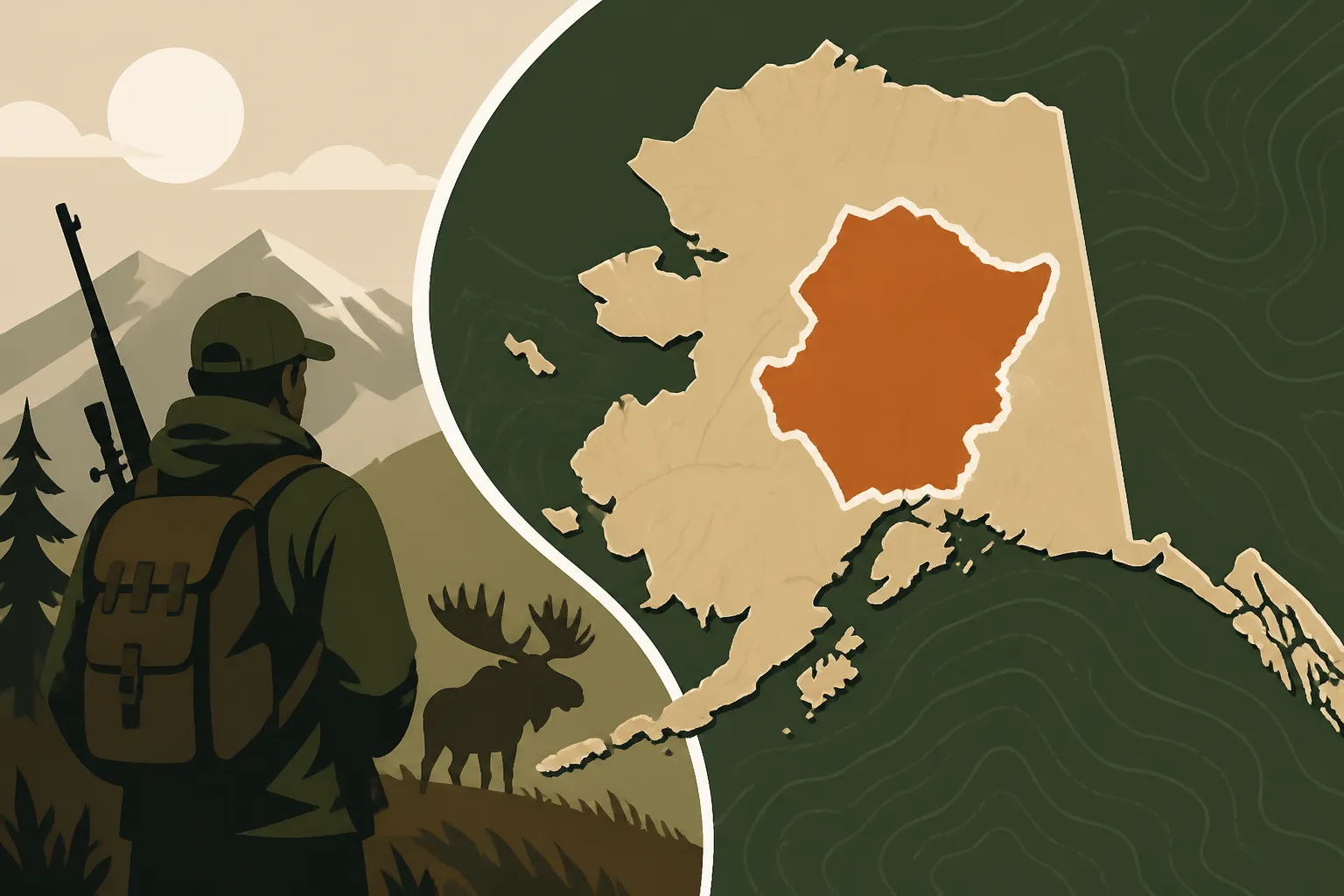
Game Management Unit 25C is located in the interior of Alaska, encompassing a significant portion of the Yukon Flats region. It's a vast area, characterized by its immense wetlands, countless lakes, winding rivers – most notably segments of the mighty Yukon River – and dense boreal forest, often referred to as "taiga." The unit is known for its incredible moose habitat, particularly in the willow flats and old burn areas, and it's also critical caribou range, though herd movements mean caribou presence can vary significantly year to year. You'll find a scattering of small, predominantly Alaska Native communities throughout the unit, which are often the very communities whose residents qualify for federal subsistence. This region is a prime example of remote Alaska, with most access being via air taxi, boat, or snowmachine in winter.
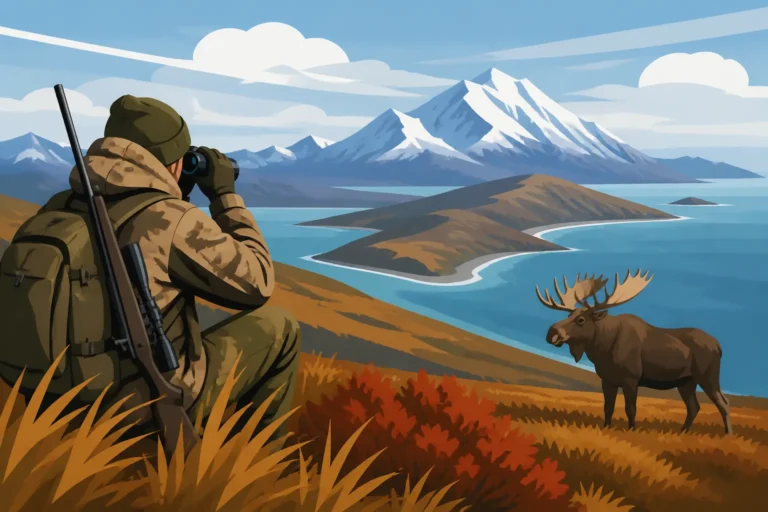
The sheer scale and remoteness of Unit 25C mean that understanding land status isn't just academic; it's a practical necessity for safe and legal hunting. Imagine you're deep in the bush, miles from any road, and you've just spotted a legal bull moose. Knowing whether you're on federal land, and therefore which set of regulations applies to you as a general season hunter, is paramount. Alaska Moose: Where the Biggest Bulls Live will give you an idea of the kind of game you might encounter in this region.
Identifying Federal Lands within Unit 25C
Unit 25C is a patchwork of land ownership, but federal lands make up a substantial portion of it. The most prominent federal land designation here is the Yukon Flats National Wildlife Refuge. National Wildlife Refuges are managed by the U.S. Fish and Wildlife Service, and they often have their own specific regulations on top of general federal subsistence rules. While some parts of refuges might be entirely closed to hunting or have highly restrictive rules, other parts are open, but under federal management guidelines.
Beyond the refuge, you'll also find Bureau of Land Management (BLM) lands, which are managed for multiple uses, including hunting. Sometimes, you might even encounter Native Corporation lands, which are privately owned by Alaska Native Corporations and often require explicit permission or a permit to access for hunting. This mix means you could potentially cross between state-managed lands, BLM lands, National Wildlife Refuge lands, and Native Corporation lands all within a single hunting trip. It’s enough to make your head spin if you haven't done your homework! This is where mapping tools become absolutely essential. For more general information about federal lands, check out Federal Subsistence Hunting on Alaska Public Lands.
The Impact of Federal Subsistence on Non-Local Hunters
For non-federally qualified hunters – essentially anyone who doesn't live in a designated rural community and meet the federal criteria – the presence of federal subsistence regulations in Unit 25C means you must adhere to the more restrictive state hunting regulations, even when you're hunting on federal lands. This is the part that often catches hunters off guard.
Let's say the state general season for moose in Unit 25C is September 1-15, with a specific antler restriction. However, the federal subsistence season for federally qualified users might run from August 15 through October 15, with a more liberal bag limit. If you are not a federally qualified subsistence user, you cannot hunt during that federal season, nor can you follow the federal bag limits, even if you are physically hunting on the Yukon Flats National Wildlife Refuge. You must stick to the state's dates and antler rules. Violating this distinction can lead to serious legal trouble. It's not about being unfair; it's about the legal framework prioritizing a traditional way of life for rural residents. Always consult the current Alaska hunting regulations, both state and federal, before heading out.
Navigating the Boundaries: Practical Tools and Tips
Given the labyrinthine nature of land status and hunting regulations in Unit 25C and similar areas, simply knowing the rules isn't enough. You need practical ways to stay on the right side of the law, both in your planning and when you're out in the field.
Mapping Resources for Hunters
In this digital age, ignoring technology would be a mistake. Modern mapping applications have become indispensable for Alaska hunters. When you're trying to figure out where those federal subsistence boundaries lie, and which parts of Unit 25C are state, federal, or even private, a robust mapping app is your best friend.
For instance, apps like onX Hunt are fantastic for clearly displaying land ownership, including federal, state, and private parcels. You can download maps for offline use, which is absolutely critical given the lack of cell service in most of Unit 25C. Seeing the lines on a topographical map, overlaid with land ownership data, makes it much easier to plan your movements and avoid accidental trespass or violations. Similarly, platforms like GoHunt offer detailed planning tools and often integrate land ownership maps, allowing you to visualize your hunting area before you ever step foot in it. These tools can even show you things like land management agency, helping you differentiate between BLM land and National Wildlife Refuge land, which might have subtly different rules. Downloading Offline Maps Before a Fly-In is a must-read for anyone heading into remote country.
Verifying Land Status in the Field
Even with the best maps loaded onto your phone or GPS device, it's wise to have multiple methods for verifying your location and the land status in the field. Technology can fail – batteries die, devices get wet, or satellite signals can be blocked by dense cover or deep canyons.
Always carry a physical map (USGS topo maps are excellent) and a compass, and know how to use them. While these won't show the land ownership lines directly, they are invaluable for pinpointing your exact coordinates and cross-referencing with your digital maps. Before your trip, mark key federal boundaries on your paper maps as well. Furthermore, before you even leave cell service, make sure your GPS unit or mapping app has all relevant land ownership layers active and downloaded. When in doubt about a boundary, err on the side of caution. It's better to hold off on a shot or move to a different area than to risk a violation. Alpine Navigation Without Cell Service is another vital skill for hunters in remote Alaska.
The Importance of Regulations Booklets and Emergency Orders
Alaska's hunting regulations are not static. While the general season dates are published in annual regulation booklets, things can change. Emergency Orders (EOs) are a common occurrence in Alaska, especially for species like caribou or when quotas are met. These EOs can open or close seasons, change bag limits, or modify other rules with very little notice. This is particularly true for federal subsistence hunts, which are often managed with quotas that can close a season almost immediately.
Before and during your hunt, you must stay informed. Read both the Alaska State hunting regulations and the Federal Subsistence regulations for the area you plan to hunt. Check the Alaska Department of Fish and Game (ADF&G) website and the Federal Subsistence Board website regularly for any Emergency Orders affecting Unit 25C. Many air taxi operators, guides, and local sporting goods stores also keep up-to-date information, but the ultimate responsibility rests with you. Ignorance of an Emergency Order is not a valid defense if you're found in violation. Alaska Emergency Orders That Close a Season Early highlights just how quickly things can change.
Here's a simplified look at how state and federal regulations might differ generally (remember, actual rules vary wildly by unit, species, and year):
| Feature | Typical Alaska State General Hunt Regulations (for non-federally qualified) | Typical Alaska Federal Subsistence Regulations (for federally qualified rural residents) |
|---|---|---|
| Eligibility | Any licensed hunter (resident or nonresident) | Federally qualified rural residents of specific communities |
| Season Length | Often shorter, set to manage overall harvest | Often longer, prioritizing continuous harvest for subsistence needs |
| Bag Limits | More restrictive (e.g., one animal per season) | Potentially more liberal (e.g., multiple animals or household limits) |
| Areas | Applies to most lands unless restricted by specific closures | Applies to designated federal public lands, with priority use |
| Species | All legal game species, subject to state regs | All legal game species, with priority access for subsistence |
| Management | Alaska Department of Fish & Game | Federal Subsistence Board/USFWS, BLM, NPS |
| Reporting | State harvest tickets and online reporting | Federal permits, harvest tickets, and specific reporting requirements |
Common Pitfalls and How to Avoid Them
The complexity of Alaska's dual management system, especially concerning federal subsistence boundaries, creates several common traps for even well-intentioned hunters. Being aware of these pitfalls is the first step in avoiding them.
Mistaking State for Federal Rules
This is perhaps the biggest and most frequent mistake hunters make. You've studied the Alaska hunting regulations booklet cover to cover, you know the moose season in Unit 25C is a specific two-week window in September with an antler restriction for legal bulls. You fly into the Yukon Flats, confident you're prepared. But what you might not realize is that the specific tract of land you're hunting on is federal land within the Yukon Flats National Wildlife Refuge, and a federally qualified subsistence hunter might be able to hunt a different season or bag limit. If you're not federally qualified, you still must follow the state general season rules.
The pitfall here is assuming that because you're on federal land, federal rules automatically apply to you. That's not the case. Federal rules often create opportunities for specific users (federally qualified rural residents) on federal lands. For everyone else, state rules generally prevail, even on those federal lands. Always ask yourself: "Am I federally qualified for subsistence? No? Then what are the state regulations for this specific area and species?" Alaska Harvest Tickets, Registration Permits and Draw Permits often differentiate between state and federal mechanisms.
Inadvertently Entering Closed or Restricted Areas
Federal lands, particularly National Wildlife Refuges and National Parks/Preserves, can have specific areas that are completely closed to hunting, or have special restrictions (e.g., no motorized vehicles, archery-only zones, or specific access corridors). While much of Unit 25C is open to hunting, these internal closures or restrictions can easily be overlooked if you're not meticulously studying your maps.
Imagine you're pursuing a bull moose, focused intensely on the animal, and you push into an area marked on a federal refuge map as a "No Hunting Zone" or an area requiring a special federal permit you don't possess. Ignorance is no excuse, and wardens patrol these areas. Use your onX Hunt app or a similar mapping tool with land status layers prominently displayed. Set up boundary alerts if your GPS has that feature. Before you finalize your hunt plan, zoom in on your intended hunting zones with multiple map layers to ensure no small, restricted areas are hiding in plain sight.
Relying Solely on Outdated Information
Hunting regulations, especially for federal subsistence, are dynamic. What was true last year might not be true this year. Herd numbers can fluctuate, conservation concerns can arise, and management priorities can shift, leading to Emergency Orders or changes in the annual regulations.
The danger here is relying on a regulation booklet from a previous year, or worse, "campfire talk" from other hunters that might be outdated or misinformed. Always, always consult the most current regulations directly from the ADF&G and Federal Subsistence Board websites. Pay close attention to the dates when regulations were published or last updated. If you're planning a trip well in advance, make a calendar reminder to check for updates a few weeks before you leave, and again just before you head into the field. This due diligence is the best way to ensure your hunt is legal and enjoyable. Where to Get the Alaska Hunting Regulations Booklet is a starting point for current information.
Disclaimer
This article is for general informational purposes only and does not constitute professional advice. Laws, prices and regulations vary by location and change over time. Consult a qualified professional for guidance on your specific situation.