Tongass National Forest Deer Country
Hunting Sitka blacktail deer in Southeast Alaska's vast Tongass National Forest is an experience unlike almost any other, but it comes with its own unique set of challenges. Forget wide-open Western landscapes; here, you're battling dense rainforest, relentless rain, thick brush, and often, a steep, unforgiving coastline. Many hunters arrive picturing easy beach access, only to find themselves swallowed by unforgiving timber or struggling to locate deer in the vastness. This guide is all about helping you understand the Tongass ecosystem, master the terrain, and develop effective strategies for finding and harvesting deer in this truly wild and often wet corner of Alaska.
Understanding the Tongass Ecosystem and Sitka Blacktail Deer
The Tongass National Forest is the largest national forest in the United States, a sprawling temperate rainforest covering most of Southeast Alaska. This isn't your typical deer habitat, and understanding its unique characteristics is the first step to a successful hunt. The environment profoundly shapes the behavior and distribution of Sitka blacktail deer, which are the stars of the show here. They are smaller than their mule deer cousins, incredibly tough, and perfectly adapted to the wet, rugged landscape.
Sitka Blacktail Deer Habitat and Diet
Sitka blacktail deer thrive in a mosaic of old-growth timber, regenerating clearcuts, and alpine fringes. Unlike interior deer that might rely heavily on aspen or browse, these deer have a varied diet influenced by the coastal climate. During the spring and summer, you'll find them gorging on forbs, grasses, and shrubs in open areas, often migrating upwards into the alpine as the snow recedes. The abundant rainfall means a lush understory, providing both food and cover. As fall approaches and berries ripen, they become a crucial food source, especially blueberries and huckleberries, which are rich in sugars for winter fat. Later, during the winter months, their diet shifts to evergreen browse like cedar, hemlock, and even mosses and lichens when snow depths push them down into old-growth timber where the canopy provides some relief.
Understanding these seasonal food preferences and how they relate to the landscape is key. A hunter who walks past a blueberry patch in October, thinking only of deep woods, is missing a prime opportunity. The deer are constantly moving, following the most nutritious food sources available, which means you need to be thinking like a deer. Sometimes they’re down on the beach nibbling kelp at low tide; other times they’re high in the alpine, browsing on tender shoots. It’s a dynamic system.
Population Dynamics and Environmental Influences
Sitka blacktail deer populations in the Tongass can fluctuate wildly, much more so than many other deer populations. These swings are heavily influenced by the severity of winter weather. Deep snow is the biggest killer. When snow blankets the lower elevations for extended periods, deer are forced to expend more energy to move, find food, and escape predators. This leads to what locals often call "winter die-offs," which can dramatically reduce populations for several years. Conversely, a mild winter allows deer to thrive, leading to robust numbers. This is why checking current population assessments and recent winter severity reports is crucial before planning a hunt.
Predation by wolves and bears also plays a role, especially on fawns and deer weakened by winter. However, winter snow depth is generally considered the primary driver of population cycles. Hunters often express frustration when they arrive expecting high numbers only to find a lean year after a hard winter. It’s a stark reminder that nature calls the shots here. Learning about these fluctuations will help manage your expectations and direct your efforts towards areas that might have fared better. Sitka Blacktail Deer Population Cycles in Alaska can offer more insight into these natural rhythms.
Navigating the Dense Tongass Terrain
The Tongass National Forest is breathtakingly beautiful, but it's also incredibly challenging to move through. This isn't open country where you can glass for miles; it's a claustrophobic world of thick timber, steep slopes, and boggy muskegs. Many hunters underestimate the sheer physical demands of this environment.
Dealing with Thick Timber and Undergrowth
The temperate rainforest of Southeast Alaska is defined by its impenetrable forests. Old-growth stands, while magnificent, often have a dense understory of devil's club, salmonberry, and tangled brush that makes walking a slow, noisy, and exhausting endeavor. Clear-cut areas, while offering new growth for deer, can be even worse with their jumbled logging slash and rapidly regenerating brush. Trying to push through this silently is nearly impossible. Many a hunter has spent hours busting brush, only to feel like they've gone nowhere.
The trick is to learn to read the slight changes in terrain and vegetation. Look for old game trails, even faint ones, that offer a path of least resistance. Sometimes, following a slight ridge or a dry streambed can offer easier travel than a direct line. Using an app like onX Hunt can be invaluable here, allowing you to identify subtle elevation changes, small drainages, or even historical logging roads that might offer a slightly more open route. Always assume travel will take twice as long as you expect, and plan your day accordingly. Being stuck miles from your boat or camp in the dark, slogging through thick brush, is a miserable experience.
Traversing Muskegs and Coastal Mudflats
Muskegs are another distinct feature of the Tongass, and they can be incredibly frustrating. These are boggy, waterlogged areas, often covered in stunted trees, grasses, and mosses, where the ground gives way underfoot. They can range from merely soggy to truly dangerous, sucking boots off your feet or hiding deep holes. It’s easy to get turned around in a large muskeg, as all the small trees look identical.
Along the coastline, you'll also encounter extensive mudflats at low tide. These look like easy walking from a distance, but they can be deep, sticky, and exhausting to cross. Many a hunter has misjudged a tide and found their path cut off, or worse, their skiff high and dry, stranded until the next high tide. Understanding tide tables becomes as important as understanding the terrain. When you're Packing a Deer Off a Beach at Low Tide, these mudflats can turn a short pack into an epic struggle. Always factor in the tides when planning your movements, especially for accessing hunting areas or recovering game near the water.
Accessing Tongass Deer Country
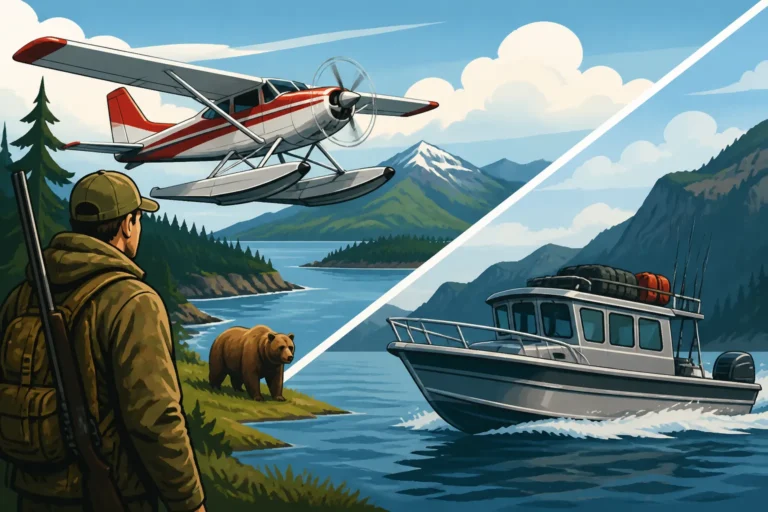
Hunting the Tongass is largely a boat-based affair. The road system is minimal, limited mostly to a few towns, and the vast majority of the forest is wild, roadless country accessible only by water or air. This means your vessel is your lifeline and your primary mode of transportation.
Boat-Based Access and Strategy
For most hunters, a skiff or a small cabin cruiser is the key to unlocking Tongass deer country. You'll spend a lot of time cruising shorelines, scanning for deer on beaches or in the immediate timber fringe. Landing on a suitable beach, anchoring, and then working your way inland is the most common approach. This requires a keen eye for good landing spots—rocky points or gravel beaches are preferable to sticky mudflats. Understanding the tides is absolutely critical here; you don't want your boat to be grounded for hours while you're deep in the timber.
Your boat also serves as your mobile base camp, often carrying all your gear, food, and eventually, your deer. Many hunters use their boats not just for transport, but for still hunting. Cruising slowly along a quiet bay at first light or last light, glassing the edges, can yield opportunities. Skiff Hunting Deer Along Saltwater Beaches is a popular and effective method. You'll want a reliable outboard, plenty of fuel, and the knowledge of how to handle rapidly changing weather conditions that can turn calm waters into treacherous seas in a matter of minutes.
Forest Service Cabins and Remote Campsites
While boat-based day hunting is common, many hunters opt for overnight trips, using either a remote tent camp or one of the many Forest Service cabins scattered throughout the Tongass. These cabins are a fantastic resource, offering shelter from the relentless rain and a warm, dry place to dry gear and cook meals. They vary in size and amenities, but even a basic cabin with a woodstove can feel like a five-star hotel after a day spent soaking wet in the brush.
Booking these cabins well in advance is essential, especially during peak hunting seasons. They are very popular and can be competitive. Setting up a remote tent camp, on the other hand, offers more flexibility but demands more robust gear. You'll need a tent that can withstand heavy rain and wind, a stove for cooking and warmth, and a solid plan for securing food and meat from bears. Regardless of your choice, knowing your intended hunting area and having reliable maps, perhaps downloaded on an app like onX Hunt, is crucial for finding your way to and from these remote locations. If you're considering staying in one, Renting a Forest Service Cabin on the Tongass can provide more details.
Using Navigation and Planning Tools
Navigating the Tongass is not for the faint of heart, especially without cell service in most areas. A reliable GPS unit, a compass, and paper maps are absolute necessities. Even with these tools, the dense canopy can sometimes interfere with GPS signals, and everything looks the same when you're thrashing through the brush. This is where dedicated hunting apps really shine.
I personally rely heavily on onX Hunt. Before I even leave the dock, I download offline maps for my entire hunting area. This allows me to see detailed topography, identify potential game trails, mark my boat's location, and track my progress, all without a cell signal. It's incredibly helpful for understanding land ownership, too, ensuring I'm on public land and not accidentally trespassing on private or Native Corporation parcels. Planning your routes, marking key waypoints like a good beach access or a promising clearcut, and being able to retrace your steps are critical safety measures in this unforgiving environment. GoHunt can also be a valuable resource for broader hunt planning, particularly for researching specific units or historical harvest data, though its primary focus often leans towards Western big game draws.
Effective Deer Hunting Strategies in the Tongass
Hunting Sitka blacktail deer in the Tongass requires different tactics than chasing whitetails in a treestand or mule deer in sagebrush. It’s often a physically demanding, slow, and methodical pursuit, adapting to the unique landscape and the deer’s behavior.
Still Hunting the Timber and Clear-Cuts
Still hunting is arguably the most common and often most effective method in the Tongass. This involves moving incredibly slowly and deliberately through the timber, stopping frequently to listen and scan. The goal isn't to cover ground quickly, but to move quietly enough to surprise a deer before it hears or smells you. This is where the dense brush becomes both a curse and a blessing: it makes travel tough, but it also provides excellent cover for the deer, meaning you need to be within very close range to spot them.
Focus on areas where different habitat types meet—the edge of an old-growth stand bordering a clearcut, or where timber opens up into a muskeg. Deer often utilize these transition zones for feeding and bedding. Pay close attention to subtle signs: a fresh track in the mud, droppings, or disturbed vegetation. The sound of water dripping off leaves, common in this rainforest, can mask your footsteps, but it also makes it harder to hear deer moving. Choose your steps carefully, watch the wind constantly, and be ready for a quick, close-range shot. Many hunters find that hunting into the wind during a light rain can be particularly productive, as the rain dampens sounds and helps hide human scent. For more on this method, check out Deer Drives Versus Still Hunting in Southeast Alaska Timber.
Beach and Alpine Hunting Tactics
While still hunting the timber is productive, don't overlook the beaches and alpine areas, especially during specific times of the year. In the early season, particularly late summer and early fall, deer often graze on lush grasses and forbs in the high alpine basins, well above the tree line. These hunts can be incredibly scenic, offering opportunities for long-range glassing, but they also require serious physical fitness and good weather. When the weather is clear, glassing these open slopes from a vantage point can be highly effective. Conversely, in the late season or during periods of heavy snow, deer will often move down to the coastline, feeding on exposed vegetation and even kelp at low tide.
Hunting the beaches involves cruising quietly by boat at first light or last light, scanning with binoculars, and then making a quick, silent approach if deer are spotted. Landing without spooking the deer, and then making a stalk, requires precision. Be mindful of the wind, as it often swirls unpredictably along the coastline. Understanding the habits of deer in these distinct environments is crucial. Alpine Versus Beach Deer Behavior can help you adapt your approach depending on where you find yourself.
Rut Timing and Calling
The Sitka blacktail rut in Southeast Alaska typically peaks in mid to late November, often extending into early December. This is when bucks become much more active and vocal, making them more susceptible to calling. Unlike moose or elk, deer calling here is often subtle and focused on doe bleats or short grunts. While not as universally effective as calls for other species, it can certainly pull a curious buck out of the timber, especially if you're in an area with good buck-to-doe ratios.
During the rut, bucks will be actively scent-checking does and can be found in more open areas than usual. Look for rub lines on small trees or scrapes on the ground, indicating buck activity. Patience is key when calling; set up in a spot with good visibility and cover, and give your calls time to work. The dense cover means deer might approach cautiously and silently, so constant vigilance is a must. Remember, hunting during this time often means contending with colder, wetter weather, and potentially early snow, so proper gear is even more critical.
Essential Gear for Tongass Deer Hunting
Hunting the Tongass means battling the elements as much as, if not more than, battling the deer. Your gear choices are paramount to your comfort, safety, and ultimately, your success. Skimping on quality here is a recipe for misery.
Rain Gear and Layering Systems
Let's be blunt: it rains in Southeast Alaska. A lot. Your rain gear isn't just a backup; it's your primary outer layer for much of the hunt. You need high-quality, durable, truly waterproof and breathable rain gear—jacket, pants, and hat—that can withstand days of constant drizzle, heavy downpours, and rubbing against wet brush. Many budget rain suits simply won't cut it, leaving you soaked and cold within hours. Think about how the gear sheds water, how durable the zippers are, and if the cuffs and hood can be cinched tight.
Underneath your rain gear, a proper layering system is crucial. Synthetic or merino wool base layers that wick moisture, followed by insulating mid-layers like fleece or puffy jackets (again, synthetic fill is usually preferred over down for its ability to insulate when wet), will keep you warm even when you're damp. Cotton is absolutely out; it absorbs moisture and loses all insulating properties when wet, becoming a hypothermia risk. The goal is to stay dry and warm, allowing you to focus on the hunt instead of shivering.
Footwear and Navigation
Your feet will take a beating in the Tongass, moving over slippery rocks, through boggy muskegs, and up steep, wet slopes. Waterproof, ankle-supporting boots are non-negotiable. Many hunters prefer rubber boots for their superior waterproofing in truly wet conditions, especially when crossing shallow creeks or muskegs. However, rubber boots can be heavy and offer less support for long hikes on uneven terrain. Some opt for high-quality leather or synthetic hunting boots with waterproof membranes, paired with gaiters to keep water out. Whatever your choice, ensure they are well-broken in and comfortable. There’s nothing worse than blisters miles from the boat.
For navigation, as mentioned, a reliable GPS or a smartphone with offline maps (like onX Hunt) is essential. Carry spare batteries or a portable power bank. A traditional map and compass are also critical backups, and knowing how to use them is non-negotiable, especially when the canopy is thick, and electronics might struggle with signal. A satellite communication device like an inReach is also a wise investment for emergency communication and check-ins, given the complete lack of cell service in most hunting areas.
Meat Care and Field Processing in a Wet Environment
Once you've harvested a deer, the work truly begins, and proper meat care in the wet Tongass environment is crucial to preventing spoilage. The mild temperatures, especially in early fall, combined with high humidity, mean bacteria can multiply quickly. Get the deer gutted and skinned as soon as possible to allow the carcass to cool. Quartering the animal and getting the meat into breathable game bags is the next step. Avoid plastic bags, which trap heat and moisture, accelerating spoilage. Breathable game bags allow air circulation while protecting the meat from flies and debris. Game Bags That Breathe in Coastal Rain are specifically designed for these conditions.
If you're near a creek or stream, gently washing any blood or dirt off the meat can help, but ensure it dries quickly afterward. Hang the meat in a cool, shady spot where air can circulate, and critically, out of reach of bears. If your camp or boat has a cooler with ice, transfer the meat there as soon as it has cooled sufficiently. The goal is to cool the meat rapidly and keep it dry. Many hunters have had to discard hard-earned meat due to improper care in these challenging conditions, a frustration that hits hard after all that effort.
Disclaimer
This article is for general informational purposes only and does not constitute professional advice. Laws, prices and regulations vary by location and change over time. Consult a qualified professional for guidance on your specific situation.