Salting a Hide in Wet Weather
Salting an Alaska animal hide during rainy weather prevents bacterial growth, hair slippage, and trophy spoilage before taxidermy.
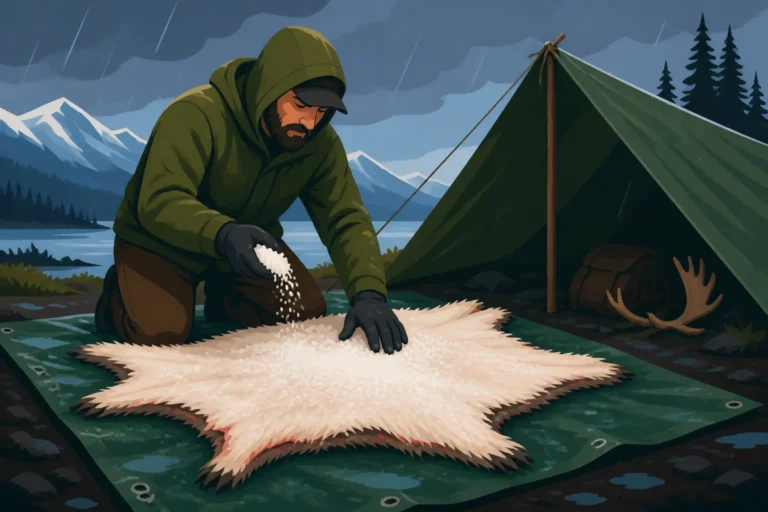
Salting an Alaska animal hide during rainy weather prevents bacterial growth, hair slippage, and trophy spoilage before taxidermy.
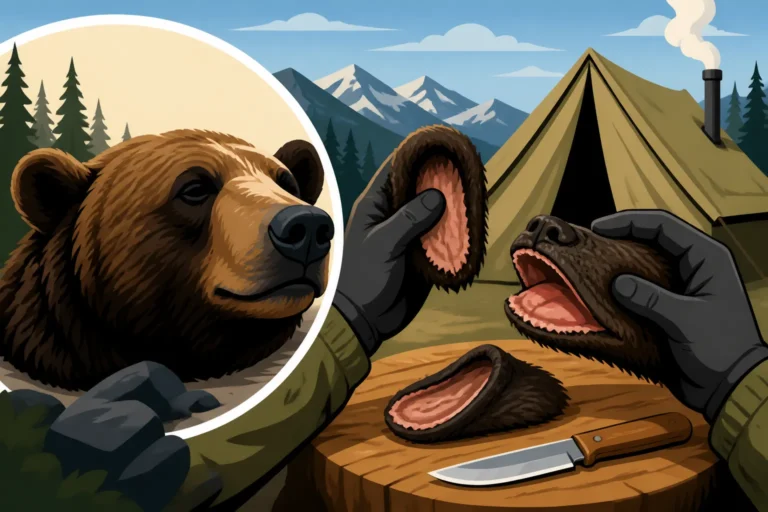
Turning the lips, ears and eyelids of a bear hide in a remote Alaska camp, since leftover fat and moisture invite bacteria and hair slip within a day or two.
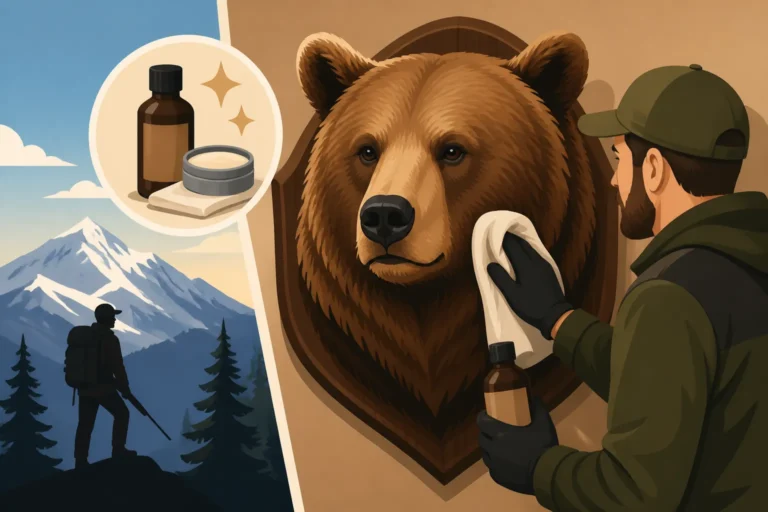
Proper field care and precise skinning techniques prevent bacterial growth and hair slip on an Alaskan life-size bear mount.
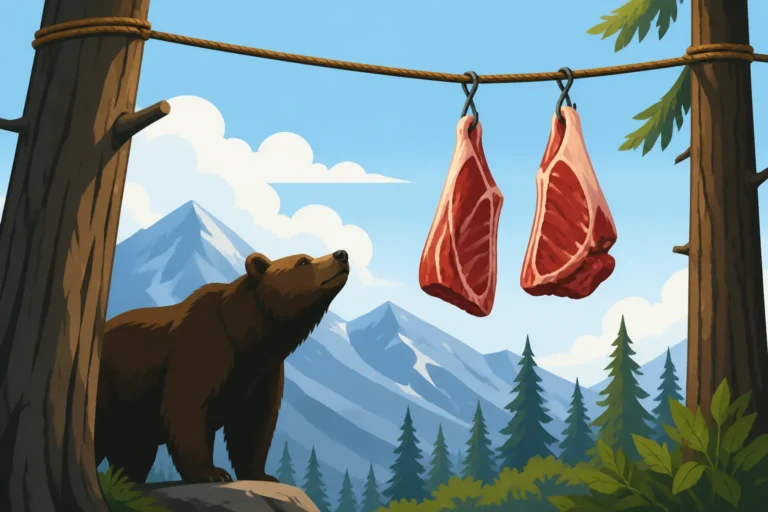
Alaska big game hunters learn proven strategies for hanging meat fifteen feet high in tall trees to safeguard harvests from bears.
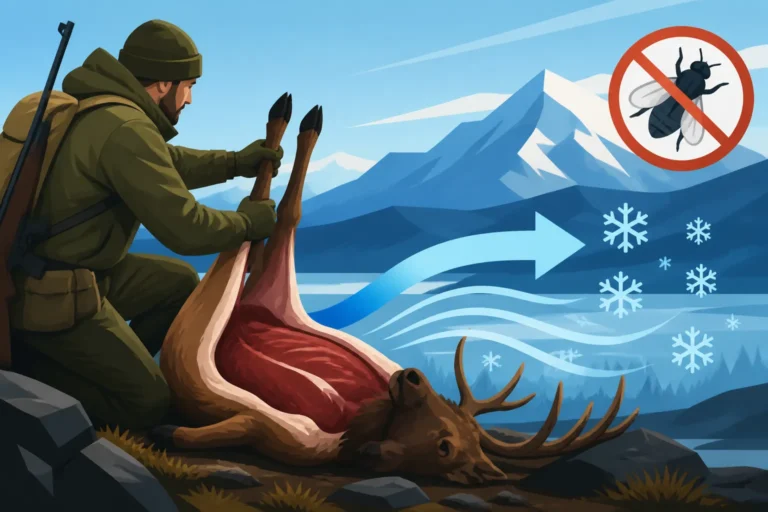
Rapidly cooling big game carcasses and protecting harvested Alaskan meat from flies prevents bacterial spoilage and ruins.
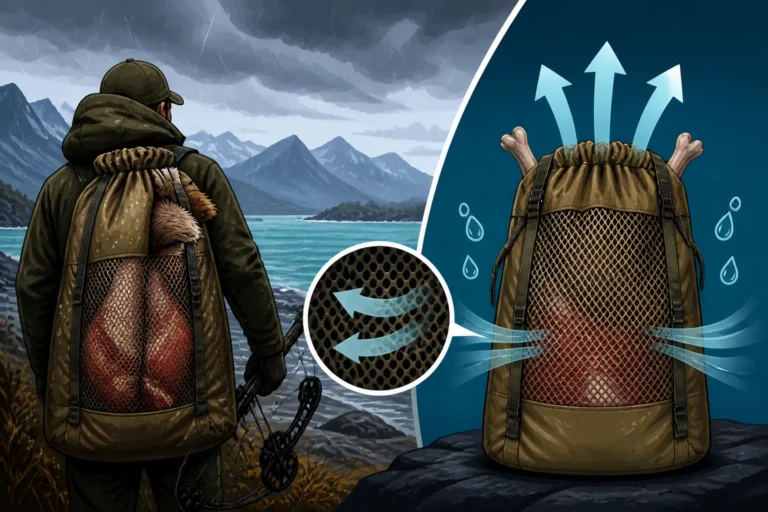
Breathable game bags for coastal Alaska hunts, where constant rain and humidity let bacteria spoil meat such as Sitka blacktail deer in waterlogged cotton bags.
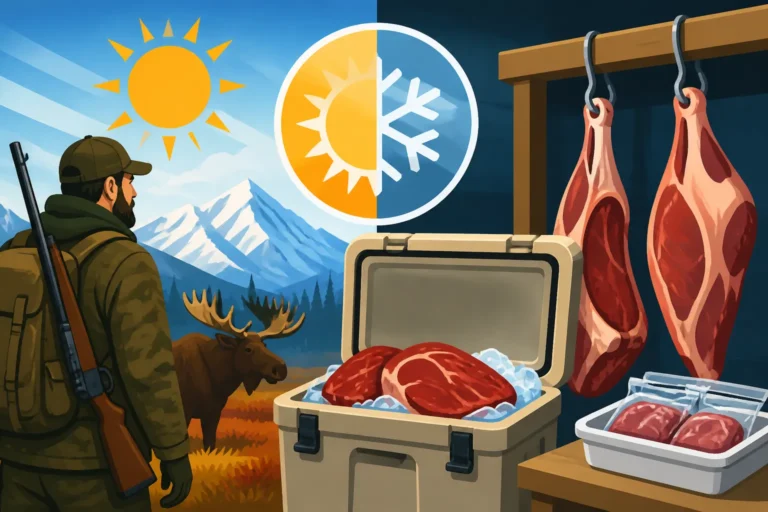
Alaska game meat care strategies explain how to prevent spoilage during warm early September hunting weather conditions.
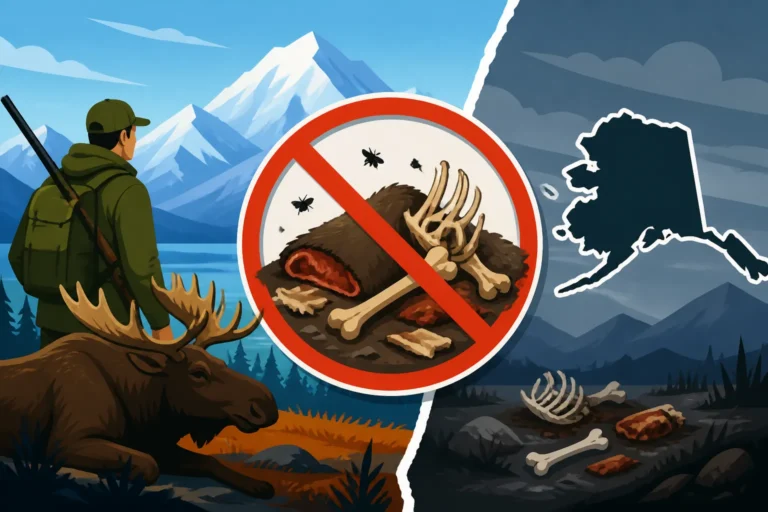
Alaska wanton waste penalties require hunters to salvage all muscle tissue, including ribs, neck meat, briskets, and organs.
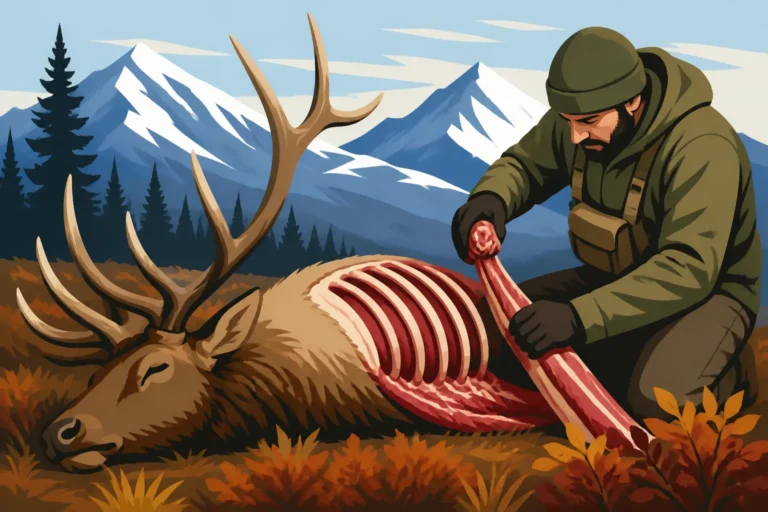
Alaska bull moose meat salvage laws require hunters to harvest all edible rib and neck meat to avoid stiff legal penalties and fines.
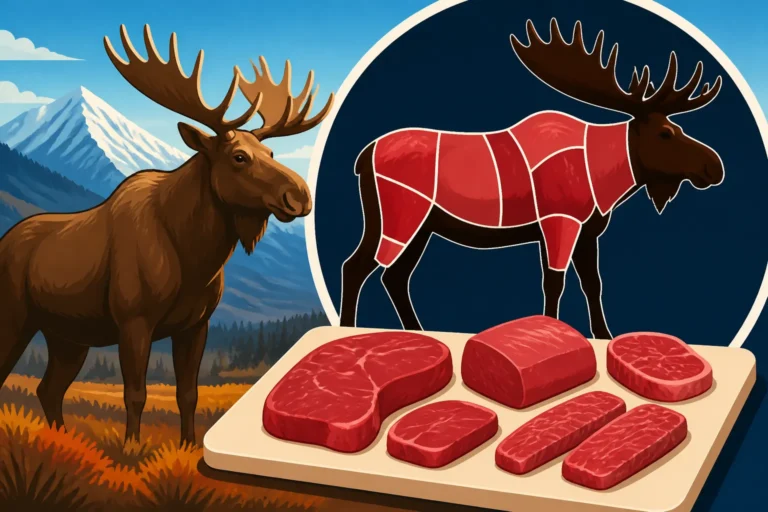
Alaska hunting regulations explain which carcass parts and specific meat cuts must be legally salvaged to prevent wanton waste violations.