How Goats Survive Coastal Cliff Winters
Alaska's rugged coastal cliffs might look like an impossible place to survive, especially when winter unleashes its fury of blizzards and ice. Yet, mountain goats thrive in these unforgiving environments, a testament to their incredible resilience and specialized adaptations. If you've ever wondered how these majestic creatures manage to make it through months of extreme cold, deep snow, and scarce food, you're not alone. This guide will take a deep dive into the fascinating world of mountain goat survival, explaining the unique strategies they employ to defy the odds in some of the harshest conditions on the planet.
The Harsh Reality of Alaska's Coastal Cliff Winters
When you think about winter in Alaska, you likely picture vast expanses of snow and ice. On the coast, particularly in the mountainous regions of Southeast Alaska or the Chugach Mountains, it's a whole different beast. These environments present a unique set of challenges that would be insurmountable for most other large mammals. It's a landscape sculpted by glaciers and hammered by oceanic storms, demanding an exceptional level of toughness from anything that calls it home.
Extreme Weather and Limited Forage
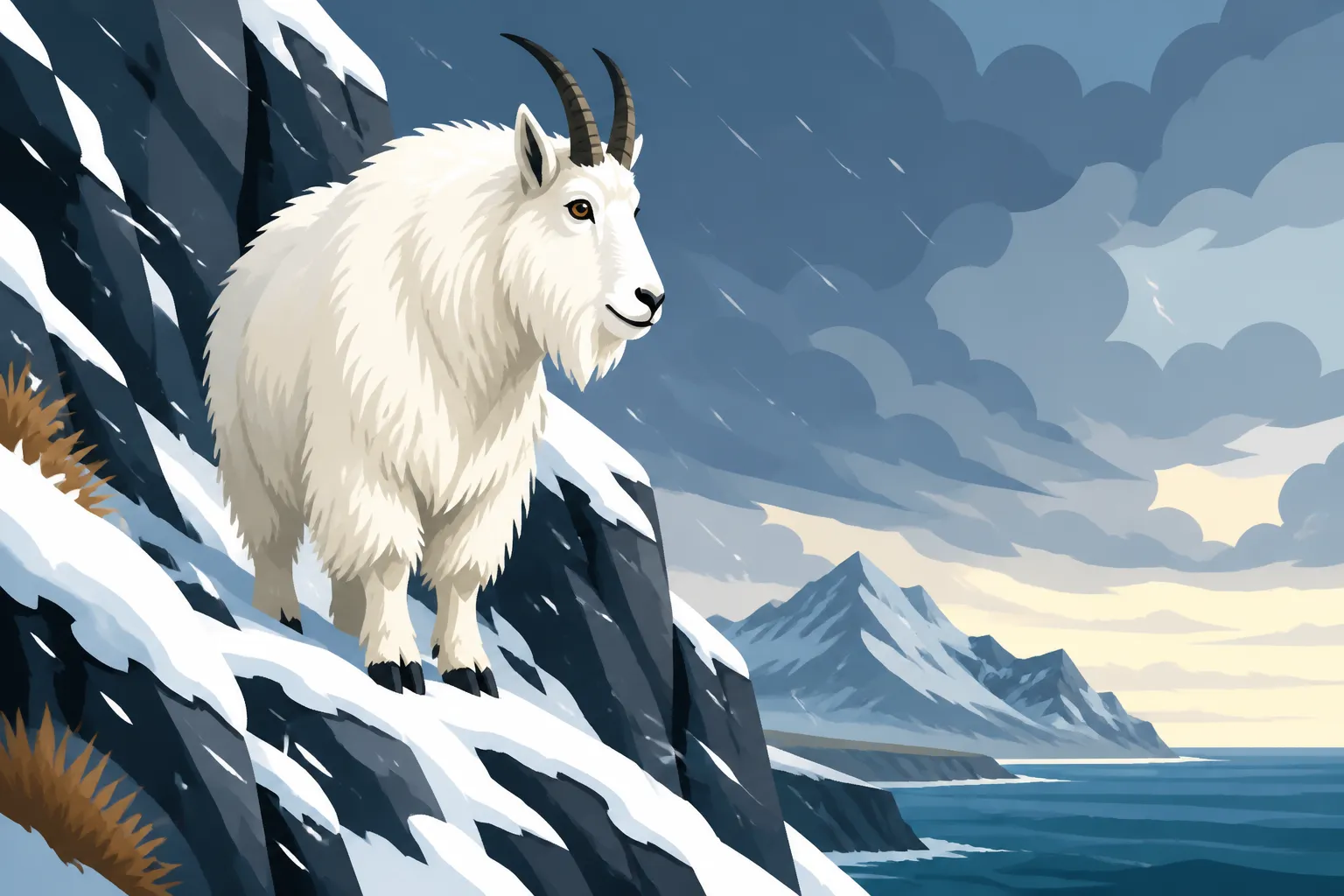
The sheer volume of snow that falls in Alaska's coastal ranges is astounding. We're not talking about a few feet; some areas can see dozens of feet of accumulation over a single winter. This isn't fluffy, dry powder either; it's often heavy, wet snow that compacts into concrete-like drifts, making travel difficult and burying almost all vegetation. High winds are a constant companion, whipping snow into blinding whiteouts and driving wind chill temperatures far below zero. Then there's the ice – freezing rain coats everything, turning already precarious cliff faces into treacherous, glassy slides.
For a mountain goat, this means their primary food sources—succulent alpine grasses, forbs, and shrubs—are almost entirely inaccessible. Imagine trying to find a meal when every plant is either buried under meters of snow or encased in a layer of ice. This scarcity of forage is arguably the most significant hurdle, forcing goats to rely on much less palatable and nutritious options, or simply to make do with very little at all. It's a constant struggle to balance energy expenditure against caloric intake, a balance often tipped precariously during severe winters. This is where their adaptations truly shine, allowing them to extract what little sustenance is available.
The Importance of Steep, Rocky Terrain
While these cliffs appear hostile to us, for a mountain goat, they are a sanctuary. The extreme steepness of the terrain, often approaching vertical, actually offers a measure of protection from the deep snow that blankets less rugged areas. Wind naturally scours snow from exposed ridges and faces, creating small, snow-free patches where goats can sometimes find a few sparse bites of frozen vegetation. These wind-swept areas, often on south-facing slopes, also provide crucial thermal advantages, soaking up what little sunlight is available during the short winter days.
Furthermore, the very features that make these cliffs so challenging for humans – the ledges, caves, and overhangs – serve as vital shelters for goats. These natural formations provide respite from the biting winds and heavy snow, allowing them to conserve precious body heat. Deeper drifts might even form "snow caves" that offer surprisingly good insulation. Predators like wolves and coyotes, while formidable hunters, struggle to navigate these sheer ice and rock faces, giving the goats a significant advantage. This natural fortress allows them to weather storms with a relative degree of safety, even if food remains a constant concern. Understanding these specific terrains is critical when scouting, especially if you're using detailed mapping software like GoHunt to identify potential wintering areas or travel corridors.
Specialized Adaptations for Winter Survival
Mountain goats aren't just tough; they are masterpieces of evolutionary engineering, perfectly designed for their icy, high-altitude homes. Their very physiology is geared towards enduring the incredible hardships that Alaska's coastal winters throw at them. You might be tough, but you probably don't have a built-in furnace and rock-climbing shoes like a goat does!
Physical Traits: Coat, Hooves, and Build
Perhaps the most iconic adaptation of the mountain goat is its incredible coat. It’s a double layer, far more insulating than a typical animal’s fur. The outer layer consists of long, coarse guard hairs that are remarkably waterproof, shedding snow and freezing rain effectively. Beneath this is a dense, soft undercoat, often referred to as qiviut, which is incredibly fine and provides phenomenal insulation against the frigid air. This undercoat traps air close to the body, creating an insulating barrier that rivals the best technical outdoor gear. When you see a goat in a blizzard, you'll notice snow can pile up on its back without melting, a clear sign of how little heat it's losing. This phenomenal insulation is why they can bed down in an exposed spot during a fierce storm and emerge relatively unfazed.
Their hooves are another marvel. Mountain goats possess cloven hooves with soft, rubbery pads on the underside, which provide exceptional traction on slick rock and ice. The hard outer rim of the hoof acts like a chisel, digging into small cracks and irregularities in the rock, while the inner pad molds to the surface, enhancing grip. Their hooves are also relatively short and wide, giving them a stable base on uneven ground. This unique design, combined with powerful legs and incredible balance, allows them to navigate terrifyingly steep and icy cliffs with an ease that seems to defy gravity. Without these specialized hooves, the icy slopes of the Chugach Mountains would be impassable, cutting them off from vital high-elevation winter ranges.
Their overall stocky, compact build also contributes to heat retention. With relatively short legs and a thick body, they minimize their surface area-to-volume ratio, which means less heat is lost to the environment. This isn't just about looking stout; it's a critical aspect of their thermoregulation, helping them maintain core body temperature even when external temperatures plummet. This body plan is a far cry from the lanky frames of deer or moose, animals built for covering ground or pushing through brush, but not for defying gravity and extreme cold in the same way. When you're glassing for Goat Numbers in the Chugach Mountains or other areas, observing their physical prowess in such harsh terrain is truly something to behold.
Dietary Flexibility and Energy Conservation
In winter, the gourmet diet of summer is a distant memory. Mountain goats become opportunistic foragers, shifting their diet to whatever sparse vegetation they can uncover or reach. This often includes dried grasses, lichens, mosses, and even twigs from low-growing shrubs. These food sources are far less nutritious than their summer fare, offering fewer calories and essential vitamins. They will meticulously browse small patches of wind-blown ground, sometimes spending hours to glean enough sustenance to get by. Their digestive systems are robust, capable of extracting nutrients from this low-quality roughage, a crucial ability when other food simply isn't an option.
To compensate for the reduced food availability and quality, mountain goats employ a powerful strategy: energy conservation. They significantly reduce their activity levels, moving only when absolutely necessary to find food or shelter. Their metabolic rate slows down, essentially putting their bodies into a low-power mode. You won't see them frolicking or expending energy needlessly. Every movement is deliberate, every step carefully placed. They'll find a sheltered ledge, often out of the wind, and bed down for long periods, sometimes for days during severe storms. This deliberate stillness minimizes caloric burn, allowing them to stretch their limited energy reserves through long stretches of lean times. This is why careful observation is key when trying to spot them, as they can often blend seamlessly into the rocky slopes.
Behavioral Strategies to Beat the Cold
Beyond their physical adaptations, mountain goats exhibit a range of astute behavioral strategies that further enhance their chances of survival during Alaska's brutal winters. These aren't just passive responses; they are active choices that reflect generations of instinct honed by extreme conditions.
Seeking Shelter and Thermal Advantage
When a blizzard hits or temperatures drop to dangerous lows, mountain goats instinctively seek out the best available shelter. This usually means leveraging the natural features of their cliff habitats. They will hunker down in shallow caves, under large rock overhangs, or along narrow ledges that offer protection from direct wind and driving snow. These spots, often hard to distinguish from the surrounding rock for the untrained eye, can make the difference between survival and succumbing to exposure. The wind is a goat's enemy, stripping away body heat, so finding a barrier is paramount.
They also understand the nuances of solar exposure. On clear winter days, even if brief, south-facing slopes can absorb enough sunlight to warm slightly, or at least melt a thin layer of snow, making forage a tiny bit more accessible. Goats will strategically position themselves on these aspects of the mountain, not only to take advantage of any available warmth but also to find those wind-scoured ridges. They might even huddle together, especially the ewe-lamb bands, to share body heat. This communal warmth offers a slight but significant advantage, reducing individual heat loss. When Reading Contour Lines for Sheep Benches, similar principles apply to identifying potential sheltered areas for goats.
Strategic Movement and Resource Exploitation
Despite the challenges, goats can't simply hibernate. They must move to find food, but they do so with incredible efficiency and deliberation. Their movements are often slow and methodical, conserving energy for crucial climbs. They've likely inherited knowledge of specific areas—small pockets where vegetation might persist or where wind consistently keeps snow thinner—and will travel to these critical winter ranges. This deep understanding of their habitat, sometimes passed down through generations, is vital.
They also have a knack for exploiting temporary opportunities. A brief warm spell might soften snow just enough for them to paw through to dormant plants. A change in wind direction could clear a new patch of ground. These windows of opportunity are fleeting, and the goats must be quick to capitalize. This also means their movements can be unpredictable for hunters not attuned to these subtle environmental shifts. If you're planning a Backpack Hunting in Alaska: Gear Weight and Meat Loads trip into goat country, understanding these patterns of strategic movement is essential for locating them.
The Role of Social Structure and Habitat Selection
While often perceived as solitary, mountain goats do exhibit social behaviors that play a subtle yet important role in their winter survival. Their choices in where they spend the coldest months are also incredibly deliberate and critical.
Group Dynamics and Protection
Mountain goats typically segregate by sex and age during most of the year. During winter, however, you'll often see ewe-lamb bands remaining together, forming small, cohesive units. This social grouping offers several advantages. The presence of multiple animals can make it slightly easier to break trails through moderate snow, reducing the energy expenditure for individuals. More importantly, huddling together provides a measure of shared warmth, especially beneficial for the more vulnerable young. While not as pronounced as in some herd animals, this collective presence can also offer a bit of mutual vigilance against the rare predator that might attempt to climb into their high-altitude strongholds.
Billies, or male goats, often form smaller bachelor groups or remain solitary, typically in even more rugged and inaccessible terrain. While they don't benefit from group warmth as much as ewe-lamb bands, their solitary nature helps reduce competition for sparse resources in extremely demanding environments. Each social structure is a refined adaptation to maximize survival within the constraints of their harsh habitat, balancing the need for resource acquisition with safety and energy conservation.
Critical Winter Range Selection
The choice of winter range is perhaps the single most critical factor for mountain goat survival. These aren't random spots; they are specific, geographically defined areas that offer the best combination of shelter and accessible forage. These areas are often lower in elevation than their summer alpine pastures, but still incredibly steep and rocky. They might include south-facing cliffs with reduced snow accumulation, or areas with persistent geothermal activity that keeps certain patches clear. You might also find them in timbered areas on steep slopes, using the trees for cover and to break wind. For hunters, knowing these critical winter ranges is paramount, not just for finding goats, but for understanding how fragile their existence is. Hunting Alaska's Southeast Islands by Boat often involves scouting these precise locations.
Areas like the Chugach Mountains and parts of the Kenai Peninsula are known for their healthy goat populations, largely because they offer suitable wintering habitat. However, even within these regions, the specific wintering grounds are limited. If these crucial areas are disturbed, or if exceptionally deep snow blankets even these preferred spots, goat populations can face severe die-offs. This highlights why ethical hunting practices, including careful Alaska Goat Seasons and Nanny Identification and avoiding hunting nannies, are so vital—we need to protect the breeding stock that ensures the long-term survival of these incredible animals. Hunters often spend countless hours using detailed maps, sometimes on platforms like GoHunt, and applying skills like Alpine Navigation Without Cell Service to locate and understand these critical survival zones.
| Winter Challenge | Mountain Goat Adaptation | How it Helps Survive |
|---|---|---|
| Deep Snowfall | Steep, rocky terrain; wind-scoured ridges | Provides snow-free patches for travel and foraging; offers predator protection. |
| Extreme Cold/Wind | Dense, waterproof double coat (qiviut); compact body; sheltered ledges | Superior insulation; reduces heat loss; provides relief from exposure. |
| Limited Forage | Dietary flexibility (lichens, moss); slow metabolism | Utilizes low-quality food sources; conserves energy, extending survival during scarcity. |
| Icy Surfaces | Specialized hooves with rubbery pads and hard outer rim | Exceptional traction on slick rock and ice, allowing safe navigation of treacherous cliffs. |
| Predator Pressure | Inaccessible cliff habitat | Terrain acts as a natural fortress, deterring most ground-based predators. |
Disclaimer
This article is for general informational purposes only and does not constitute professional advice. Laws, prices and regulations vary by location and change over time. Consult a qualified professional for guidance on your specific situation.