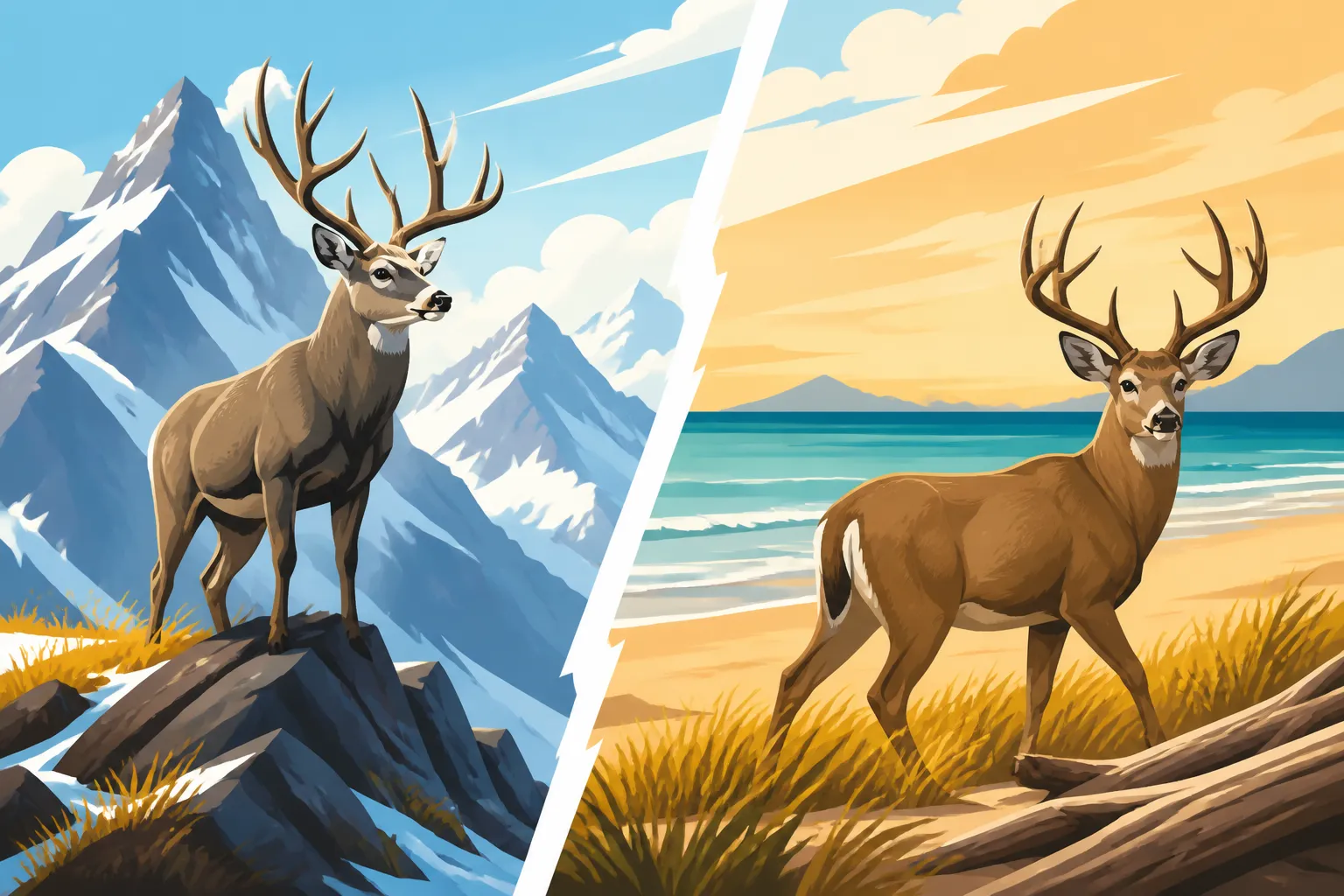
Alpine Versus Beach Deer Behavior
Hunting Sitka blacktail deer in Alaska is an incredible experience, but it’s easy to get frustrated if you approach every hunt the same way, regardless of the terrain. The truth is, deer living high in the alpine behave quite differently from those browsing the shoreline, and understanding these nuances is absolutely critical for success. This guide will walk you through the distinct behaviors of alpine versus beach deer, helping you tailor your strategies and find more success in Alaska's diverse deer country.
The High Life: Understanding Alpine Sitka Blacktail Behavior
When you head into the mountains of Southeast Alaska or parts of Kodiak and Afognak, you're stepping into a different world than the thick coastal timber. The Sitka blacktail deer that thrive up here, above the tree line, have adapted their lives to the harsh, exposed environment of the alpine. They're often seen as the more elusive, hard-earned trophy, and for good reason.
These alpine deer spend a significant portion of their lives grazing on the lush forbs, grasses, and low-growing shrubs that carpet the mountain slopes once the snow melts. They'll be found in rocky bowls, on benches, and along the upper edges of the timberline, moving between feeding areas and secure bedding sites. Their world is one of open vistas, often exposed to the elements, where survival means keen senses and smart movement.
One of the defining characteristics of alpine deer is their reliance on elevation for security and thermals for scent control. During the day, especially on warm, sunny days, they might bed on cool, rocky outcrops or small snowfields, often with a commanding view of their surroundings. As evening approaches, or during cooler weather, they might drop into the lee side of a ridge or the sparse timber just below the open alpine to feed and seek shelter from wind and precipitation. Understanding these daily movements, dictated by sun, wind, and feeding needs, is paramount. Many experienced hunters know that patience on a glassing knob, especially early or late in the day, is often more fruitful than blindly hiking the ridges. Deer Above Timberline in Early August gives more insight into their summer patterns.
Seasonal Shifts and Alpine Rutting Habits
The behavior of alpine deer shifts dramatically with the seasons. In late summer and early fall, as the first snows dust the peaks, deer may begin to move down, seeking more shelter and accessible browse. This movement isn't always a full migration to sea level; often, they'll simply drop to lower elevations within the alpine or into the dense subalpine timber. This can create excellent hunting opportunities in these transition zones, especially if you're prepared for the weather.
When the rut begins, usually in late October and November, alpine bucks become much more active, searching for does. While the core of the rut often pulls deer to lower elevations where dense timber provides more cover for breeding, some mature bucks will remain high as long as food and receptive does are available. They might be harder to find, but those big, older bucks that have survived multiple alpine winters are often there for the patient hunter. Blacktail Rut Timing in Southeast Alaska goes into more detail about when to expect this activity.
Their bedding habits during the rut are also influenced by the need to find does. While they might still seek high, secure spots, they'll be moving much more frequently throughout the day, often following doe groups. Look for rub lines and scrapes on the edges of alpine meadows and where the timber starts to thicken. Wind direction is critical when still-hunting these areas. You need to use the prevailing winds to your advantage, especially in an environment where scent can carry for miles on the mountain drafts.
Challenges of Hunting Alpine Deer
Hunting alpine Sitka blacktail deer is physically demanding and requires a different set of skills and gear than beach hunting. The terrain is often steep, rocky, and unforgiving. Weather can change in an instant, turning a sunny morning into a blizzard by afternoon. Visibility can go from crystal clear to zero in minutes when fog rolls in. This means you need to be physically fit, mentally prepared, and equipped with reliable gear.
Glassing is your most powerful tool in the alpine. Hours spent behind good binoculars and a spotting scope will pay dividends, allowing you to locate deer from a distance and plan your stalk meticulously. Using a platform like GoHunt for mapping and satellite imagery can be invaluable for pinpointing potential bedding areas, escape routes, and feed zones before you even step foot in the unit. You'll want to study the topography, identify natural funnels, and understand how the deer might use the terrain to their advantage. Glassing the Alaska Range: Finding Game Before You Move offers excellent strategies for this.
Another significant challenge is the pack out. Once you've harvested a deer in the alpine, you're faced with getting the meat and trophy off the mountain. This often means navigating steep, uneven ground, sometimes in fading light or worsening weather. Lightweight, sturdy pack frames and game bags that breathe, even in coastal rain, are essential. Remember that Game Bags That Breathe in Coastal Rain are crucial for keeping meat cool and clean. Being prepared for a heavy, difficult pack out is as important as the hunt itself.
Salty Strides: Decoding Beach Deer Behavior
Contrast that alpine experience with hunting Sitka blacktail deer along Alaska's rugged coastlines. Here, particularly in Southeast Alaska and the Kodiak Archipelago, deer live a life intimately tied to the ebb and flow of the tides and the dense, dark rainforest. This environment presents its own unique set of challenges and opportunities for hunters.
Beach deer are constantly on the move, primarily driven by the tide. At low tide, they will venture out onto the exposed beaches, often browsing on seaweed, kelp, and other marine vegetation that gets washed up. This is a crucial food source, especially in winter when inland forage is scarce or buried under snow. They'll also pick through beach grasses and browse on the lower branches of shrubs and trees that overhang the beach. They are opportunistic feeders, making the most of what the sea provides.
Their cover is typically the thick, almost impenetrable rainforest that often comes right down to the high tide line. This dense timber provides excellent escape cover from predators and hunters, as well as shelter from the relentless coastal rain and wind. Deer will often bed just inside the timber edge, where they can quickly disappear if disturbed. Understanding Tide Tables and Beach Deer Hunting is not just helpful, it's absolutely essential for planning your hunt along these coastal strips.
Daily Routines and Beach Rutting Habits
The daily routine of a beach deer revolves around the tide cycle. As the tide recedes, deer will emerge from the timber to feed on the exposed beach. As the tide comes in, they retreat into the safety of the forest. This creates predictable patterns of movement that hunters can exploit. High tide is often a good time to still-hunt the timber edges or to move stealthily along old logging roads or game trails just behind the beach. At low tide, you're looking for them out in the open.
During the rut, beach bucks become even more active along these coastal margins. They'll scent-check the timber edges, follow doe groups along game trails, and even chase does out onto the beaches. While visibility can be limited by the dense vegetation, fresh rubs and scrapes will indicate their presence. The sounds of the ocean can mask your approach, but it can also mask the sounds of deer moving, so extreme stealth is necessary.
Many hunters use small boats, skiffs, or even kayaks to access prime beach hunting areas. This allows them to cover miles of coastline, looking for deer feeding in the open. It's a method that requires good seamanship and a careful eye on the weather, as sudden storms can make coastal travel dangerous. Skiff Hunting Deer Along Saltwater Beaches delves into this popular and effective technique.
Challenges of Hunting Beach Deer
Hunting beach deer presents different challenges. The dense timber can be incredibly difficult to navigate quietly, making still-hunting a true test of patience and skill. Visibility is often restricted to mere yards, meaning close-range encounters are common. Rain is a near-constant companion in many coastal areas, making tracking difficult and requiring top-tier rain gear and waterproof optics.
Another challenge is access. While a boat provides mobility, finding legal landing spots and navigating tidal flats can be tricky. You also need to consider Packing a Deer Off a Beach at Low Tide. You can't just leave a deer on the beach waiting for a high tide pickup. Having a plan for quartering and securing your meat, especially from opportunistic scavengers, is critical. The proximity to salt water means quick processing and proper storage of meat are even more important to prevent spoilage.
Many parts of Southeast Alaska, particularly on islands like Prince of Wales or Admiralty, have extensive road systems from past logging. These can offer excellent access to deer habitat just a short walk from a vehicle, though they also see more hunter pressure. Scouting these areas, often through detailed mapping applications like GoHunt, to find less-pressured pockets, is a smart strategy.
Strategic Shifts: Hunting Both Worlds
While alpine and beach deer inhabit distinct worlds, there are also transition zones where their behaviors might overlap or shift. Understanding these fluid boundaries is key to becoming a versatile and successful Alaska deer hunter. Often, deer will utilize both the high country and the coast depending on weather, food availability, and hunting pressure.
For example, on many islands, deer might spend the summer high in the alpine, enjoying the rich forage. As winter approaches and snow begins to accumulate, they will gradually move down to lower elevations, eventually seeking refuge along the beach. This seasonal migration can offer some fantastic hunting in the mid-elevation timber, where deer are actively moving between different habitat types. This is where a hunter needs to be adaptable, ready to hunt open country one day and dense timber the next.
Consider hunting an area where steep mountains meet the sea. You might glass the alpine in the morning, then transition to hunting beach fringes during a low tide in the afternoon. This dual approach maximizes your opportunities and requires a hunter to be proficient in both glassing and still-hunting techniques. Knowing Deer Populations on Prince of Wales Island and their seasonal movements can provide critical intel for such combined strategies.
Here's a quick comparison of the two environments:
| Feature | Alpine Deer Habitat | Beach Deer Habitat |
|---|---|---|
| Primary Food | Forbs, grasses, low-growing shrubs, lichens | Seaweed, kelp, beach grasses, forest browse |
| Key Movement Driver | Thermals, weather, feeding areas, security | Tides, feeding cycles, timber security |
| Typical Cover | Rocky outcrops, small timber patches, terrain breaks | Dense coastal rainforest, thick brush, timber edge |
| Primary Hunting Method | Glassing, long-range stalking, patience | Still-hunting timber edges, boat-based glassing, tide-watching |
| Visibility | Often expansive, but prone to fog | Typically limited, dense vegetation |
| Physical Demands | Steep climbs, navigating rocky terrain | Bushwhacking dense timber, slippery rocks, boat handling |
| Weather Impact | Extreme cold, high winds, sudden blizzards | Persistent rain, strong coastal winds, sea swells |
Gear Considerations for Varied Terrain
Your gear list will reflect these distinct hunting environments. For alpine hunts, lightweight, durable layers are paramount, along with a top-quality spotting scope, binoculars, and a sturdy tripod. Boots need excellent ankle support for rough terrain. A solid pack frame for hauling meat over long distances is non-negotiable. Backpack Hunting in Alaska: Gear Weight and Meat Loads offers good advice here.
For beach hunts, waterproof everything is the golden rule. Heavy-duty rain gear, waterproof boots designed for mud and rocky beaches, and dry bags for all your essentials are critical. A good quality skiff or inflatable boat with reliable motor is often a necessity, or at least a highly beneficial tool for access. Stealth in dense timber requires quiet clothing and careful footing.
In either scenario, bear safety is always a concern in Alaska. Whether you're in open alpine country or thick coastal brush, carrying bear spray and knowing how to use it, or having a suitable firearm, is simply common sense. Bear Safety While Butchering a Kill in Alaska offers important considerations, no matter where you harvest your deer.
Ultimately, the most successful Alaska deer hunters are those who understand the specific behaviors of the animals in their chosen environment and adapt their strategies accordingly. It's about being a student of the landscape, the weather, and the deer themselves. So, whether you're climbing high into the Chugach or cruising the channels of the Tongass, remember that the deer have different rules of engagement, and your success depends on playing by them.
Disclaimer
This article is for general informational purposes only and does not constitute professional advice. Laws, prices and regulations vary by location and change over time. Consult a qualified professional for guidance on your specific situation.