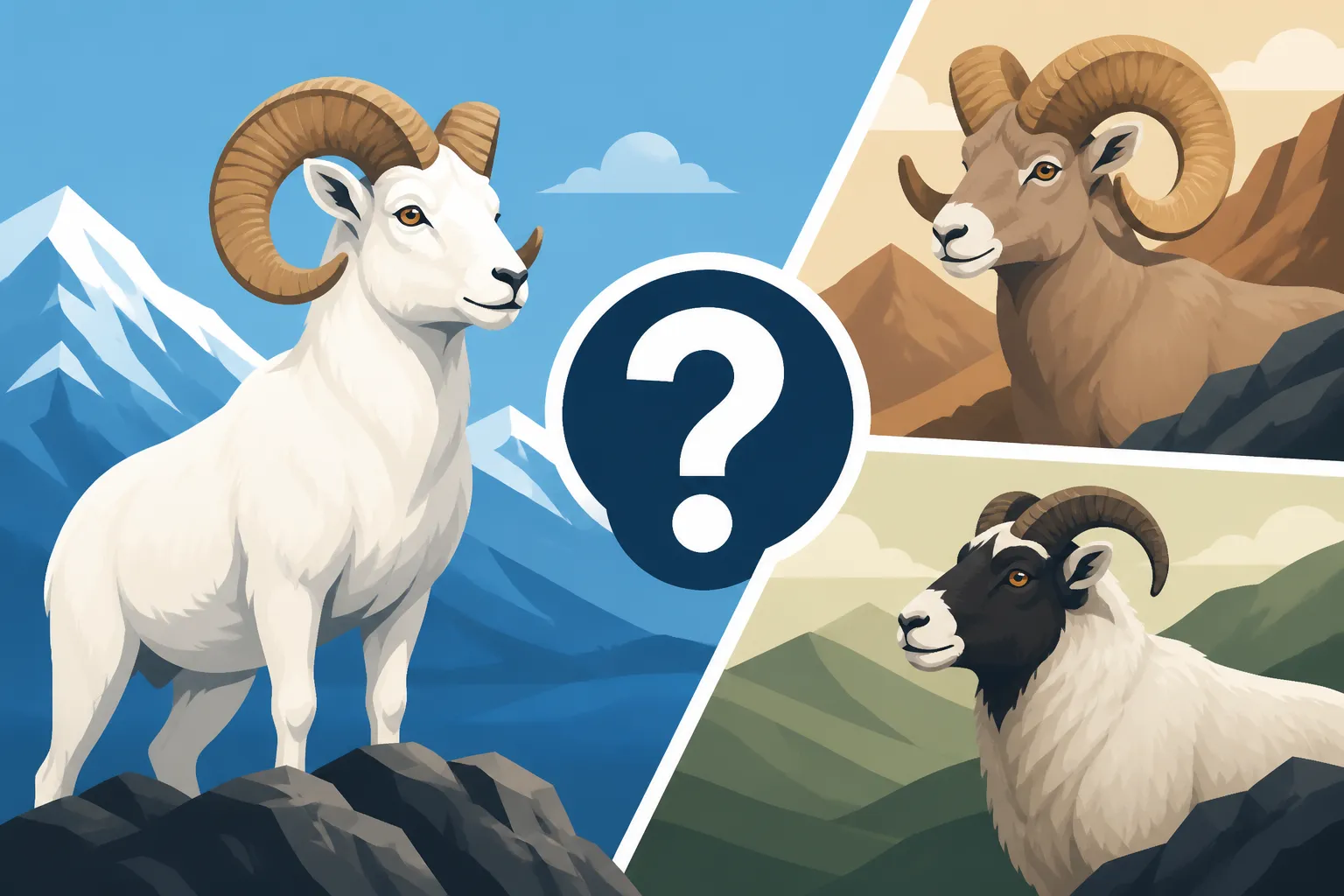
Are Dall Sheep the Only White Wild Sheep?
It's a common thought, especially for those of us who spend our days dreaming of Alaska's high country: are Dall sheep truly the only wild sheep that grace the mountains with their stunning white coats? It’s easy to look at a majestic white ram against the dark rock and think there’s nothing else like it, but the world of wild sheep is a bit more nuanced than that. This guide will delve into the incredible world of wild sheep, focusing on the iconic Dall, exploring why they stand out, and introducing you to other species that might occasionally trick the eye with their lighter hues.
The Iconic White Ghost: Dall Sheep in Alaska
When we talk about white wild sheep, the Dall sheep immediately springs to mind for anyone familiar with North American hunting. These incredible animals are synonymous with the rugged, breathtaking peaks of Alaska, the Yukon, and parts of the Northwest Territories. Their pure white coats are not just beautiful; they're a vital adaptation to their harsh alpine environment.
The Pristine White Coat: An Adaptation for Survival
Imagine a hunter trying to spot a Dall ram in a late-season snowstorm, or against a backdrop of snow-covered rock. Their brilliant white coat offers superb camouflage against the high-altitude snowfields and rocky outcrops where they make their home. This isn't just a fashion statement; it's a matter of survival, helping them blend in from both predators like wolves and grizzlies, and, of course, from human hunters scanning the vast landscape with optics.
Dall sheep are true high-country dwellers. You'll find them navigating incredibly steep and broken terrain, often far above timberline, where vegetation is sparse and the winds are relentless. Their incredible agility and keen eyesight are legendary. When you're spending days glassing the Alaska Range, sometimes the first hint of a ram is just a subtle white speck moving against the gray shale, or a flash of white as it rounds a ridge. For many, harvesting a Dall sheep is the pinnacle of a Backpack Hunting in Alaska: Gear Weight and Meat Loads adventure, demanding peak physical fitness and mental fortitude.
Habitat and Range: Alaska's High Country Kings
Dall sheep are primarily found in Alaska, the Yukon Territory, and the Mackenzie Mountains of the Northwest Territories. Within Alaska, major populations thrive in the Brooks Range, the Alaska Range, and the Chugach Mountains, among other smaller ranges. These areas are characterized by severe winters, rocky terrain, and alpine meadows. The sheep typically utilize high ridges and south-facing slopes in winter to escape deep snow and access forage that has been blown clear.
During the warmer months, they might descend slightly to feed on lush alpine grasses and forbs, often seeking out mineral licks in the spring to replenish vital nutrients lost over the winter. If you're planning a trip to the Brooks Range, for example, knowing their seasonal movements is key. Many hunters spend countless hours before the hunt studying maps, satellite imagery (maybe even using tools like those from GoHunt to map out potential sheep basins), looking for the nuances of their preferred habitat. Understanding where they feed, where they bed, and how they react to pressure is crucial. The unique ecosystem they inhabit shapes their very existence, and their pristine white coats are a perfect example of their adaptation to this specialized niche.
Beyond the Dall: Other White or Light-Colored Wild Sheep
While Dall sheep are indeed the poster children for white wild sheep in North America, the answer to "Are Dall sheep the only white wild sheep?" isn't a simple yes or no. It requires us to broaden our view to include related species and even look at variations within populations.
Stone Sheep: The "Black Dalls" with a Twist
Often called "black Dalls," Stone sheep (Ovis dalli stonei) are a subspecies closely related to Dall sheep. They primarily inhabit northern British Columbia and parts of the southern Yukon. Their coats are typically dark brown or black, often with a white rump patch, belly, and inner leg areas. However, this is where the nuance comes in: there's a fascinating intermediate phase known as Fannin sheep.
Fannin sheep are essentially a hybrid, showing characteristics of both Dall and Stone sheep, with coats ranging from a bluish-gray to a much lighter, almost whitish-gray. While not pure white like a Dall, a very light-colored Fannin ram can certainly appear almost white at a distance, especially in certain lighting conditions or against a snowy backdrop. These animals blur the lines, proving that nature rarely fits neatly into strict categories. They demonstrate the genetic flow between these subspecies, creating a spectrum of colors rather than distinct, separate species. A hunter glassing a distant mountainside for a ram might initially mistake a very light Fannin for a Dall, only to discover its true coloration upon closer inspection. Learning How to Judge a Full-Curl Ram in the Field requires an understanding of these variations.
Bighorn Sheep: Rocky Mountain and Desert Varieties
Bighorn sheep (Ovis canadensis) are another iconic North American wild sheep, but they are generally known for their rich brown coats. There are several subspecies, including Rocky Mountain bighorns and Desert bighorns. While their dominant color is brown, the rump patch, muzzle, and belly are typically white or creamy white.
Even within bighorn populations, there can be variations in coat intensity. Some individuals might have lighter brown coats that, from a significant distance, particularly in bright sunlight or against light rock, could appear much paler than their typical coloration. However, they will never possess the pure, unblemished white coat of a Dall sheep. The contrast of the dark brown body with the stark white rump is a key identifier. Hunters pursuing bighorns in states like Montana or Wyoming know that spotting these animals often means looking for that tell-tale white patch moving through the timber or across a rocky slope. While they share the same genus Ovis as Dall sheep, their appearance and primary habitat (often lower elevations, less extreme alpine conditions for Rocky Mountain bighorns, and arid regions for Desert bighorns) are quite distinct.
Other Global Wild Sheep: A World of Diverse Coats
If we cast our net globally, the diversity of wild sheep becomes even more apparent. While none exhibit the characteristic pure white of a Dall, many have lighter phases or areas of white in their coats.
For example, the Urial sheep of Central and South Asia have reddish-brown coats with white bellies. The Argali, the largest wild sheep in the world, found across Central Asia, typically range from light yellow-brown to a darker brown, often with lighter undersides. While striking in their own right, none approach the uniform white of the Dall. Even species like the Mouflon, considered the ancestor of domestic sheep and found in parts of Europe and Asia, display shades of brown, often with a lighter saddle patch, but again, no all-white coloration.
The key takeaway here is that while Dall sheep are truly unique in their uniformly white coat among North American wild sheep, there are other species and subspecies that exhibit lighter color variations, and some (like Fannin sheep) can even be quite pale. The "white ghost" of the northern mountains is indeed special, but it's part of a much larger, colorful family of wild sheep around the world.
Understanding the Nuances: Distinguishing White Sheep
When you're out in the field, especially with optics, telling the difference between a pure white Dall sheep and a very light-colored Fannin or even a sun-bleached bighorn can sometimes be a challenge. It's not just about the dominant color; it's about the full picture of their appearance, habitat, and even the nuances of their horns.
Coat Color and Markings
The most obvious differentiator is, of course, the coat. A Dall sheep will have an almost entirely pure white coat. Even their hooves are often light-colored, and their horns typically have a yellowish-amber hue that stands out against their white fleece. There might be slight variations, but the overall impression is one of stark white.
Fannin sheep, on the other hand, will show varying degrees of gray or brownish-gray on their bodies. The amount of white can differ greatly; some might have a lot of white on their head, neck, and legs, but a distinct grayish "saddle" or darker patches on their back and sides. The transition between colors might be subtle or quite pronounced. This intermediate coloration is what makes them so interesting and occasionally confusing. Their horns are also typically darker, often a deep amber or brownish-black, which provides a stark contrast to the pure white horns of a Dall.
Bighorn sheep, particularly the Rocky Mountain variety, are predominantly brown. While they have prominent white rump patches, bellies, and sometimes white on their muzzle and inner legs, the main body is dark. You'll never see a bighorn that is entirely white. Their horns are also a distinct dark brown or black, much heavier and more deeply ridged than a Dall's.
Here's a quick comparison to help visualize the differences:
| Feature | Dall Sheep | Fannin Sheep | Bighorn Sheep |
|---|---|---|---|
| Primary Coat | Pure White | Grayish-white to Bluish-gray with darker patches | Brown |
| Rump Patch | Blends with white coat | Often white, contrasting with gray body | Prominently white |
| Belly/Legs | White | White to light gray | White to creamy white |
| Horn Color | Light yellow to amber | Darker amber to brownish-black | Dark brown to black |
| Range | Alaska, Yukon, NWT | British Columbia, Yukon | Western US, Canada, Mexico |
| Typical Size | Medium | Medium | Large |
Horn Shape and Characteristics
Beyond color, the horns are a critical identification tool. Dall sheep rams typically have relatively slender, heavily ridged horns that form an open curl. They are usually light in color, ranging from a yellowish-tan to an amber hue. The way they grow, often spiraling outwards and backwards, is characteristic. When considering a ram, knowing the Full-Curl Judging From Below the Ram is essential for legality.
Stone sheep and Fannin sheep horns tend to be darker, often a rich brownish-black, and can be quite massive. While the curl can be similar to Dall sheep, the sheer bulk and color are often distinct. Bighorn sheep, especially Rocky Mountain bighorns, possess truly massive, heavy horns that curl much tighter to the head, often forming a full circle or more. Their horns are typically dark brown or black, showing deep annuli rings.
When hunting sheep, especially in areas where subspecies ranges might overlap or in draw units, it's vital to know precisely what you're targeting. Misidentification can lead to serious legal issues. Often, guides or even experienced DIY hunters will spend hours evaluating an animal before committing, ensuring it meets not only legal requirements but also their personal standards. Many hunters planning for a sheep hunt will use tools to review images and videos of rams to hone their Spotting Scope Power for Ram Judging skills, making sure they can differentiate species and judge horn size and shape accurately at a distance.
Geographic Range and Habitat
Perhaps the most definitive way to distinguish these sheep if you're uncertain about their appearance alone is their geographic location.
- Dall sheep are primarily creatures of the remote, high mountains of Alaska, the Yukon, and the Northwest Territories. If you're hunting in, say, the Brooks Range, you're looking for Dall sheep.
- Stone sheep and Fannin sheep are found further south in the Yukon and extensively in British Columbia. If you're in the northern reaches of BC, you might encounter either Stone or Fannin.
- Bighorn sheep are found in the lower 48 states and parts of southern Canada, particularly the Rocky Mountains and desert regions of the Southwest. They do not overlap ranges with Dall sheep in Alaska or the northern Yukon.
While there might be slight overlaps in the extreme edges of subspecies ranges, the core habitats are distinct. When planning an Alaska hunt, you can be fairly confident that any pure white sheep you encounter high up in the mountains will be a Dall. However, understanding the broader family of wild sheep enriches the experience and provides a deeper appreciation for these magnificent animals. Every species, with its unique adaptations and challenges, is a testament to the wild places they call home. It’s why we spend so much time studying maps and learning about Alpine Navigation Without Cell Service, because knowing the terrain helps us know the animal.
Why the Color Matters to Hunters
For hunters, the color of a wild sheep is more than just an aesthetic feature; it's a critical identifier, a key to habitat, and even a factor in the hunting experience itself. Beyond the simple visual appeal, understanding the nuances of coat color helps in scouting, legal identification, and appreciating the incredible adaptations of these mountain monarchs.
Identification and Legal Harvest
As we've discussed, distinguishing between Dall sheep, Fannin sheep, and bighorns is paramount for legal harvest. In Alaska, you'll primarily be targeting Dall sheep, which are legally defined by their pure white coats. Venturing into British Columbia, however, and you might be hunting Stone sheep, which typically requires a darker animal. Misidentification can lead to severe penalties, including fines, loss of hunting privileges, and confiscation of trophies. This is why thorough preparation, including studying game regulations and species identification guides, is as important as physical training.
Many states and provinces have specific regulations tied to subspecies. This makes knowing the subtle differences in coat color, horn shape, and geographic range absolutely essential. A hunter needs to be confident in their ability to differentiate these animals before making a decision in the field. This can sometimes mean observing a ram for an extended period, waiting for it to move into better light, or getting closer to confirm its identity, even if it means sacrificing an opportunity. This is particularly true when you are working to identify legal rams under specific antler rules, such as those that require Brow Tine Counts on Alaska Antler-Restricted Bulls or understanding "full curl" definitions for sheep.
Camouflage and Hunting Strategies
The white coat of the Dall sheep dramatically impacts how we hunt them. Their camouflage in a snowy, rocky environment is exceptional. This means a hunter often needs to adjust their approach, relying heavily on high-quality optics like those you can research on a platform like GoHunt, to pick out subtle movements or shapes that don't quite fit the natural landscape. Often, spotting a ram is less about seeing a whole animal and more about noticing a white patch that moves or a distinct horn shape against a ridge line.
For other, darker sheep, like bighorns or typical Stone sheep, their brown coats offer different camouflage challenges and advantages. They blend better with timbered slopes or dark rock, requiring a hunter to focus on different visual cues. Understanding how each species' coloration interacts with its habitat allows hunters to develop more effective glassing patterns, stalking routes, and overall hunting strategies. Whether it's the pure white of a Dall or the dark brown of a bighorn, the animal's color is a fundamental part of its defense mechanism and, therefore, a crucial element for the hunter to understand and adapt to.
Aesthetic Value and Trophy Care
Finally, for many hunters, the beauty of the animal's coat is part of its allure as a trophy. The pristine white of a Dall sheep, especially a large ram with amber horns, is truly magnificent and makes for a stunning mount. Proper Cape and Skull Care for a Brown Bear Hide is crucial for any trophy, but for sheep, preserving that delicate white fleece is particularly important.
The unique coloration of Dall sheep not only contributes to their survival but also to their iconic status in the hunting world. While other wild sheep may have lighter phases or white markings, none possess the uniform, snow-white coat that defines the Dall. This makes them truly special in the wild sheep family and a highly sought-after trophy for those willing to endure the rigors of high-country hunting in places like Alaska. They are, in many ways, the pure white ghosts of the northern mountains, a testament to nature's incredible design and a challenge for any hunter who dares to pursue them.
Disclaimer
This article is for general informational purposes only and does not constitute professional advice. Laws, prices and regulations vary by location and change over time. Consult a qualified professional for guidance on your specific situation.