Dall Sheep Numbers After a Hard Winter
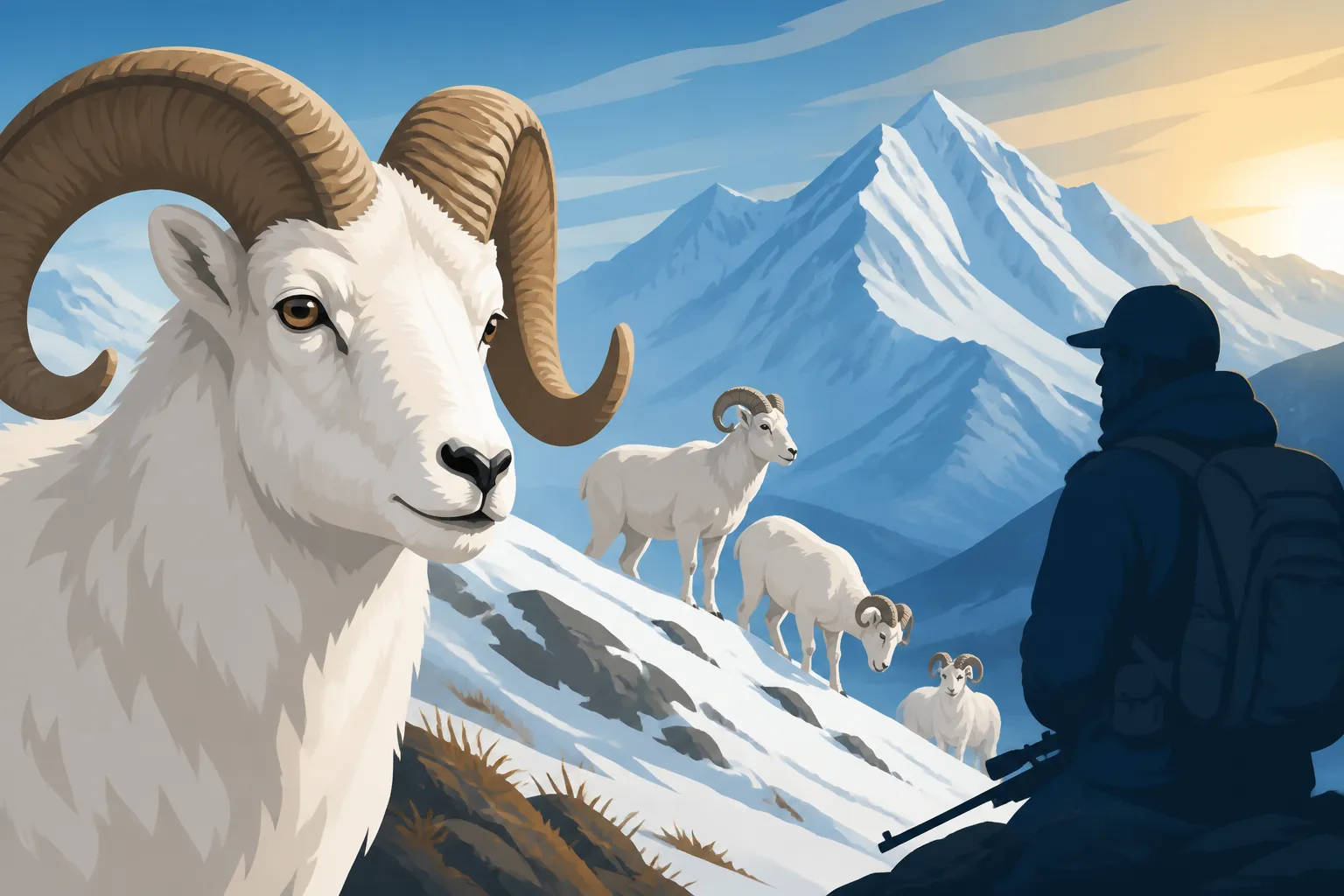
Oh, the Alaska winter. It's a beast, isn't it? For those of us who spend our autumns chasing Dall sheep in the high country, the severity of the previous winter isn't just a casual conversation topic; it's a deep-seated concern that dictates our expectations, our strategies, and sometimes, even whether we bother to apply for a permit in certain areas. There’s nothing quite like the crushing disappointment of hearing whispers that a brutal season of heavy snow and bitter cold took a heavy toll on the sheep population. This guide is all about understanding what a hard winter truly means for Dall sheep numbers in Alaska and how that knowledge can inform your next hunt.
The Delicate Balance of Dall Sheep Populations in Alaska
Dall sheep are tough animals, no doubt. They thrive in some of the most unforgiving landscapes Alaska has to offer – high, windswept ridges, steep mountain faces, and vast alpine tundras. But even these hardy creatures have their limits, and a truly severe winter can push those limits to the breaking point. It's a constant, precarious balance between forage availability, predator pressure, and the sheer environmental hardship that defines life in the alpine.
How Winter Severity Impacts Survival Rates
When we talk about a "hard winter" in sheep country, we're not just talking about a little extra snow. We're talking about deep, persistent snowpack that blankets critical winter ranges for months on end, effectively burying the sparse forage that Dall sheep rely on. Imagine trying to paw through several feet of dense, wind-crusted snow day after day, week after week, just to find a few dried grasses or lichens. It’s an exhausting, energy-sapping ordeal. This constant struggle leads to a significant caloric deficit, leaving sheep weakened and vulnerable.
Beyond the snow, bitter cold amplifies the struggle. While sheep have incredible insulating coats, prolonged periods of extreme sub-zero temperatures still demand immense energy reserves to maintain body heat. Older rams, which have already expended so much energy during the fall rut, and young lambs, who are still developing their full strength and insulation, are particularly susceptible to succumbing to the cold directly. These aren't just minor inconveniences; they are life-threatening conditions that thin the herd.
Specific regions, like parts of the Brooks Range or the Chugach Mountains, can experience localized severe winters that impact their resident sheep populations more dramatically than other areas. It's not always a statewide phenomenon; sometimes it's a particular mountain range or even a specific basin that gets hammered, leaving isolated pockets of sheep to endure a disproportionate struggle. Understanding these microclimates and their historical snowfall patterns can be a huge advantage for hunters.
Lamb Survival as a Key Indicator
When assessing the health of a Dall sheep population after a tough winter, one of the first things biologists and seasoned hunters look at is lamb survival. Lambs are, without question, the most vulnerable segment of the population. Born in late spring, they rely heavily on their mothers' milk and rapidly growing forage to put on weight and develop the strength needed to face their first winter. A hard winter that stretches late into spring, or one that follows a dry summer with poor forage growth, can critically impact their ability to thrive.
If the winter conditions are severe, it's not just the immediate cold or starvation that takes its toll. Lambs that survive might be smaller, weaker, and more prone to disease, making them less likely to survive their second winter, which is often statistically the toughest. This cascading effect means that a single brutal winter can impact the recruitment of new, mature rams into the huntable population for several years down the line. It's not just about the sheep that die during the winter, but those whose chances of long-term survival are severely compromised.
Understanding the dynamics of lamb survival is paramount because it directly correlates to the future health and huntable surplus of the herd. If you want to dive deeper into the specific challenges these young sheep face, you might find more helpful information by looking into topics like How Deep Snow Kills Sheep Lambs. A low lamb-to-ewe ratio observed in post-winter surveys is a red flag, signaling that the population might be struggling to replace itself, and consequently, that future hunting opportunities might be reduced.
Reading the Landscape for Post-Winter Sheep Health
After a hard winter, the mountains themselves often tell a story, if you know how to read the signs. While you won't see gravestones for every lost sheep, the overall appearance of the landscape and the behavior of the surviving animals can offer critical clues about the herd's condition. This is where meticulous scouting and keen observation truly pay off.
Identifying Winter Range and Chokepoints
Dall sheep have specific preferences for their winter range – typically steep, wind-blown ridges and south-facing slopes where snow depth is minimized, and solar radiation helps melt patches of snow, exposing vital forage. However, truly brutal winters can render even these prime locations inaccessible or deplete their resources faster. Imagine a winter with record snowfall that then gets locked down by a series of high-pressure systems, compacting the snow and preventing it from blowing off the ridges. This turns traditional winter havens into death traps.
As a hunter, knowing these typical wintering areas is key. If you're Scouting a Unit From Satellite Imagery Before You Fly, pay close attention to the topography that offers these features. After a severe winter, if you're out in the field and see sheep still concentrated in low-quality areas, or if their preferred high-elevation winter ranges still hold significant, crusted snowpack well into spring, it's a strong indicator that conditions were extremely tough. You might observe signs of browse lines on stunted willows or unusually worn-down areas where sheep have desperately pawed for every last scrap of forage.
Crucially, sheep might be forced into less desirable, more exposed terrain, or even into river bottoms where they are more vulnerable to predation. These "chokepoints" can become areas of high mortality during or immediately after a severe winter. Recognizing these areas on a map and understanding how a deep snowpack might have funneled animals can provide insight into where to potentially find sheep, or where to understand why their numbers might be low.
The Role of Predation After a Hard Winter
A hard winter doesn't just kill sheep directly; it also weakens the survivors, making them far more susceptible to predation. Wolves, wolverines, and even golden eagles will naturally target the weakest animals in the herd. After a period of starvation and cold, many sheep will be in poor physical condition, moving slowly, and lacking the energy to escape effectively. This can lead to an elevated rate of predation, further reducing the overall population.
Think about it: a wolf pack, already struggling to find food in deep snow, will find an easier meal in a struggling lamb or an emaciated ewe or ram. This isn't a sign of an "unhealthy" predator population; it's a natural function of the ecosystem. However, after a hard winter, the increased vulnerability of the sheep population can allow predator populations to have a more pronounced impact than they would in an average year.
It's a stark reminder that the ecosystem is interconnected. A healthy sheep population is better able to withstand some predation, but a stressed population can be pushed to the brink when predators capitalize on their weakened state. When Glassing at First Light Versus Midday in the spring or early summer, hunters might notice more sign of wolf activity than usual in sheep country, or see eagles circling more frequently, indicating a more active predation cycle on a vulnerable herd.
Management Responses and Hunter Expectations
Alaska's wildlife managers are acutely aware of the impact of winter severity on Dall sheep. Their job is to ensure sustainable populations for the future, which means sometimes making tough decisions about hunting seasons and quotas. For hunters, this translates directly into expectations for the upcoming season.
How Biologists Monitor Post-Winter Herds
Biologists at the Alaska Department of Fish and Game (ADF&G) are constantly monitoring wildlife populations, and Dall sheep are no exception. After a particularly harsh winter, they increase their efforts, often conducting aerial surveys in the spring and early summer. These surveys count sheep, categorize them into lambs, ewes, and rams, and assess overall body condition. They are looking for key ratios, such as the number of lambs per 100 ewes, and the proportion of adult rams that survived. Low ratios are a clear signal of winter mortality.
This data is crucial for determining harvest quotas and adjusting season dates, if necessary. If lamb recruitment is critically low or there's evidence of significant adult mortality, emergency orders might be issued to reduce pressure on the herd. This might mean shortening seasons, reducing bag limits, or even closing areas to hunting entirely. These decisions are rooted in conservation, aiming to give the sheep population the best chance to recover. You can learn more about this process by researching How Alaska Sets Its Hunting Seasons.
For hunters, staying informed through ADF&G press releases and checking online resources is vital. Platforms like GoHunt often aggregate this information, offering insights into how various game management units are performing after a hard winter. While they can't predict every variable, these tools are invaluable for understanding the health of the herd and what to realistically expect for your hunt.
Adjusting Your Hunting Strategy After a Tough Winter
So, you've done your homework, and the reports aren't stellar. What does this mean for your hunt? First and foremost, adjust your expectations. While it's still possible to find a legal ram, the overall density of sheep, especially older rams, might be noticeably lower. This isn't a year to expect easy hunting; it's a year for maximum effort, patience, and realistic goals.
Table: Adjusting Your Dall Sheep Hunting Strategy Post-Hard Winter
| Factor | Normal Winter Expectations | Hard Winter Expectations | Strategic Adjustment |
|---|---|---|---|
| Sheep Density | Moderate to high, depending on the unit | Potentially significantly lower, especially older rams | Focus on proven wintering areas with good forage; be prepared for longer stalks. |
| Ram Availability | Good chance of encountering multiple legal rams | Fewer older rams; younger rams may be more prevalent | Increase glassing time; be patient with field judging. Full-Curl Judging From Below the Ram becomes even more critical. |
| Sheep Condition | Generally robust, good body fat going into fall | Potentially thinner, less robust; slower to respond | Ethical shots are paramount; avoid pushing already stressed animals. |
| Hunting Effort | Standard physical demands; good preparation helps | Extreme physical demands; requires exceptional endurance | Extend hunt days; be prepared for more extensive Backpack Hunting in Alaska: Gear Weight and Meat Loads to cover ground. |
| Success Rates | Good odds for prepared hunters | Lower odds overall; success often depends on persistence | Focus on the experience, not just the harvest; celebrate any success deeply. |
| Scouting Focus | General reconnaissance of basins and ridges | Intense focus on winter ranges, identifying survival zones | Utilize aerial imagery and historical data more rigorously. |
Secondly, your hunting tactics might need to shift. Instead of covering vast amounts of ground quickly, you might need to become even more methodical, spending more time Reading Sheep Country From a Glassing Knob and picking apart every detail of the terrain. Focus on areas known for having excellent winter range, as these are the places where sheep might have had a slightly better chance of survival. Be prepared to put in more miles, both on your feet and behind your optics.
Finally, ethical considerations become even more prominent. If you do find a ram, ensure it's a legal animal and take the most ethical shot possible. Remember that these sheep have just endured incredible hardship, and minimizing stress and ensuring a clean harvest is paramount. A tough winter reminds us of the fragility of these populations and reinforces our role as responsible stewards.
Long-Term Impacts and Conservation Considerations
The effects of a single hard winter can ripple through a Dall sheep population for years, shaping its demographics and overall health. Understanding these long-term impacts is vital for both wildlife managers and the hunting community.
Genetic Bottlenecks and Herd Resilience
While Dall sheep populations are generally resilient, a series of particularly harsh winters, or even a single catastrophic one, can lead to what biologists call a "genetic bottleneck." This occurs when a large proportion of the population perishes, leaving only a smaller, less diverse genetic pool to rebuild the herd. Over time, this reduction in genetic diversity can make the population less adaptable to future environmental changes, disease, or other stressors. It might affect traits like resistance to parasites, tolerance to extreme cold, or even reproductive success.
Maintaining healthy genetic diversity is crucial for the long-term resilience of any wildlife species. It ensures that the herd has the inherent variability to cope with whatever challenges the Alaskan wilderness throws at it. Conservation efforts, which often involve careful harvest management and protection of critical habitats, are designed to prevent these bottlenecks and ensure that Dall sheep populations remain robust and adaptable for generations to come.
Understanding the delicate balance between environmental factors and genetic health underscores why seemingly small changes in lamb survival or overall herd numbers can have significant, lasting consequences. It’s a powerful reminder that every animal harvested, and every management decision made, plays a role in the health of the species as a whole.
The Hunter's Role in Stewardship
As hunters, we are often the first line of conservation. Our actions in the field, our willingness to adhere to regulations, and our support for sound wildlife management practices directly contribute to the health of the game we pursue. After a hard winter, this stewardship role becomes even more critical. Reporting your harvest accurately and promptly, respecting season closures or reduced bag limits, and providing detailed observations to biologists are all ways you can contribute. You can find information on harvest reporting deadlines, such as Alaska Harvest Report Deadline After the Hunt.
Moreover, responsible hunting involves more than just following the rules. It means understanding the context of your hunt – if the sheep have just endured a brutal winter, approaching your hunt with an even greater sense of respect for the animals and the challenges they face. It might mean choosing to pass on a smaller ram in favor of letting it contribute to the herd's recovery, or simply appreciating the opportunity to be in the mountains even if you don't fill your tag.
Organizations like GoHunt often advocate for ethical hunting and informed decision-making, providing resources that help hunters understand population dynamics and responsible practices. Ultimately, our passion for chasing Dall sheep should be matched by an equal passion for ensuring their long-term survival and health. By working with wildlife managers and embracing our role as conservationists, we can help ensure that the majestic Dall sheep continue to thrive in Alaska's rugged mountains, regardless of what Mother Nature throws their way.
Disclaimer
This article is for general informational purposes only and does not constitute professional advice. Laws, prices and regulations vary by location and change over time. Consult a qualified professional for guidance on your specific situation.