Alaska Moose: Where the Biggest Bulls Live
Many hunters dream of chasing an Alaska-Yukon moose, but the sheer scale of the Last Frontier and the often-elusive nature of truly massive bulls can make planning your dream hunt feel overwhelming. Trying to pinpoint the exact regions where these giants roam, and understanding what makes them thrive, is a challenge every hunter faces. This comprehensive guide will break down the biology, habitat, and strategies necessary to increase your odds of encountering one of Alaska's biggest, most impressive moose.
Understanding Alaska-Yukon Moose Biology
The Alaska-Yukon moose (scientific name: Alces alces gigas) stands as the largest subspecies of moose in the world, a true testament to the rich, wild ecosystems of Alaska. These majestic animals are not just big; they are an icon of the northern wilderness, captivating hunters and wildlife enthusiasts alike with their immense size and impressive antler spreads. Understanding their fundamental biology is the first step toward appreciating where and why the largest specimens are found.
The Majesty of the Alaska-Yukon Moose
When we talk about the Alaska-Yukon moose, we're talking about an animal that can be truly gargantuan. Mature bulls commonly weigh between 1,200 to 1,600 pounds, with some exceptional individuals pushing well over 1,800 pounds, even approaching a ton. Their shoulders can stand over seven feet tall, dwarfing a grown man. It's not just their body mass that impresses; their antlers are legendary, often spreading 60 inches or more, with some monsters exceeding 70 and even brushing the 80-inch mark. These incredible racks are a seasonal marvel, grown and shed annually, a huge investment of energy that directly reflects the bull's health and the richness of its environment.
The sheer presence of a mature bull moose in the wild is something that stays with you forever. Imagine being out in a willow-choked river bottom, the silence broken by the distinct "whump-whump" of a bull walking through shallow water, or the deep, guttural grunt echoing through the crisp fall air. It's an experience that underscores the raw power and beauty of Alaska's wilderness. Their large, paddle-shaped antlers, often adorned with numerous points and deep palms, are not just for show; they're used for defense against predators like bears and wolves, and, most importantly, for asserting dominance during the rut.
Life Cycle and Growth Patterns
A moose's life cycle is intrinsically linked to its environment. Calves, usually one or two, are born in late May or early June, small and vulnerable, weighing only around 30 pounds. They grow rapidly, however, fueled by their mother's rich milk and the abundant summer browse. By fall, a calf can weigh hundreds of pounds. The first set of antlers on a young bull typically appear around two years of age, often just spike-forks or small paddles. As they mature, typically reaching peak body size around 5-7 years old, their antlers also increase in size and complexity. The growth of these antlers is a fascinating biological process, heavily influenced by age, nutrition, and genetics.
Peak antler development usually occurs between 7 and 10 years of age, though exceptional bulls can continue to grow magnificent racks beyond that. After around 10-12 years, antler size often begins to decline, a process known as "going backward," as the bull's body prioritizes maintaining health over growing massive headgear. This cyclical nature means that to find truly giant bulls, you're often looking for older, more mature animals that have had years to maximize their growth potential. The amount of energy required to grow a set of antlers weighing 50-70 pounds or more in a few short months is astounding, making nutrition a critical factor in understanding where these giants truly live.
Diet and Nutritional Needs
Alaska-Yukon moose are herbivores, and their diet primarily consists of browse – the twigs, leaves, and shoots of woody plants. Willows, birch, and aspen are their staples, particularly in riparian areas and post-fire successional forests. In summer, they also consume a variety of forbs and aquatic vegetation, which are surprisingly rich in essential minerals. This high-volume, relatively low-quality diet means moose need to eat a tremendous amount daily, sometimes consuming 50-70 pounds of forage. Access to diverse and abundant browse, especially during the long summer months, is absolutely critical for them to pack on the body mass and acquire the nutrients needed to grow impressive antlers.
The quality of their diet isn't just about quantity, though. Trace minerals like calcium, phosphorus, and zinc play a vital role in antler development. Areas with mineral-rich soils or where certain plant species thrive often produce moose with larger, denser antlers. This is why you'll often find excellent moose habitat in river valleys where floodplains deposit nutrient-rich silts, or in areas regenerating after a wildfire, where young, succulent browse is abundant. If a bull spends its life in an area with marginal forage, even with good genetics, it simply won't have the nutritional building blocks to produce a truly giant rack. Understanding their dietary needs helps us pinpoint the "grocery stores" of the moose world.
Key Factors Influencing Moose Antler Size
When a hunter gazes at a colossal set of moose antlers, it’s easy to get caught up in the awe of the moment. But the truth is, those impressive paddles and points are the culmination of a complex interplay of several critical factors. It’s not just luck; it’s a biological masterpiece shaped by genetics, environment, and sheer brute-force nutrition. Disentangling these elements helps us understand why certain areas consistently produce bigger bulls.
Age, Genetics, and Environmental Conditions
These three pillars form the foundation of antler development. First, age is paramount. A young bull simply hasn't had the years to develop the body mass and hormonal cycles necessary for maximum antler growth. Most record-book moose are harvested from bulls in their prime, typically between 7 and 10 years old. These animals have survived multiple winters, evaded predators, and had enough time to fully mature. Secondly, genetics play an undeniable role. Just like in humans, some moose are simply predisposed to grow larger antlers due to their inherited traits. If a bull comes from a lineage of big-antlered animals, it has a higher likelihood of producing impressive headgear itself, assuming optimal conditions. This genetic component is often spread throughout a population, meaning areas with a history of big bulls tend to keep producing them.
Finally, environmental conditions tie everything together. A bull with excellent genetics and ample age will still struggle to grow a trophy rack if its environment is poor. This includes everything from the severity of winter to the pressure from predators and other hunters. A harsh winter can deplete a bull's energy reserves, leading to smaller antler growth in the subsequent year as the body prioritizes survival over trophy production. Conversely, mild winters and abundant, high-quality forage allow a bull to divert more energy into antler development, leading to those massive, symmetrical racks we all dream about.
The Role of Nutrition and Browse Quality
If age and genetics are the blueprint, nutrition is the fuel. Moose require an enormous amount of high-quality forage to sustain their massive bodies and to grow antlers that can add 50-70 pounds of bone in just a few months. The quality of browse, primarily willow, birch, and aspen, is absolutely critical. Areas rich in these species, especially young, succulent growth, provide the protein, minerals, and energy needed for optimal development. Think about river bottoms, areas regenerating after wildfires, or swampy lowlands where willow flats extend for miles; these are the prime feeding grounds.
Beyond the sheer volume of food, the mineral content of the soil and plants also matters. Locations with access to mineral licks or specific aquatic plants can provide essential trace elements like calcium, phosphorus, and magnesium, which are direct building blocks for bone. A bull that has consistent access to a diverse, nutrient-rich diet throughout its life, particularly during the antler-growing months of spring and summer, is far more likely to develop those wide, heavy, and palmed racks. A consistent food supply, free from heavy competition, allows a bull to reach its full genetic potential.
Winter Severity and its Impact on Antler Growth
Winter in Alaska is no joke, and its severity is a major wild card in the annual cycle of antler growth. A mild winter, with less snow accumulation and moderate temperatures, means moose expend less energy simply trying to survive. They can access more browse, maintain better body condition, and emerge in spring with stronger reserves. This translates directly into better antler growth during the subsequent summer. The less energy a bull has to burn simply staying alive, the more it can invest in its rack.
Conversely, a harsh winter with deep snow and prolonged cold periods can be devastating. Moose struggle to move through deep snow, burning critical calories and increasing their vulnerability to predators. Their access to browse is severely limited, forcing them to survive on less nutritious forage or simply less food overall. Bulls that enter winter in poor condition, or endure a particularly brutal season, will often show the effects in their next set of antlers, which may be smaller, less dense, or less symmetrical. This is why consecutive mild winters often precede years of exceptional trophy moose being harvested. It's a testament to the resilience of these animals and the unforgiving nature of their environment.
Top Regions for Trophy Moose in Alaska
When you start digging into where the biggest moose are found in Alaska, you quickly realize it's less about a single "secret spot" and more about understanding the ecological conditions that favor these giants. While Alaska is moose country across much of its vastness, certain regions consistently produce the kind of trophy bulls that make jaws drop. These areas share common characteristics: abundant, high-quality forage, lower hunting pressure, and often, a history of good genetics.
Interior Alaska's Productive River Basins
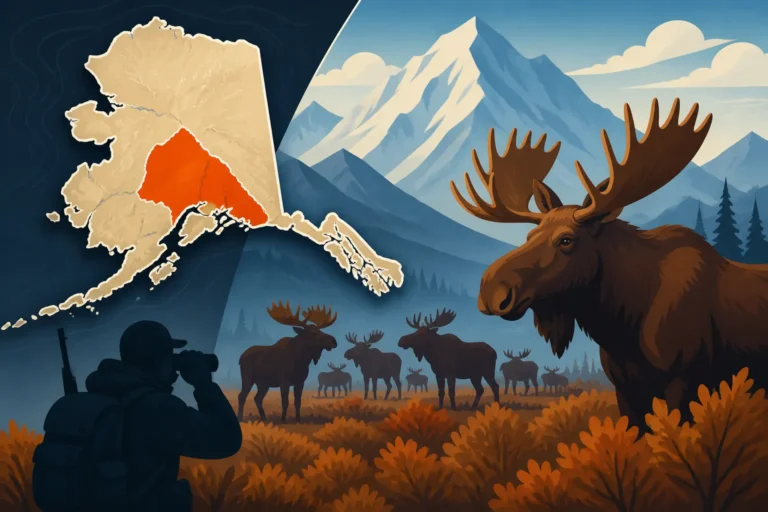
Interior Alaska, particularly the vast drainages of the Yukon and Kuskokwim rivers and their countless tributaries, stands out as a premier region for trophy moose. This enormous area, characterized by its mosaic of spruce forests, birch stands, and extensive willow flats, provides an ideal buffet for moose. The meandering rivers constantly create new sandbars and oxbow lakes, leading to successional growth of young, nutrient-rich willows—a moose's favorite food. Areas like the Tanana Flats in Game Management Unit (GMU) 20A have a long-standing reputation for producing exceptional bulls. The combination of nutrient-rich soil, extensive wetland complexes, and varied browse makes it a moose paradise.
Float hunting these river systems, such as the upper Yukon or parts of the Koyukuk, allows hunters to access remote areas rarely touched by road-system hunters. This reduced pressure often means older, more mature bulls have a chance to reach their full antler potential. The challenge here is the logistics: fly-in access, navigating vast wilderness, and being prepared to Quartering a Bull Moose Alone in the Field are all part of the game. But for those willing to put in the effort, these river basins offer some of the best opportunities to find truly enormous Alaska-Yukon moose. You might not see a moose every mile, but when you do, it often has the size you're looking for.
Southwestern Alaska's Coastal Plains and Drainages
Moving southwest, the vast Bristol Bay region and the drainages flowing into it also harbor impressive moose populations, often with great trophy potential. While more commonly associated with brown bears and salmon, areas like the Nushagak and Kvichak river drainages offer expansive lowlands, dense willow thickets, and productive wetlands. The coastal influence often brings milder winters than the deep Interior, which can contribute to better overwinter survival and, in turn, better antler growth.
Hunting here often involves bush planes to remote lakes or rivers, followed by float trips or spike camps. These areas are truly remote, requiring meticulous planning and self-sufficiency. You'll likely encounter an abundance of water, and understanding how to navigate these marshy landscapes is key. The moose here benefit from a diverse forage base and, again, relatively low human pressure compared to more accessible units. If you're looking for a hunt where you might encounter an enormous bull and truly be in the middle of nowhere, Southwestern Alaska offers that rugged appeal.
The Brooks Range Foothills and Beyond
While the Brooks Range is often synonymous with Dall sheep, its southern foothills and the vast taiga forests stretching north toward the Arctic Circle can also hold some phenomenal moose. These animals tend to be more spread out due to harsher conditions and less dense browse in some areas, but the ones that thrive often produce magnificent antlers. The immense, unbroken wilderness ensures that many bulls live to old age, giving them years to develop truly massive racks.
Access here is almost exclusively by air, often through a fly-in hunting operation. Hunters will typically set up base camps and then backpack hunt for Alaska's biggest bulls, covering vast distances on foot or using ATVs on established trails where permitted. This is a very physically demanding hunt, but the rewards can be extraordinary. The sheer isolation means minimal human disturbance, allowing older bulls to avoid hunting pressure. While not as densely populated as some Interior river systems, the quality of the bulls in these remote northern reaches can be exceptional.
Specific Game Management Units (GMUs) Known for Big Bulls
Alaska is divided into 26 Game Management Units (GMUs), each with its own regulations. While moose are found in many, a few stand out for consistently producing exceptional trophy animals.
- GMU 20A (Tanana Flats): This unit, south of Fairbanks, is legendary. Its vast floodplains, burn areas, and willow swamps are prime moose habitat. It's often managed with specific antler restrictions to protect younger bulls and allow them to mature, leading to an older age class and larger average antler size. Access can be challenging, involving ATVs, airboats, or small aircraft.
- GMU 13 (Nelchina Basin): While perhaps more famous for caribou, certain parts of Unit 13, particularly the river drainages and wetlands, hold impressive moose. It's more accessible from the road system via the Glenn and Denali Highways, but hunters who venture deeper into the wilderness can find excellent bulls.
- GMU 19 (Middle Kuskokwim): This large, remote unit in Western Alaska is another hotspot. Its extensive river systems, sloughs, and marshy lowlands create perfect conditions. Access is typically by air or boat.
- GMU 24 & 26 (Brooks Range & North Slope): These northern units are very remote and offer vast tracts of undeveloped wilderness. While moose densities might be lower, the bulls that live here often have incredible antler growth due to age and lack of pressure. These are truly expeditionary hunts.
| GMU | Primary Access Method | Key Habitat Features | Typical Antler Spread (Mature Bull) | Notes |
|---|---|---|---|---|
| 20A (Tanana) | ATV, Airboat, Fly-in | Floodplains, Burn Scars, Willow Swamps | 60-70+ inches | Legendary for trophy potential, high competition |
| 19 (Kuskokwim) | Fly-in, Boat | River Systems, Sloughs, Marshlands | 55-65+ inches | Remote, good age class, challenging logistics |
| 24/26 (Brooks) | Fly-in | Taiga Forest, Willow Thickets, River Valleys | 60-70+ inches | Very remote, lower density but high quality |
| 13 (Nelchina) | Road, ATV, Snowmachine | Wetlands, River Drainages, Timbered Areas | 50-60+ inches | More accessible, diverse species, specific rules |
When researching potential areas, resources like GoHunt can be invaluable. Their mapping and data tools can help you analyze harvest statistics, draw odds, and land ownership, giving you a serious edge in pre-hunt planning for any of these GMUs. Understanding Alaska Game Management Units and How They Are Numbered is crucial for proper hunt planning.
Habitat Characteristics of Giant Moose Country
It's not enough to know which regions hold big moose; you also need to understand why these areas are so productive. The secret lies in specific habitat characteristics that provide everything a moose needs to not just survive, but to truly thrive and grow those immense antlers. If you can learn to read the landscape for these signs, you'll be light-years ahead in your scouting and hunt planning.
Optimal Foraging Areas and Preferred Browse
At the heart of any giant moose country is an abundance of optimal foraging areas, absolutely bursting with their preferred browse species. Moose are creatures of habit when it comes to food. Their primary diet consists of the tender, nutritious twigs and leaves of deciduous shrubs and trees. Willows are king, particularly species like feltleaf willow, balsam poplar, and diamondleaf willow, which grow prolifically in moist, open environments. Birch and aspen are also important, especially the young saplings that sprout after disturbances. You'll find these "moose grocery stores" in river floodplains, along the edges of swamps and bogs, in old burn areas, and sometimes even in alpine transition zones.
A critical indicator of quality foraging grounds is a healthy mix of age classes in the browse. Moose prefer young, succulent growth, which is more digestible and nutrient-dense than old, woody stems. This is why areas undergoing ecological succession, perhaps after a major flood that scours a riverbank, or a wildfire that clears mature timber, are so attractive. These disturbances kickstart a cycle of vigorous regrowth, creating a banquet of nutritious forage for years. Scouting for these types of areas, perhaps using satellite imagery and topographic maps, is essential.
Water Sources and Willow-Dominated Ecosystems
Moose are often found in close proximity to water, and for good reason. Not only do they need water to drink, especially in the dry heat of summer, but many of their preferred food sources thrive in moist, riparian environments. Willow-dominated ecosystems are often found alongside rivers, streams, lakes, and extensive wetlands. These wet areas provide a stable, productive environment for willows to flourish, offering a continuous supply of high-quality browse. Furthermore, aquatic vegetation, which moose readily consume, can be a vital source of minerals and nutrients, especially during the summer months.
The presence of vast, interconnected systems of rivers, sloughs, and shallow lakes means more edge habitat – the transition zones where different vegetation types meet – which moose love. These areas offer both food and cover, allowing them to retreat into dense thickets for bedding down or escaping predators. When you're scouting, look for extensive networks of braided rivers, wide river valleys with numerous oxbows, and large wetland complexes. These are the natural highways and dining rooms for big moose. Floating Alaska Rivers for Moose and Caribou is often an effective strategy for accessing these productive, water-rich habitats.
Old Burns and Where Moose Feed in Them
Wildfires, while destructive in the short term, are a natural and often beneficial force in creating prime moose habitat in Alaska. After a fire sweeps through a spruce forest, it clears out the old growth and returns nutrients to the soil. In the years following, deciduous species like willow, birch, and aspen are often the first to regenerate, growing quickly and vigorously. These "old burns," typically 5 to 20 years post-fire, become incredibly productive feeding grounds for moose. The young, tender saplings provide an easily accessible and highly nutritious food source that can support high moose densities and promote excellent antler growth.
The key is finding burns that are in the right stage of regeneration. Too recent, and there might not be enough browse yet. Too old, and the deciduous growth may have become too woody and less palatable, or coniferous trees might be starting to dominate again. Satellite imagery, combined with historical fire maps, can be an invaluable tool for identifying these crucial feeding areas. These burn scars are often massive, requiring extensive travel to cover effectively, but they concentrate moose like few other habitats. Learning about Old Burns and Where Moose Feed in Them can unlock hidden potential in many units.
Hunting Strategies for Alaska's Biggest Bulls
Chasing truly enormous Alaska moose is more than just stumbling upon a lucky bull; it requires a calculated approach, keen understanding of their behavior, and often, a willingness to go where few others venture. The strategies employed to find and harvest these giants are as diverse as the Alaskan landscape itself, but they all share common threads of preparation, patience, and persistence.
The Importance of Thorough Scouting and E-Scouting
In a state as vast and wild as Alaska, showing up without extensive pre-hunt scouting is akin to throwing darts in the dark. Thorough scouting, both in the field (if possible) and from home (e-scouting), is absolutely non-negotiable for anyone serious about a trophy moose. E-scouting involves poring over high-resolution satellite imagery, topographic maps, and even historical weather data. You're looking for those prime habitat indicators: expansive willow flats, old burn areas, braided river systems, and potential travel corridors between feeding and bedding areas. Resources like GoHunt's Insider platform, with its detailed mapping layers and unit data, can provide critical insights into terrain, access points, and historical harvest data, helping you narrow down productive zones without ever leaving your home.
Beyond simply identifying good habitat, e-scouting helps you plan your logistics. Where will you land a float plane? What's your ingress and egress plan? Are there choke points in the terrain that funnel moose movement? Identifying potential camping spots, water sources, and escape routes is all part of the digital reconnaissance. Once on the ground, traditional scouting involves reading sign – tracks, rubs, browsed vegetation, and bedding areas. The presence of large, deep tracks or heavily rubbed trees with wide scrapes often indicates a mature bull is in the vicinity. Never underestimate the power of knowing your hunting area intimately before you ever set foot there with a rifle.
Effective Calling Techniques During the Rut
The Alaska moose rut, typically peaking in late September and early October, is a magical time when bulls become more vocal and aggressive, making them vulnerable to calling. This is arguably the most effective strategy for bringing a big bull into range, but it requires finesse and understanding of moose behavior. The primary calls are the cow call (a long, drawn-out bawl), the bull grunt (a deep, throaty sound), and aggressive raking of brush or a moose scapula against trees to mimic a bull sparring or marking territory. Each call serves a different purpose and should be used strategically.
A common tactic is to set up in a strategic location with good visibility, often overlooking a willow flat or a beaver pond, and start with subtle cow calls. If there's no response, you might escalate to some light raking and a more insistent cow call. If a bull answers, patience is key. He might circle downwind, test the wind, or take his sweet time approaching. Many hunters make the mistake of calling too aggressively or moving too soon. Sometimes, the most effective call is silence after an initial series, letting the bull's curiosity draw him in. Understanding the nuances of Calling Bull Moose During the Alaska Rut, including when to use a moose scapula for raking or when bulls stop answering calls in September, is paramount to success.
Float Hunting and Backpack Hunting for Remote Access
To consistently find Alaska's biggest bulls, you often need to get away from the road system and areas with heavy hunting pressure. This is where methods like float hunting and backpack hunting shine. Float hunting involves flying into a remote lake or gravel bar with an inflatable raft or canoe, then drifting down a river, hunting from the water or making frequent stops to scout and call from shore. This allows access to vast, otherwise impenetrable river systems, moving you through prime moose habitat daily. You can cover significant ground, camp in different spots each night, and often find bulls that rarely see human presence.
Backpack hunting, on the other hand, is about getting into high-elevation basins or vast timbered areas far from any trails or water access. It requires significant physical conditioning, a lightweight gear setup, and the ability to be self-sufficient for days or weeks. This method is particularly effective in areas like the Brooks Range foothills, where moose might be more dispersed but often grow to exceptional sizes due to lack of pressure. Both strategies demand robust planning for gear, food, safety, and, crucially, how you'll pack out hundreds of pounds of meat in the field. This can be one of the most physically demanding parts of any Alaska hunt.
Conservation and Management of Alaska Moose Populations
Alaska's robust moose populations don't happen by accident; they are the result of careful, science-based management by the Alaska Department of Fish and Game (ADF&G). This management involves a complex dance of habitat monitoring, population surveys, harvest limits, and adaptive regulations, all aimed at ensuring healthy herds for both current and future generations of hunters and wildlife enthusiasts.
ADF&G Management Units and Regulations
The foundation of moose management in Alaska lies in its Game Management Units (GMUs). These 26 units, and their further subdivisions (subunits), are the building blocks for specific regulations tailored to local herd conditions. ADF&G conducts regular aerial surveys, monitors harvest data, and assesses habitat health to determine population trends within each GMU. Based on this data, specific regulations are set, including season dates, bag limits, and hunter numbers. These regulations are designed to achieve specific population objectives, whether it's maximizing sustained yield, increasing herd size, or ensuring an older age class of bulls.
Hunters are responsible for knowing and adhering to the regulations for the specific GMU they intend to hunt. These can vary significantly from one unit to another, even for the same species. For instance, one unit might have a general season with a simple spike-fork antler restriction, while another might require a draw permit with a more complex 50-inch spread or four brow tines rule. These rules are published annually in the Alaska Hunting Regulations booklet, which is available online and at local ADF&G offices. Understanding your chosen unit's specific regulations is the first and most critical step for a legal and successful hunt.
Antler Restrictions and Their Purpose
Antler restrictions are a common management tool used in many GMUs, particularly those known for high hunting pressure or a desire to produce more trophy-class animals. The most common restrictions for moose include the "spike-fork" rule (meaning a bull must have antlers with at least one spike and one fork, or two spikes and two forks, etc., often used to protect yearling bulls), the "50-inch spread" rule (antlers must measure at least 50 inches wide), or the "four brow tines" rule (each antler must have at least four brow tines). Sometimes, a unit will combine these, such as a "50-inch spread OR four brow tines on one side."
The primary purpose of these antler restrictions is to allow younger bulls to survive and mature into older, larger-antlered animals. By protecting specific age classes, managers can influence the age structure of the bull population, leading to a higher proportion of older, larger-antlered bulls in the herd. This can also improve breeding success by ensuring a sufficient number of mature bulls are available during the rut. While they can make field judging more challenging for hunters, these regulations are a critical component in ensuring the long-term health and trophy potential of Alaska's moose herds. Knowing how to judge a legal bull under Alaska antler rules is essential to avoid citations.
Predation and its Influence on Herd Health
Predation, primarily by wolves and brown bears, is a natural and often significant factor influencing moose population dynamics in Alaska. While hunters harvest a portion of the moose population, predators play a crucial role in regulating herd numbers, particularly targeting calves and older, weaker animals. In some areas, high predation rates, especially on calves, can limit herd growth or even cause declines, impacting future hunting opportunities.
ADF&G closely monitors predator-prey relationships and, in some cases, implements predator management strategies to help achieve moose population objectives. This might involve liberalized hunting and trapping seasons for wolves and bears in certain areas. It's a complex and often controversial aspect of wildlife management, balancing ecological integrity with hunter desires for abundant game. Understanding that moose exist within a broader ecosystem, constantly influenced by their predators, helps to paint a more complete picture of their population health and the challenges of managing them for both conservation and hunting.
Common Misconceptions About Trophy Moose Hunting
When you dream about Alaska moose hunting, especially for those truly massive bulls, it's easy to get caught up in popular narratives or oversimplified ideas. However, the reality of pursuing a trophy moose in Alaska is often far more nuanced and challenging than what's portrayed in magazines or on TV. Dispelling these common misconceptions is vital for setting realistic expectations and planning a successful, fulfilling hunt.
The "Bigger is Always Better" Trap
One of the biggest traps hunters fall into is believing that only the largest, Boone and Crockett-sized moose are worth pursuing. While there's no denying the allure of a giant bull, focusing solely on the "biggest possible" can lead to immense frustration and missed opportunities. Many hunters return from Alaska empty-handed because they passed on multiple legal and respectable bulls, holding out for a mythical monster that never materialized. The reality is that a 50-inch moose, or even a solid 40-inch bull in an antler-restricted area, is still an incredible trophy, providing a lifetime of memories and a freezer full of delicious meat.
The hunt itself, the immersion in the Alaskan wilderness, the physical challenge, and the connection to the landscape are often far more rewarding than the mere tape measure dimensions of an antler. It's easy to get caught up in the numbers game, especially with social media showcasing endless giant animals. But remember, the experience is paramount. Don't let the pursuit of "bigger" overshadow the joy of the hunt and the accomplishment of harvesting a magnificent animal, whatever its exact antler dimensions. An Alaska moose hunt is an achievement in itself, regardless of whether it makes the record book.
The Myth of Easy Access to Giant Bulls
Another pervasive misconception is that Alaska's wilderness means "easy access" to giant bulls simply because there's so much land. While it's true that Alaska boasts incredible expanses of wild country, finding truly big, old bulls often means going far beyond the easy access points. The biggest bulls usually live in remote areas, away from roads, trails, and heavy hunting pressure. This means float planes, jet boats, packrafts, or extensive backpack hunting are often necessary. Such access is expensive, logistically complex, and physically demanding.
Don't expect to drive up an ATV trail and have a 65-inch bull step out next to your truck. While it happens on occasion, it's the exception, not the rule. The kind of country that consistently produces giant moose usually requires significant effort to reach and hunt. This might involve weeks of planning, substantial financial investment, and a willingness to endure harsh weather, bugs, and difficult terrain. Thinking that Alaska's vastness automatically translates into easy trophy access is a recipe for disappointment. The best bulls demand the hardest work, both in planning and in the field.
Overcoming the Psychological Challenges of a Moose Hunt
Beyond the physical demands, an Alaska moose hunt, especially for a trophy bull, presents significant psychological challenges. The sheer scale of the landscape can be daunting. Days can pass without seeing any legal moose, leading to self-doubt and frustration. The weather can be relentlessly brutal, testing your resolve and your gear to its limits. The remoteness can feel isolating, and the constant awareness of large predators like brown bears can be mentally exhausting. Hunters often face difficult decisions, like whether to pass on a legal bull that doesn't quite meet their "trophy" standard, knowing it might be the only opportunity.
It takes a strong mental game to stay positive, focused, and persistent through these challenges. Empathy for yourself and your hunting partners is key. Remember that success isn't just measured by a kill, but by the resilience shown, the lessons learned, and the memories forged in the wilderness. Be prepared for setbacks, be adaptable, and cultivate a deep appreciation for the entire experience. Going into a moose hunt with a realistic mindset about these psychological hurdles will better equip you to push through them and truly enjoy the adventure, regardless of the outcome.
Planning Your Hunt for a Giant Alaska Moose
Embarking on an Alaska moose hunt is an enormous undertaking, and going after a giant bull adds even more layers of complexity. This isn't a trip you just "wing." It requires meticulous planning, serious physical preparation, and a clear understanding of what you're getting into, from gear to logistics to working with professionals.
Logistics and Essential Gear Considerations
The logistical puzzle of an Alaska moose hunt is arguably the most challenging part, especially if you're pursuing a remote, unguided adventure. It starts with transportation: will you fly commercially to Anchorage or Fairbanks, then take a bush plane (float plane or wheel plane) to a remote camp? Or are you considering a float hunt, requiring rafts and shuttles? Each option comes with its own costs, weight limits, and scheduling complexities. You'll need to secure tags and licenses well in advance, understand Alaska Harvest Tickets, Registration Permits and Draw Permits, and have a clear plan for meat and trophy extraction – often the heaviest and most challenging part of the entire hunt. Thinking about how you will get hundreds of pounds of meat off a beaver slough or out of a remote burn area is not an afterthought; it's a primary consideration.
Your gear list will be extensive and specialized for the Alaskan wilderness. Rain gear, first and foremost, must be bomb-proof and breathable, as coastal rain can be relentless. Layering systems are critical for fluctuating temperatures. You'll need sturdy, waterproof boots, a quality rifle or bow suitable for big game, robust game bags that breathe in coastal rain, and a reliable navigation system (GPS, satellite messenger like an InReach, and paper maps). Don't forget bear safety equipment – carrying a sidearm around a kill site is common, as is bear spray. Every item must be carefully chosen for its weight, durability, and functionality in extreme conditions.
Physical Conditioning for a Demanding Hunt
Let's be blunt: an Alaska moose hunt is not a leisurely stroll. Pursuing a trophy bull, especially in remote, roadless country, demands a high level of physical fitness. You'll be traversing uneven tundra, slogging through muskeg, climbing steep riverbanks, and potentially packing out hundreds of pounds of meat over difficult terrain. You might be wet, cold, and sleep-deprived for days on end. Your body needs to be ready for it.
Start training months in advance. Focus on building endurance through long hikes with a loaded pack, incorporating elevation changes if possible. Strength training, particularly for your core, legs, and back, is crucial for carrying heavy loads. Don't neglect flexibility and balance, as navigating slick logs and uneven ground is common. Cardiovascular fitness is also paramount, as you might need to quickly cover ground to get into position or to a downed animal. The better physical shape you're in, the more you'll enjoy the hunt, reduce your risk of injury, and increase your chances of success. This isn't about vanity; it's about being prepared for the genuine physical challenge of the Alaskan wilderness. Training for a Backpack Sheep Hunt, for example, shares many similar requirements for a demanding moose hunt.
Working with Transporters and Guide Considerations
For many non-resident hunters, working with an Alaska transporter or a registered guide is a necessity. Transporters (often bush pilots) provide air or boat access to remote areas, drop you off, and pick you up at a predetermined time. They are not guides; they cannot provide advice on where to hunt, call animals, or assist with the kill or recovery beyond dropping off and picking up gear. However, for those experienced in self-sufficient hunting, they offer the key to unlocking vast, untamed country. Understanding Alaska Transporter Services Versus Guide Services is critical.
If you're less experienced, or hunting species that require a guide (like brown bear, Dall sheep, or mountain goat for non-residents, unless you're hunting with a Second-Degree-Kindred relative), then hiring an Alaska Registered Guide-Outfitter is essential. A good guide will handle much of the logistics, provide expert field knowledge, ensure your safety, and significantly increase your odds of success. Choosing a Guide for an Alaska Moose Hunt involves thorough research, checking references, and ensuring their hunting philosophy aligns with yours. While more expensive, a guided hunt provides an unparalleled level of support and expertise, allowing you to focus on the hunt itself. For any hunt plan, always remember to build extra days into a fly-in schedule for potential weather delays.
Disclaimer
The information provided in this guide is for general informational purposes only and does not constitute legal advice. Hunting regulations in Alaska are complex and subject to change. Always consult the most current Alaska Department of Fish and Game (ADF&G) regulations for the specific Game Management Unit (GMU) you intend to hunt and obtain all necessary licenses, tags, and permits before your trip. Safety in the Alaskan wilderness is paramount; hunters should always be prepared for extreme conditions and potential wildlife encounters.