Alaska Trapping License Versus Hunting License
Trying to figure out the maze of licenses in Alaska can feel like navigating a dense willow thicket in the dark. It’s a common point of confusion for folks new to the state, and even for seasoned outdoors enthusiasts: what’s the real difference between an Alaska trapping license and a hunting license? Many people mistakenly believe one might cover the other, or that if they’re just after small game or a wolf, a general hunting license is all they need. This guide will meticulously break down the distinctions, requirements, and overlaps, ensuring you understand exactly what you need for your chosen pursuits in the Last Frontier.
Understanding the Alaska Hunting License
When most people think of heading into the Alaska wilderness with a firearm or bow, they're typically thinking about hunting, and for that, a valid hunting license is your foundational requirement. It's the first step to pursuing everything from massive bull moose to elusive Sitka blacktail deer.
What an Alaska Hunting License Allows
An Alaska hunting license is your ticket to legally pursue game animals in the state. This includes the grandeur of big game like moose, caribou, brown/grizzly bear, black bear, Dall sheep, and mountain goat, but it also extends to the less glamorous, yet equally important, world of small game. Think about those ptarmigan that make for a welcome addition to a remote camp meal, or the snowshoe hare you might find hopping through the Interior spruce forests. Even furbearers like wolves and wolverines, which are often thought of in the context of trapping, can be legally hunted during specified seasons with the appropriate hunting license and any required tags.
It's crucial to understand that while a hunting license is the baseline, many of Alaska's most sought-after species require additional permits or "locking tags." For instance, if you're dreaming of a Dall sheep hunt or a fall brown bear expedition, you'll need the hunting license first, and then purchase a specific tag for that animal. The same goes for species like moose, caribou, and bison. These tags are literally "locked" onto the animal's hide or horn after a successful kill, a testament to the state's detailed management system. This process is very different from the requirements for general small game.
Who Needs a Hunting License and When
Essentially, anyone who intends to hunt any game animal in Alaska, regardless of residency or the size of the animal, needs an Alaska hunting license. The rules do, however, vary significantly based on your residency status. Nonresidents typically face higher costs for both the license and the individual species tags, which is a common practice across states to manage resource use. You can get a clear picture of the Nonresident Hunting License Costs in Alaska by checking the current regulations. Residents, on the other hand, benefit from more affordable licenses and sometimes don't even need to purchase locking tags for certain species, like black bear or wolf, if they are only taking one per regulatory year.
Age is another factor. While there are provisions for youth hunting licenses, and specific Alaska Hunter Education and Orientation Requirements that must be met by younger hunters or those hunting certain species (like sheep or goat), the general rule is that anyone over the age of 16 needs a license. These licenses are typically valid for a calendar year, from January 1st to December 31st, regardless of when you purchase it. So, if you buy your license in September, it's still only good until the end of December of that same year. Always make sure you're buying for the correct regulatory year.
Navigating the Alaska Trapping License
While hunting focuses on the direct pursuit and take of game animals, trapping is a specialized method centered around capturing furbearers using snares, foothold traps, and other devices. It requires a distinct license and a different set of skills and regulatory knowledge.
What an Alaska Trapping License Covers
An Alaska trapping license grants you the legal authority to set traps and snares for furbearers. This category primarily includes animals prized for their pelts, such as marten, mink, beaver, otter, lynx, fox (red, cross, silver, arctic), and ermine (weasel). Just like hunting, it also covers wolves and wolverines when pursued by trapping methods. The emphasis here is on the method of take: using passive devices rather than active pursuit with a weapon.
The regulations governing trapping are incredibly detailed and often unit-specific, dictating everything from trap size and type to setback distances from public trails or residences. Trappers are focused on the harvest of fur, which, especially for species like marten or lynx, can provide economic benefits in addition to subsistence. While some trappers may salvage meat from larger furbearers like beaver or wolf, the primary intent and legal framework revolve around the fur resource.
Specific Requirements for Trappers
Just as hunters have specific requirements, so do trappers. For nonresidents, obtaining an Alaska trapping license can be challenging, as some furbearer seasons might be restricted or require additional permits beyond the general trapping license. The costs also reflect this distinction between residents and nonresidents.
Perhaps the most significant difference from hunting is the mandatory trapper education course. Unlike hunter education, which has age exemptions and reciprocity with other states, Alaska's trapper education program is designed specifically for the unique safety, ethical, and legal considerations of trapping. New trappers, regardless of age or residency, often need to complete this course before they can legally set traps in the state. This curriculum covers trap setting, proper dispatch methods, responsible trapping practices, and how to avoid non-target catches, ensuring both animal welfare and public safety.
Ignoring these specific requirements can lead to serious consequences, including fines, confiscation of gear, and loss of future trapping privileges. It's imperative to consult the current Alaska Furbearer Trapping Regulations booklet meticulously. These booklets provide detailed information on specific Unit regulations, which can vary wildly regarding trap sizes, methods, and season dates.
Key Differences and Overlapping Scenarios
The distinction between hunting and trapping licenses in Alaska isn't just a bureaucratic formality; it reflects fundamental differences in methodology, intent, and regulatory oversight. However, there are also a few interesting overlaps, particularly with certain furbearer species.
Legal Distinctions: Methods and Intent
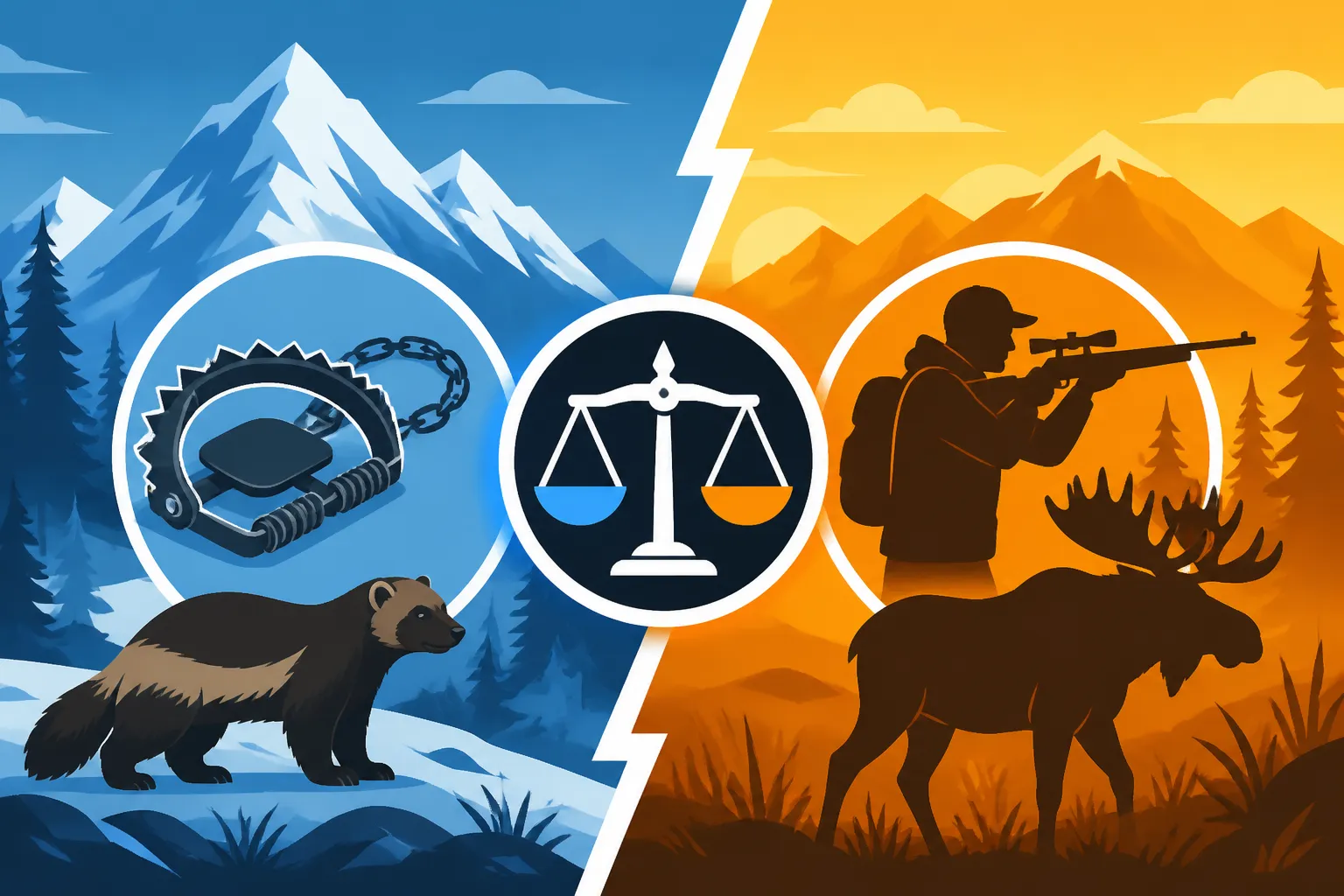
The most straightforward way to differentiate between hunting and trapping lies in the method and intent. Hunting involves the active pursuit of an animal with a weapon – a rifle, shotgun, bow, or muzzleloader. The hunter actively seeks out, stalks, and directly shoots or arrows the animal. The intent is often for meat, a trophy, or both. For instance, an archer might be focused on Bowhunting Alaska Big Game in Archery-Only Areas for moose or caribou.
Trapping, on the other hand, involves setting a device (a trap, snare, or snaring pole) to capture an animal without the trapper's immediate presence. The animals are caught by the devices, not by direct discharge of a weapon. The primary intent for trapping is usually the harvest of fur, although as mentioned, some meat might be salvaged. This distinction in method means that you cannot use a trapping license to hunt a moose, nor can you use a hunting license to set a beaver trap.
Where it gets interesting is with species like wolves and wolverines. These animals are classified as furbearers and can be taken by both hunting and trapping methods, but the license requirement still aligns with the method used. If you shoot a wolf while out on a caribou hunt, you need a hunting license (and often a wolf tag, depending on your residency and the unit). If you catch a wolf in a snare set on a trapline, you need a trapping license. The seasons for Alaska Wolf Trapping Versus Hunting Seasons are often different, and it's essential to understand which regulations apply to your chosen method.
Cost, Eligibility, and Reporting Requirements
The financial commitment for hunting versus trapping licenses and tags also varies significantly. For nonresidents especially, the costs associated with big game hunting can be substantial, as highlighted in Alaska Big Game Locking Tags and What Each Costs. Trapping licenses, while still requiring a fee, are generally less expensive than a full suite of big game hunting tags.
To illustrate, here's a simplified comparison of typical resident and nonresident license costs in Alaska (these are approximate and subject to change, always check current ADF&G regulations):
| License Type | Alaska Resident Cost (Approx.) | Nonresident Cost (Approx.) |
|---|---|---|
| Annual Hunting License | $30 | $160 |
| Annual Trapping License | $30 | $350 |
| Sport Fishing License | $20 | $45 (annual) |
| Moose Locking Tag | Free | $800 |
| Brown Bear Locking Tag | Free | $1,000 |
| Wolf Hunting Tag (Nonresident) | $60 | $60 |
| Wolverine Hunting Tag (Nonresident) | $60 | $60 |
Note: Resident locking tags are generally free with a valid hunting license, but nonresidents pay for each species-specific tag.
Eligibility also varies. While nonresidents can purchase a hunting license and most locking tags, nonresident trapping licenses are often more expensive and might have additional restrictions or not be available for all species or units.
Reporting requirements are another key difference. For big game hunting, you'll often have Alaska Harvest Report Deadline After the Hunt that are critical to meet, especially for draw or registration hunts. Some big game, like bear and wolf, also have Alaska Sealing Requirements for Bear and Wolf Hides, meaning you must present the skull and hide to an ADF&G representative within a specified timeframe. For trappers, reporting typically involves submitting harvest reports by unit for all furbearers taken, and some high-value furs might also have sealing requirements. Staying organized with these requirements is paramount; many experienced Alaskans use resources like GoHunt to keep track of deadlines and specific unit regulations.
Why You Might Need Both
For many Alaskans who embrace the full spectrum of outdoor pursuits, holding both a hunting and a trapping license is a common scenario. This allows for maximum flexibility throughout the year. For example, a resident might spend September focused on Calling Moose in Alaska With a Scapula and a Cow Call under their hunting license, and then once winter sets in, shift to running a trapline for marten or lynx with their trapping license.
It’s crucial to remember that these licenses are not interchangeable. You cannot use your trapping license to shoot a deer, nor can you use your hunting license to set a snare for a wolverine. They are distinct legal permissions for distinct activities, even if they sometimes pertain to the same species. If you encounter a wolf during a hunt, and you have a hunting license and the season is open, you can hunt it. If you find yourself needing to dispatch an animal caught in one of your legal traps, you rely on your trapping license.
Understanding the specific season dates, bag limits, and legal methods for each activity is vital. The Alaska Caribou Seasons and the Winter Hunt Split is a prime example of hunting seasons that vary throughout the year, but trappers will have their own distinct windows for caribou-following predators like wolves.
Navigating Alaska's Complex Regulations with Confidence
Alaska's hunting and trapping regulations are among the most complex in North America, and for good reason—they manage some of the continent's most diverse and robust wildlife populations. Success and legality hinge on a thorough understanding of these rules.
The Importance of the Regulation Booklet
There is simply no substitute for reading the official regulation booklets published by the Alaska Department of Fish and Game (ADF&G) every single year. There are separate booklets for hunting and furbearer trapping. Do not rely solely on information from friends, online forums, or even last year's regulations. When Alaska's Hunting Regulatory Year Begins (typically July 1st for the fall hunt seasons) is when new regulations come into effect, and changes, even subtle ones, can have significant implications.
These booklets detail everything from legal methods of take, open seasons, bag limits, reporting requirements, and specific unit restrictions. For trappers, they cover trap specifications, permissible baits, and restrictions near public access points. For hunters, they outline antler restrictions for moose or full-curl requirements for sheep, among countless other rules. Pay close attention to any emergency orders that might be issued, as these can change seasons or quotas mid-year. Reputable online platforms like GoHunt often summarize key regulatory information, but always cross-reference with the official ADF&G source.
Resources for Hunters and Trappers
Beyond the regulation booklets, there are numerous resources available to help you navigate Alaska's outdoors:
- Alaska Department of Fish and Game (ADF&G) Website and Offices: The official ADF&G website is an invaluable digital hub for regulations, draw hunt information, harvest reporting, and news on emergency orders. Their regional offices are also staffed by knowledgeable biologists and enforcement officers who can answer specific questions about local conditions or complex regulations. Don't hesitate to call your local ADF&G office if you have doubts.
- Online Platforms and Communities: Websites and apps like GoHunt have become popular among hunters for compiling state regulations, providing application strategies for draw hunts, and offering a community forum for sharing information. While these can be excellent tools for organization and staying informed, always verify critical details with official sources.
- Experienced Local Hunters and Trappers: There's immense wisdom to be gained from those who have lived and hunted/trapped in Alaska for years. Join local conservation groups or attend public meetings to connect with experienced individuals who can share their practical knowledge. Just be sure to always verify legal aspects with ADF&G.
- Buying Licenses Online: The process of Buying an Alaska License Online has become incredibly convenient. You can purchase your hunting and trapping licenses, and most locking tags, directly from the ADF&G website, print them out, and be ready to head into the field. This saves time and ensures you have the necessary documentation before your trip.
By diligently using these resources, understanding the distinct requirements for both hunting and trapping, and always staying informed about current regulations, you can confidently and legally enjoy Alaska's incredible wildlife opportunities.
Disclaimer
The information provided in this guide is for general informational purposes only and does not constitute legal advice. Hunting and trapping regulations in Alaska are complex and subject to change. Always consult the most current official Alaska Department of Fish and Game hunting and furbearer trapping regulations booklets and contact ADF&G directly for specific legal interpretations or questions before engaging in any hunting or trapping activities.