Alaska Locking Tag Versus Harvest Ticket Difference
The world of Alaska hunting regulations can feel like a labyrinth, especially when you start trying to decipher the nuances between something as seemingly straightforward as a "tag" and a "ticket." Many hunters, particularly those new to the Last Frontier or non-residents planning their dream trip, often find themselves scratching their heads, worried about making a costly mistake. This guide aims to unravel the mystery, clarifying the critical differences between Alaska locking tags and harvest tickets, so you can hunt confidently and legally.
Understanding the Basics: Licenses First, Then Tags and Tickets
Before we even dive into locking tags or harvest tickets, it's absolutely crucial to remember that everything starts with a valid hunting license. Think of your license as your fundamental passport to being a hunter in Alaska. Without it, none of the other permits or documents matter.
The All-Important Alaska Hunting License
Your Alaska hunting license is your base entry fee, granting you the privilege to hunt small game, furbearers, and often serves as the prerequisite for applying for or purchasing big game permits. The cost varies significantly depending on whether you're an Alaska resident or a non-resident. For example, a non-resident hunting license is a substantial investment compared to what an Alaska resident pays for a hunting license. This difference reflects the state's intent to manage resources and offer certain benefits to its permanent population.
Many first-time non-resident hunters are often surprised by the upfront cost, which can easily be a few hundred dollars before they even consider specific big game opportunities. This license is valid for a calendar year, typically from January 1st to December 31st. It’s imperative to have it on your person, along with a valid photo ID, whenever you are in the field hunting. Forget it, and you're inviting trouble, even if you have all the right tags and tickets.
Why Tags and Tickets Exist Beyond the License
Once you have your hunting license, you might wonder why the state requires additional documents. This is where the specific management of game populations comes into play. Alaska's wildlife is a precious resource, and the Alaska Department of Fish and Game (ADF&G) uses a multi-layered system to ensure sustainable harvests, gather crucial data, and manage hunter effort.
Locking tags and harvest tickets are two distinct tools in this regulatory toolbox. They serve different purposes: one primarily controls the number of high-demand big game animals harvested and generates revenue for conservation, while the other is primarily a data collection tool for species where harvest limits might be less restrictive or where general season opportunities are widespread. Understanding which applies to what species and in what situation is paramount to avoiding citations and enjoying a successful hunt. Resources like GoHunt can be invaluable for cross-referencing these regulations before you even step foot in the bush.
Alaska Locking Tags: The "Costly Permit to Kill"
When most people think of "tags" in hunting, they're often thinking of what Alaska calls a "locking tag." These are serious business, typically for the most sought-after or carefully managed big game species, and they come with a significant financial commitment.
What is a Locking Tag and Which Species Need One?
A locking tag is essentially a physical permit that you purchase for a specific species, such as moose, caribou, Dall sheep, or brown/grizzly bear. It has a unique serial number and is designed to be physically attached to the animal immediately after the kill. This acts as a clear, irrefutable proof of your legal harvest. The state requires a locking tag for species where harvest needs to be strictly controlled, often because of their iconic status, lower population numbers, or the intense hunting pressure they experience.
For non-residents, these tags can represent a significant portion of their overall hunting budget. For instance, you might be shocked to learn why an Alaska brown bear tag costs $1,000 for a non-resident. Similarly, the Alaska Dall sheep tag price for nonresidents is substantial, as is what an Alaska moose tag adds to a hunt budget, and the caribou tag price for an Alaska nonresident. These costs contribute directly to wildlife management, research, and enforcement efforts across the state. Residents, on the other hand, often pay significantly less or, in some cases, nothing for certain locking tags, reflecting their contribution to the state through taxes and their direct residency status. To find out exactly which Alaska species need a locking tag, you'll need to consult the current ADF&G regulations, which are updated annually.
How a Locking Tag Works in the Field
The process of using a locking tag is straightforward but demands immediate attention. Once you successfully harvest an animal that requires a locking tag, the tag must be physically detached from its paper backing and affixed to a specific part of the animal, usually the ear or horn, as soon as possible and before the animal is moved from the kill site. The tag typically has a self-locking mechanism, much like a zip tie, which prevents it from being removed and reused. This rule is absolute, regardless of weather, exhaustion, or how eager you are to start quartering your animal.
For example, imagine you've just put down a magnificent bull moose after days of calling and stalking. The adrenaline is pumping, and the heavy work of quartering is about to begin. But before you touch that knife to the hide, you must legally attach the locking tag. The regulations are very clear on when to attach an Alaska locking tag after the kill. Failure to do so immediately can result in severe penalties, including fines, loss of your animal, and even revocation of hunting privileges. The tag must remain attached until the hide or skull is processed or sealed, depending on the species. This ensures accountability and allows game wardens to verify the legality of your harvest at any point in the process.
Alaska Harvest Tickets: The "Free Regulatory Tool"
In contrast to the costly and physically attached locking tag, harvest tickets serve a different, but equally important, function. These are primarily for data collection and are typically required for species that have more liberal bag limits or general open seasons, but where the state still needs to monitor harvest levels.
What is a Harvest Ticket and When Do You Need It?
A harvest ticket is a no-cost permit that you obtain for certain species, like black bears, wolves, or sometimes specific caribou herds in certain areas. Unlike a locking tag, it usually doesn't need to be physically attached to the animal. Instead, it serves as a pre-registration and post-harvest reporting mechanism. Its main purpose is to help ADF&G track how many animals of a given species are being taken in specific areas and during specific timeframes. This data is critical for understanding population health, setting future season dates, and adjusting bag limits as needed.
You might need a harvest ticket for black bears throughout much of the state, or for wolves and wolverines in some units. The exact species and locations vary, so always check the current Alaska hunting regulations. The key takeaway is that while it's free, it's not optional. If the regulations state you need a harvest ticket for a particular species in your chosen game management unit, you must have it, even if there's no fee associated with it.
The Process of Obtaining and Using a Harvest Ticket
Obtaining an Alaska harvest ticket is generally a simple process. You can often get them online through the ADF&G license sales portal, at any licensed vendor that sells hunting licenses (like sporting goods stores or even some grocery stores in larger towns), or directly from ADF&G offices. You'll typically fill out a short form, and the ticket will be issued. It's often printed on the same paper as your hunting license or as a separate document that you carry with you. To learn more about where to get an Alaska harvest ticket, consult the ADF&G website or your local license vendor.
The critical part of using a harvest ticket comes after your hunt. Once you've harvested an animal for which you obtained a harvest ticket, you are legally obligated to report that harvest to ADF&G by a specific deadline. This often involves filling out the harvest ticket itself with details like the date of kill, location (game management unit and subunit), sex of the animal, and sometimes other specific data points. You then typically mail in the completed ticket or report it online. The Alaska harvest ticket reporting deadlines are strict, and missing them can lead to penalties, similar to those for misusing a locking tag. This reporting is how the state compiles its harvest data, so it's not just a formality—it's essential for wildlife management.
Key Differences and Why It Matters for Your Hunt
Understanding the distinctions between these two documents is more than just about avoiding a ticket; it's about being a responsible, ethical hunter who respects Alaska's wildlife resources and regulatory framework.
Cost, Species, and Regulatory Function
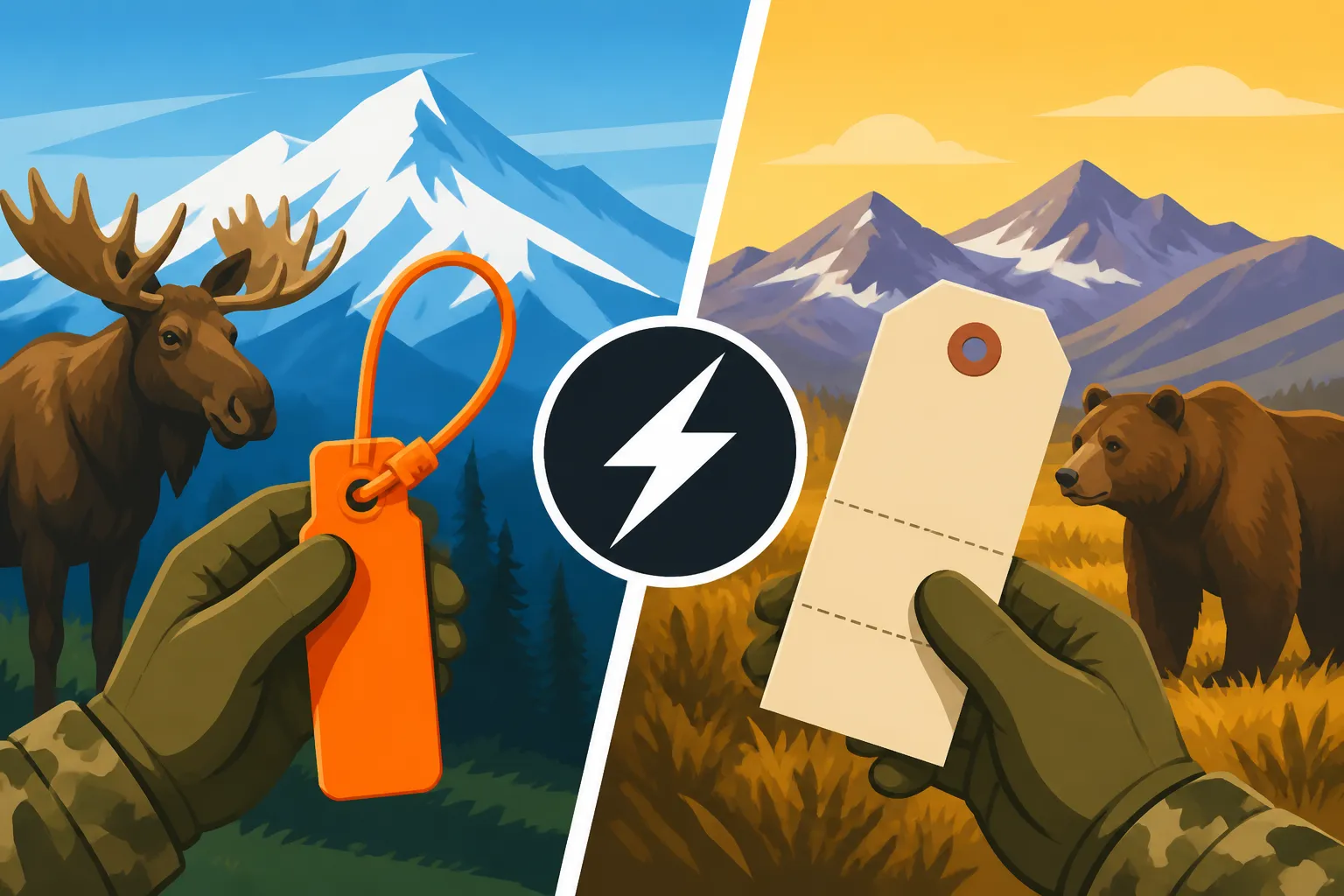
Let's lay out the fundamental differences in a clear table:
| Feature | Alaska Locking Tag | Alaska Harvest Ticket |
|---|---|---|
| Cost | Varies, often significant for non-residents | Generally free for both residents and non-residents |
| Species | High-demand, low-population, or iconic species (e.g., moose, brown bear, Dall sheep, caribou) | More common species, typically with general seasons (e.g., black bear, wolf, wolverine, some caribou) |
| Physical Use | Must be physically attached to the animal post-kill | Carried by hunter, no physical attachment to animal |
| Primary Purpose | Limits harvest, generates revenue, ensures accountability | Gathers harvest data, monitors population trends |
| Reporting | Often requires sealing by ADF&G, sometimes additional reporting | Mandatory post-hunt reporting (mail or online) |
| Availability | Purchased at license vendors or online | Obtained at license vendors or online |
As you can see, the core functions are distinct. Locking tags are a direct control on individual animal harvest and a revenue source, while harvest tickets are an information-gathering mechanism. Both, however, are mandatory if required for your chosen species and area. Failing to acquire the correct document or neglecting the reporting requirements can lead to serious legal consequences. For example, not salvaging all edible meat and meeting Alaska moose meat salvage requirements, even with a valid tag, can lead to severe wanton waste penalties.
Avoiding Common Mistakes and Violations
The biggest mistake hunters make is assuming one covers the other, or simply forgetting to obtain the necessary document because it was "free." Here are some common pitfalls and how to avoid them:
- Assuming a species doesn't need a tag/ticket: Always, always, always consult the current year's ADF&G hunting regulations for the specific Game Management Unit (GMU) and species you plan to hunt. Regulations can change annually, and what was true last year might not be true this year. Platforms like GoHunt are fantastic for double-checking these details.
- Forgetting to purchase a locking tag: Many non-resident hunters will budget for a license and one primary big game tag (like a moose or bear tag), but then realize they also want to hunt small game or a different species that requires a separate, smaller fee locking tag. Make a comprehensive list of every species you might encounter and want to hunt legally.
- Neglecting harvest ticket reporting: Because harvest tickets are free and don't require physical attachment, it's easy to forget about the post-hunt reporting requirement. Mark the Alaska harvest report deadline after the hunt in your calendar immediately upon obtaining the ticket. ADF&G uses this data, and failure to report is a violation, even if you harvested legally.
- Confusion with Draw Permits: It's important to note that drawing permits are an entirely separate system for limited entry hunts, even though some draw permits may still require the purchase of a locking tag if you are successful in the draw. Always confirm what specific documents are required after you successfully draw a permit. Many guides also recommend checking your understanding of Alaska hunter education and orientation requirements to ensure you meet all prerequisites.
By taking the time to understand these differences, researching the specific requirements for your planned hunt, and meticulously following all regulations, you'll ensure your Alaska hunting adventure is not only successful but also completely legal and ethical.
Disclaimer
The information provided in this article is for general guidance only and is not a substitute for the official regulations published by the Alaska Department of Fish and Game (ADF&G). Hunting regulations in Alaska are complex and subject to change annually. Always consult the most current ADF&G hunting regulations booklet for the specific Game Management Unit (GMU) and species you intend to hunt. It is the hunter's sole responsibility to know and comply with all applicable hunting laws and regulations.