Alaska Nunivak Muskox Permit Odds
Drawing a Nunivak Island muskox permit in Alaska feels like hitting the lottery, and for good reason—the odds are incredibly stacked against you. Many hopeful hunters apply year after year, dreaming of a chance to pursue these magnificent, prehistoric-looking animals in one of the state's most remote and iconic locations. This guide will walk you through the realities of the Nunivak muskox permit odds, what factors influence them, and how you can best navigate the application process to maximize your slim chances.
Understanding the Nunivak Muskox Hunt and Its Rarity
Nunivak Island, located in the Bering Sea off Alaska's western coast, is not just a place; it’s an experience. Hunting here isn't like heading to your local deer stand; it's a true wilderness expedition, steeped in the mystique of an ancient landscape and its unique wildlife.
The Allure of Nunivak Island Muskox
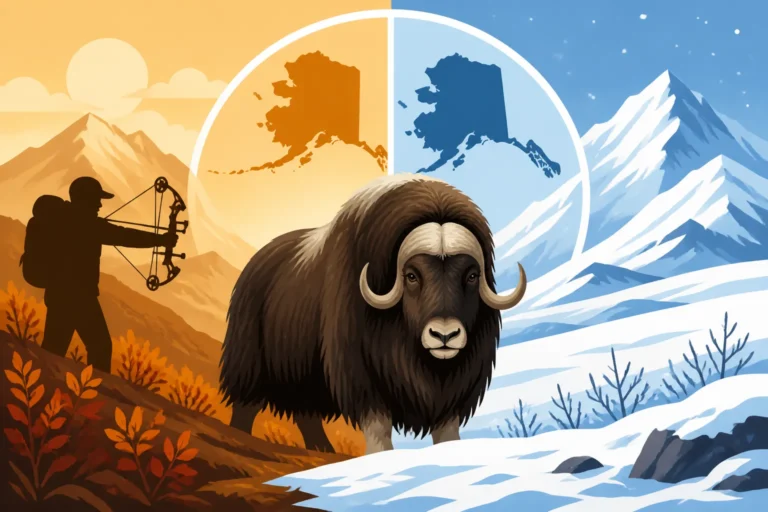
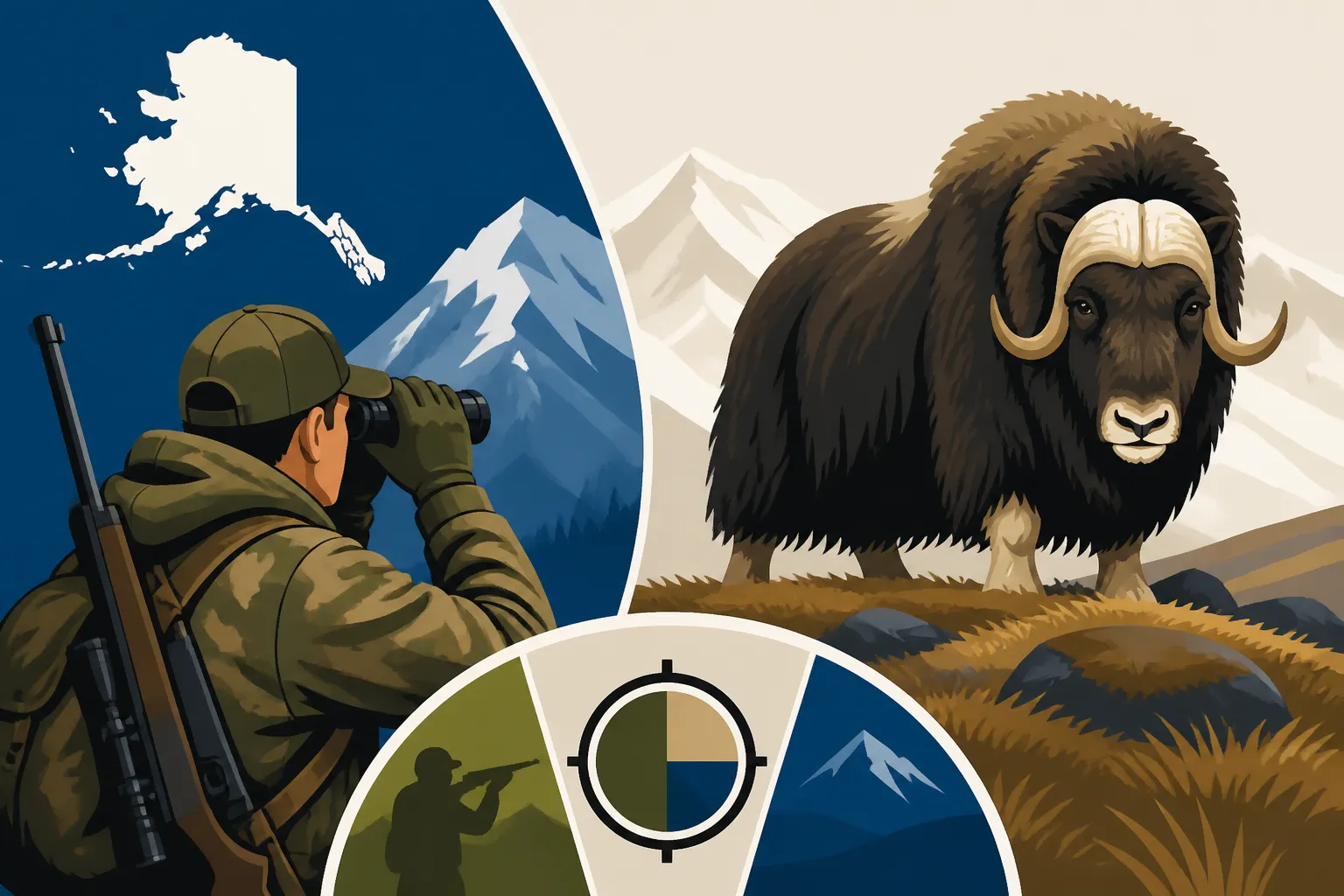
The draw of Nunivak Island muskox is undeniable. These shaggy, Ice Age survivors roam a vast, treeless tundra, making for a hunting experience unlike any other. Imagine glassing across rolling hills of frozen ground, spotting a dark shape against the snow, and realizing it's one of these incredible creatures. The sheer isolation and raw beauty of Nunivak, combined with the challenge of pursuing such a distinctive animal, elevate this hunt to bucket-list status for many. The island, which is part of Game Management Unit (GMU) 18, is known for its robust muskox population, and a permit here often translates into an opportunity for a truly trophy-class bull.
Unlike other areas with muskox herds, like those on the Seward Peninsula or Nelson Island, Nunivak has a storied history as a primary reintroduction site, supporting a thriving population that allows for limited, controlled hunting opportunities. The chance to harvest a muskox, particularly a large bull with its impressive boss, is what keeps thousands of hunters applying, despite the long odds. This makes understanding the nuances of the hunt and its limited availability crucial.
Unique Hunt Structure and Logistics
The Nunivak Island muskox hunt is exclusively managed through a drawing permit system. This means you cannot simply purchase an over-the-counter tag; you must be selected in a lottery conducted by the Alaska Department of Fish and Game (ADF&G). Each year, specific hunt numbers are designated for Nunivak muskox, such as DM835, DM836, or DM837, which typically denote different hunt periods or weapon types (though for muskox, rifle is standard). These hunts are highly regulated to maintain the health of the herd and ensure sustainable harvest levels.
For non-residents, there's an additional layer of complexity and cost: Alaska law mandates that non-resident hunters pursuing muskox must be accompanied by an Hiring an Alaska Registered Guide-Outfitter or a second-degree-of-kindred Alaska resident. This requirement, similar to that for brown bear and Dall sheep, means that even if you draw a permit, you'll need to immediately secure a guide, which can be an expensive and time-sensitive endeavor. Logistically, reaching Nunivak Island is an adventure in itself. Hunters typically fly to Bethel, then take a scheduled or charter flight to Mekoryuk, the island's only village. From there, further air or ground transport is often necessary to reach hunting areas. The severe weather conditions, especially during the typical late fall and winter seasons, add another layer of challenge, demanding meticulous planning and readiness for extreme cold and wind.
Decoding the Nunivak Muskox Permit Odds
When it comes to drawing a Nunivak muskox permit, the numbers tell a stark story. It’s a game of statistics, where a confluence of factors dictates just how likely, or unlikely, your success will be.
Factors Influencing Permit Odds
Several key elements come together to determine the draw odds for a Nunivak muskox permit, each contributing to its legendary difficulty:
- Permit Quota: The most critical factor is the number of permits ADF&G issues annually. These quotas are set after careful assessment of the muskox population on Nunivak Island, herd health, calf survival rates, and previous harvest data. For a species as unique and sought-after as the muskox, especially from a prime area like Nunivak, these quotas are almost always very low—often single-digit numbers for non-residents and typically fewer than 50 permits overall across all hunt types and resident categories. This stringent management ensures the long-term viability of the herd, but it also means very few winning tickets are distributed. This is a prime example of how ADF&G manages critical species, as discussed in Nunivak Island's Muskox Population Today.
- Application Volume: Despite the low quotas, the allure of Nunivak muskox means that thousands of hopeful hunters apply each year. The sheer volume of applications dramatically dilutes the odds for every individual applicant. Think of it: if there are only 2-3 non-resident permits available and a thousand non-residents apply, your chances are immediately reduced to a fraction of a percent.
- Residency Status: Alaska Fish & Game often allocates permits with a strong preference for residents. This means that a certain percentage, or a specific number, of permits will be reserved exclusively for Alaskan residents. While non-residents certainly can draw, their pool of available permits is considerably smaller, making their odds inherently tougher. Understanding the distinction between resident and non-resident categories is crucial for any hunter looking at Nonresident Hunting License Costs in Alaska and the overall draw system.
- Hunt Choices: While the Alaska draw system allows for multiple choices, for highly coveted permits like Nunivak muskox, success almost exclusively comes from being drawn as a first choice. Most applicants for these premium hunts put it as their number one, so by the time second or third choices are considered, the permits are long gone. Each application choice also incurs an Alaska Draw Application Fees Per Hunt Number, so careful consideration of your top choices is essential.
Historic Trends and Application Volume
Historically, the draw odds for non-resident Nunivak muskox permits have consistently been among the lowest for any big game species in Alaska. We’re talking about odds that often hover between 0.1% and 0.5% for non-residents. Residents typically see slightly better odds, but even for them, it's rarely above 5-10%, illustrating just how truly difficult this permit is to acquire.
For instance, looking back at past draw results, you might see a single-digit number of non-resident permits issued against hundreds, sometimes over a thousand, non-resident applicants for a specific hunt code. This high demand coupled with extreme scarcity creates the challenging odds we discuss. Resources like GoHunt's Insider service are invaluable here. They provide detailed historical draw odds, broken down by residency, hunt code, and even first or second choice success rates. This kind of data can illuminate the true competition levels and help you understand the long-term trends for these coveted tags. Analyzing this information allows hunters to approach the Alaska Nunivak Muskox Permit Odds with realistic expectations.
Here's a simplified look at what you might typically see for Nunivak muskox draw odds (actual numbers vary year-to-year and by specific hunt code):
| Year | Hunt Code | Permits Issued (Non-Res) | Total Non-Res Apps | Non-Res Odds (Approx.) |
|---|---|---|---|---|
| 2021 | DM835 | 2 | 850 | 0.24% |
| 2022 | DM835 | 3 | 1100 | 0.27% |
| 2023 | DM836 | 2 | 980 | 0.20% |
As you can see, the odds are incredibly slim, emphasizing that persistence and a bit of luck are your greatest allies.
Strategies to Improve Your Odds in the Alaska Draw
Given the notoriously low odds for a Nunivak muskox permit, you might feel like it's a lost cause. However, while you can't guarantee a draw, you can certainly employ smart strategies to put yourself in the best possible position.
Smart Application Choices
The first and most critical step is to apply for every Nunivak muskox permit hunt code you are eligible for, always listing them as your first choice. For example, if both DM835 and DM836 are available for Nunivak muskox in a given year and you meet all requirements, apply for both as your top choices. Remember that each first choice is treated independently. While you still only have one chance per hunt code, casting a wider net across all relevant Nunivak options marginally increases your overall chance of drawing a Nunivak permit.
It's absolutely paramount to submit your application correctly and well within the Alaska's November 1 to December 15 Draw Application Window. Simple errors, like incorrect hunt codes, missing information, or late submission, can immediately disqualify you, eliminating even that fractional chance you had. Double-check everything before hitting submit. While Alaska doesn't have a bonus point system that rewards years of applying, persistence is key. Many hunters apply for decades before finally drawing one of these coveted tags. Utilizing a platform like GoHunt can streamline this process by helping you track hunt codes, deadlines, and application requirements, reducing the chance of critical errors.
Leveraging Party Applications
Alaska's draw system includes a valuable feature known as Party Applications in the Alaska Draw. For a permit as rare as Nunivak muskox, this strategy can subtly, yet significantly, enhance your group's chances. Here's how it works: if you apply as a party, and any member of your party is drawn, all eligible members of that party receive a permit. This doesn't necessarily increase your individual odds but it does increase the party's probability of someone in the group drawing a permit.
However, there are important considerations. All members of the party must meet the eligibility requirements for the hunt. For non-residents, this means all party members must be prepared to engage an Alaska Guide Licensing: Assistant, Registered and Master once the permit is drawn. The financial commitment for a guided muskox hunt is substantial, so all party members must be fully aware and committed to the cost and logistics involved should they be successful. This strategy is most effective for small, trusted groups where everyone is equally invested and prepared for the reality of drawing a permit.
Considering Resident vs. Non-Resident Factors
As we've touched upon, residency plays a significant role in permit odds. Alaskan residents generally have access to a larger pool of permits or separate quotas, giving them comparatively better odds, though still challenging. For non-residents, the guide requirement is a critical factor. Unlike a caribou or moose hunt, which a non-resident can undertake unguided, muskox, brown bear, and Dall sheep all require a guide. This not only adds to the financial investment but also impacts the pool of applicants. Non-residents must factor in the substantial cost of a guided hunt, which can easily run into tens of thousands of dollars, into their application decision.
This financial consideration effectively filters the non-resident applicant pool to only those who are serious and prepared for the full expense. While your odds are tougher as a non-resident, if you are drawn, the experience will be one of the most memorable hunts of your life. The critical takeaway is that while the dream is accessible to all, the reality of a guided hunt makes the Alaska Guided Hunt Price Ranges by Species for muskox a very real barrier, solidifying it as a truly premium experience.
The Reality of Drawing and Planning Your Hunt
The moment you check the Alaska draw results and see that coveted "Successful" status for a Nunivak muskox permit is exhilarating. But that excitement quickly shifts to the intense logistical planning required for such a unique and challenging hunt.
What Happens If You Draw
Congratulations, you've beaten the odds! You're among the fortunate few. However, drawing the permit is just the first step in a long, detailed process. If you are a non-resident, your immediate priority is securing an Hiring an Alaska Registered Guide-Outfitter with experience on Nunivak Island. These guides are often booked years in advance due to the high demand for such limited permits. You'll need to move quickly, as finding a reputable outfitter who has availability and concession rights for Nunivak can be a significant challenge. Be prepared for robust discussions around contracts, deposits, and what a What an Alaska Guided Hunt Price Includes for a muskox hunt covers.
Beyond the guide, you'll need to dive into the deep end of logistical planning. This includes booking flights to Bethel, then onward to Mekoryuk, and arranging further air or ground charters to get into your hunting area on the island. Nunivak's weather is notoriously harsh, especially during the typical winter hunt periods, so proper gear for extreme cold, wind, and potential white-out conditions is non-negotiable. You’ll need to understand how Muskox Herd Structure and Rutting Bulls might influence your hunt plan and what to expect in terms of tracking and field care in sub-zero temperatures. It’s a hunt that demands meticulous attention to detail, physical preparedness, and a flexible mindset to adapt to whatever the Alaskan wilderness throws your way.
If You Don't Draw This Year…
Let's be realistic: the vast majority of applicants will not draw a Nunivak muskox permit in any given year. This is not a reflection of your application strategy or desire, but simply a mathematical reality of extremely low odds and high demand. The most important thing is not to get discouraged. Many hunters consider this a multi-year, even multi-decade, endeavor. You apply, you hope, and if it doesn't happen, you try again next year.
While you wait for your dream tag, consider exploring other incredible hunting opportunities Alaska has to offer. There are numerous general season hunts for species like caribou or moose, or even other draw permits that might have slightly better odds, as you can explore through resources like How Alaska's Big Game Drawing Permits Work. Perhaps a Float Hunting Alaska Rivers for Moose and Caribou or hunting Sitka Blacktail Deer of Alaska's Island Rainforest could be an exciting adventure in the interim. Regularly reviewing draw odds and application strategies with tools like GoHunt can help you refine your approach and identify other desirable hunts that might be more attainable while you continue your quest for that elusive Nunivak muskox. The journey of applying and dreaming is part of the experience, and eventually, with persistence, your turn might come.
Disclaimer
The information provided in this guide is for informational purposes only and is subject to change. Hunting regulations, permit quotas, and application processes are determined by the Alaska Department of Fish and Game and can be updated annually. Always consult the most current Alaska Hunting Regulations booklet and official ADF&G resources before planning any hunt or submitting applications. It is the hunter's responsibility to understand and comply with all applicable laws and regulations.