Alaska Bonus Points Compared to Other States
Coming to Alaska from other states, especially those in the Lower 48, many hunters are accustomed to a system where consistency and loyalty are rewarded. You might have years of preference points built up for elk in Colorado, or bonus points for sheep in Arizona, only to find that Alaska operates on a completely different playing field. This can be genuinely confusing and even frustrating, making it feel like all your strategic planning experience is useless. This guide is here to unravel Alaska's unique draw system and explain precisely how it stands apart from point systems in other states.
Understanding Alaska's Unique Approach to Drawing Permits
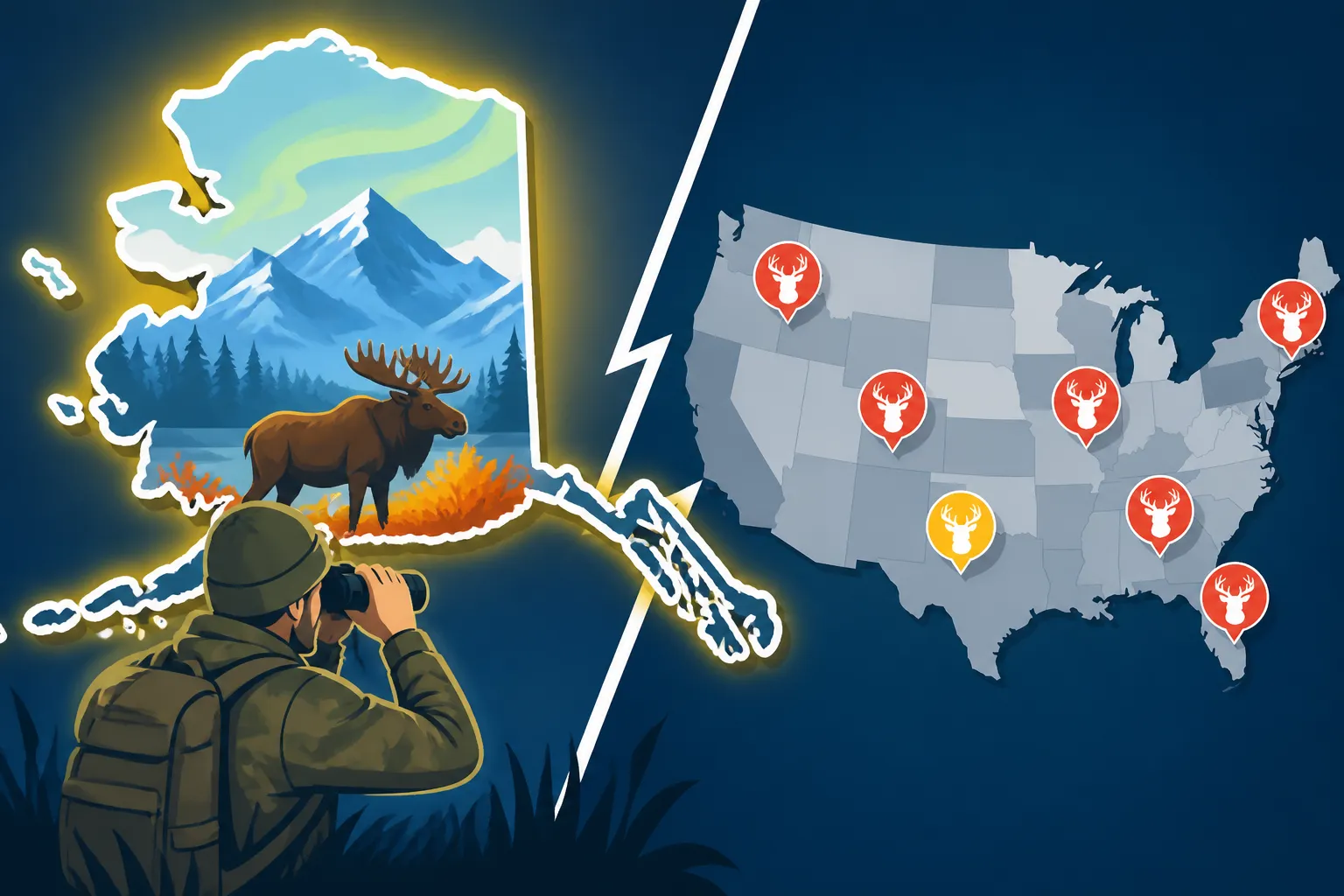
When you first dive into the Alaska hunting regulations, one of the most striking differences you'll encounter, especially if you're a seasoned hunter from the Western states, is the complete absence of a bonus or preference point system. Unlike states such as Wyoming, Arizona, or Nevada, where every unsuccessful application grants you a point that statistically improves your odds in future draws, Alaska runs a pure lottery. Every single year, every applicant starts with exactly the same chance, regardless of how many times they've applied in the past or how many decades they've dreamed of an Alaska trophy.
This can be a tough pill to swallow for those who've meticulously built up points over years, only to realize that their dedication doesn't count for anything here. It means that the hunter applying for the very first time has the exact same mathematical chance as someone who has applied for the same hunt for thirty years straight. There's no "banking" points, no strategic advantage gained by accumulating unsuccessful applications. It's a completely level playing field where luck is the primary determinant, and while that can feel unfair to some, it's also a fundamental aspect of the Last Frontier's hunting philosophy. This pure lottery system applies to most of the highly sought-after species and units available through the state's drawing permit process. Understanding How Alaska's Big Game Drawing Permits Work is crucial for anyone planning their dream hunt here.
Why Alaska Doesn't Use Bonus or Preference Points
The reason Alaska maintains a pure lottery system, eschewing the bonus or preference points common elsewhere, really boils down to a combination of historical context, management philosophy, and the sheer scale of the state. In many ways, Alaska’s hunting regulations reflect a different reality than those in the more densely populated and heavily hunted regions of the Lower 48.
Historically, Alaska has always had vast wilderness and lower hunter densities compared to states with long-established point systems. The pressure on individual units, while growing, has not traditionally reached a level that mandated a system designed to reward longevity in the draw. Instead, the focus has often been on managing opportunity and distributing it as broadly as possible. The philosophy is often centered on the idea that every Alaskan, and indeed every hunter who applies, should have an equal shot at drawing a coveted permit, rather than creating a system where an individual's accumulated "sweat equity" in the draw dictates their success. This approach aligns with a certain rugged individualism that often characterizes the state. It essentially says, "Come to Alaska, put your name in the hat, and may the best luck win." This might frustrate hunters from states like New Mexico or Montana who are used to seeing their draw odds increase over time, but it’s how Alaska has chosen to operate, emphasizing an annual fresh start for everyone involved. The Alaska Department of Fish and Game (ADF&G) uses these draw permits as a tool for game management, controlling harvest levels in specific areas for sensitive populations, not as a reward system for persistent applicants.
What This Means for Your Alaska Draw Application Strategy
Given that Alaska operates on a pure lottery system, your application strategy needs to shift significantly from what you might be used to in point-based states. The old adage of "playing the long game" simply doesn't apply here. Instead, you need to focus on maximizing your chances within the framework of a random draw.
First and foremost, understanding the sheer "luck of the draw" factor is paramount. Every year is a clean slate. This means that past success or failure in the draw has absolutely no bearing on your future outcomes. You could draw a coveted tag on your first try, or you could apply for twenty years and never see your name pulled. This can be disheartening, especially for those who meticulously plan years in advance, but it also means that every application holds the same potential for success.
When it comes to the actual application process, Alaska allows you to apply for multiple hunt choices on a single application, up to three different hunt numbers in most cases, though species like moose often allow for Why Alaska Allows Six Moose Hunt Choices. This is your primary lever for increasing your odds. Instead of banking on one long-shot hunt, you can strategically list a dream hunt as your first choice, a more realistic hunt as your second, and perhaps a less popular but still desirable hunt as your third. It's crucial to research the past draw odds for these hunts. While these odds won't guarantee future success, they offer insight into the relative popularity and difficulty of drawing a particular permit. For instance, a hunt with 1:5 odds is statistically much easier to draw than one with 1:100 odds, even though both are still pure luck. Tools like GoHunt can be invaluable here, providing historical data and analysis to help you make informed decisions about your choices, allowing you to compare the attractiveness of various units and species.
You'll also need to pay close attention to the application timelines. The Alaska Draw Application Opening Date usually occurs in early November, and the Alaska Draw Application Deadline Time Zone is a hard cutoff, typically in mid-December. Missing this window means you're out of luck for the entire season. Knowing these dates, along with checking the Alaska Draw Results Release in February, becomes critical for managing your hunting calendar.
Finally, consider party applications. While it doesn't increase your individual odds of being drawn, if one person in your party draws the permit, everyone on the application gets the tag. This can be a useful strategy for groups who want to hunt together, but it means everyone’s application rides on the luck of a single draw number. More detailed information can be found in our guide on Party Applications in the Alaska Draw. Be mindful that each Alaska Draw Application Fees Per Hunt can add up, so budget accordingly, as these are non-refundable whether you draw a tag or not.
| Feature | Typical Western State (e.g., Wyoming) | Alaska Drawing Permit System |
|---|---|---|
| Point System | Yes (Preference or Bonus) | No |
| Point Accumulation | Points accumulate year to year | None; reset to zero annually |
| Odds Improvement | Points increase your mathematical odds | Pure random lottery each year |
| Applicant Advantage | Long-term applicants have an edge | Every applicant has equal odds |
| Strategy Focus | Point banking, strategic application | Maximizing choices, diverse applications, robust research |
| Application Cost | Often includes point fees in addition to application fees | Non-refundable application fees per hunt number |
Maximizing Your Chances in a Pure Lottery System
Even without bonus or preference points, you're not entirely at the mercy of blind luck. While the draw itself is random, smart planning and strategic application can absolutely maximize your chances of securing one of Alaska's coveted drawing permits.
Your most powerful tool in a pure lottery system is thorough research. The Alaska Department of Fish and Game website is a treasure trove of information. Dive deep into the harvest statistics and past draw odds for every hunt number that piques your interest. Don't just look at the most popular hunts with astronomical odds. Sometimes, a lesser-known unit or a hunt with slightly different dates might offer significantly better chances. This is where resources like GoHunt really shine, allowing you to filter through vast amounts of data, visualize trends, and identify those hidden gems that might be overlooked by the masses. They consolidate the information that would take hours to compile from various ADF&G reports.
Beyond simply looking at the numbers, you need to think about the practicalities of the hunt. A permit might have great odds because it's an incredibly remote area, requiring a bush plane and significant logistical planning. Are you prepared for a Fly-In Hunting: Working With an Alaska Transporter Pilot scenario? Or perhaps it’s a difficult hunt that requires exceptional physical conditioning, like a sheep hunt in rugged alpine terrain. Consider your own experience, fitness level, and budget when making your choices. Often, the hunts with higher success rates and better draw odds are those that demand more from the hunter in terms of preparation and effort.
Another critical step is to submit a complete and accurate application as soon as possible after the Alaska Draw Application Opening Date. While applying early doesn't affect your odds in Alaska's lottery system, it does ensure that any potential issues with your application can be addressed before the strict deadline. There's nothing worse than having your application rejected because of a small error when you had ample time to fix it. Always double-check your chosen hunt numbers, your personal information, and your payment details.
Consider applying for a diverse range of species and hunt types. Don't just focus on that dream bull moose tag in Unit 13. Perhaps a caribou permit in another unit or a black bear hunt in an area that typically sees lower application numbers could be an excellent opportunity. The more varied your applications, the more "tickets" you have in the lottery for different prizes. It’s also wise to get your hands on the latest Getting the Alaska Hunting Regulations Booklet, either physically or online, and pore over every detail. Regulations change, and what was legal or available last year might not be this year.
Lastly, don't underestimate the power of preparation beyond the draw. Even if you draw a permit, the real work begins. Scouting a Unit From Satellite Imagery Before You Fly can give you an edge, allowing you to identify potential game habitat, travel corridors, and access points from the comfort of your home. If your drawn hunt requires an outfitter, begin researching and contacting guides as soon as you know your results. A good guide can be the difference between a successful hunt and a challenging one. Remember, you might even need to consider Hiring an Alaska Registered Guide-Outfitter depending on the species and your residency status.
Disclaimer
Hunting in Alaska involves inherent risks and complex regulations. This guide provides general information and should not replace official sources. Always consult the latest Alaska Department of Fish and Game regulations and, if applicable, federal regulations for specific hunt details, requirements, and safety protocols before planning or undertaking any hunt.